You’ve read the studies. Rosemary oil performed as well as 2% minoxidil in clinical trials. But here’s what the research papers don’t tell you: the bottles lining pharmacy shelves aren’t created equal. Most contain diluted extracts, synthetic fragrances, or oxidized oils that lost their potency months ago.
The difference between an effective rosemary oil and an expensive placebo comes down to five specific factors. Extraction method matters. Concentration matters. Storage matters more than you’d think. And in the Gulf’s heat and humidity, shelf stability becomes critical.
This isn’t a sponsored roundup of products. It’s a framework for evaluating rosemary oils based on the chemistry that actually drives hair growth. Because spending money on the wrong formulation doesn’t just waste cash (it delays real results by months).
What the Research Actually Says About Rosemary Oil
The 2015 study everyone cites compared rosemary essential oil to 2% minoxidil over six months. Both groups saw significant hair count increases. But here’s the detail that matters: participants used pure rosemary essential oil diluted to 3.5% in a carrier oil base, applied twice daily with five-minute scalp massage.
That specific protocol isn’t optional. The mechanical stimulation from massage increased blood flow to follicles. The 3.5% concentration balanced efficacy with skin tolerance. And the carrier oil (jojoba in the study) helped the active compounds penetrate the scalp barrier.
Most commercial “rosemary hair oils” don’t match this formula. They’re either too diluted to work or too concentrated to use safely. Some contain rosemary extract (water-based) instead of essential oil (lipid-based). The molecular composition is completely different, and so are the results.
According to research published in the Journal of Clinical Investigation, rosemary’s active compound carnosic acid works by blocking DHT at the follicle level and reducing oxidative stress. But carnosic acid degrades rapidly when exposed to light, heat, and oxygen. Storage method determines whether your bottle contains active compounds or inert plant matter.
Pure Essential Oil vs Pre-Diluted Formulas
You’ll find two types of products: 100% pure rosemary essential oil (which you must dilute yourself) and pre-mixed hair treatment oils (ready to apply). Each has specific advantages depending on your situation.
Pure essential oil offers maximum control. You choose the carrier oil, adjust the concentration, and ensure freshness. A 30ml bottle contains roughly 600 drops, enough for 4-6 months of treatment when diluted properly. The math works out to about $0.15 per application.
But pure essential oil requires careful handling. It’s too concentrated for direct scalp contact and can cause irritation or sensitization if misused. You’ll need to measure, mix, and store your dilutions properly. For some people, that’s helping. For others, it’s a barrier to consistent use.
Pre-diluted formulas eliminate the guesswork. They’re formulated at therapeutic concentrations (typically 2-5%) with complementary carrier oils and stabilizers. The trade-off? You’re trusting the manufacturer’s formulation and freshness. And you can’t adjust the concentration if your scalp proves sensitive.
Here’s what actually matters: consistency beats perfection. The best formula is the one you’ll actually use twice daily for six months. If measuring and mixing feels like a chore, pre-diluted wins. If you want maximum value and control, pure essential oil is your answer.
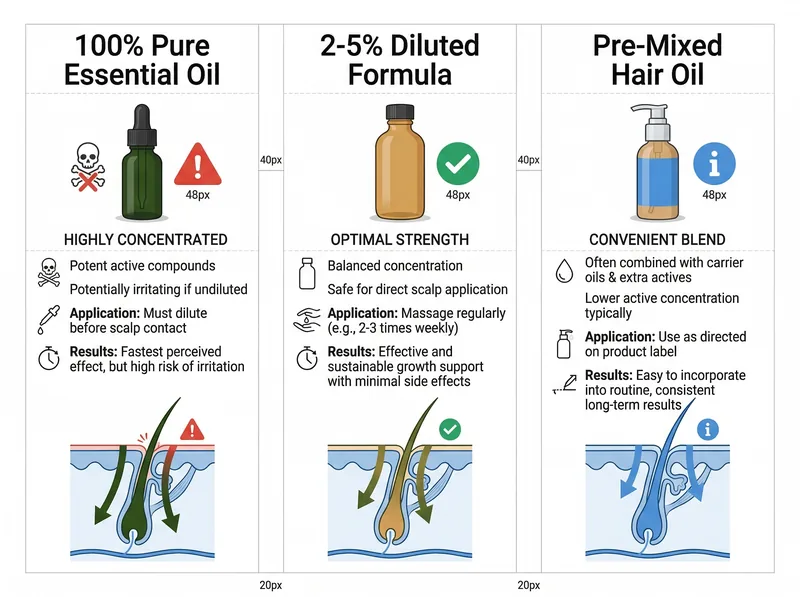 Different concentration levels affect both safety and effectiveness. Pure essential oil requires dilution, while pre-diluted formulas offer convenience.
Five Non-Negotiable Quality Markers
First: steam distillation. This extraction method preserves the volatile compounds that drive hair growth. CO2 extraction works too. Solvent extraction doesn’t. If the label doesn’t specify the method, assume the cheapest process was used.
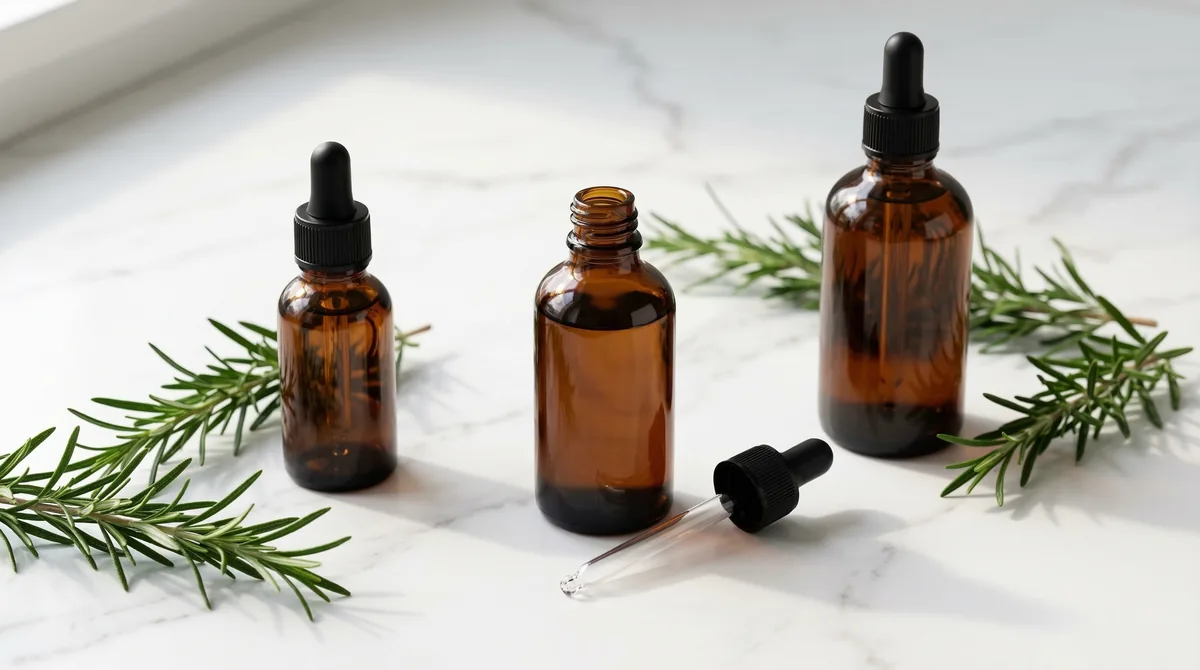
Second: dark glass bottles. Amber or cobalt blue glass blocks UV light that degrades carnosic acid. Clear glass bottles are a red flag, regardless of price point. The oil inside has likely lost 30-50% potency before you even open it.
Third: Latin name verification. The label should say “Rosmarinus officinalis” or “Salvia rosmarinus” (the updated botanical name). If it just says “rosemary oil” without the Latin name, you might be getting rosemary-scented fragrance oil instead of therapeutic essential oil.
Fourth: country of origin. Spain, Tunisia, and Morocco produce the highest-quality rosemary oil with optimal carnosic acid content. The terroir matters for essential oils just like it does for wine. Oils from these regions consistently test higher for active compounds.
Fifth: third-party testing. Look for GC/MS (Gas Chromatography/Mass Spectrometry) reports that verify purity and compound composition. Reputable suppliers make these reports available. If a brand can’t provide testing documentation, they’re either hiding adulteration or they’ve never tested their product.
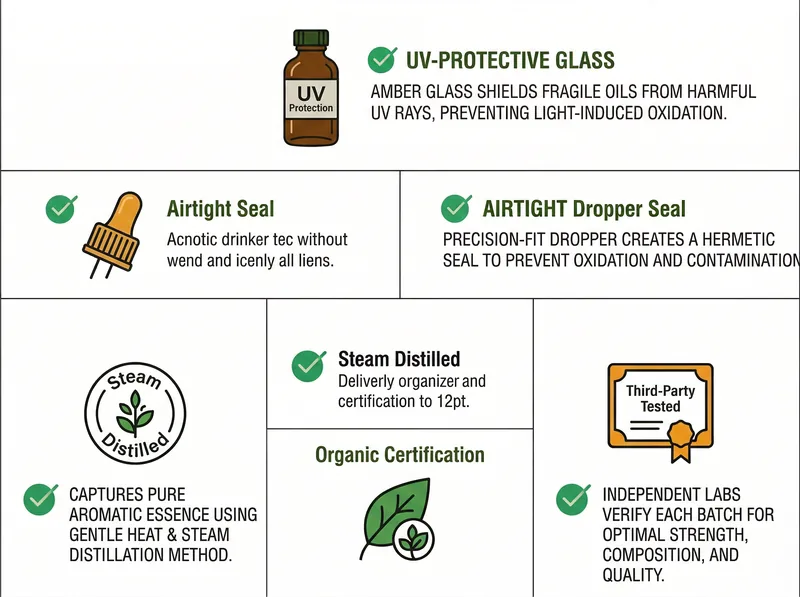 These five quality markers separate therapeutic-grade oils from cosmetic-grade alternatives that won’t deliver results.
The Carrier Oil Question Nobody Addresses
If you’re buying pure essential oil, your choice of carrier matters as much as the rosemary itself. Different carriers penetrate the scalp at different rates and deliver different secondary benefits.
Jojoba oil (used in the clinical study) mimics sebum chemistry and won’t clog follicles. It’s stable, absorbs quickly, and works well in the Gulf’s humidity. The downside? It’s pricier than alternatives.
Sweet almond oil offers similar benefits at lower cost. It’s rich in vitamin E (an antioxidant that protects follicles) and penetrates well. But it can go rancid faster than jojoba, especially in warm climates. Buy small bottles and store them in cool, dark places.
Avoid coconut oil for scalp treatments. Yes, it’s popular. But its molecular structure sits on the scalp surface rather than penetrating. It can also create buildup that blocks follicles over time. Save coconut oil for hair shaft conditioning, not scalp treatment.
Grapeseed oil is the budget-friendly option. It’s lightweight, absorbs fast, and doesn’t leave residue. The trade-off is a shorter shelf life (3-4 months once opened). If you’re mixing small batches and using them quickly, grapeseed works fine.
Storage and Shelf Life Reality Check
Here’s what nobody tells you: that expensive rosemary oil loses potency fast if you store it wrong. And in the Gulf’s climate, standard storage advice doesn’t apply.
Pure essential oils last 1-2 years unopened when stored properly. Once opened, the clock accelerates. Exposure to air triggers oxidation. Heat speeds up degradation. Light breaks down active compounds. In a 35°C bathroom, your oil might lose half its potency in three months.
Store bottles in the refrigerator. Yes, really. The cool temperature dramatically slows oxidation. Essential oils don’t freeze at typical refrigerator temps, and the slight thickening reverses at room temperature. This single change can double your oil’s effective lifespan.
Pre-diluted formulas are more vulnerable. The carrier oil oxidizes faster than pure essential oil. Once you’ve mixed rosemary oil into a carrier base, use it within 2-3 months maximum. Make small batches. Fresh beats bulk.
Watch for signs of degradation: color darkening, smell changing from fresh and herbaceous to musty or sour, texture becoming thick or sticky. When you notice these changes, the active compounds are gone. Toss it and start fresh.
How to Actually Use Rosemary Oil for Results
The protocol that worked in clinical trials isn’t complicated, but it is specific. Mix 7-8 drops of pure rosemary essential oil per tablespoon (15ml) of carrier oil. That creates the 3.5% concentration used in research.
Apply to dry scalp, section by section. You need direct scalp contact, not just coating your hair. Use your fingertips to massage in small circular motions for 5 minutes minimum. The mechanical stimulation matters as much as the oil itself.
Leave it on for at least 30 minutes. Overnight is better. The active compounds need time to penetrate. Then shampoo normally. If you’re using a hair growth shampoo with complementary ingredients, the combined approach works better than either alone.
Frequency matters more than amount. Twice daily (morning and evening) produced the best results in studies. Once daily still works, but slower. Every other day probably won’t deliver noticeable results. Consistency is everything.
Set realistic expectations. You won’t see visible results for 8-12 weeks minimum. Hair growth is slow. The follicles need to shift from telogen (resting) to anagen (growth) phase, and that transition takes time. Track progress with photos, not daily mirror checks.
What About Pre-Made Rosemary Hair Products
Rosemary-infused shampoos and conditioners are everywhere now. Do they work? It depends entirely on formulation.
Most shampoos contain rosemary extract (not essential oil) at concentrations too low to affect follicles. They smell nice. They might provide antioxidant benefits. But they won’t replicate the hair growth results from clinical studies. The contact time is too short and the concentration is too diluted.
Leave-in treatments and serums can work if they’re formulated correctly. Look for products listing rosemary essential oil (not extract) in the first five ingredients. The concentration should be 2-5%. And the base should be a lightweight oil or silicone that won’t create buildup.
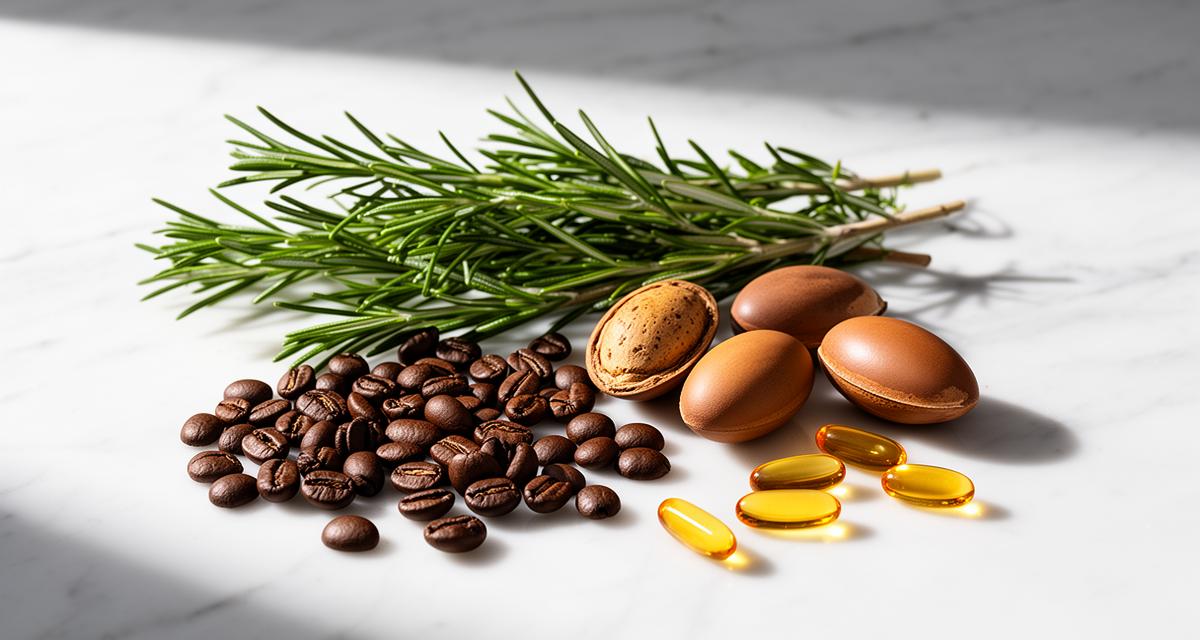
The advantage of quality pre-made products is formulation expertise. Good manufacturers combine rosemary with complementary actives (like caffeine, saw palmetto, or niacinamide) that target hair growth through different mechanisms. The combination can outperform rosemary alone.
But you’re paying for convenience and formulation. A $40 serum might contain $5 worth of ingredients. If budget matters, DIY with pure essential oil delivers better value. If consistency and ease matter more, a well-formulated product might be worth the premium.
References
- Rosemary oil vs minoxidil 2% for the treatment of androgenetic alopecia: a randomized comparative trial - SKINmed: Dermatology for the Clinician
- Carnosic acid inhibits 5α-reductase activity in vitro and in vivo - Phytotherapy Research
- Oxidative Stability and Shelf Life of Essential Oils - PubMed Central
- Mechanisms of Hair Growth Stimulation by Natural Compounds - Journal of Clinical Investigation