Your hair was fine in London. Perfect in New York. Great in Sydney.
You moved to Dubai. Within three months, everything changed.
Strands in the shower drain. Dull, lifeless texture. Breakage when you brush. You tried expensive salon treatments. Keratin-infused shampoos. Even vitamins your dermatologist recommended.
Nothing worked.
Here’s why: It’s not you. It’s not genetics. It’s not stress.
It’s the water.
And not in the way most people think. The problem isn’t just that Gulf water is “hard.” It’s that it’s been deliberately engineered to be hard in a way that natural hard water never is.
Let me explain the chemistry.
How Dubai’s Water Is Actually Made (And Why That Matters for Your Hair)
The GCC relies almost entirely on desalination. In the UAE, over 85% of drinking water comes from the sea.
Here’s what happens in a desalination plant:
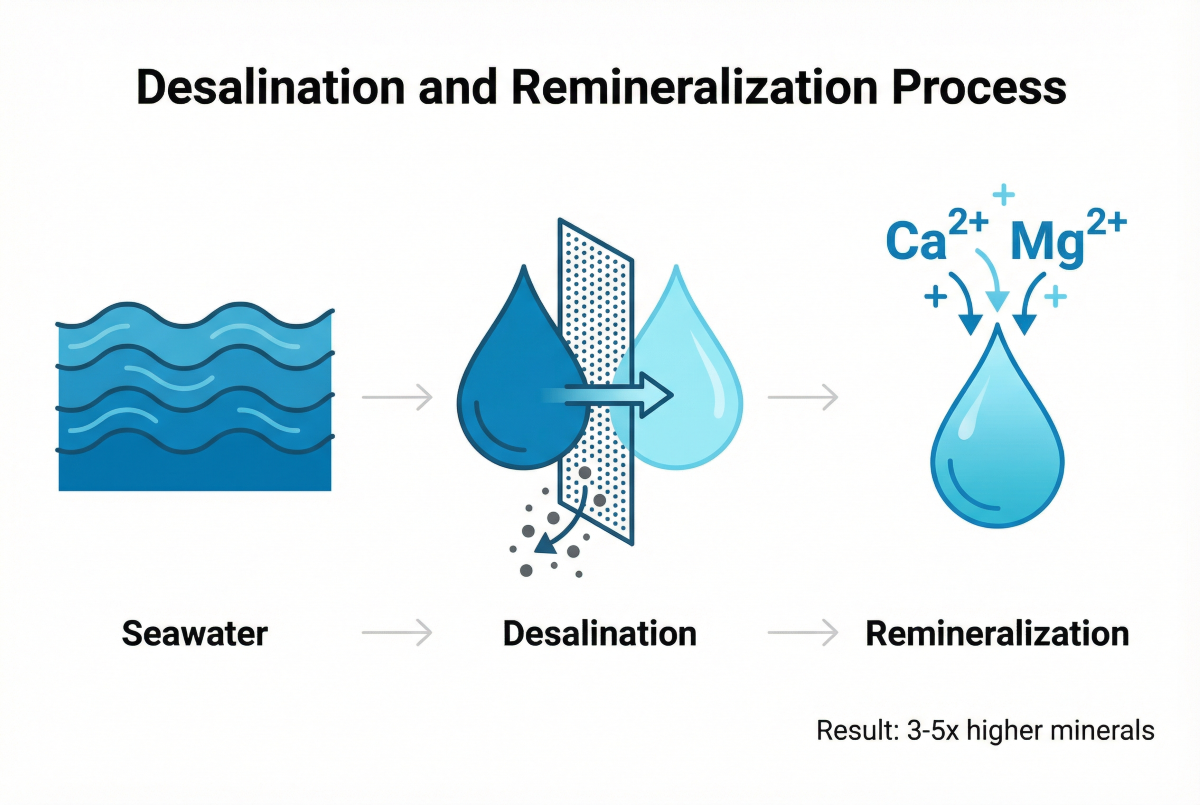
First, seawater gets pushed through reverse osmosis membranes. This strips out salt. But it also removes every single mineral. Calcium, magnesium, everything. You’re left with water so pure it’s actually aggressive. It corrodes metal pipes.
So engineers do something interesting. They add minerals back.
This process is called remineralization. It’s done deliberately to protect infrastructure. Calcium and magnesium get pumped back into the water supply at controlled levels.
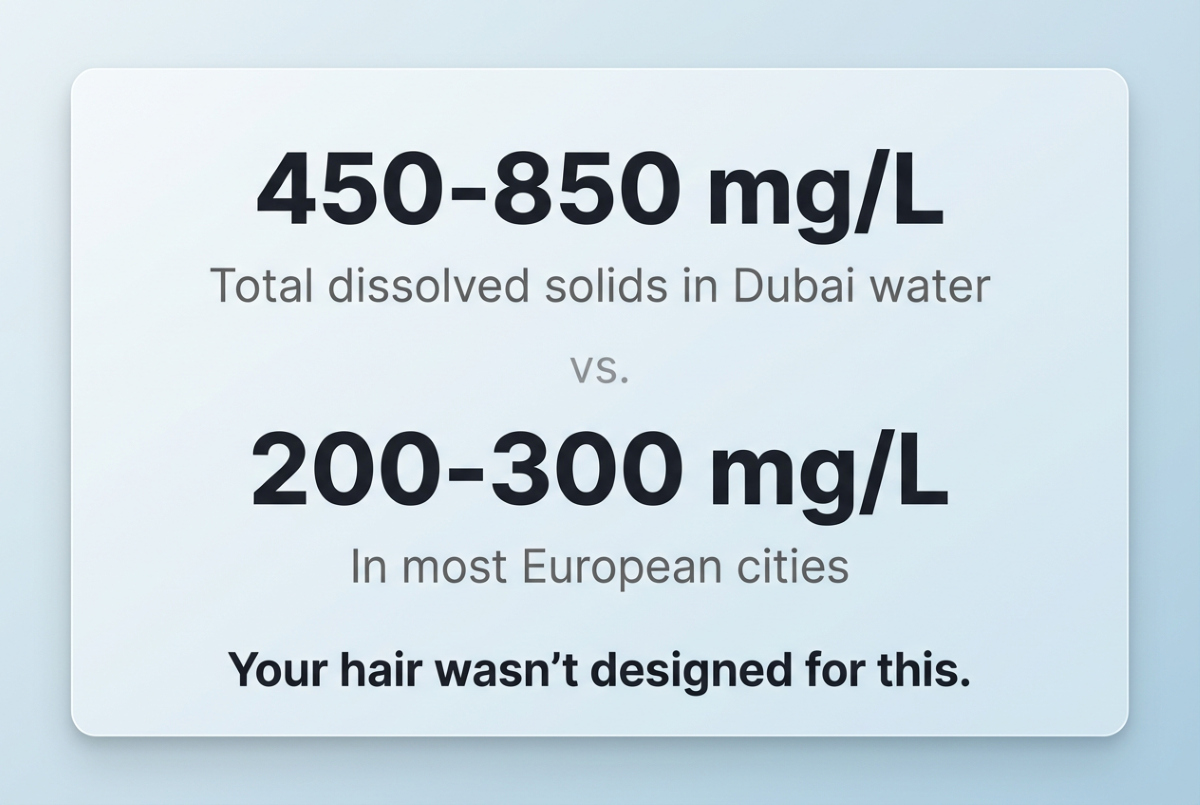
The result? Water with mineral concentrations 3 to 5 times higher than natural hard water in most European cities.
Dubai’s water contains 450 to 850 mg/L of total dissolved solids. For comparison, London’s water sits at 200 to 300 mg/L. Paris? About the same.
This isn’t accidental. It’s engineered hard water, optimized for pipes, not biology.
Your hair wasn’t designed for this.
What Calcium and Magnesium Actually Do to Your Hair (The Science, Explained Simply)
Most people think hard water is just “harsh” in some vague way. The actual mechanism is specific and chemical.
Let me break it down.
The Mineral “Cast” Effect
Normal hair has a slightly acidic pH, around 4.5 to 5.5. This keeps the cuticle layer (the outer protective shell) sealed flat against the hair shaft.
GCC water sits at a pH between 7.5 and 8.5. Alkaline. When alkaline water touches your hair, the cuticle layer lifts. Just slightly, but enough.
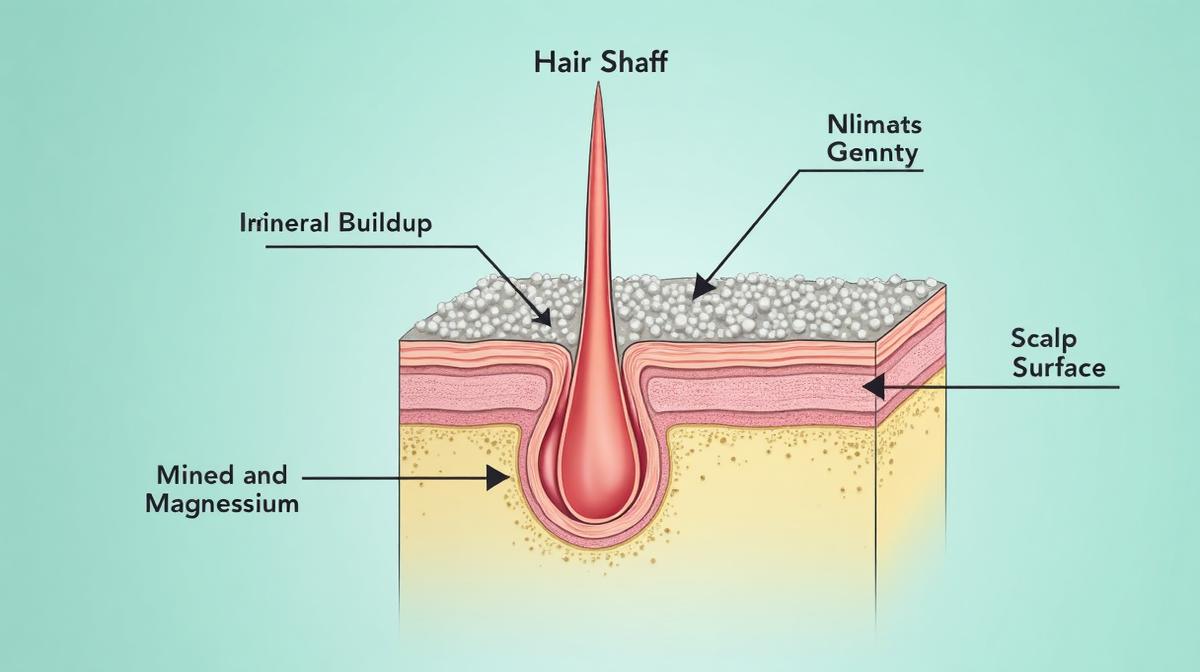
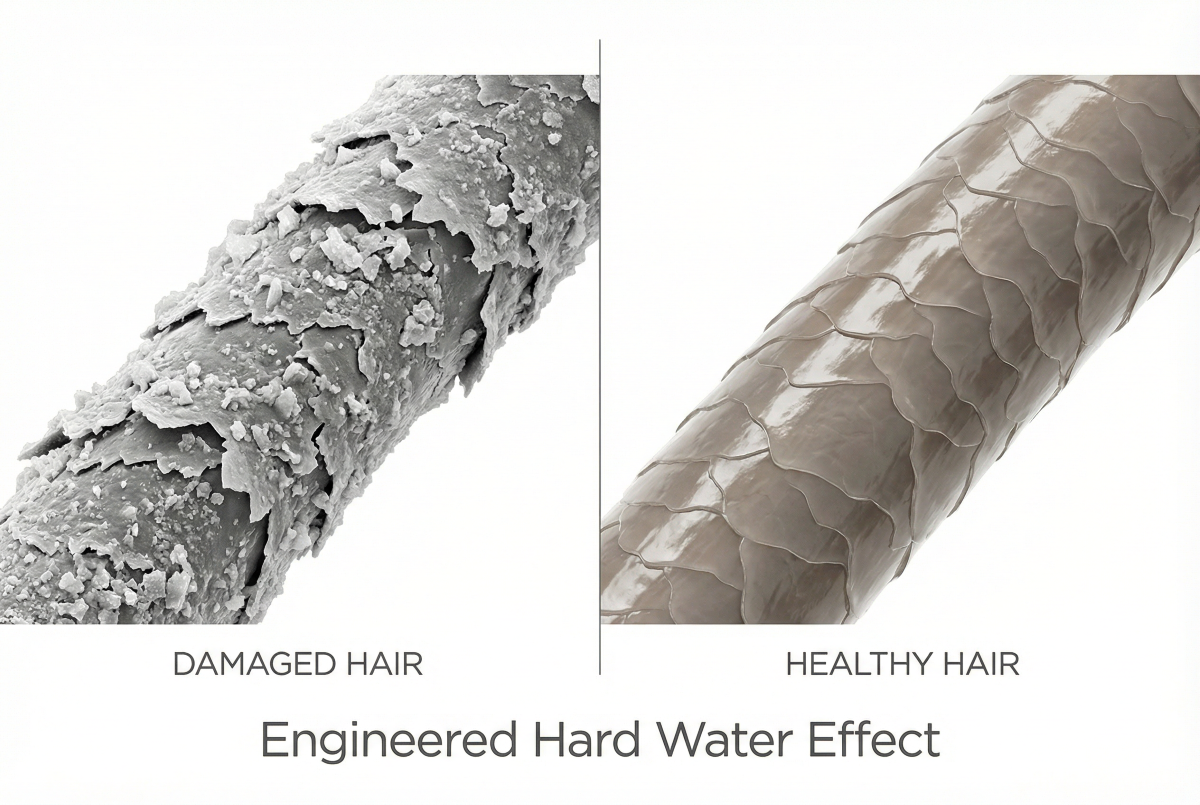
Now those lifted cuticles create tiny spaces. Calcium carbonate and magnesium hydroxide from the water crystallize in those spaces. They form a microscopic “cast” around each strand.
This mineral cast blocks moisture from penetrating your hair. It creates a rough, brittle surface that increases friction between strands.
The result? Dryness. Stiffness. Breakage.
Research shows mineral-damaged hair can lose up to 40% of its tensile strength. It snaps with normal brushing. It breaks during styling. You find clumps in the drain.
But here’s the critical thing: This isn’t hair loss from the follicle. It’s hair fall from breakage. The distinction matters.
Why Regular Shampoo Doesn’t Work
Commercial shampoos are designed to remove oil and dirt. That’s what surfactants do. They grab onto oily molecules and wash them away.
But minerals aren’t oil. They’re inorganic compounds bonded to your hair shaft. Surfactants can’t touch them.
It’s like trying to remove paint with soap. The chemistry doesn’t match the problem.
You can wash your hair every day with the most expensive shampoo on the market. If it doesn’t contain chelating agents, you’re not removing the mineral buildup. You’re just washing around it.
The Breakage vs. Hair Loss Distinction
Most people in the GCC think they’re experiencing hair loss. They’re not. They’re experiencing increased hair fall due to breakage.
Here’s the difference:
True hair loss means follicles stop producing hair. Androgenetic alopecia, hormonal changes, autoimmune conditions. That’s follicle-based hair loss.
Hard water damage means your hair grows normally, but breaks mid-shaft before it can reach length. The follicles are fine. The hair structure is compromised.
This is why biotin supplements don’t help. Why minoxidil doesn’t work. Why visiting a trichologist leaves you confused when they say your follicles look healthy.
You don’t need to stimulate growth. You need to stop breakage.
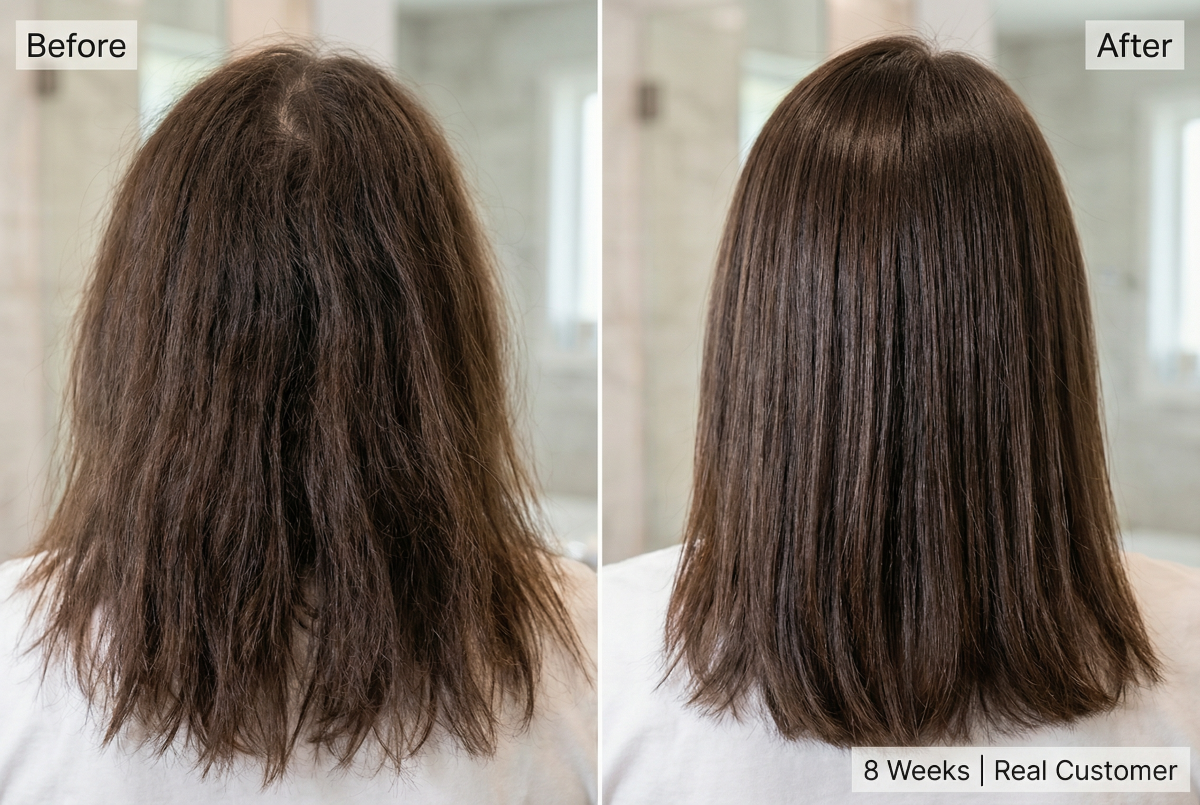
Learn more about chelating shampoos engineered for GCC water →
Your Skin Is Suffering Too: Hard Water and Dermatological Stress
Hair isn’t the only victim. Your skin faces the same assault.
Those same mineral deposits that coat your hair? They form on your skin surface too. They disrupt your skin’s natural pH barrier, called the acid mantle.
Your skin normally sits at pH 4.5 to 5.5. Slightly acidic. This acidity protects against bacteria and keeps moisture locked in.
Alkaline water (pH 7.5 to 8.5) neutralizes that protective layer. Repeatedly. Every time you shower.
The result? Chronic dryness. Sensitivity. Eczema flare-ups. Dermatitis that won’t respond to normal treatments.
Then there’s the “soap scum” effect. When soap molecules interact with calcium and magnesium, they form an insoluble compound. This residue stays on your skin after rinsing. It clogs pores. It prevents moisturizers from penetrating.
That tight, dry feeling after showering? Not in your head. The lotion that worked perfectly in your home country suddenly stops absorbing? Same reason.
You’re not suddenly sensitive. Your skin barrier is under constant chemical assault.
And just like with hair, regular body wash can’t fix this. You’re not washing away what your cleanser wasn’t designed to remove.
What Actually Works: Chelating Agents vs. Everything Else You’ve Tried
Let’s talk about solutions. Because you’ve probably tried a few already.
Why Shower Filters Have Limited Impact
Shower filters are the first thing people buy. I get it. The logic makes sense.
But here’s the problem: Most shower filters target chlorine, not minerals. They use activated carbon. Great for removing chlorine taste and smell. Useless for calcium and magnesium.
The filters that do remove minerals use ion exchange resins. These work, but they require replacement every 2 to 3 months. At 150 to 300 AED per cartridge, you’re spending 600 to 1,200 AED yearly.
Plus, mineral-removing filters reduce water flow significantly. Showering takes longer. The experience becomes frustrating.
And here’s the thing: Even with a filter, you’ve still got years of mineral buildup already on your hair and skin. The filter prevents new deposits. It doesn’t remove existing ones.
The Chemistry You Need: Chelating Agents
Now we get to what actually works.
Chelating agents are molecules that bind to metal ions. They’re like tiny magnets designed specifically for calcium, magnesium, iron, and copper.
Common chelating agents include EDTA (ethylenediaminetetraacetic acid), citric acid, and phytic acid. When you wash with a chelating shampoo, here’s what happens:
The chelating agent molecules attach to the mineral deposits on your hair shaft. They form a stable complex around the metal ions. Water rinses the bound minerals away.
Your hair is actually clean. Not just surface clean. Structurally clean.
Regular clarifying shampoos remove product buildup. Chelating shampoos remove mineral buildup. Completely different chemical action.
This is the key distinction most people miss.
The Protection Problem
But here’s where most people get stuck.
You use a chelating shampoo. It works. Your hair feels amazing. Then you shower again tomorrow. The water redeposits minerals. You’re back to square one.
Chelating removes existing buildup. But you need something to prevent new deposits from forming.
This is where protective oils come in. Castor oil, olive oil, argan oil. These create a water-repellent film on your hair shaft. Minerals can’t crystallize on an oil barrier.
Think of it this way: Chelating shampoo removes the paint. Conditioning oils seal the surface so new paint can’t stick.
One without the other is like bailing water from a boat without plugging the leak. You might make progress. But you’re still sinking.
Engineering a Solution for Engineered Water: The Regrowth+ Approach
So now you understand the chemistry. The question becomes: What’s the practical solution?
This is where Regrowth+ comes in. And I want to be transparent about why it exists.
Most hair care brands formulate for European or North American water conditions. They adapt existing formulas for different markets. But GCC water isn’t just “hard.” It’s engineered hard in a way that natural hard water never is.
That requires a purpose-built solution.
Regrowth+ was formulated specifically for Gulf water conditions. Not adapted. Engineered from scratch.
The system works in two parts:
The Shampoo removes existing mineral deposits and addresses the secondary problem (weakened follicles from chronic mineral exposure). It combines chelating agents with rosemary extract and caffeine for scalp stimulation, plus argan oil and shea butter to restore moisture immediately after mineral removal.
The Conditioner creates a protective barrier against new deposits. Castor oil and olive oil form a water-repellent film. Vitamin B5 repairs cuticle damage from years of alkaline water exposure.
Together, they form what’s called a complete system. Removal plus protection. Both problems solved.
Here’s why both matter: If you only remove buildup without protecting against new deposits, you’re chelating weekly forever. If you only condition without removing existing buildup, you’re sealing minerals underneath the oil. Neither approach works alone.
Most customers who buy just the shampoo come back for the conditioner within two weeks. They see results from the chelating action (less shedding, reduced breakage). Then they realize their hair is still dry and frizzy between washes.
That’s because the water is still depositing minerals after they wash. The conditioner fixes that.
“I finally have control again. I’m not dreading my morning shower. I’m not anxious when I brush my hair. Regrowth+ gave me back a piece of myself I thought was gone.”
Sarah K., Marketing Director
How to Actually Fix This: The Weekly Chelating Routine
Let’s talk implementation. Because understanding the chemistry means nothing without a practical routine.
Here’s what works:
Weekly chelating wash to remove accumulated mineral deposits. This is your deep clean. You’re resetting your hair to its natural state.
Daily conditioning to maintain the protective barrier. This prevents minerals from crystallizing on your hair shaft between chelating sessions.
Observation period of 4 to 6 weeks to see full results. Hair grows in cycles. Existing damaged hair needs to grow out. New hair needs time to benefit from the protective barrier.
Set realistic expectations:
First 2 weeks: You’ll notice reduced breakage. Less hair in the drain. Easier detangling.
Weeks 3 to 4: Texture improves. Shine returns. Hair feels softer, more manageable.
Weeks 5 to 6: Visible thickness at the crown. This isn’t new growth. It’s existing hair that’s not breaking off anymore. You’re keeping the length you grow.
Some people see faster results. Some take longer. It depends on how much mineral buildup you’ve accumulated and how damaged your hair structure currently is.
But here’s what everyone reports: The anxiety around washing hair goes away. That’s the psychological shift that matters most.
Taking Back Control
Here’s what frustrates me about the Gulf water problem: People blame themselves.
They think their hair changed because they’re not using the right products. Not eating the right foods. Not managing stress properly.
It’s none of those things.
Your hair didn’t change. Your environment did.
You moved to a place where water has been chemically engineered for infrastructure protection, not human biology. Your hair is responding to that chemistry in predictable, understandable ways.
Once you know the mechanism, you can fix it. That’s the empowering part.
You don’t need to spend 2,000 AED on salon treatments. You don’t need prescription medications. You don’t need to accept that “this is just how things are now.”
You need chemistry that matches the problem. Chelating agents to remove minerals. Protective oils to prevent new deposits. That’s it.
The solution is straightforward. The implementation is simple.
What would you do with the confidence that comes from taking back control?