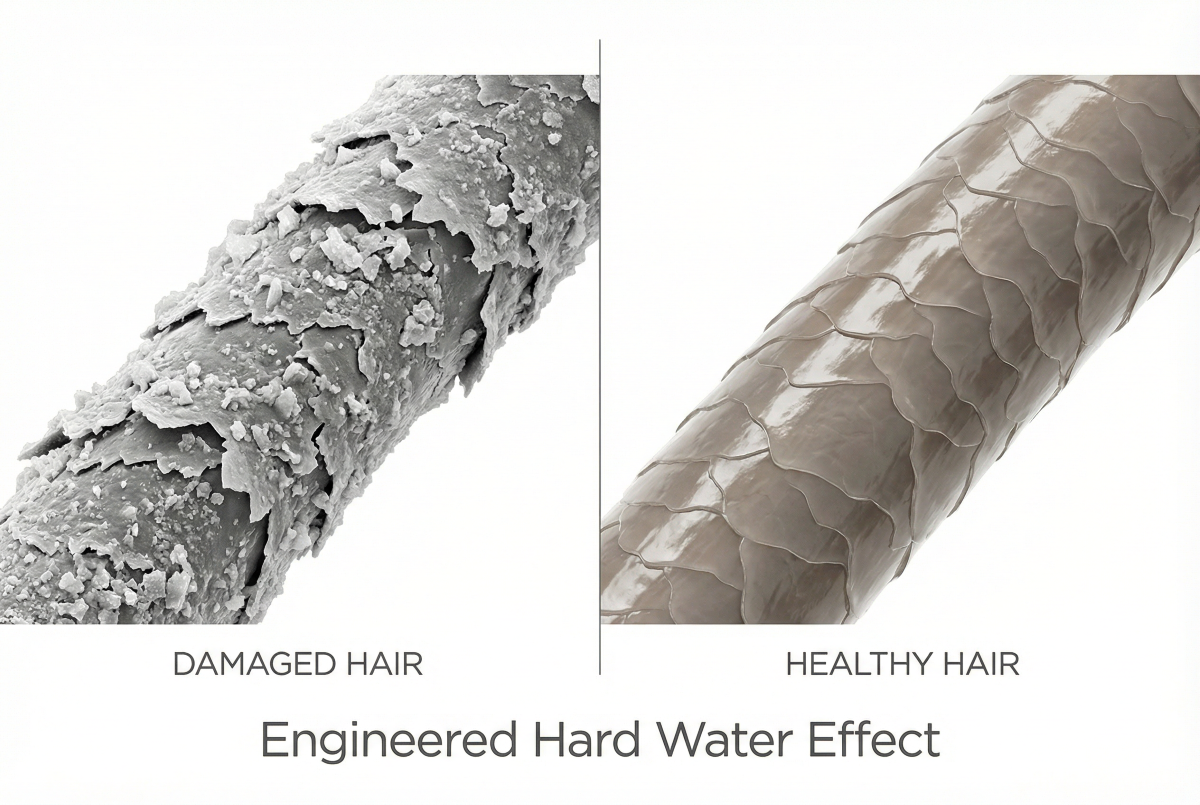
You’ve probably noticed it. Your hair feels different after relocating to the Gulf. Coarser texture. More breakage. Slower growth. You’re not imagining it.
The culprit isn’t your genetics or your shampoo technique. It’s what’s in your water.
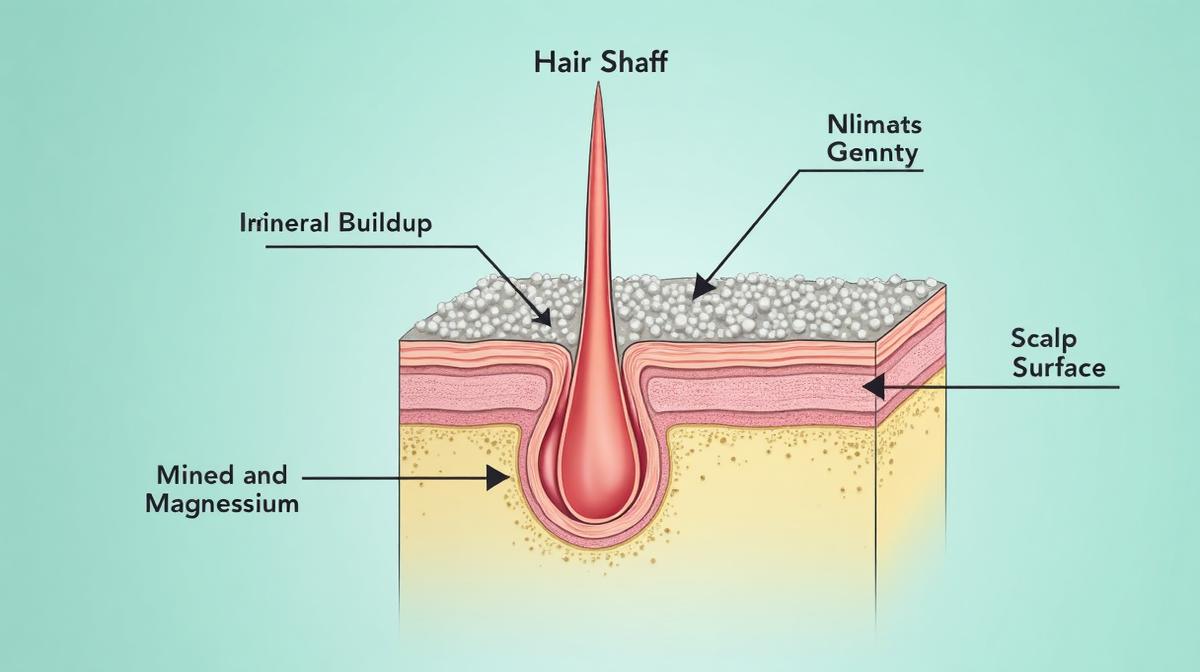
Desalinated water contains significantly higher concentrations of calcium, magnesium, and other minerals compared to naturally sourced water. These minerals don’t just rinse away. They accumulate on your hair shaft and scalp, creating a cascade of biochemical problems that directly impact follicle health. This process is the primary driver of hard water hair loss in coastal regions.
Let’s examine what actually happens at the cellular level.
How Hard Water Hair Loss Begins: Mineral Deposits and Follicle Damage
When hard water contacts your hair, dissolved calcium and magnesium ions bind to the keratin protein structure. This process, called chelation, creates an invisible coating that builds up with each wash.
Think of it like scale forming inside a kettle. Except this scale forms on living tissue.
This mineral layer has three primary damaging effects that contribute to hard water hair loss:
First, it creates a physical barrier that prevents moisture and nutrients from penetrating the hair shaft. Your follicles can’t absorb the oils and proteins they need for healthy growth.
Second, the mineral coating increases hair shaft rigidity. Hair becomes brittle and prone to breakage under normal mechanical stress. Studies show hard water can reduce hair elasticity by up to 20%.
Third, and most concerning for hard water hair loss, mineral buildup interferes with the scalp’s natural pH balance. The accumulation creates an alkaline environment that disrupts the acid mantle protecting your follicles. This triggers inflammation and oxidative stress at the follicle level.
The Oxidative Stress Mechanism Behind Hair Loss
Here’s where it gets interesting from a biochemical perspective.
Mineral deposits don’t just sit passively on your scalp. They catalyze oxidative reactions. Calcium and magnesium interact with residual chemicals from hair products, chlorine byproducts, and even atmospheric pollutants common in coastal regions.
These reactions generate free radicals. Free radicals damage the cellular membranes of follicle cells, impairing their ability to produce healthy hair shafts. Over time, this oxidative stress can push follicles into premature telogen phase, the resting stage of the hair growth cycle.
The result? More shedding. Slower regrowth. Progressively thinner hair density. This is the hallmark of hard water hair loss.
Research published in the International Journal of Trichology found that hard water exposure increased telogen effluvium markers by 34% compared to soft water controls. That’s not a trivial difference. The connection between mineral-laden water and accelerated shedding is well-established in trichological research.
Why Standard Shampoos Can’t Prevent Hard Water Hair Loss
Most commercial shampoos contain surfactants designed to remove oil and dirt. They’re not formulated to address mineral chelation or prevent hard water hair loss.
Sodium laureth sulfate and similar cleansing agents can’t break the ionic bonds between minerals and keratin. They might remove surface residue, but they can’t reverse the underlying mineral buildup that’s damaging your follicles.
You need a different mechanism entirely to combat hard water hair loss.
This is why people often report worsening hair conditions despite trying multiple premium shampoo brands. The products simply aren’t designed to address the root cause.
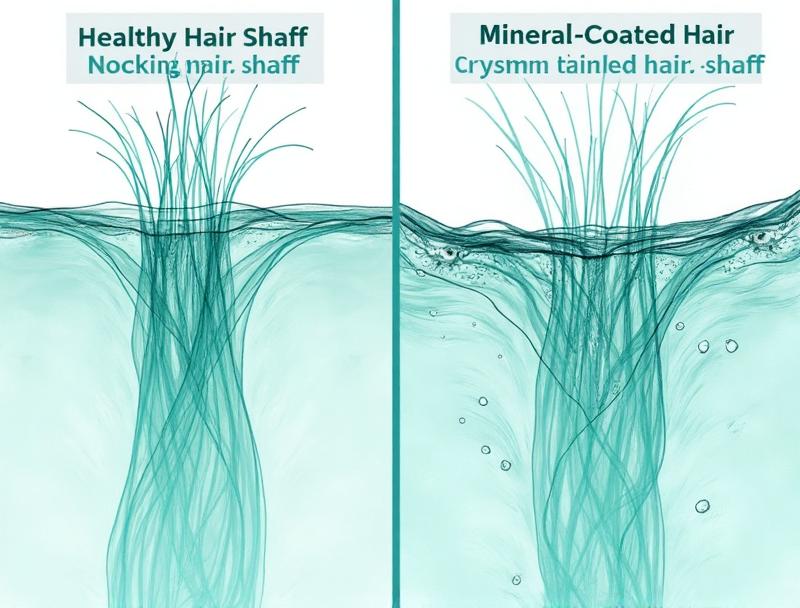 Microscopic comparison: Healthy hair shaft (left) vs. mineral-coated hair shaft (right)
What Actually Works: The Chelating Agent Solution for Hard Water Hair Loss
The solution comes down to chemistry. You need ingredients that can bind to the minerals more strongly than your hair does, pulling them away from the keratin structure.
These are called chelating agents. EDTA (ethylenediaminetetraacetic acid) and similar compounds work by forming more stable complexes with calcium and magnesium ions, effectively reversing the mineral accumulation that causes hard water hair loss.
Products formulated with chelating agents, like Regrowth+ Hair Protection & Growth Booster Shampoo, can help remove these mineral deposits while protecting against future buildup. The formulation combines chelating action with follicle-supporting ingredients like rosemary and caffeine, which research suggests may help counteract oxidative stress at the scalp level.
But chelation is only part of the equation when addressing hard water hair loss.
The Protection Component: Preventing Recurrent Mineral Damage
Once you’ve removed existing mineral buildup, you need to prevent it from reforming. This is where oil-based ingredients become critical in preventing hard water hair loss.
Argan oil and shea butter create a protective lipid barrier on the hair shaft. This barrier reduces the surface area available for mineral binding. It won’t eliminate hard water exposure, but it significantly reduces the rate of accumulation between washes.
Think of it as applying a protective coating to metal before exposing it to corrosive elements. The principle is the same.
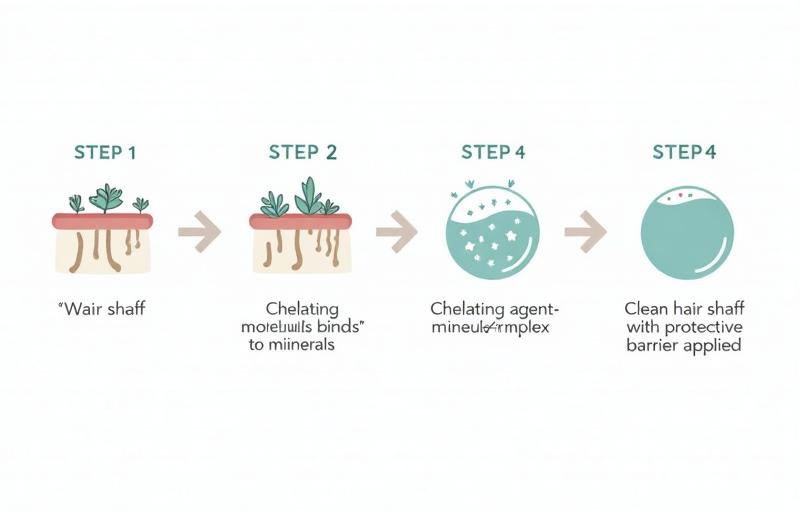 The chelation process: How chelating agents remove mineral deposits from hair
What The Research Shows About Reversing Hard Water Hair Loss
The good news? Hard water hair loss isn’t permanent.
A 2019 study examining hard water effects found that consistent use of chelating treatments over 12 weeks resulted in measurable improvements in hair tensile strength and reduced shedding rates. Participants showed a 28% reduction in daily hair loss compared to baseline.
The key is consistency. Mineral buildup accumulates gradually, and reversing hard water hair loss requires sustained intervention.
Your follicles can recover once you remove the oxidative stress and restore proper nutrient absorption. But you can’t treat this as a one-time fix. Regional water conditions don’t change, which means protection needs to be ongoing.
The Bottom Line on Hard Water Hair Loss
Hard water hair loss isn’t about having “weak” hair or poor genetics. It’s a direct biochemical consequence of mineral exposure affecting follicle function.
The mechanism is well-understood. Calcium and magnesium coat hair shafts, create oxidative stress, disrupt pH balance, and push follicles into premature shedding phases.
Standard shampoos can’t address hard water hair loss because they’re not designed to break mineral-keratin bonds. You need chelating agents to reverse the damage and protective barriers to prevent recurrence.
The research supports intervention. Follicles can recover with the right approach.
If you’ve noticed increased shedding or texture changes since relocating to the region, hard water hair loss is the most probable explanation. Address the chemistry, and you address the problem.