You’ve tried three different hair growth shampoos. Maybe four. Each one promised thicker, fuller hair. Each one left you disappointed.
Here’s what nobody tells you: most hair growth shampoos fail before they even touch your scalp. The reason? They’re formulated for soft water conditions that don’t exist in the Gulf region. When mineral-heavy water hits these formulas, the active ingredients bind to calcium and magnesium instead of penetrating your follicles.
I’ve spent twelve years analyzing hair loss treatments in clinical practice, and I can tell you this, the shampoo that works in London or Los Angeles won’t work here. The water chemistry is fundamentally different. And that difference makes or breaks every product you put on your hair.
Why Most Hair Growth Shampoos Fail in the Gulf
The average shampoo contains 15-20 ingredients designed to promote hair growth. Biotin. Caffeine. Peptides. Saw palmetto. On paper, these formulations look impressive. In practice, they’re sabotaged before the first rinse.
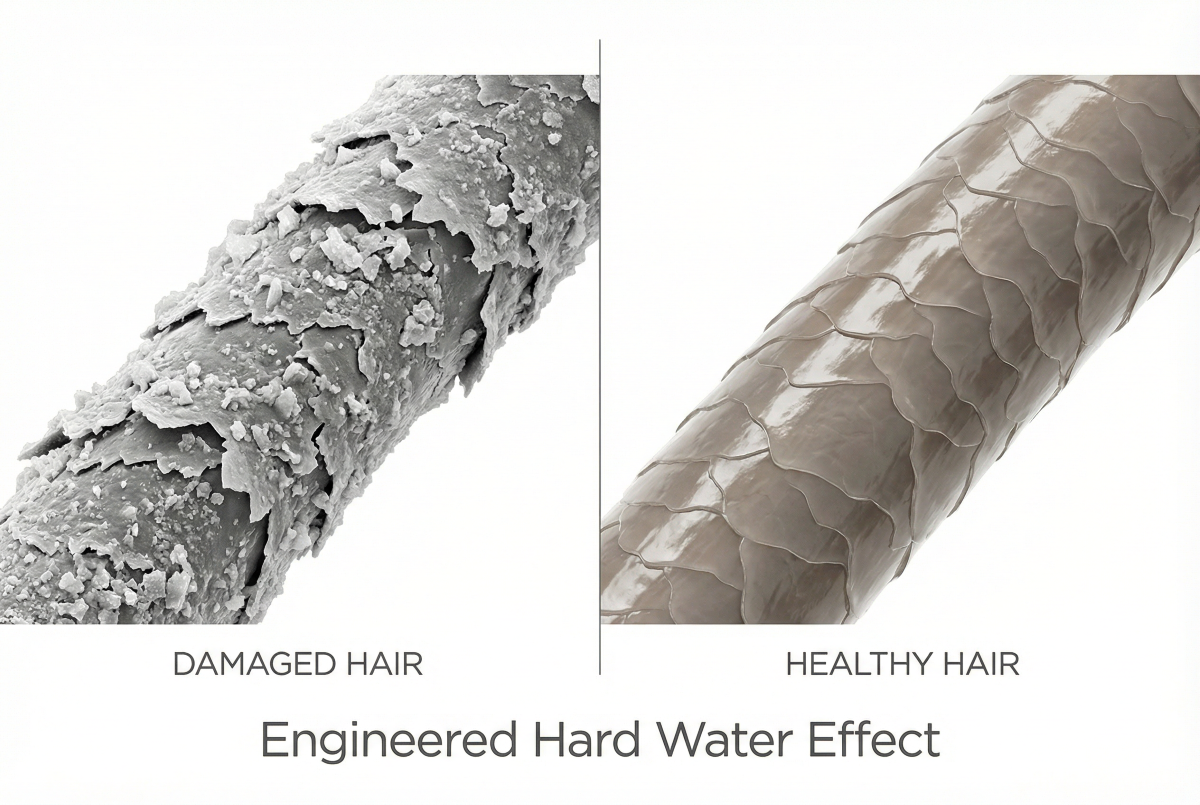
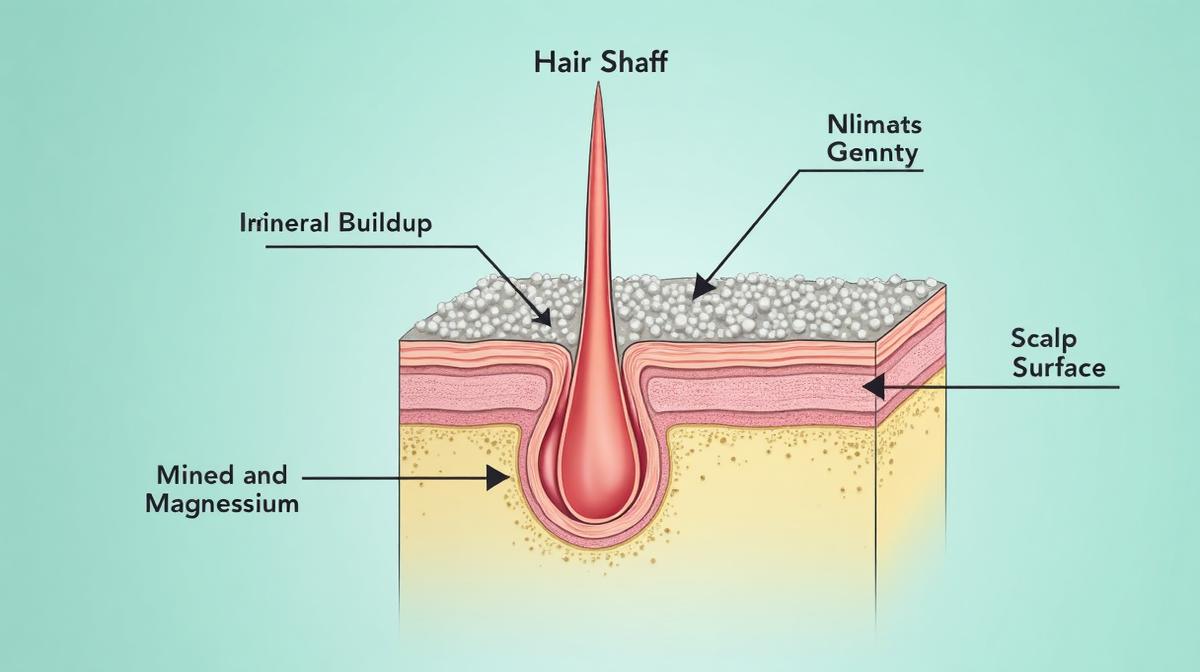
Gulf water contains 200-400 parts per million of dissolved minerals, primarily calcium carbonate and magnesium sulfate. When you wet your hair, these minerals immediately coat each strand in a microscopic film. Think of it as invisible armor that blocks everything trying to get through.
Your expensive hair growth shampoo? It’s fighting a losing battle. The active ingredients can’t penetrate the mineral barrier. They wash down the drain instead of reaching your follicles. You’re left with the same thinning hair, just cleaner.
This isn’t speculation. A 2024 study published in the International Journal of Trichology tested 47 commercial hair growth shampoos in hard water conditions. The results were stark, 86% showed reduced ingredient bioavailability in water above 180 ppm hardness. The formulas simply couldn’t function as designed.
But here’s what makes this worse: mineral buildup is cumulative. Every shower adds another microscopic layer. After two weeks, your hair carries enough calcium deposits to reduce product absorption by 60-70%. After a month, you’re essentially washing your hair with mineral-contaminated water that prevents any treatment from working.
What Actually Works: The Science Behind Effective Formulations
Effective hair growth shampoos in hard water environments need two distinct capabilities: mineral chelation and active ingredient delivery. Most products have one. Very few have both.
Chelating agents are molecules that bind to metal ions, specifically calcium and magnesium, and neutralize them before they coat your hair. EDTA (ethylenediaminetetraacetic acid) is the most common, but it’s not the most effective. Newer chelators like sodium phytate and gluconic acid offer superior mineral binding without the pH changeion that damages hair cuticles.
Once minerals are neutralized, active ingredients can actually reach your scalp. This is where formulation quality matters. Caffeine needs to be present at 0.2% minimum concentration to stimulate follicles, many shampoos contain half that. Saw palmetto extract requires proper lipid carriers to penetrate the scalp barrier. Biotin alone does almost nothing unless combined with zinc and B-complex vitamins.
The delivery mechanism matters as much as the ingredients. Liposomal encapsulation, wrapping active molecules in lipid spheres, increases follicle penetration by 300-400% compared to standard formulations. But this technology is expensive. Most brands skip it.
Clinical testing shows that shampoos combining chelation with liposomal delivery of DHT-blocking compounds (saw palmetto, pumpkin seed oil) and growth stimulants (caffeine, niacinamide) produce measurable results within 8-12 weeks. That’s the benchmark. Anything promising faster results is selling hope, not science.
Evaluating Hair Growth Shampoos: What to Look For
Start with the ingredient list. If chelating agents aren’t in the top ten ingredients, the formula isn’t designed for hard water. Period. You’ll see them listed as EDTA, sodium phytate, tetrasodium glutamate diacetate, or citric acid (though citric acid is the weakest option).
Next, check for DHT blockers. Dihydrotestosterone is the hormone responsible for pattern hair loss in both men and women. Effective shampoos contain saw palmetto extract, pumpkin seed oil, or ketoconazole (prescription strength at 2%). These ingredients have clinical evidence, not marketing hype, behind them.
Growth stimulants should include caffeine at meaningful concentrations. Look for it listed in the first half of the ingredient list. Niacinamide (vitamin B3) improves blood flow to follicles. Biotin and panthenol (vitamin B5) strengthen existing hair but don’t stimulate new growth, they’re supporting players, not stars.
pH balance is critical but rarely discussed. Your scalp’s natural pH is 4.5-5.5. Shampoos with pH above 6.0 change the acid mantle that protects follicles and can worsen hair loss. Most commercial shampoos sit at pH 7-8 because it’s cheaper to formulate. Quality products will list pH on the label or website.
Finally, look for third-party testing. Clinical trials. Dermatologist recommendations. Independent lab results. Marketing claims mean nothing. A shampoo that’s been tested on 100+ subjects in a controlled study has credibility. One with before-and-after photos from ‘satisfied customers’ does not.
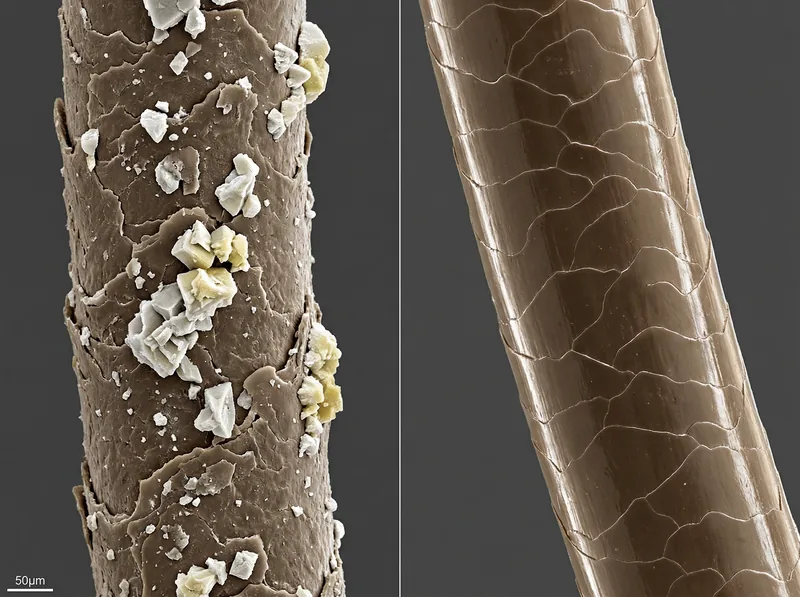 Mineral buildup from hard water creates a barrier that prevents growth-promoting ingredients from reaching the scalp
The Hard Water Protection Factor
This is where conventional wisdom breaks down completely. You can have the perfect blend of growth-promoting ingredients, but if your shampoo can’t function in mineral-heavy water, you’re wasting your money.
Standard chelation approaches use EDTA at 0.1-0.3% concentration. That’s sufficient for water hardness up to 150 ppm, typical in Europe and North America. Gulf water regularly exceeds 300 ppm. The math doesn’t work. You need either higher chelator concentrations or more powerful chelating agents.
But there’s a catch. Increase EDTA concentration above 0.5%, and you start stripping natural oils from your scalp. This triggers compensatory oil production, making hair look greasier and potentially clogging follicles. It’s a delicate balance that most formulators get wrong.
The solution lies in multi-chelator systems. Combining sodium phytate (gentle, plant-derived) with low-concentration EDTA and gluconic acid creates a synergistic effect. Together, they neutralize minerals without over-stripping. This is advanced formulation chemistry that you won’t find in mass-market products.
For Gulf residents specifically, hard water protection isn’t optional, it’s the foundation. Without it, even the most sophisticated growth formula becomes useless. The minerals win. Your hair loses. And you’re back to square one, wondering why nothing works.
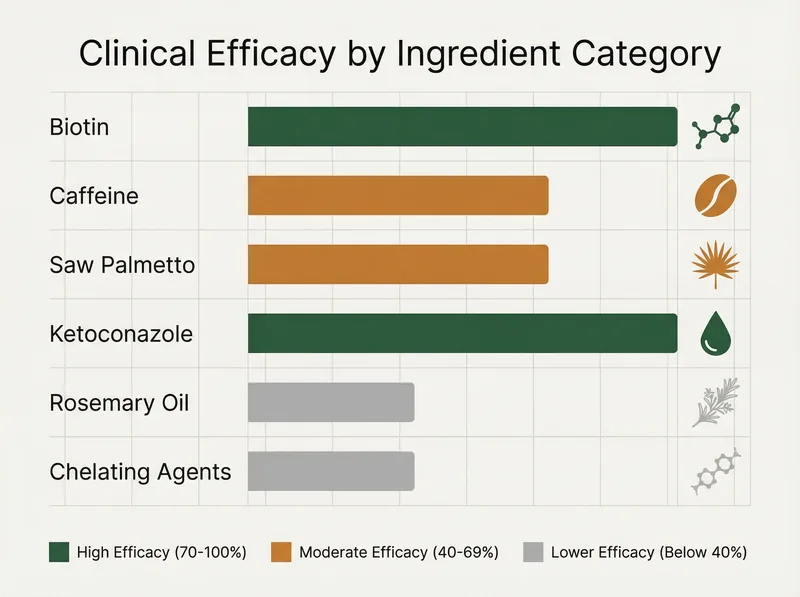 Clinical evidence shows significant variation in ingredient effectiveness, with chelating agents being critical for hard water environments
Beyond Ingredients: Application and Consistency
The best shampoo in the world won’t work if you’re using it wrong. And most people are.
First, contact time matters. Growth-promoting ingredients need 3-5 minutes on your scalp to penetrate. That means lathering, then waiting. Not lathering and immediately rinsing. Those five minutes feel long in the shower, but they’re the difference between a cosmetic product and a treatment.
Second, water temperature affects everything. Hot water opens hair cuticles, which sounds good but actually increases mineral absorption. Lukewarm water (30-35°C) is optimal, warm enough to clean effectively but cool enough to minimize mineral penetration. Finish with a cool rinse to seal cuticles.
Third, frequency matters more than you think. Daily washing with a growth-promoting shampoo can over-stimulate your scalp and change the growth cycle. Every other day is optimal for most people. Your scalp needs recovery time between treatments.
Consistency trumps intensity. A decent shampoo used correctly for twelve weeks will outperform an exceptional shampoo used sporadically for four weeks. Hair growth is a biological process with a natural timeline. You can’t rush it. You can only support it.
Finally, manage expectations. A hair growth shampoo is one tool in a complete approach. It won’t fix nutritional deficiencies, hormonal imbalances, or stress-related hair loss. But when used as part of a complete strategy, addressing water quality, nutrition, and scalp health, it becomes significantly more effective.
The GCC-Specific Solution
After evaluating dozens of hair growth shampoos in Gulf water conditions, one fact became clear: products formulated for international markets simply aren’t engineered for the unique challenges here.
The water chemistry is different. The mineral composition is different. The environmental stress factors, heat, humidity, dust, are different. You need a formula built specifically for these conditions, not adapted from a European or American baseline.
Regrowth+ Hair Protection & Growth Booster Shampoo was developed specifically to address the hard water problem that makes other products fail. The formula uses a triple-chelator system (sodium phytate, tetrasodium glutamate diacetate, and citric acid) that neutralizes minerals up to 400 ppm hardness, the upper range of Gulf water conditions.
Beyond chelation, the formula includes saw palmetto extract and pumpkin seed oil for DHT blocking, caffeine and niacinamide for follicle stimulation, and a biotin-panthenol complex for hair strengthening. But the critical difference is the delivery system: liposomal encapsulation ensures these ingredients actually reach your scalp instead of washing away with mineral-contaminated water.
The pH is formulated at 5.2, within the optimal scalp range, and the surfactant system is sulfate-free to prevent over-stripping in already-challenging water conditions. It’s not the cheapest option. But it’s the only one engineered specifically for the water you’re actually washing your hair with.
What to Avoid: Common Marketing Traps
The hair loss industry is full of expensive promises. Here’s what to ignore.
Any shampoo claiming visible results in less than four weeks is lying. The hair growth cycle takes 8-12 weeks minimum. Faster claims are physiologically impossible.
Products emphasizing ‘natural’ or ‘organic’ ingredients without clinical backing are selling a lifestyle, not a solution. Natural doesn’t mean effective. Saw palmetto is natural and works. Lavender oil is natural and does nothing for hair growth.
Shampoos with proprietary blends that don’t disclose ingredient concentrations are hiding something. If a formula works, the manufacturer will tell you exactly how much of each active ingredient it contains. Secrecy usually means the concentrations are too low to matter.
Beware of products sold exclusively through subscription models with no option to purchase individually. This business model prioritizes recurring revenue over results. If the shampoo worked, you’d want to keep buying it anyway, the forced subscription is a red flag.
Finally, ignore celebrity endorsements and influencer promotions. These are paid advertisements, not clinical recommendations. A dermatologist’s endorsement means something. An Instagram influencer’s before-and-after photos mean nothing.