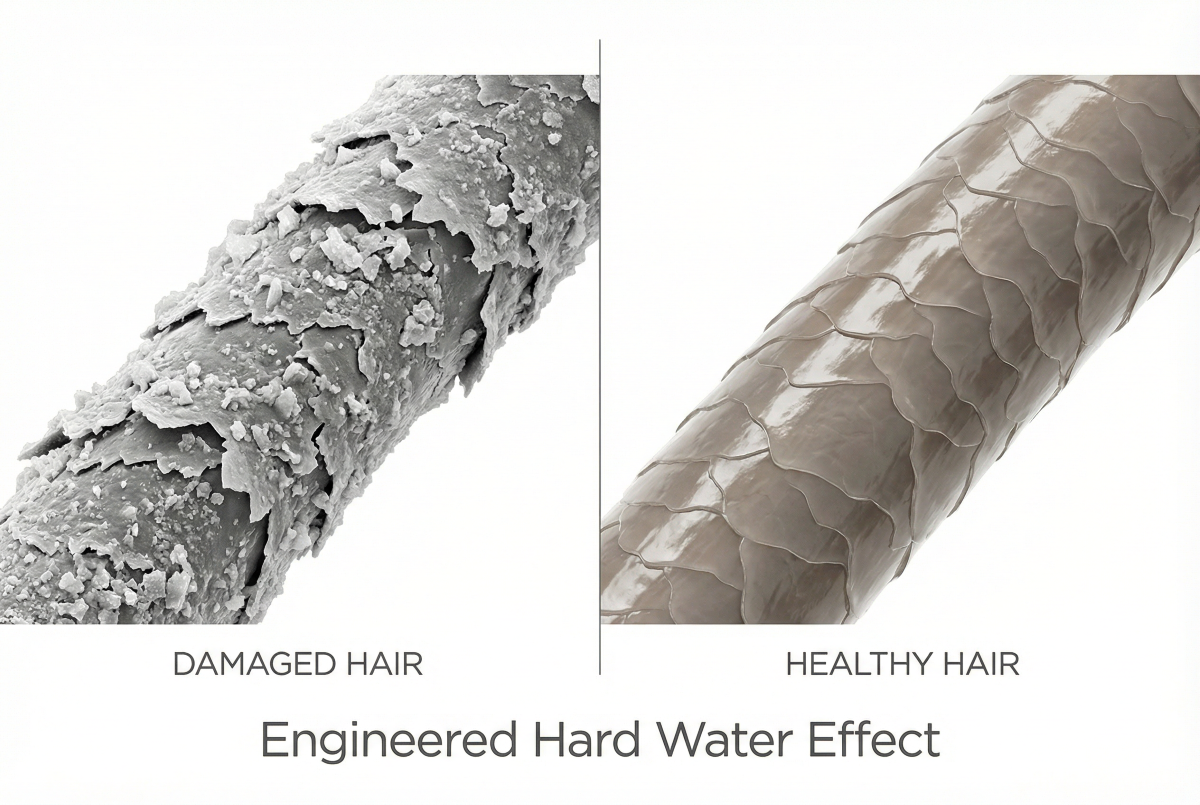
Your hair feels coated. Products don’t work anymore. And no matter how much you wash, that weird texture won’t go away. Here’s the thing: your regular shampoo can’t fix this. The problem isn’t dirt or oil. It’s mineral buildup from hard water, and you need something stronger to remove it.
This article contains affiliate links. See our affiliate disclosure for details.
Chelating shampoos work differently than anything else in your shower. They use specialized molecules that grab onto mineral ions, calcium, magnesium, iron, and pull them off your hair. Regular shampoos can’t do this because they’re designed to remove oils and dirt, not minerals that have bonded to your hair at the molecular level. If you live in the Gulf region where hard water is the norm, understanding how chelating shampoos work isn’t optional. It’s essential.
What Makes Chelating Shampoo Different
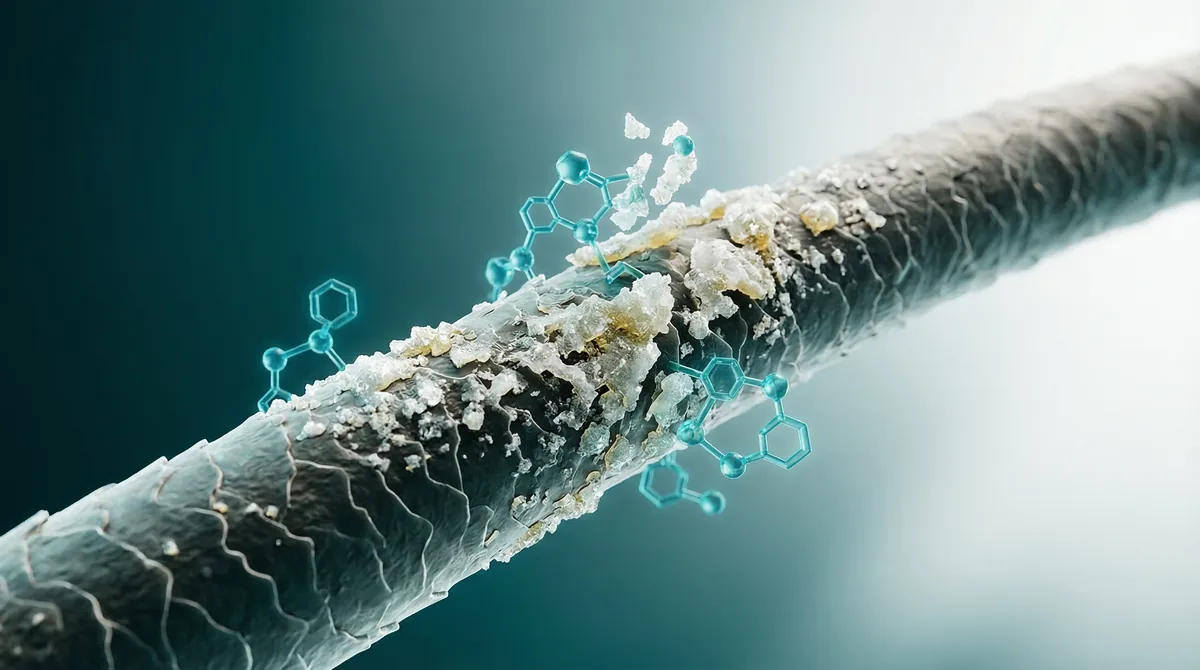
The chemistry is surprisingly elegant. Chelating agents are molecules with multiple binding sites that surround metal ions like a claw (the word comes from the Greek ‘chele,’ meaning claw). When you apply a chelating shampoo, these molecules seek out positively charged mineral ions stuck to your hair and form stable complexes with them. Once bound, the minerals can be rinsed away instead of remaining cemented to your hair shaft.
Regular shampoos use surfactants, molecules with one water-loving end and one oil-loving end. They’re excellent at removing sebum, styling products, and environmental pollutants. But they can’t break the ionic bonds between minerals and hair proteins. That’s why you can wash your hair daily and still have buildup. You’re cleaning the surface while the minerals stay locked in place.
The most common chelating agents in hair care are EDTA (ethylenediaminetetraacetic acid), citric acid, and phytic acid. Research published in ScienceDirect shows these compounds can reduce mineral deposition on hair by up to 80% in hard water conditions. They work by forming coordination complexes with calcium and magnesium ions, effectively neutralizing their positive charge and allowing them to be washed away.
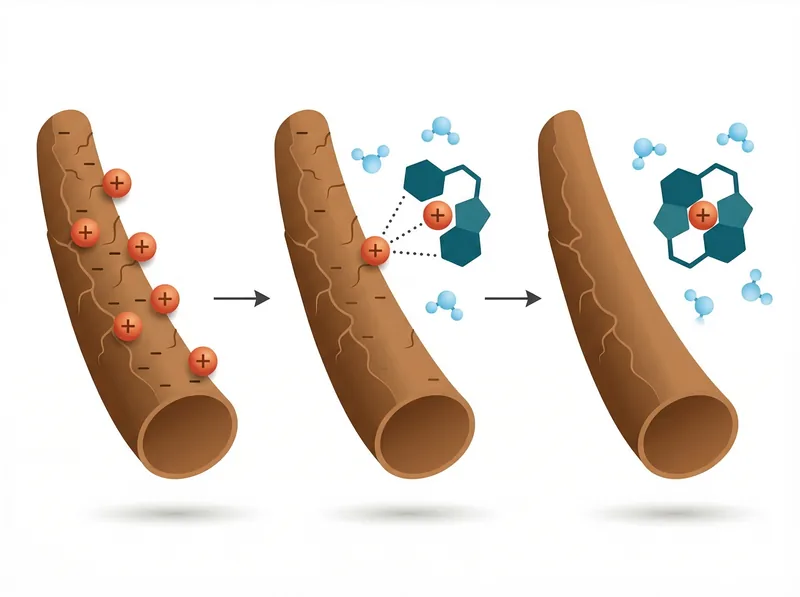 Chelating molecules form stable bonds with mineral ions, allowing them to be rinsed away instead of remaining on the hair
Why Hard Water Creates Buildup Regular Shampoo Can’t Remove
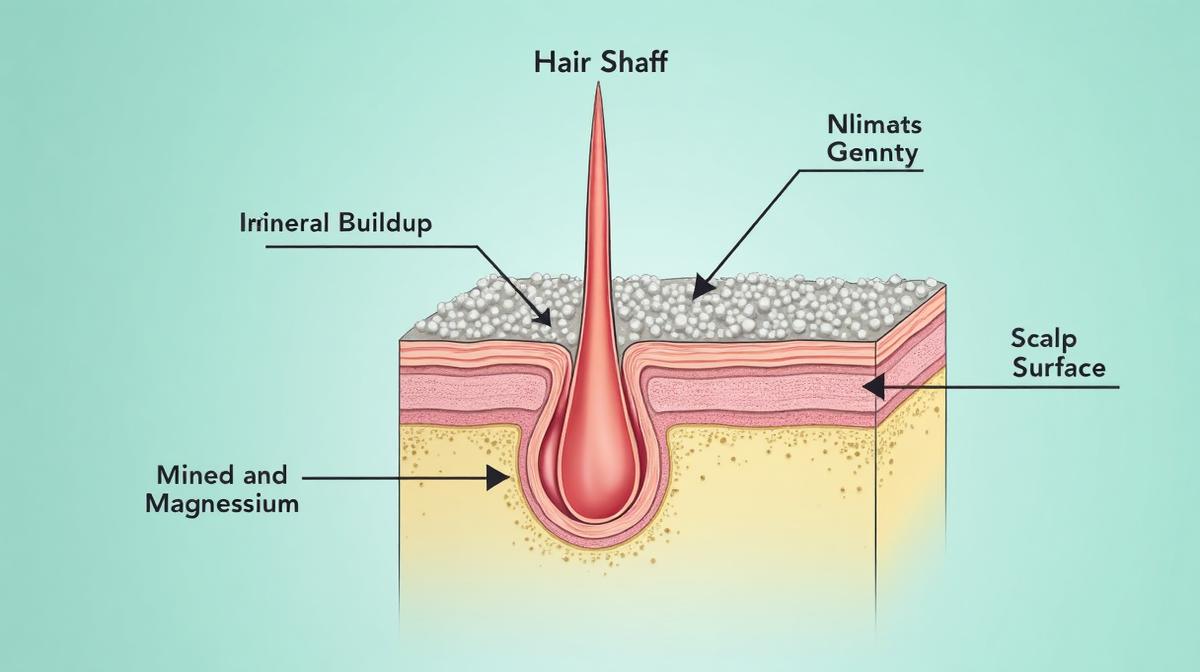
Gulf water contains 200-400 ppm of dissolved minerals. That’s classified as ‘very hard’ to ‘extremely hard’ by US Geological Survey standards. Every time you wash your hair, you’re depositing a layer of calcium carbonate, magnesium sulfate, and other mineral salts onto each strand.
These minerals don’t just sit on the surface. They form ionic bonds with the keratin proteins in your hair. Your hair is naturally negatively charged, especially when damaged. Mineral ions are positively charged. They attract each other like magnets. Over weeks and months, this creates a coating that changes your hair’s texture, blocks moisture absorption, and prevents treatments from penetrating.
The buildup is cumulative and progressive. Week one, you might not notice anything. By week four, your hair feels different. By week twelve, it’s unmistakable, stiff, dull, resistant to styling. Many people who move to the Gulf report dramatic hair changes within three months. The minerals are the cause.
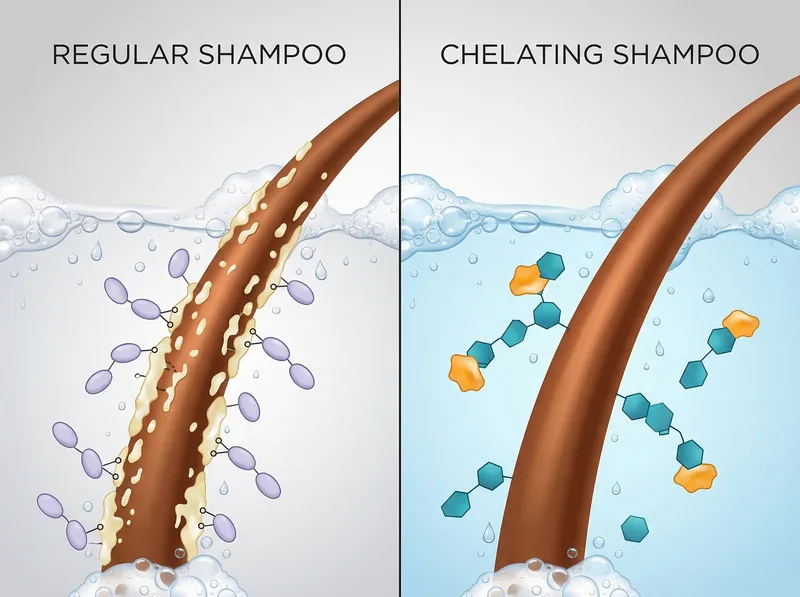 Regular shampoos can’t break the ionic bonds between minerals and hair, chelating shampoos can
How to Use Chelating Shampoo Correctly
Chelating shampoos are clarifying treatments, not daily shampoos. Use them once every 1-2 weeks depending on your water hardness and hair type. If you have color-treated hair, start with once every two weeks and adjust based on how your hair responds. The goal is to remove mineral buildup without stripping beneficial oils or color molecules.
Application matters. Wet your hair thoroughly with the hardest spray your shower can produce. Apply the chelating shampoo to your scalp first, then work it through to your ends. Let it sit for 2-3 minutes. This contact time allows the chelating agents to bind with minerals. Rinse completely, you want those mineral complexes washed down the drain, not redeposited.
For Gulf residents dealing with extreme hard water, a chelating shampoo like Regrowth+ becomes part of your core hair care routine. It’s not a luxury product. It’s preventive maintenance. Follow with a moisturizing conditioner since chelating shampoos can be drying. Your hair will feel squeaky clean, almost too clean. That’s normal. You’re feeling your actual hair texture without the mineral coating.
Signs You Need a Chelating Shampoo
Your hair feels rough even after conditioning. Products that used to work don’t anymore. Your scalp itches despite regular washing. These are all signs of mineral buildup. Even topical treatments like minoxidil can’t penetrate through a layer of calcium carbonate.
Color-treated hair that fades quickly or turns brassy is another indicator. Minerals oxidize hair color and create a barrier that prevents color molecules from properly bonding. If you’ve noticed your highlights looking dull or your color not lasting as long as it should, mineral buildup is likely the culprit.
Swimmers need chelating shampoos regardless of water hardness. Chlorine and copper from pool water create their own buildup issues. If you swim regularly and notice a greenish tint or persistently dry texture, you’re dealing with metal accumulation that only chelation can address.
What Chelating Shampoo Won’t Do
Let’s be clear about limitations. Chelating shampoo removes mineral buildup. It doesn’t repair damaged hair, stimulate growth, or treat underlying scalp conditions. If your hair is breaking due to chemical damage or heat styling, chelation won’t fix that. It will remove the minerals that make the damage look worse, but you’ll still need protein treatments and deep conditioning.
It also won’t change your water quality. You’re treating the symptom, not the cause. The next time you wash your hair, minerals will start accumulating again. That’s why chelating shampoos are maintenance tools, not one-time solutions. Some people ask about shower filters. Most can’t remove dissolved minerals, only water softeners can do that effectively.
And chelating shampoos can’t reverse hair loss caused by hard water damage that’s already occurred. They prevent future buildup and create optimal conditions for treatments to work, but they’re not a hair growth treatment themselves. Think of them as clearing the path, not building the road.
References
- Chelating Agents in Personal Care Products: Mechanisms and Applications - ScienceDirect - Colloids and Surfaces
- Hardness of Water: Classification and Effects - US Geological Survey
- Effects of Hard Water on Hair: A Complete Review - International Journal of Trichology
- EDTA and Chelation Chemistry in Cosmetic Applications - Personal Care Products Council