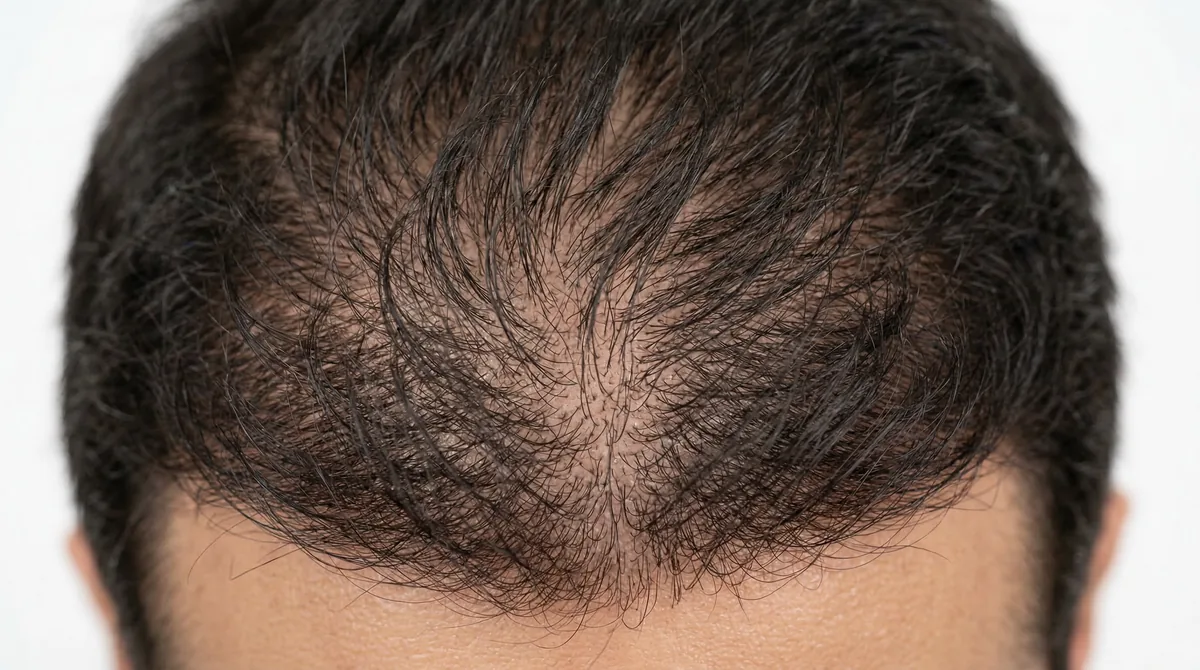
You’ve noticed it. The hairline’s crept back. The crown’s thinning. Your shower drain tells a story you’d rather not read. And now you’re here, scrolling through another article promising miracle cures, wondering what’s actually real.
Here’s the thing: male pattern baldness affects 50% of men by age 50, and the Gulf region’s environmental factors (hard water, heat, humidity) can accelerate the process. But the good news? We’ve got more proven options now than ever before. Not snake oil. Not wishful thinking. Actual FDA-approved treatments backed by decades of clinical research.
This isn’t about false hope or overnight transformations. It’s about understanding what works, why it works, and what you can realistically expect. Because the difference between men who successfully treat hair loss and those who don’t often comes down to one thing: knowing which treatments have real evidence behind them.
Understanding Male Pattern Baldness First
Before we talk solutions, you need to understand the enemy. Androgenetic alopecia (male pattern baldness) isn’t just about losing hair. It’s about follicle miniaturization driven by dihydrotestosterone (DHT), a hormone your body converts from testosterone.
DHT binds to receptors in genetically susceptible hair follicles, gradually shrinking them over years. The follicles don’t die immediately. They just produce thinner, shorter, weaker hairs until they eventually stop producing visible hair altogether. This process typically starts at the temples and crown, following predictable patterns mapped by the Norwood-Hamilton scale.
And here’s what matters: the earlier you intervene, the better your results. Once a follicle’s been miniaturized for years, it’s much harder to revive. That’s why men who start treatment at the first signs of thinning consistently see better outcomes than those who wait until they’ve lost significant density.
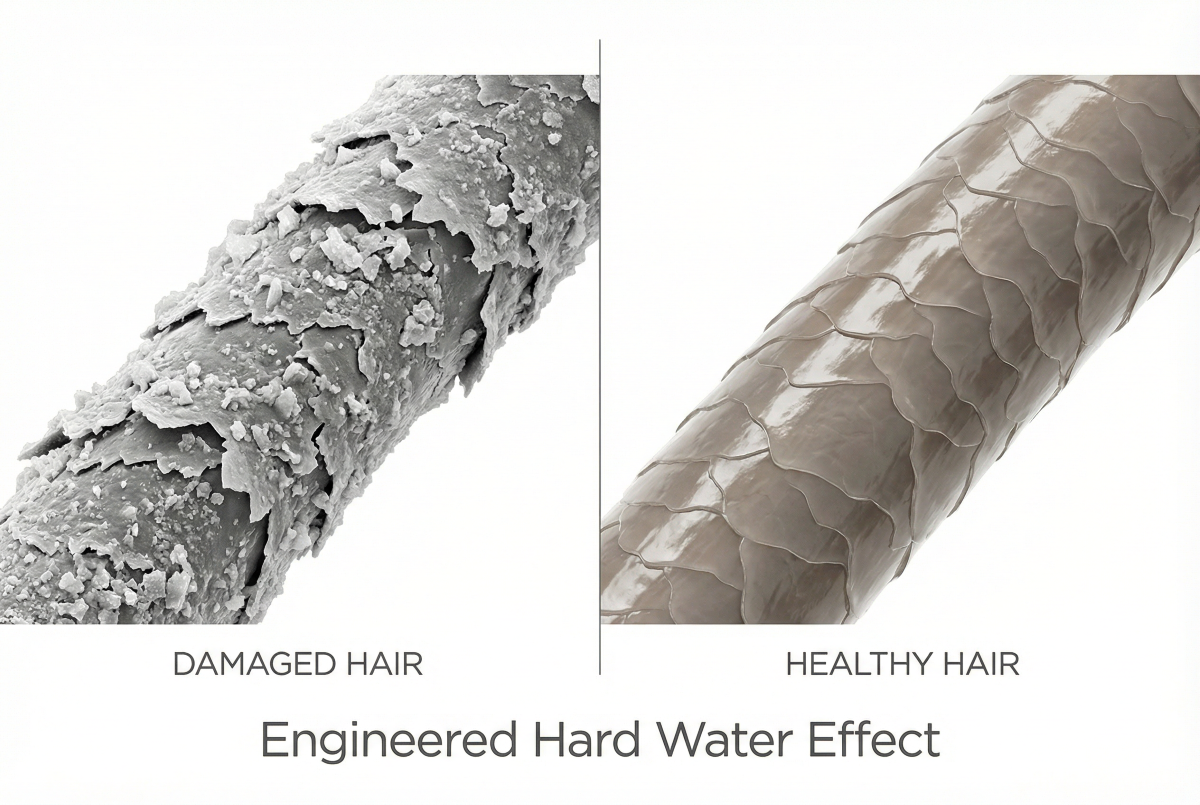
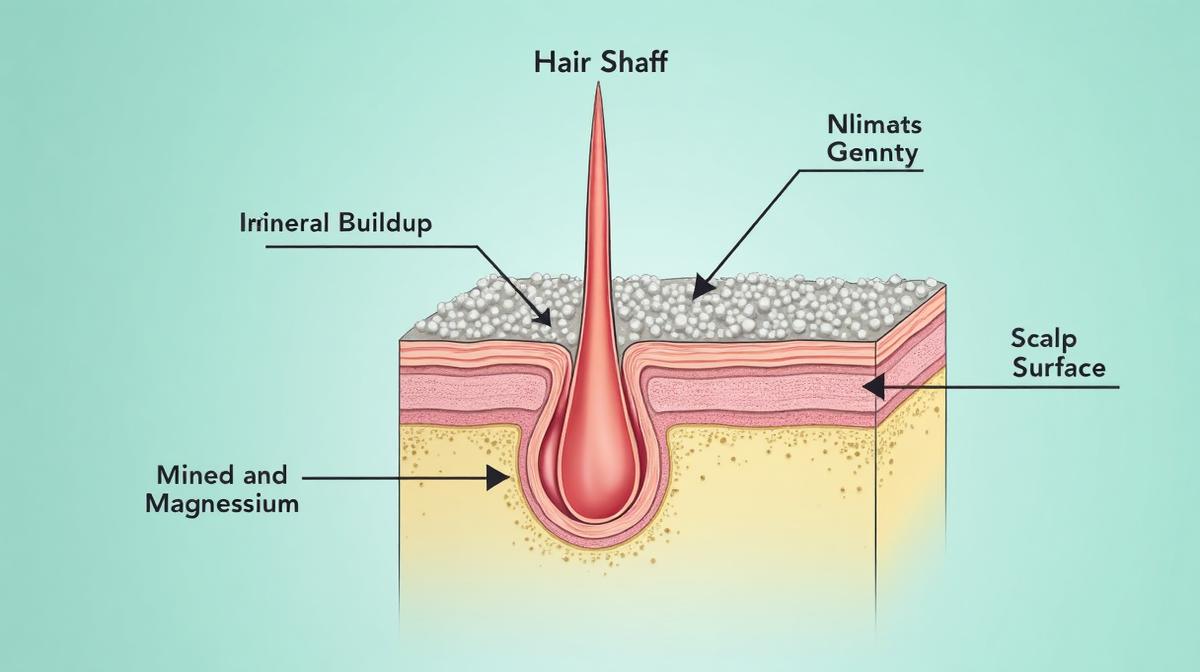
The Gulf region adds another layer of complexity. Hard water deposits minerals on your scalp, creating buildup that can worsen inflammation and potentially accelerate follicle miniaturization. It’s not the primary cause of male pattern baldness, but it’s an environmental stressor that doesn’t help.
Minoxidil: The Gold Standard Topical Treatment
Let’s start with what actually works. Minoxidil (commonly known by the brand name Rogaine) is FDA-approved, clinically proven, and has decades of safety data behind it. It’s available over-the-counter in 2% and 5% formulations, with 5% showing superior results for men.
How it works: Minoxidil is a vasodilator. It widens blood vessels around hair follicles, increasing nutrient and oxygen delivery. It also extends the anagen (growth) phase of the hair cycle and may stimulate follicles to shift from resting to active growth. Studies show that after 16 weeks of twice-daily use, 84.3% of men experience at least some regrowth.
But here’s the reality check. Minoxidil works best on the crown, less effectively on the hairline. Results take 4-6 months to become visible, and you’ll likely experience an initial shedding phase as weak hairs are replaced by stronger ones. Miss applications consistently, and you’ll lose your gains.
The biggest mistake men make? Stopping too soon. They don’t see results in 6-8 weeks and quit. Or they see results, stop using it, and watch their progress disappear within months. Minoxidil requires lifelong commitment. That’s not a marketing tactic. That’s biology.
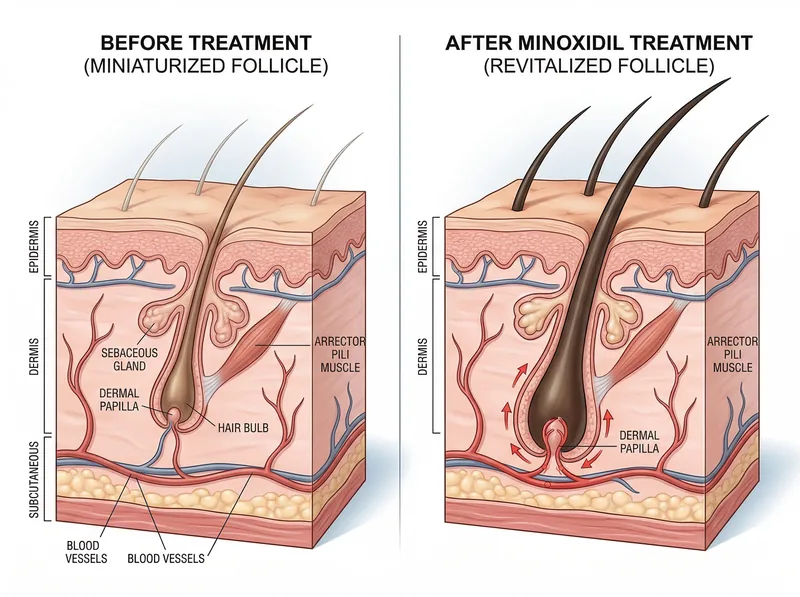 Minoxidil extends the growth phase of hair follicles while increasing blood flow to the scalp, supporting thicker, healthier hair growth over time.
Finasteride: Blocking DHT at the Source
While minoxidil addresses symptoms, finasteride attacks the root cause: DHT production. This prescription medication (brand name Propecia) inhibits the enzyme 5-alpha reductase, which converts testosterone to DHT. Less DHT means less follicle miniaturization.
The evidence is compelling. Clinical trials show finasteride stops hair loss progression in 83% of men and produces visible regrowth in 66% after one year of daily use. It’s particularly effective at preserving what you have, making it ideal for men in early stages of hair loss.
The standard dose is 1mg daily, though recent studies suggest lower doses (0.5mg or even 0.25mg) may be nearly as effective with fewer side effects. You’ll need a prescription, which means consulting a dermatologist who understands your medical history.
Let’s address the elephant in the room: side effects. Sexual side effects (decreased libido, erectile dysfunction) occur in 1-2% of users according to clinical trials. Most resolve after discontinuation. Some men report persistent symptoms, though the actual incidence is debated in medical literature. It’s a personal risk-benefit calculation you need to make with your doctor.
One critical point for Gulf residents: finasteride requires consistent use and regular monitoring. If you’re traveling frequently or don’t have reliable access to prescriptions, factor that into your decision.
Low-Level Laser Therapy: The Science of Light
Low-level laser therapy (LLLT) sounds like science fiction, but it’s FDA-cleared for treating hair loss. Devices like laser caps and combs emit red light at specific wavelengths (typically 650-670nm) that penetrate the scalp and stimulate cellular activity in hair follicles.
The proposed mechanism involves photobiomodulation: light energy absorbed by cells increases ATP production, improves blood flow, and may reduce inflammation around follicles. Clinical studies show LLLT increases hair density and thickness when used 3-4 times weekly for at least 6 months.
The catch? Results are modest compared to minoxidil or finasteride. LLLT works best as a complementary treatment, not a standalone solution. It’s also expensive upfront (devices range from $200 to $1000+), though there are no ongoing prescription costs.
For men who can’t or won’t use medications, LLLT offers a non-drug option with minimal side effects. Just don’t expect dramatic transformations. Think of it as supporting your hair’s existing potential, not reversing years of loss.
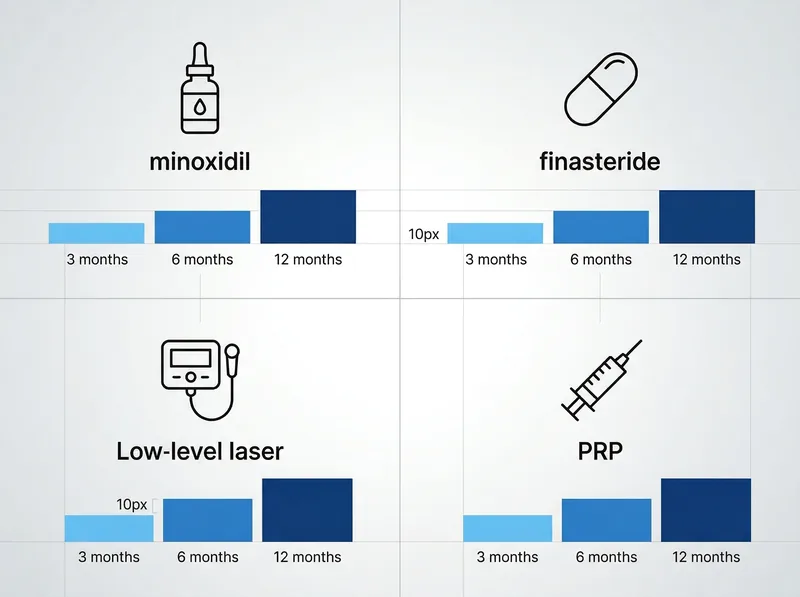 Different treatments work on different timelines, but consistency is what separates success from disappointment.
Platelet-Rich Plasma: Your Blood as Medicine
Platelet-rich plasma (PRP) therapy involves drawing your blood, concentrating the platelets through centrifugation, then injecting that concentrated plasma into your scalp. The growth factors in platelets theoretically stimulate dormant follicles and improve hair density.
The research here is mixed. Some studies show promising results with increased hair count and thickness after 3-4 monthly sessions. Others show minimal benefit. The lack of standardization (different preparation methods, injection techniques, and treatment protocols) makes it hard to predict individual outcomes.
PRP isn’t FDA-approved specifically for hair loss, though it’s widely used off-label. Sessions typically cost $500-$1500 each, and you’ll need multiple treatments plus maintenance sessions. That’s a significant investment for uncertain returns.
Bottom line? PRP might work for some men, particularly when combined with minoxidil or finasteride. But it shouldn’t be your first-line treatment. Consider it after you’ve tried proven medications and want to explore additional options.
What Doesn’t Work (Despite the Marketing)
Let’s save you time and money. Biotin supplements don’t treat male pattern baldness unless you have an actual biotin deficiency (which is rare). Saw palmetto shows weak evidence at best. Caffeine shampoos have minimal clinical support for significant regrowth.
Hair growth shampoos can support scalp health and may reduce breakage, but they won’t reverse genetic hair loss on their own. The active ingredients (like ketoconazole in some formulations) can help with scalp conditions that worsen hair loss, but they’re not primary treatments for androgenetic alopecia.
Essential oils like rosemary oil show some promise in small studies, but the evidence doesn’t compare to minoxidil or finasteride. They might be useful additions to a complete approach, but they’re not replacements for proven treatments.
And please, ignore the Instagram ads promising full regrowth in 30 days. Hair growth follows biological timelines. Follicles that have been miniaturizing for years don’t reverse overnight, no matter what supplement or serum you apply.
Building Your Treatment Protocol
Here’s how to approach this strategically. Start with the foundation: minoxidil 5% twice daily. It’s proven, accessible, and has the longest safety track record. Give it 6 months of consistent use before evaluating results.
If you’re comfortable with prescription medications and have no contraindications, add finasteride. The combination of minoxidil (stimulating growth) and finasteride (blocking DHT) is more effective than either alone. Studies show men using both treatments see significantly better results than those using just one.
Address environmental factors simultaneously. If you’re in the Gulf region dealing with hard water, consider a shower filter or chelating shampoo to reduce mineral buildup. This won’t cure hair loss, but it removes one environmental stressor that can worsen scalp inflammation.
For men who want to maximize results and can afford it, add LLLT after establishing your medication routine. Use it as a complementary treatment, not a replacement. The cumulative effect of multiple evidence-based approaches often produces better outcomes than any single treatment alone.
Document your progress. Take standardized photos every 6-8 weeks in the same lighting, from the same angles. Hair loss and regrowth happen gradually, and you need objective markers to assess whether your protocol is working. Your perception of daily changes isn’t reliable.
Realistic Expectations and Long-Term Commitment
Let’s be brutally honest about expectations. You’re not going to regain the hairline you had at 18. The goal is to slow or stop progression and potentially regrow some of what you’ve recently lost. Men who’ve been balding for a decade won’t see full restoration.
The Norwood scale helps set realistic goals. If you’re at Norwood 3 (mild recession), you have a much better chance of significant improvement than someone at Norwood 6 (extensive loss). Early intervention is everything.
Treatment is lifelong. Stop using minoxidil, and you’ll lose gains within 3-4 months. Stop finasteride, and DHT-driven miniaturization resumes. This isn’t a cure. It’s management. You’re committing to a daily routine for as long as you want to maintain results.
And that’s okay. Managing hair loss is like managing any other chronic condition. You wouldn’t expect to stop blood pressure medication once your numbers improve. Hair loss works the same way. The treatments work only as long as you use them.
Some men decide the commitment isn’t worth it and embrace baldness. That’s a valid choice. But if you’re going to treat hair loss, commit fully or don’t start at all. Half-hearted efforts waste money and guarantee disappointment.
When to See a Specialist
Not all hair loss is androgenetic alopecia. If you’re experiencing sudden shedding, patchy loss, or hair loss accompanied by scalp symptoms (redness, scaling, pain), see a dermatologist. These could indicate alopecia areata, telogen effluvium, or scalp conditions requiring different treatments.
A trichologist or dermatologist can perform a scalp examination, potentially including dermoscopy or hair pull tests, to diagnose the specific type of hair loss you’re experiencing. This matters because treatments for male pattern baldness won’t help if you have a different condition.
For men considering finasteride, a medical consultation is mandatory. Your doctor needs to review your health history, discuss potential side effects, and determine if you’re a good candidate. Don’t buy prescription medications online without proper medical oversight.
If you’ve been using minoxidil and finasteride for 12+ months without results, a specialist can help evaluate why. You might be a non-responder, have underlying scalp conditions interfering with treatment, or need to adjust your protocol. Professional guidance prevents wasted time on ineffective approaches.
References
- Efficacy and Safety of Minoxidil 5% Solution for Androgenetic Alopecia - Journal of the American Academy of Dermatology
- Finasteride in the Treatment of Men with Androgenetic Alopecia - Journal of the American Academy of Dermatology
- Low-Level Laser Therapy for Hair Growth: A Systematic Review - Lasers in Medical Science
- Platelet-Rich Plasma in Androgenic Alopecia: Myth or an Effective Tool - Journal of Cutaneous and Aesthetic Surgery
- Hair Loss: Common Causes and Treatment - American Academy of Dermatology