Hard water mineral deposits can transform healthy, defined curls into limp, frizzy waves within weeks.
Your curls were your crown.
Back home, they bounced with life, each coil defined and healthy. Three months after moving to the Gulf, you barely recognize them.
They’re limp, frizzy, and no amount of leave-in conditioner seems to help. You’re doing everything right. So why do your curls look wrong?
Here’s what nobody tells you. The water in the GCC isn’t just hard. It’s engineered hard water, created through desalination, with a unique mineral composition that attacks curly hair differently than straight hair.
And because curly hair already has 50% more surface area than straight hair, you’re experiencing double the damage.
This isn’t about changing your products. It’s about understanding what’s happening to your curl structure at a molecular level, and implementing a curl-specific protection system.
Let’s break down the science.
The Hidden Damage Happening to Your Curl Pattern
When you moved to the Gulf, you didn’t just change locations. You changed water chemistry.
Desalination creates what scientists call “engineered hard water.” Unlike naturally hard water, which forms gradually over years as water flows through limestone, desalinated water gets its minerals artificially reintroduced after salt removal.
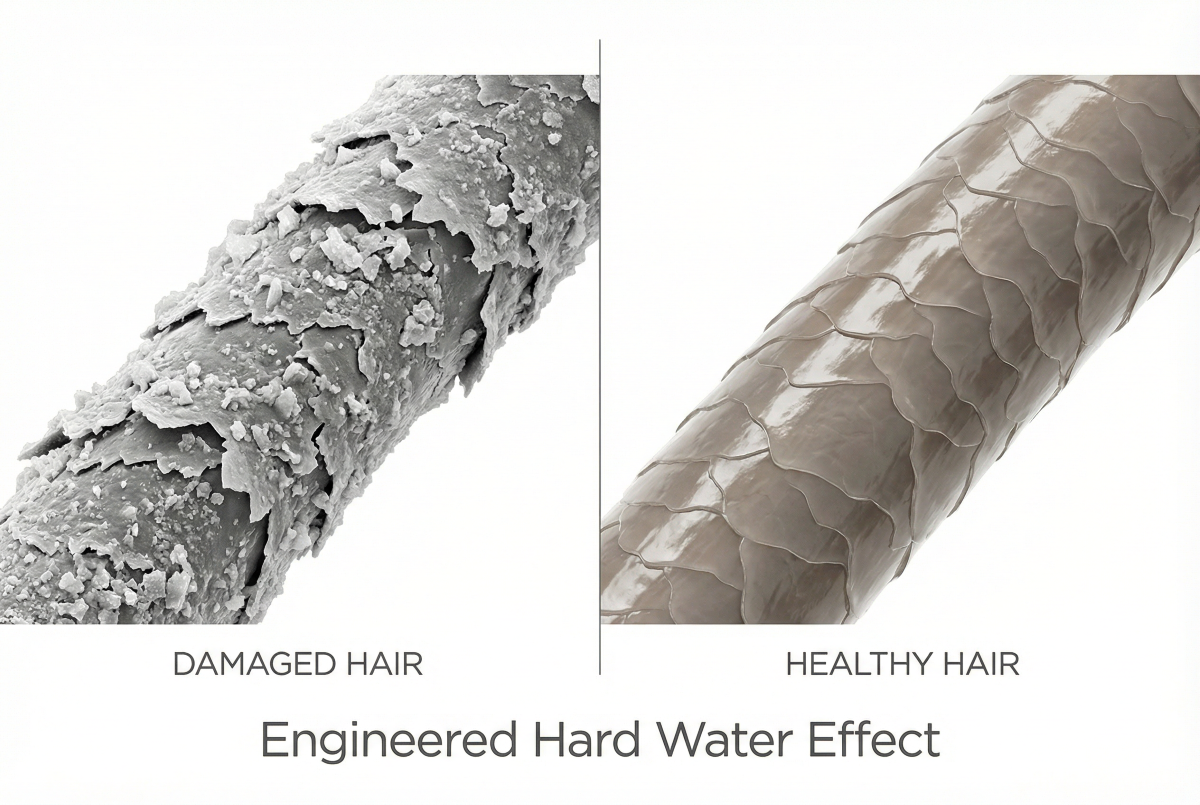
This process creates higher concentrations of calcium chloride and magnesium. These minerals don’t just sit on your hair’s surface. They lodge inside your cuticle layers.
And curly hair is uniquely vulnerable.
Why Curly Hair Suffers More
Think about how a curl forms. Your hair shaft curves and twists, creating natural lift points where the cuticle scales separate slightly.
Straight hair lies flat. Its cuticle stays closed.
But every twist in your curl pattern is a potential entry point for minerals.
Research published in the Journal of Cosmetic Science found that curly hair has 30% more variable cuticle structure compared to straight hair. Each curve in your curl creates microscopic gaps where calcium and magnesium can penetrate.
This is why your straight-haired friends might notice some dullness from hard water, but you’re experiencing structural damage.
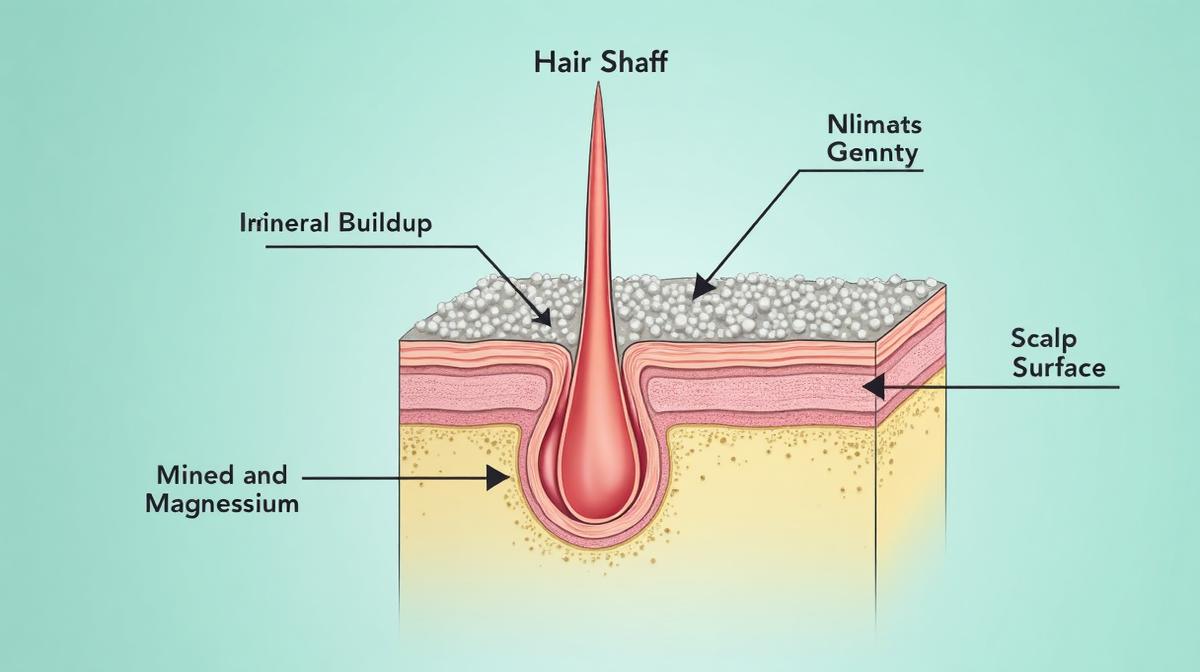
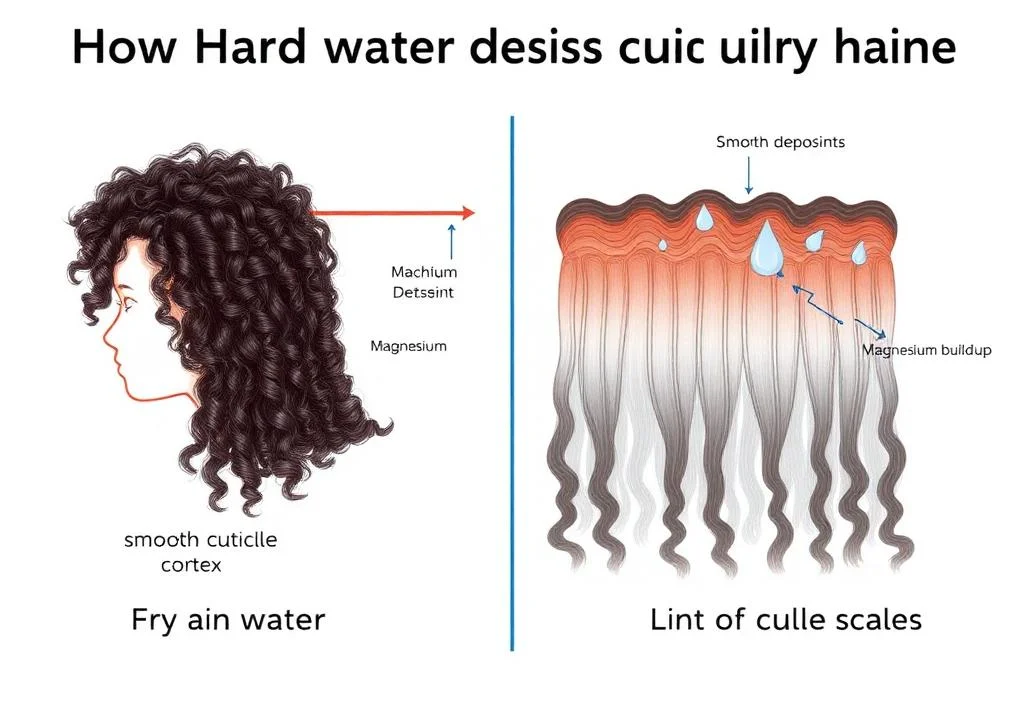 Calcium and magnesium deposits lodge between lifted cuticle scales in curly hair, creating a mineral barrier that blocks moisture.
The Porosity Trap
If you’ve researched curly hair care, you’ve heard about porosity. It’s your hair’s ability to absorb and retain moisture.
Curly hair is often naturally high porosity. The twists and curves mean your cuticle doesn’t lay completely flat, even when healthy.
This is normal. It’s what makes your curls soft and touchable.
But hard water exploits this vulnerability.
Calcium and magnesium ions don’t just coat the surface. According to scanning electron microscopy studies published in the Indian Journal of Dermatology, they actually embed themselves into the spaces between your cuticle scales.
Think of it like this. Your cuticle is a series of overlapping shingles. In healthy curly hair, those shingles have small natural gaps that allow moisture in and out.
Hard water minerals fill those gaps. They create a mineral crust inside and outside the strand.
Now your hair can’t absorb moisture, even when you pile on deep conditioners. The minerals are physically blocking absorption.
The Progressive Damage Timeline
This doesn’t happen overnight. It’s insidious.
Week 1-2: Your curls feel slightly different. Maybe a bit rougher. You lose some shine.
Week 3-4: Noticeable frizz appears. Your curl pattern starts loosening. What were tight 3C coils become looser 3B waves.
Month 2-3: Significant pattern loss. Extreme dryness no matter how much you moisturize. Products stop working.
Month 4+: Structural damage sets in. Breakage. Thinning at the crown. Possible hair loss from follicle stress.
A 2025 study in the journal Cosmetics found that textured hair exposed to hard water for just 30 days showed measurable changes in water permeability and mechanical properties.
Your curls aren’t just dry. They’re structurally compromised.
Why Everything You’ve Tried Hasn’t Worked
Let’s talk about what you’ve already attempted.
You bought more conditioner. You tried the Curly Girl Method. You invested in protein treatments. You switched to “moisturizing” products. You might have even bought a shower filter.
None of it fixed the problem.
Here’s why.
The Conditioner Paradox
When your curls feel dry, the logical solution is more moisture, right?
You doubled down on leave-ins. You bought rich, heavy creams. You started deep conditioning weekly.
But here’s the cruel reality. Those products can’t penetrate the mineral barrier coating your hair.
It’s like trying to water a plant through a layer of plastic wrap. The moisture is there, but it can’t get in.
Meanwhile, you’re creating buildup on top of buildup. Product stacks on minerals stacks on more product.
The Curly Girl Method Mistake
The Curly Girl Method revolutionized curl care. For good reason.
But it has one major flaw when you’re dealing with hard water. It tells you to avoid sulfates completely.
In most cases, this is great advice. Sulfates can strip natural oils.
But chelating agents, which you desperately need, often come paired with gentle sulfates. You need these to break the ionic bonds between minerals and your hair proteins.
Following strict CGM in hard water areas actually makes the problem worse. You’re never removing the mineral buildup.
The Protein Treatment Trap
When curls lose definition, many curl experts recommend protein treatments for “strengthening.”
The theory makes sense. Protein should rebuild structure.
But protein can’t penetrate a mineral-coated strand. You’re strengthening the outside of the problem, not addressing the inside.
Worse, too much protein on mineral-damaged hair creates brittleness. You end up with hair that breaks more easily.
Why Your Shower Filter Isn’t Enough
Shower filters help. Let’s be clear about that.
But basic carbon filters only remove chlorine and some sediment. They don’t effectively remove calcium and magnesium ions.
The fundamental problem is that most shower filters can’t remove the specific minerals created by desalination. Carbon filters help with chlorine, but calcium and magnesium ions pass right through.
You’d need a water softener system for your entire house to truly solve the water problem. That’s expensive and often not possible in rental properties.
So the filter helps a bit, but your hair is still getting mineral exposure every wash.
 Desalination creates mineral-rich water that’s chemically different from naturally hard water, requiring specific treatment approaches.
The GCC Difference: Why This Is Worse Here
Understanding the desalination process matters.
Natural hard water forms over decades. Rain water flows through limestone and chalk, slowly dissolving minerals. The process is gradual, creating a specific mineral profile.
GCC water doesn’t form naturally.
Seawater gets forced through reverse osmosis membranes. Salt is removed. Then minerals are reintroduced to make the water drinkable and prevent pipe corrosion.
This creates unnaturally high concentrations of specific minerals. Studies on Gulf desalination show calcium chloride levels significantly higher than what you’d find in naturally hard water.
And there’s another factor. pH imbalance.
Desalinated water often has a slightly alkaline pH. This causes your hair cuticle to swell and lift more than it would in neutral pH water.
Remember how we talked about curl curves creating natural cuticle gaps? Alkaline water makes those gaps bigger.
Then mineral-rich water floods in.
The Climate Factor
Gulf humidity is another complicating factor.
When you have mineral-coated hair exposed to high humidity, the minerals actually attract atmospheric moisture. But because the minerals block that moisture from penetrating your hair shaft, it just sits on the surface.
This creates the frizz halo effect. Your hair is surrounded by moisture it can’t absorb.
It’s environmental irony. You live in a humid climate, but your curls are internally dehydrated.
The Cost of Ignoring This
Let’s be honest about what’s at stake.
Financial Cost
You’ve probably spent $200-500+ on products in the past few months. Trying different conditioners, masks, leave-ins, styling products.
None of them worked because you were treating symptoms, not the cause.
Time Cost
How long is your current wash day? Three hours? Four?
You’re spending that time fighting against mineral buildup with products that can’t win that fight.
Emotional Cost
This is the part people don’t talk about enough.
Your curls are part of your identity. When they change, you change.
Maybe you’re avoiding photos. Covering your hair more. Feeling less confident in professional settings.
There’s genuine grief in losing your curl pattern.
Long-Term Structural Cost
The real danger is permanent damage.
Prolonged mineral exposure doesn’t just affect your hair shaft. It affects your follicles.
Understanding the science behind how hard water causes hair loss at the follicle level helps explain why addressing this isn’t just cosmetic—it’s about protecting your hair’s future.
A 2017 study in the International Journal of Trichology found that hard water mineral deposits on the scalp can disrupt follicle function, potentially leading to thinning and hair loss.
Your new growth is struggling to emerge through mineral-clogged follicles.
If you don’t address this now, you might lose curl pattern permanently in affected areas.
The Solution: A Curl-Specific 3-Step Protection System
Here’s what actually works.
This isn’t about buying more products. It’s about implementing a system designed specifically for curly hair in hard water environments.
Each step addresses a different aspect of the damage. Skip one, and the whole system fails.
Step 1: Remove the Mineral Barrier (Chelating)
Before you can rebuild your curls, you need to remove what’s blocking them.
Chelating agents break ionic bonds between minerals and hair proteins. They work at a molecular level, pulling calcium and magnesium out of your cuticle layers.
This is chemistry, not marketing.
Key ingredients to look for:
If you want to understand exactly which shampoo ingredients combat hard water most effectively, look for these proven chelating agents:
- EDTA (Ethylenediaminetetraacetic acid) or citric acid. These are proven chelating agents used in water treatment.
- Gentle sulfates specifically for mineral removal. Yes, you need them for this step.
- pH-balanced formulation to prevent further cuticle damage.
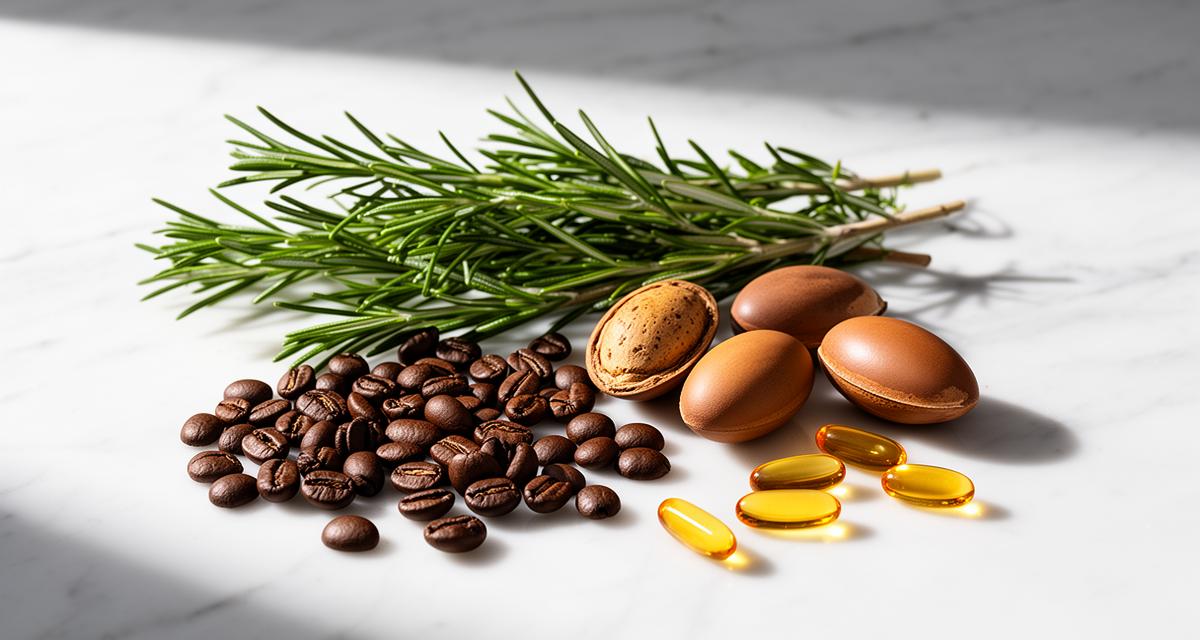
- Rosemary oil or caffeine for follicle stimulation and regrowth support.
How to use:
- Weeks 1-2, every wash. You need intensive mineral removal.
- Weeks 3-4, every other wash. You’re in maintenance mode.
- Ongoing, 1-2 times per week as prevention.
Focus on your scalp and roots. That’s where new mineral deposits form.
You’ll know it’s working when your hair feels lighter. Like a weight has been lifted. Because it has.
Products like Regrowth+ Hair Protection & Growth Booster Shampoo contain chelating agents specifically formulated for hard water environments. Unlike regular clarifying shampoos that just remove product buildup, chelating shampoos remove minerals without stripping your curl’s natural oils.
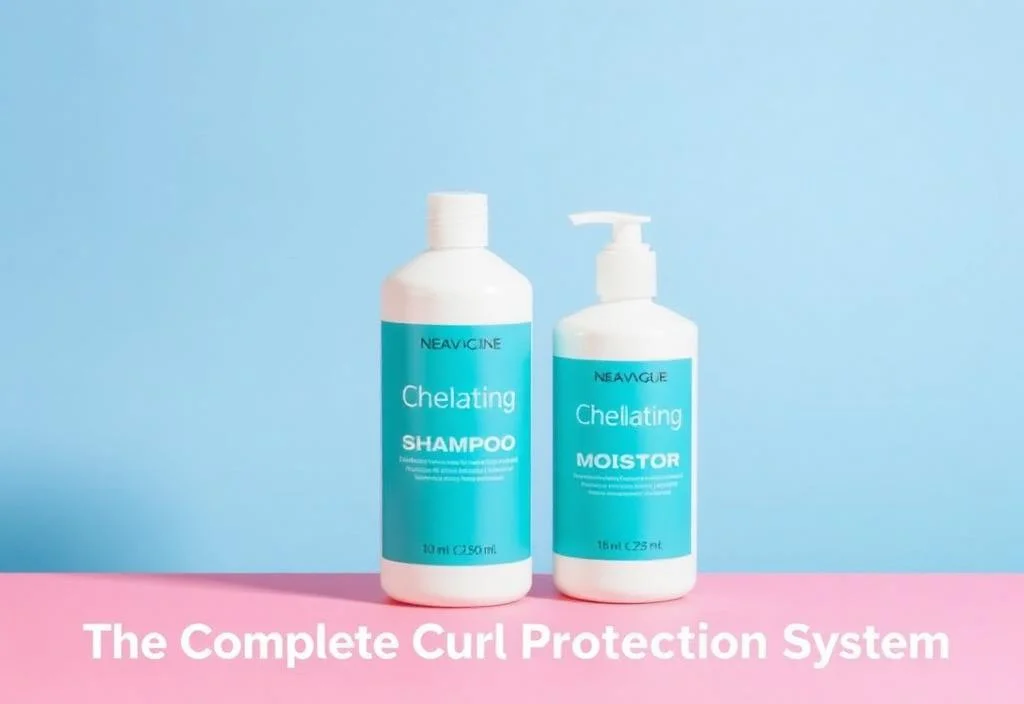 A complete curl protection system: chelating shampoo removes mineral barriers, moisture conditioner rebuilds curl structure.
Step 2: Rebuild Curl Structure (Moisture + Protein Balance)
Now your hair can actually absorb moisture. Use that window.
After chelating, your cuticle is clean but vulnerable. Think of it like removing old paint from a wall. The surface is ready, but you need to seal and protect it.
What your curls need now:
- Deep moisture that can actually penetrate. Your hair is thirsty from months of blocked absorption.
- Protein to repair cuticle damage. But gentle proteins, not heavy formulations.
- Oils that seal and protect. The right molecular weight to penetrate high-porosity hair.
- pH balance to restore natural curl formation.
Key ingredients:
- Castor oil provides intense moisture and curl definition.
- Olive oil penetrates high-porosity curly hair effectively.
- Vitamin B5 (Panthenol) strengthens and adds elasticity.
- Natural butters like shea or mango for sealing.
Application method matters:
- Apply conditioner to soaking wet hair. Mineral-free water is key here.
- Use the “squish to condish” method. Cup water and product into your curls. This forces moisture into your curl pattern.
- Leave on for 5-10 minutes. Your hair can finally absorb, so give it time.
- Rinse with cool water. This seals your cuticle closed.
The Regrowth+ Moisture Repair & Anti-Frizz Conditioner uses castor oil and olive oil specifically to restore moisture balance in mineral-damaged curls. The formula is designed for high-porosity curly hair that’s been compromised by hard water.
You should notice a difference immediately. Your curls will feel softer, more hydrated. They’ll start clumping together naturally again.
Step 3: Protect Your Curl Pattern (Daily Defense)
You’ve removed minerals. You’ve rebuilt moisture. Now you need to keep it that way.
This step is about maintaining your results and preventing new damage.
Water quality management:
- Your shower filter alone isn’t enough, but combined with chelating shampoo, it creates a complete system.
- Consider a final rinse with filtered or distilled water. It sounds extra, but it works.
- Use leave-in products with mineral-blocking ingredients.
Curl maintenance routine:
- Refresh with water plus light leave-in, not heavy products. You don’t want new buildup.
- Protect at night. Satin bonnet or pillowcase reduces friction and mineral re-deposit from head moisture.
- Minimize manipulation. Every time you touch your hair, you’re potentially redistributing minerals from your hands or environment.
Environmental defense:
- The Gulf climate is humid. Use light gels for hold, not heavy creams that attract atmospheric moisture.
- UV protection matters. GCC sun plus minerals creates oxidative stress. Look for products with UV filters.
- Regular trims remove mineral-damaged ends before they break.
Timeline for Results
Here’s what to expect:
Week 1-2: Immediate Relief
Your hair feels lighter and softer. Some curl definition returns. You’ll notice less product buildup. Frizz starts reducing.
Week 3-4: Pattern Recovery
Your curl pattern becomes more defined. Frizz is significantly reduced. Moisture retention improves noticeably. Your natural shine returns.
Month 2-3: Full Transformation
Your curls look like they did before you moved. Products work as expected again. You see healthy new growth at roots. Your confidence is restored.
This isn’t a miracle. It’s applied chemistry.
The Science Behind This Approach
Let’s look at the research backing this protocol.
On mineral removal:
A 2013 study published in the International Journal of Cosmetic Science demonstrated that hair exposed to hard water showed significantly higher calcium deposition (0.804%) compared to distilled water (0.26%).
The same study found that hard water-treated hair had decreased thickness and a “ruffled appearance” under scanning electron microscopy.
Chelating agents reverse this process by forming stable complexes with metal ions, allowing them to be rinsed away.
On porosity and curly hair:
Research from Medical News Today’s analysis of peer-reviewed studies confirms that curly and coily hair is naturally more porous than straight hair due to its structure.
The twists in curly hair cause the cuticle to lift, creating higher permeability. This is genetic and normal, but it makes curly hair more vulnerable to environmental damage.
On moisture restoration:
A 2020 overview published by the New York Society of Cosmetic Chemists explained that understanding hair porosity is critical for product selection and hair care outcomes.
High-porosity hair requires specific ingredients (like penetrating oils and humectants) to effectively restore and maintain moisture.
On desalination effects:
While direct research on desalinated water and hair is limited, multiple studies on mineral deposition patterns show that the concentration and type of minerals matter more than the total hardness number.
GCC desalination creates specific mineral profiles that differ from natural hard water, requiring adapted treatment approaches.
Real Results: What To Expect
The science is compelling, but let’s talk about real-world outcomes.
Within two weeks of starting a proper chelating routine, most people with curly hair report noticeable improvements. By week four, the transformation is dramatic.
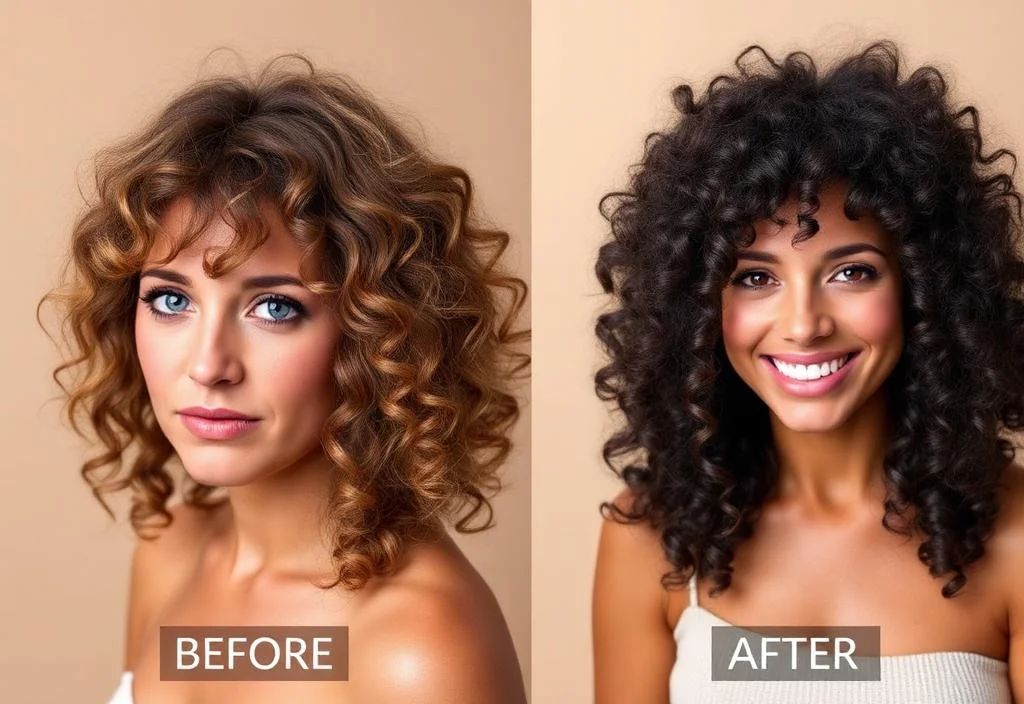
Your 3C curls that had loosened to 3A waves start tightening again. The frizz halo disappears. Your hair holds moisture for days, not hours.
You can finally run your fingers through your curls without them catching on dryness.
Products work again. That curl cream you gave up on? It suddenly performs as advertised.
Your wash days get shorter. When your hair is healthy, it cooperates.
And here’s the part that matters most: you feel like yourself again.
 After implementing a curl-specific hard water protection system, definition and health return within 2-4 weeks.
Why This Solution Is Curl-Specific
Generic hard water solutions miss the critical factors that make curly hair different.
Surface area difference:
Curly hair has 50% more surface area than straight hair of the same length. More surface area means more mineral adhesion sites.
Standard hard water shampoos don’t account for this. They’re formulated for straight hair that has less exposed cuticle.
Porosity considerations:
High-porosity curly hair needs moisture that can penetrate deeply, not just coat the surface.
The hydrogen bonds that create your curl pattern require specific moisture levels to maintain elasticity.
When minerals disrupt those bonds, your curl pattern literally unfolds.
Pattern formation science:
Your curls form because of asymmetric keratin distribution in your hair follicle. This creates natural tension that spirals the hair shaft.
Mineral deposits on one side of the shaft more than the other can disrupt this tension, causing pattern loss.
A curl-specific system addresses all three factors: increased surface exposure, high porosity vulnerability, and pattern formation disruption.
Getting Started: Your Action Plan
If you’re ready to restore your curls, here’s your roadmap.
Immediate actions:
- Stop using heavy products that create buildup. Switch to lightweight formulations.
- Get a chelating shampoo designed for hard water. This is non-negotiable.
- Find a conditioner formulated for high-porosity curly hair with penetrating oils.
Week 1 implementation:
- Chelate every wash this week. Be aggressive about mineral removal.
- Follow with intensive moisture conditioning.
- Let your hair air dry to assess true curl pattern without heat interference.
Week 2-4 refinement:
- Reduce chelating to every other wash.
- Monitor your curl pattern and adjust moisture levels.
- Protect at night with satin materials.
Ongoing maintenance:
- Chelate 1-2 times weekly to prevent new buildup.
- Deep condition weekly.
- Trim every 8-10 weeks to remove old damaged ends.
The Regrowth+ Complete Hair System Bundle provides both the chelating shampoo and moisture repair conditioner in one purchase. It’s specifically formulated for GCC water conditions and high-porosity curly hair.
Orders over 200 AED qualify for free shipping. You can split payment into 4 interest-free installments with Tabby or Tamara.
And if you want to maintain results long-term, subscribe and save 20% on every order. Never run out, never pay full price.
The Bottom Line
Your curls didn’t change because you’re doing something wrong.
They changed because the environment changed.
Hard water in the GCC is chemically different from what your hair encountered before. It creates specific damage patterns that require specific solutions.
The three-step system works because it addresses the root cause: mineral deposits that block moisture and disrupt curl structure.
Remove the minerals. Rebuild the moisture. Protect against new damage.
It’s that straightforward.
Within weeks, you’ll see the curl pattern you thought you’d lost. Within months, you’ll forget this was ever a problem.
Your curls are still there. They’re just buried under minerals.
Let’s bring them back.