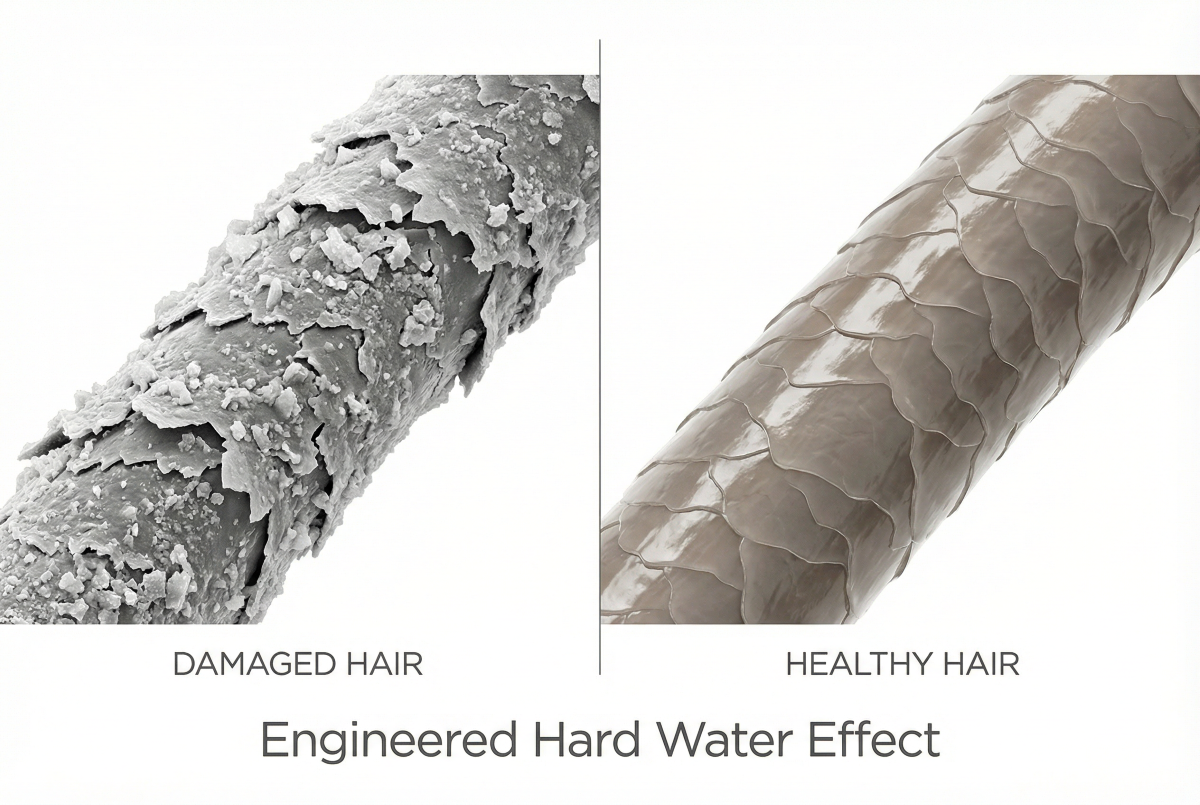
You’ve heard rosemary oil can help with hair growth. Maybe you’ve seen the TikTok videos or read the glowing reviews. The science is actually pretty solid on this one. But here’s what nobody talks about: if you’re dealing with hard water, you’re probably wasting your time and money.
Rosemary oil has been used for hair health for centuries, but recent clinical studies have given us real data on how and why it works. A 2015 study published in SKINmed found rosemary oil performed comparably to minoxidil 2% for treating hair loss. That’s significant. But there’s a catch that’s especially relevant if you live in the Gulf region.
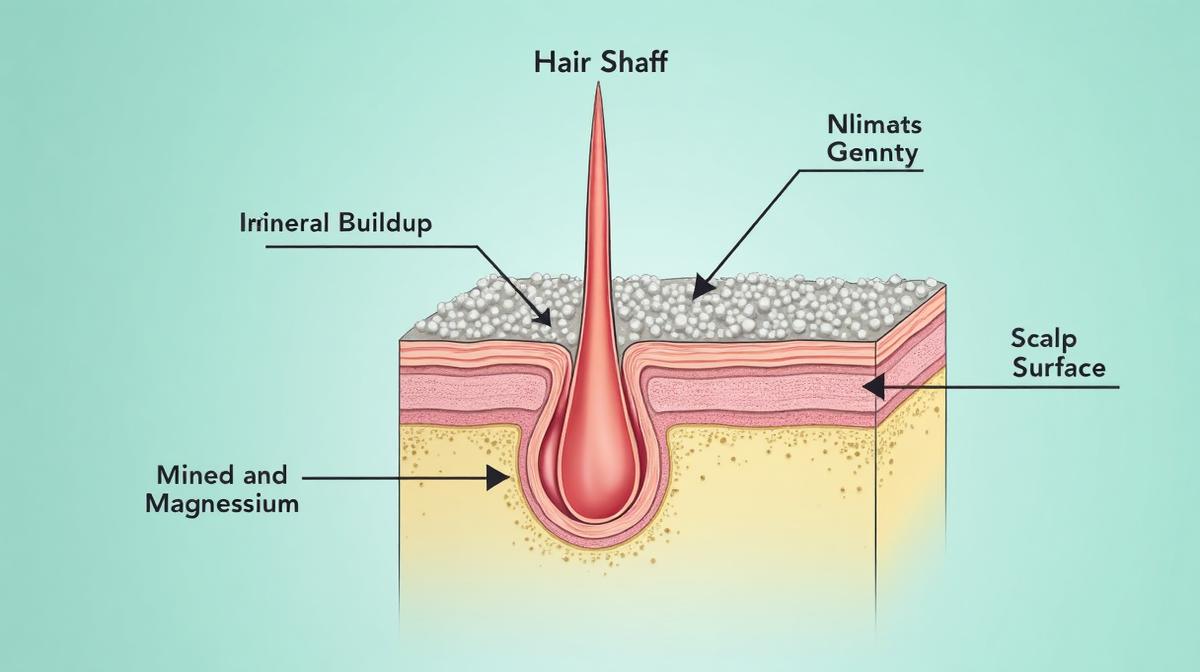
The problem isn’t the rosemary oil itself. It’s what’s already on your scalp before you apply it. Hard water deposits create a mineral barrier that blocks absorption. Your expensive rosemary oil just sits on top of calcium and magnesium buildup, never reaching the follicles where it needs to work. Let’s break down what rosemary oil actually does, how to use it properly, and why addressing hard water first changes everything.
What Rosemary Oil Actually Does to Your Hair Follicles
Rosemary oil isn’t magic. It’s chemistry. The active compounds in rosemary, primarily carnosic acid and rosmarinic acid, work through three distinct mechanisms that we can measure and verify.
First, rosemary improves scalp circulation. Studies using laser Doppler flowmetry show increased blood flow to the scalp within 30 minutes of topical application. Better circulation means more nutrients and oxygen reach your follicles. This isn’t theoretical. It’s measurable.
Second, rosemary appears to reduce the impact of DHT on follicles. DHT (dihydrotestosterone) is the hormone responsible for pattern hair loss in both men and women. While rosemary doesn’t block DHT production systemically like finasteride does, research suggests it may reduce DHT’s binding to follicle receptors. The mechanism isn’t fully understood yet, but the clinical results are consistent.
Third, and this is where it gets interesting, rosemary stimulates cellular metabolism in the dermal papilla. That’s the cluster of cells at the base of each follicle that controls hair growth cycles. In vitro studies show rosemary extract increases cellular proliferation and reduces apoptosis (cell death) in these critical cells.
The 2015 comparative study I mentioned earlier tracked 100 men with androgenetic alopecia over six months. Half used rosemary oil, half used minoxidil 2%. Both groups showed significant hair count increases with no statistical difference between them. The rosemary group actually reported less scalp itching, a common minoxidil side effect.
But here’s what that study didn’t account for: water quality. All participants were in the same geographic region with relatively soft water. Nobody was dealing with the extreme mineral content found in Gulf region water supplies, where total dissolved solids often exceed 500 ppm.
The Types of Rosemary Oil and What Actually Matters
Walk into any health store and you’ll find a dozen rosemary oil products. Some cost three times more than others. The marketing makes it confusing on purpose. Let’s cut through it.
Pure rosemary essential oil is steam-distilled from rosemary leaves. It’s highly concentrated. A single drop contains the active compounds from several grams of fresh rosemary. This is what was used in the clinical studies. This is what works.
Then you’ve got rosemary-infused oils, where dried rosemary sits in a carrier oil for weeks. These are fine for cooking. They’re not useful for hair growth. The concentration of active compounds is too low to produce measurable effects.
You’ll also see ‘rosemary oil blends’ that combine rosemary with other essential oils like peppermint, lavender, or tea tree. These aren’t inherently bad, but they dilute the rosemary concentration. If you’re using rosemary specifically for its hair growth properties, you want pure rosemary essential oil that you dilute yourself in a carrier oil.
The quality markers that actually matter: look for ‘Rosmarinus officinalis’ on the label (that’s the botanical name), steam-distilled extraction method, and preferably organic certification. The country of origin affects the chemical profile slightly. Spanish and Tunisian rosemary tends to have higher camphor content, while French rosemary is higher in 1,8-cineole. For hair growth purposes, both work fine.
Don’t get caught up in ‘chemotypes’ unless you’re a professional aromatherapist. The differences are real but minimal for topical scalp application. What matters more is whether you’re applying it to a clean scalp or one coated in mineral deposits.
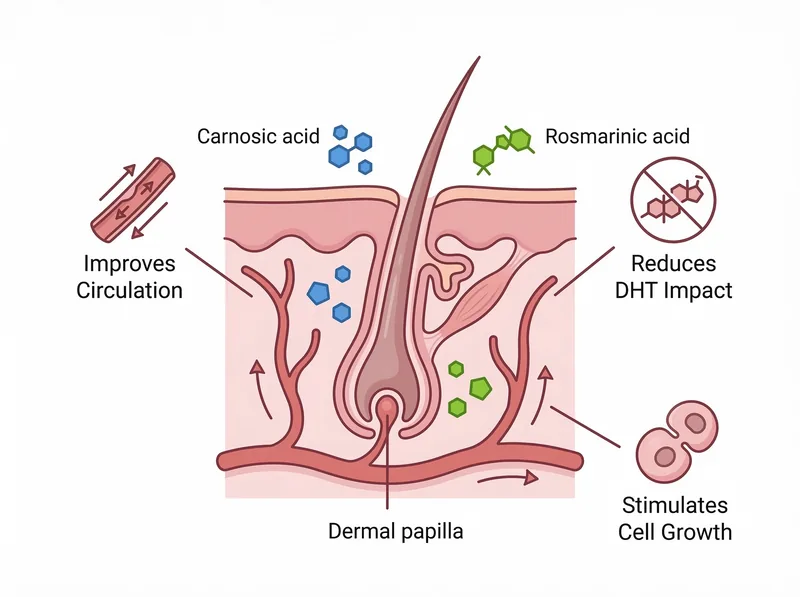 Rosemary’s active compounds work through multiple pathways to support hair follicle health and circulation
How to Actually Use Rosemary Oil Without Damaging Your Hair
This is where most people mess up. Essential oils are potent. Rosemary oil applied directly to your scalp will cause irritation, burning, and potentially damage your skin barrier. Never use it undiluted. Ever.
The standard dilution ratio is 2-3 drops of rosemary essential oil per tablespoon of carrier oil. Good carrier oils for scalp application include jojoba (chemically similar to sebum), sweet almond (lightweight and absorbs well), or fractionated coconut oil (won’t solidify in cooler temperatures).
Here’s the method that actually works: mix your diluted rosemary oil in a small bowl. Part your hair into sections. Apply the oil mixture directly to your scalp using your fingertips or a dropper bottle. Don’t drench your hair. You’re targeting the scalp and follicles, not the hair shaft.
Massage it in for 3-5 minutes. This isn’t optional. The massage itself stimulates circulation, and it helps the oil penetrate past the outer skin layer. Use firm, circular motions with your fingertips. Work systematically across your entire scalp.
Leave it on for at least 30 minutes. Some people leave it overnight. The research used 30-minute application times, so that’s your minimum. Then shampoo it out thoroughly. This is important: you need to remove the oil completely, or you’ll end up with greasy, limp hair that attracts dirt.
Frequency matters. The clinical studies used twice-daily application. That’s aggressive and not practical for most people. Three times per week is a reasonable starting point. You should see initial results around the 12-week mark if you’re going to respond to rosemary oil at all. Not everyone does.
Why Your Rosemary Oil Might Not Be Working
You’ve been applying rosemary oil religiously for two months. Nothing’s changed. Before you conclude it doesn’t work, let’s troubleshoot the real issues.
Problem one: you’re not using it consistently enough. Hair follicles don’t respond to occasional treatments. Growth cycles last months. If you’re applying rosemary oil once a week when you remember, you won’t see results. This requires consistency over at least 12 weeks.
Problem two: your dilution is wrong. Too weak, and you’re below the therapeutic threshold. Too strong, and you’re causing inflammation that counteracts any growth benefits. Stick to the 2-3 drops per tablespoon ratio. Measure it. Don’t eyeball it.
Problem three, and this is the big one: your scalp is covered in mineral buildup. This is especially common if you live in an area with hard water. The calcium, magnesium, and other dissolved minerals in your water create a crusty layer on your scalp. Rosemary oil can’t penetrate that barrier.
Think about it logically. If there’s a physical layer of mineral deposits coating your follicle openings, topical treatments can’t reach the target tissue. It’s like trying to water a plant through a plastic sheet. The water just runs off the surface.
In the Gulf region, where water hardness often exceeds 300 ppm (parts per million) of total dissolved solids, this isn’t a minor issue. It’s the primary reason topical hair treatments fail. You can use the highest quality rosemary oil available, apply it perfectly, and still see zero results because it never reaches your follicles.
This is why chelating shampoos exist. They remove mineral buildup before it becomes a barrier. Some chelating formulas now include rosemary as an active ingredient, which makes sense. You’re addressing the mineral problem and delivering the growth-supporting compounds in the same step. A product like Regrowth+ combines chelating agents with rosemary extract specifically for this reason.
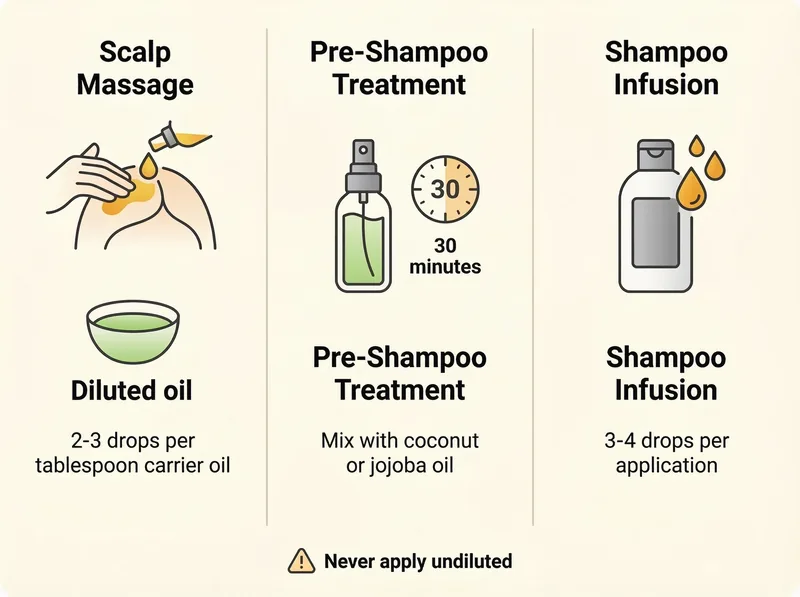 Proper dilution and application technique determines whether rosemary oil helps or harms your hair
The Hard Water Problem Nobody Talks About
Let’s get specific about what hard water does to your scalp. When water contains high levels of calcium and magnesium ions, those minerals don’t just rinse away. They bind to your skin and hair proteins.
Each time you shower, you’re depositing a thin layer of mineral salts. Over weeks and months, this builds up into a coating that changes your scalp’s chemistry. The pH shifts more alkaline. The skin barrier function degrades. Follicle openings get partially blocked.
You can feel this. If your hair feels rough or straw-like even right after washing, that’s mineral buildup. If your scalp feels tight or itchy, that’s often hard water damage, not dry skin. If you notice white or gray flakes that aren’t typical dandruff, those are mineral deposits.
The Gulf region has some of the hardest water in the world. Desalination helps with salinity but doesn’t remove hardness minerals. In some areas, tap water contains over 500 ppm of dissolved solids. That’s classified as ‘very hard’ by any standard.
Here’s what this means for rosemary oil: even if you’re applying it correctly, diluted properly, and massaging thoroughly, the active compounds can’t penetrate a mineral-coated scalp. You’re essentially applying expensive oil to a layer of rock dust.
This is why addressing hard water first changes everything. You can’t skip this step and expect topical treatments to work. It’s not optional. You either remove the mineral barrier, or you waste money on products that can’t reach their target.
Rosemary Oil vs. Rosemary Extract in Shampoos
There’s a meaningful difference between using pure rosemary essential oil as a pre-treatment and using a shampoo that contains rosemary extract. Both can work, but they work differently.
Pure rosemary oil applied to your scalp and left for 30+ minutes allows for maximum absorption of active compounds. You control the concentration and the contact time. This is the method used in clinical studies. It’s effective but time-consuming.
Rosemary extract in shampoos provides a different delivery mechanism. The concentration is lower, but you’re getting consistent daily exposure. The shampoo’s surfactants help the rosemary compounds penetrate, and if the shampoo includes chelating agents, you’re removing mineral barriers at the same time.
The advantage of the shampoo approach is convenience and consistency. You’re already washing your hair. A chelating shampoo with rosemary extract addresses both the mineral buildup problem and delivers growth-supporting compounds in one step. No separate oil treatments. No extra time investment.
The disadvantage is you can’t control the rosemary concentration as precisely. You’re trusting the formulation. This is where product quality matters significantly. A shampoo that lists rosemary near the bottom of the ingredient list is basically using it for marketing. You want rosemary extract in the top third of the ingredient list.
For people dealing with hard water, which includes most Gulf region residents, a chelating shampoo with rosemary makes more practical sense than standalone rosemary oil treatments. You’re solving the fundamental problem (mineral buildup) while delivering the active ingredient. It’s a more complete approach.
That said, there’s no reason you can’t do both. Use a chelating shampoo with rosemary as your daily cleanser, then add a weekly intensive rosemary oil treatment. Just make sure you’re using the chelating shampoo first to clear the mineral barrier.
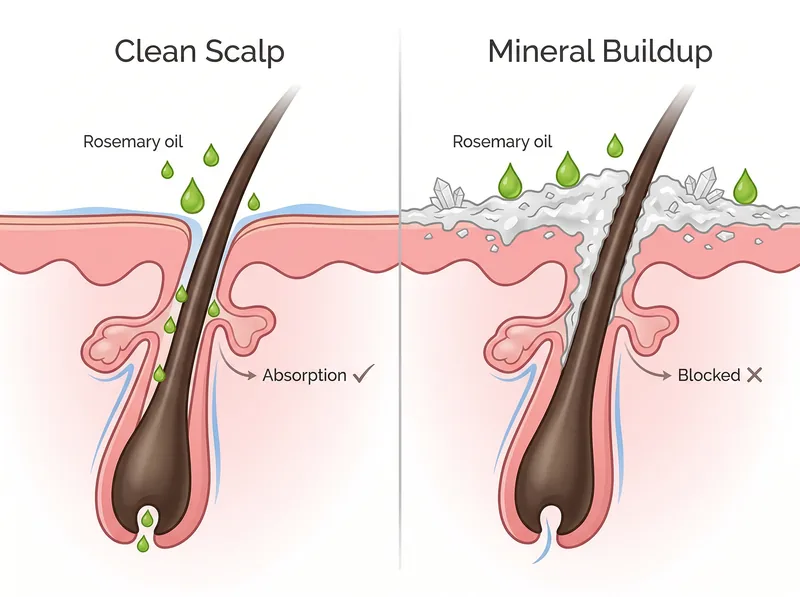 In the Gulf region, hard water mineral deposits create a barrier that prevents rosemary oil from reaching your scalp effectively
What the Research Actually Shows (and Doesn’t)
Let’s be precise about what we know from clinical research and what’s still speculation or marketing hype.
The 2015 SKINmed study I mentioned earlier is the gold standard. It was randomized, controlled, and tracked objective hair counts over six months. Rosemary oil performed as well as minoxidil 2% with fewer side effects. That’s solid evidence.
A 2013 study in Phytotherapy Research found rosemary leaf extract promoted hair growth in mice by improving circulation and reducing inflammation. Animal studies don’t always translate to humans, but the mechanisms are biologically plausible.
What we don’t have is large-scale, long-term human studies comparing different rosemary formulations, or studies specifically looking at rosemary in combination with chelating treatments. The research exists for each separately, but not together.
We also don’t have good data on how water quality affects rosemary oil absorption. This is a gap in the research that affects real-world results significantly, especially in regions with very hard water.
The mechanism by which rosemary affects DHT is still not fully understood. We know it works based on clinical outcomes, but the exact molecular pathway is unclear. This doesn’t make it less effective. It just means the science is still catching up to the observed results.
Be skeptical of claims that rosemary oil ‘cures’ hair loss or produces dramatic regrowth in weeks. The clinical evidence shows modest but consistent improvements over months, not miracle transformations. It’s a supportive treatment, not a standalone cure for genetic hair loss.
Building a Complete Hair Growth System
Rosemary oil doesn’t exist in isolation. Hair growth depends on multiple factors: genetics, hormones, nutrition, scalp health, and environmental stressors. Rosemary addresses some of these factors. Not all of them.
A complete approach starts with removing barriers. In the Gulf region, that means addressing hard water. Use a chelating shampoo to remove mineral buildup. This creates a clean foundation for any topical treatment to actually work.
Next, support your follicles from the inside. Protein, biotin, iron, and zinc all affect hair growth. If you’re deficient in any of these, no amount of topical rosemary will compensate. Get your levels checked. Adjust your diet or supplement appropriately.
Then add topical treatments. Rosemary is one option. Minoxidil is another. Caffeine solutions show promise in recent studies. These work through different mechanisms, and some people benefit from combining them.
Protect your hair from damage. Heat styling, tight hairstyles, harsh chemical treatments, all these create breakage that looks like hair loss even when your follicles are growing normally. Be gentle with your hair. Use heat protectants. Avoid styles that pull on your roots.
Finally, manage stress and sleep. Chronic stress pushes follicles into telogen (resting phase) prematurely. Poor sleep changes hormone regulation, including hormones that affect hair growth. These aren’t small factors. They’re fundamental.
The most effective approach combines all of these elements. Rosemary oil or a chelating shampoo with rosemary extract handles the topical scalp treatment aspect. But it’s part of a system, not a magic bullet.
References
- Rosemary oil vs minoxidil 2% for the treatment of androgenetic alopecia: a randomized comparative trial - SKINmed: Dermatology for the Clinician
- Effect of rosemary extract on hair growth - Phytotherapy Research
- Hair Loss: Diagnosis and Treatment - American Academy of Dermatology
- Hardness of Water - US Geological Survey