You installed the filter three months ago. Spent 350 AED on a premium model. Read all the reviews. Followed the installation instructions perfectly.
And your hair? Still falling out. Still dry. Still breaking at the ends.
Here’s what the shower filter companies don’t tell you.
The Filter Paradox Nobody Talks About
Shower filters work. That’s not the issue.
They reduce chlorine. They catch some minerals. They make your water feel softer. All of that is real.
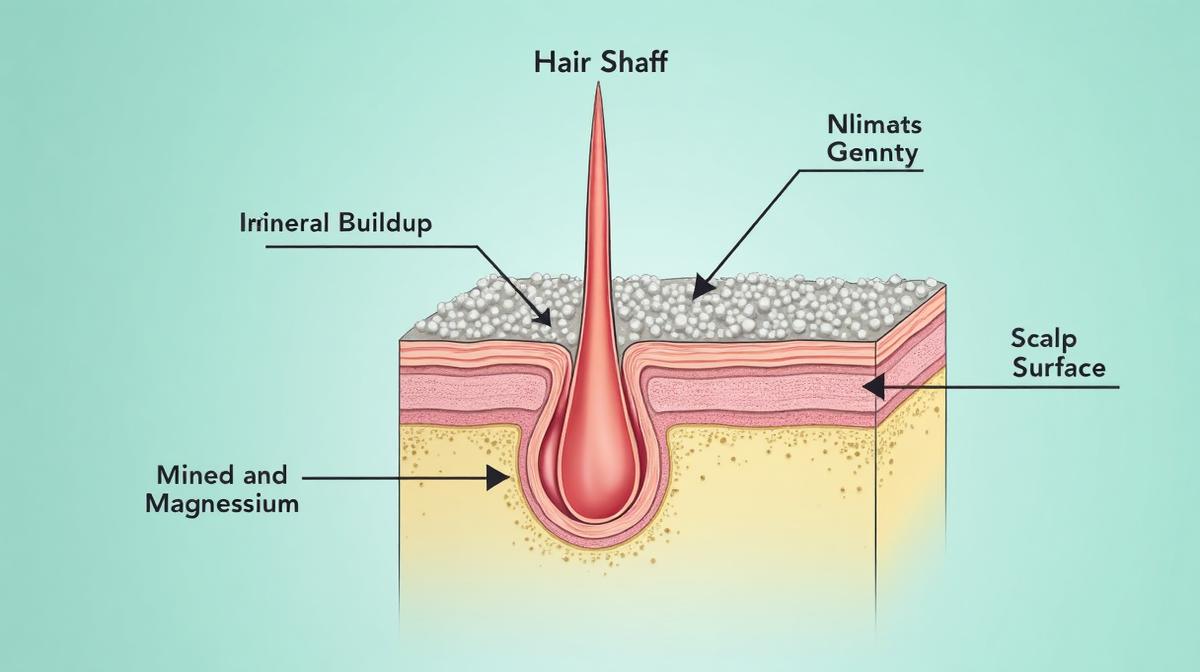
But here’s the problem. Your hair damage didn’t start yesterday. It started the day you moved to the Gulf. Every shower since then has been coating your hair with mineral deposits. Calcium. Magnesium. Silicates. All of it building up, layer by layer, suffocating your follicles.
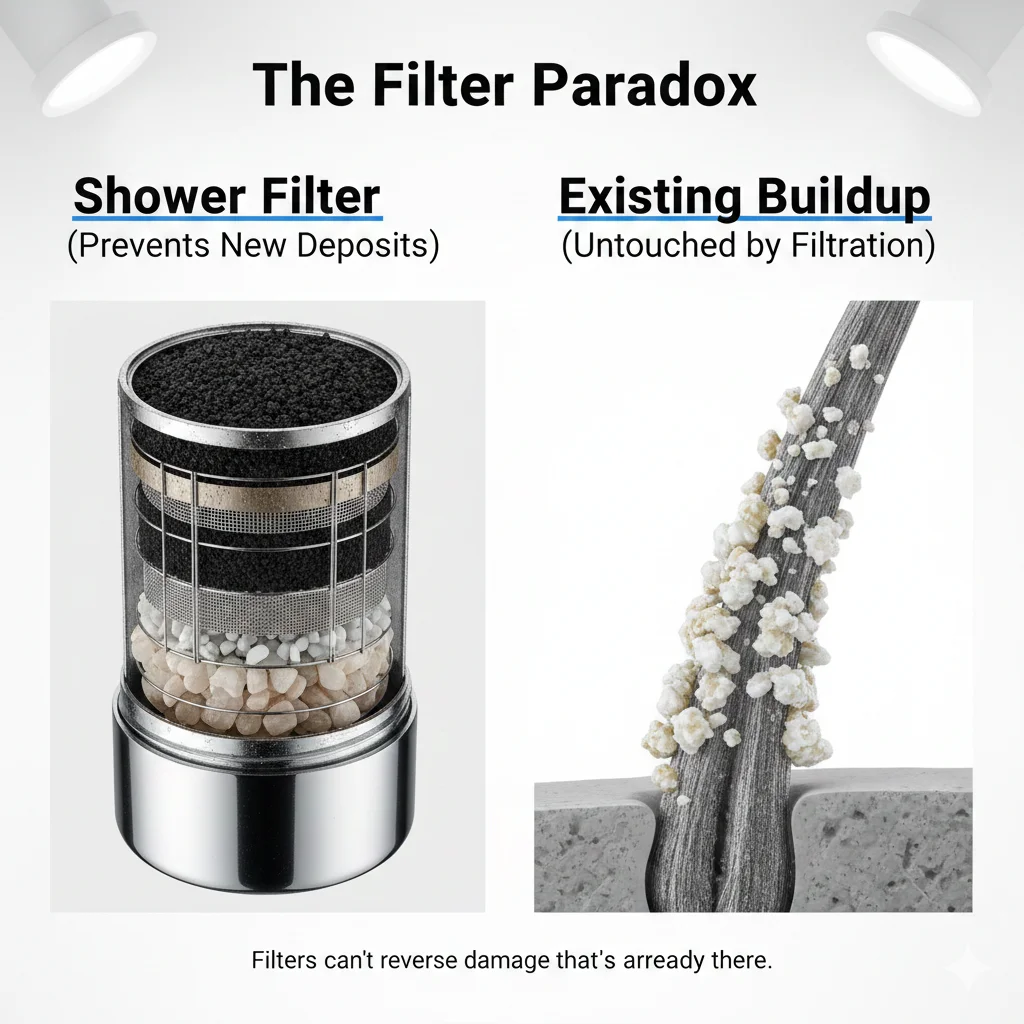
A shower filter stops NEW minerals from being added. It’s like closing the barn door after the horses have escaped. Your hair is already coated. Your scalp is already clogged. Your follicles are already struggling.
The filter doesn’t reverse any of that.
What Actually Happens to Your Hair in Hard Water
Let’s get specific about what’s happening on your scalp right now.
Hard water in the GCC contains approximately 200-400 parts per million of dissolved minerals. That’s 3-5 times higher than most Western cities. Desalination makes it worse, adding sodium and increasing the alkaline pH that damages your hair cuticle.
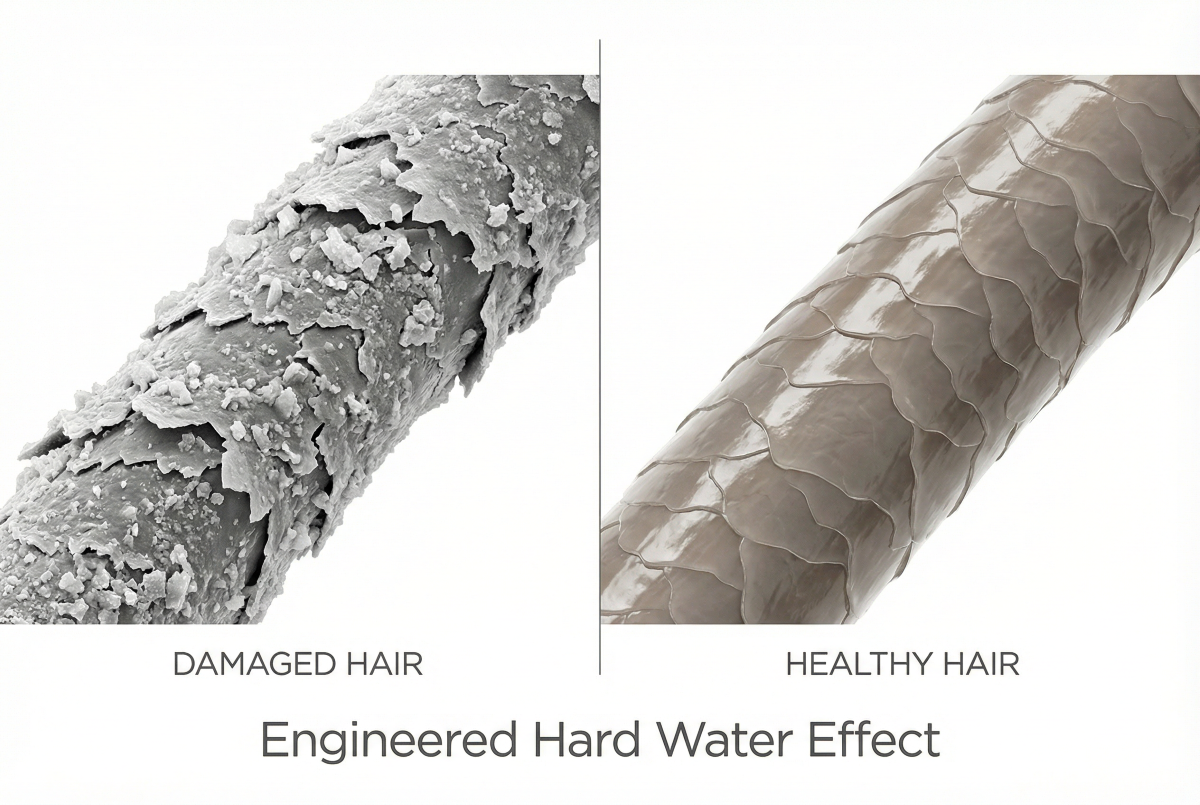
Every time you shower, minerals bond to your hair protein. They don’t rinse off. They accumulate. After a few months, you have a crusty mineral coating that:
- Blocks moisture from penetrating the hair shaft
- Prevents nutrients from reaching the follicle
- Creates a rough surface that causes tangles and breakage
- Weighs down your hair, making it look flat and lifeless
- Triggers inflammation in the scalp
A shower filter installed today doesn’t touch any of that existing damage.
It only prevents tomorrow’s water from adding MORE minerals to the buildup you already have. You’re still walking around with months of accumulated deposits strangling your follicles.
Why Filters Aren’t Enough (Even the Expensive Ones)
I’ve seen hundreds of women in my clinic who installed premium shower filters and saw zero improvement. Here’s why.
Filters are passive prevention. They sit between your pipes and your showerhead, catching some minerals before they reach your hair. But they can’t actively remove anything that’s already there.
Think of it like wearing sunscreen after you’re already sunburned. Sure, it prevents future damage. But your skin is still fried.
Your hair needs active reversal, not passive prevention.
The mineral buildup on your hair and scalp requires a chemical process called chelation. That’s when specialized molecules bind to the minerals and pull them away from your hair protein. It’s active removal, not passive filtering.
Shower filters can’t chelate. They can only reduce what flows through them.
The Science of Mineral Removal vs. Prevention
This is where it gets interesting.
Chelating agents are molecules with a specific structure that allows them to grab onto metal ions (like calcium and magnesium) and form a stable complex. Once bound, the minerals lose their ability to stick to your hair. They rinse away instead of accumulating.
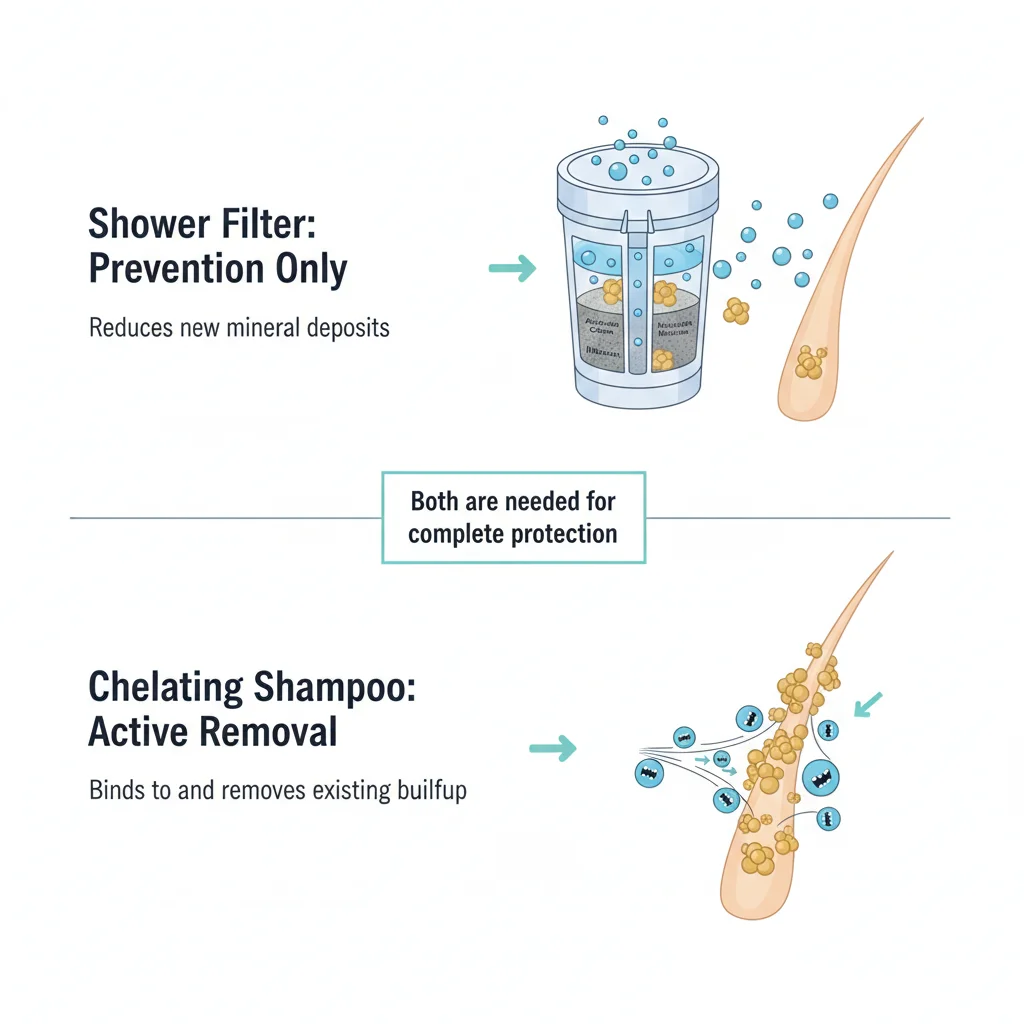
Your shower filter works through mechanical filtration and ion exchange. Water passes through activated carbon and mineral stones that attract some dissolved solids. It reduces what enters. But it doesn’t reverse what’s already deposited.
A chelating shampoo works through active chemistry. The chelating agents in the formula seek out minerals on your hair, bind to them, and allow them to be rinsed away. It reverses existing damage.
You need both mechanisms working together. Filter to reduce incoming damage. Chelation to remove accumulated damage.
But here’s what most people miss. Even with both working together, you’re still not stimulating new growth. You’re just stopping the bleeding. Your hair might stop falling out, but you’re not regrowing what you’ve lost.
That requires a third mechanism: follicle stimulation.
What Actually Works: The Three-Part System
After working with expat professionals across the Gulf for the past eight years, I’ve seen one approach consistently deliver results:
Part 1: Prevention (Shower Filter)
Reduces incoming mineral load by 40-60%. You still need this. Keep your filter. But understand its limitations.
Part 2: Active Removal (Chelating Shampoo)
Binds to and removes existing mineral buildup. This is what actually fixes your current damage. Look for formulations with EDTA or citric acid as chelating agents, combined with gentle surfactants that won’t strip your hair.
Part 3: Follicle Stimulation (Growth Actives)
Ingredients like rosemary extract and caffeine have clinical evidence supporting their ability to stimulate hair follicles and promote growth. You need this to actually regrow what you’ve lost, not just stop losing more.
Most people try one or two of these. The ones who see dramatic results use all three simultaneously.
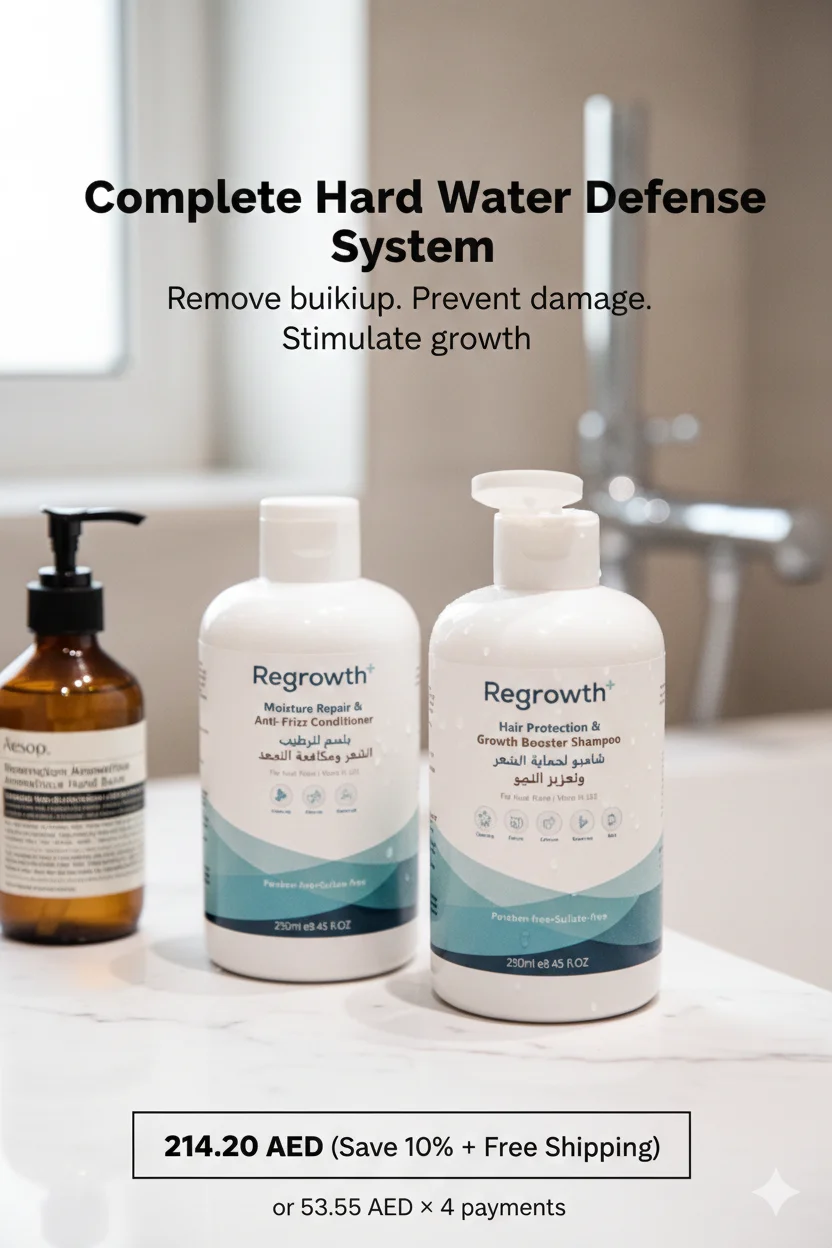
214.20 AED (Save 10% + Free Shipping) or 53.55 AED × 4 payments
The Economics Nobody Mentions
Let’s talk about what you’re actually spending.
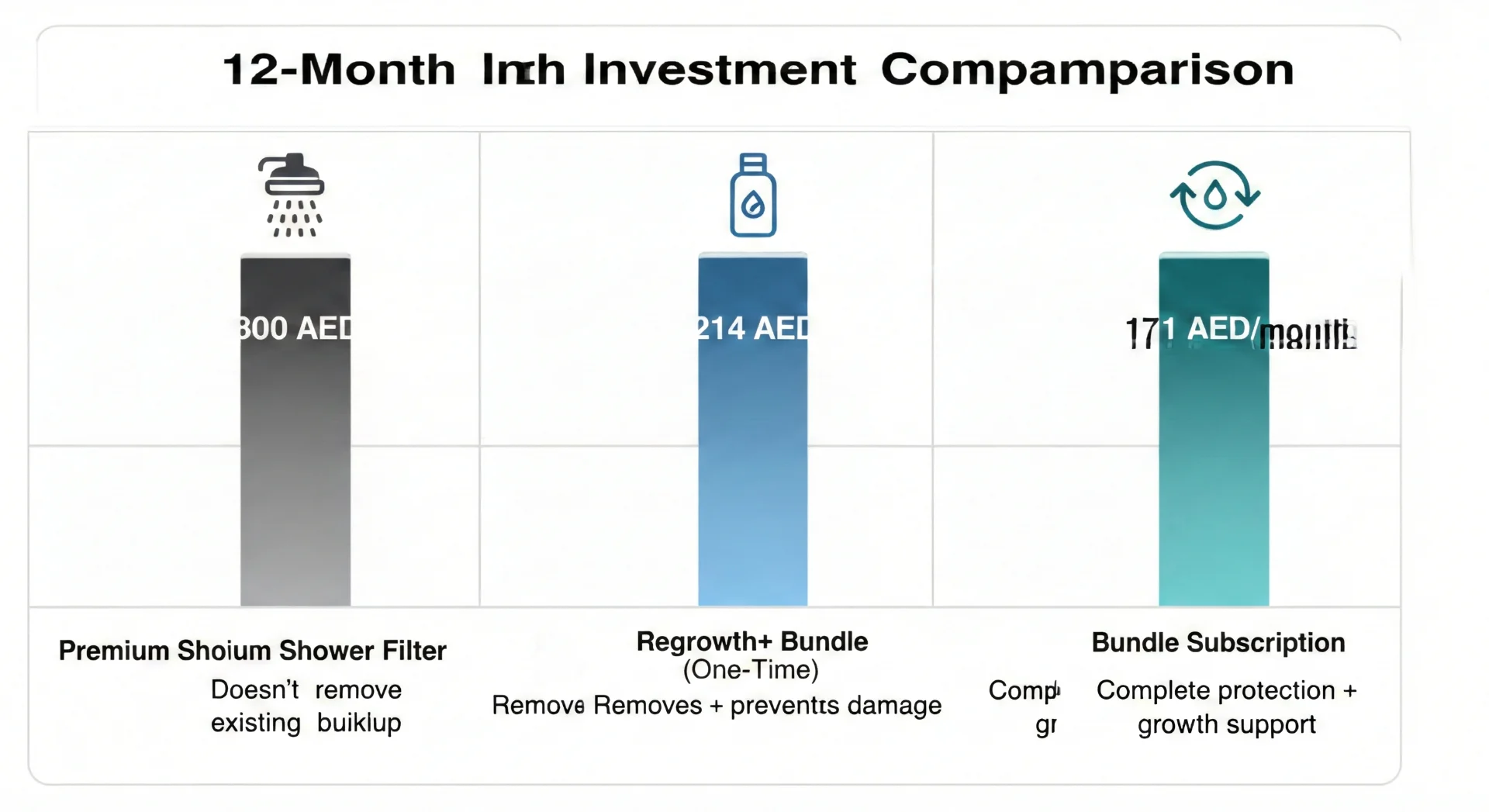
Premium shower filter system: 350 AED initial investment, plus 150 AED replacement cartridges every 3-4 months. Annual cost: approximately 800 AED.
What it fixes: Reduces future mineral deposits (but doesn’t remove existing buildup or stimulate growth).
Regrowth+ Complete Hair System: 214.20 AED for both shampoo and conditioner (10% bundle discount plus free shipping).
What it fixes: Actively removes existing mineral buildup, prevents new deposits from bonding, stimulates follicle activity with rosemary and caffeine, repairs damaged cuticles with argan oil and shea butter.
The math is pretty clear. You’re paying nearly 4X more for a solution that only addresses one-third of the problem.
And if you’re serious about maintaining results long-term, the subscription option drops the bundle to 171.36 AED per month (20% off), which is still less than half what you’d spend annually on filter replacements alone.
Real Results From Sarah’s Experience
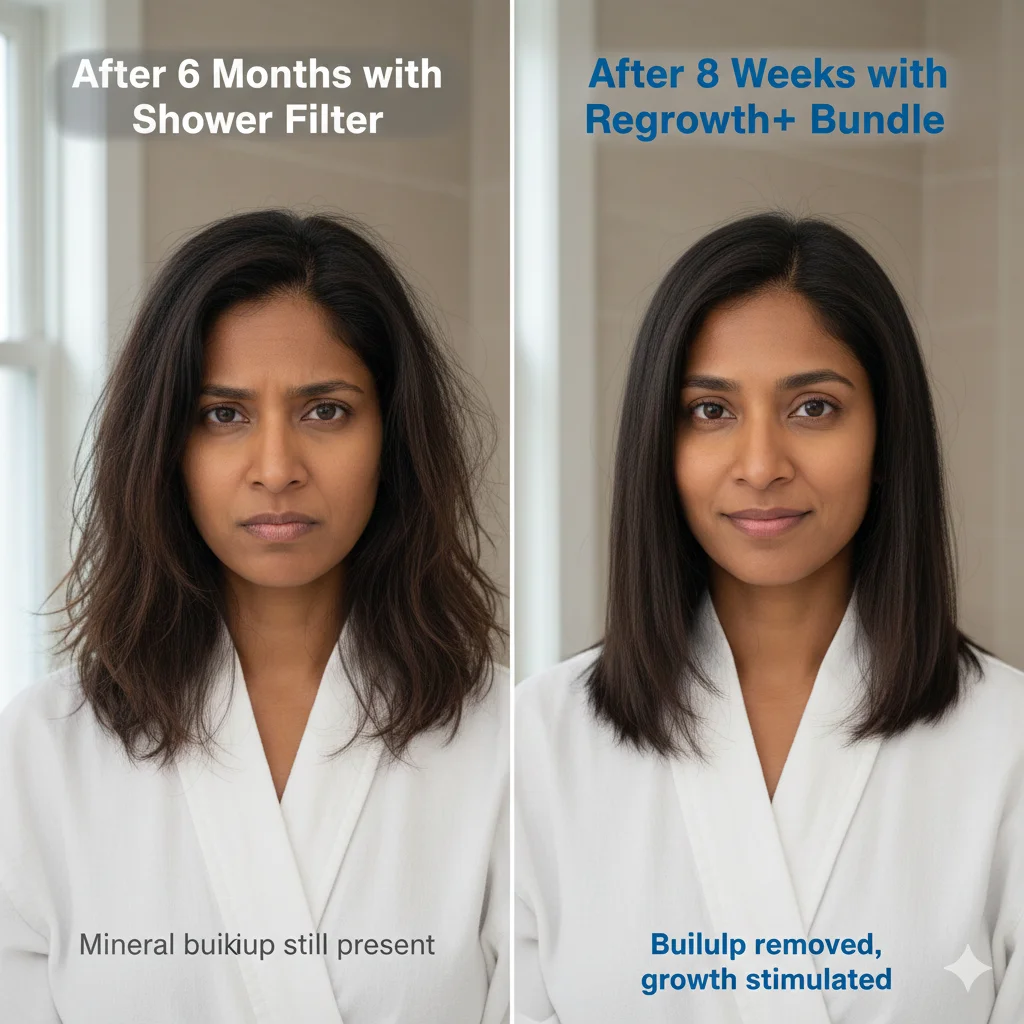
Sarah moved to the Gulf in March 2024 for a consulting role. By September, she’d lost approximately 40% of her hair density. She installed a 380 AED shower filter in October. By December, her hair was still falling out.
“I thought the filter would fix everything,” she told me. “The water felt softer, so I assumed my hair would improve. But it just kept getting worse.”
We started her on the Regrowth+ system in January 2025. Within three weeks, she noticed less hair in the drain. By week six, she saw baby hairs appearing at her hairline. By week twelve, her hair texture had completely transformed.
“I kept the filter,” she said. “But the filter alone did nothing. The chelating shampoo is what actually fixed the damage.”
Her story isn’t unique. It’s the pattern I see over and over. Filter installation, no improvement, addition of active chelation, dramatic results.
What You Should Do Right Now
If you have a shower filter, keep using it. It’s reducing the mineral load in your water, which is helpful.
But understand that it’s not fixing your current damage. You need active removal of existing buildup, plus follicle stimulation to regrow what you’ve lost.
The fastest path to results combines all three mechanisms: prevention (your filter), removal (chelating shampoo), and stimulation (growth actives like rosemary and caffeine).
Most people waste 6-8 months trying partial solutions. Filter only. Regular shampoo. Expensive salon treatments. None of it addresses the core problem: mineral buildup that’s already there, suffocating your follicles.
You can keep trying one thing at a time. Or you can use the complete system that’s engineered specifically for hard water damage in the GCC.
The choice is yours. But your hair can’t wait another six months.