You thought cradle cap was something babies got. But here you are, an adult, picking thick yellow scales off your scalp that won’t stop coming back. The flakes aren’t the small white dust of regular dandruff. They’re waxy, greasy, and they stick. Sometimes they’re yellowish. Sometimes your scalp itches. Sometimes it just looks awful and you’re tired of explaining it.
What you’re dealing with isn’t cradle cap, technically. It’s seborrheic dermatitis, the adult version of the same inflammatory scalp condition. And treating it like dry skin or regular dandruff makes it worse. The scale isn’t from dryness. It’s from inflammation, yeast overgrowth, and your sebaceous glands producing too much oil. This article contains affiliate links. See our affiliate disclosure for details.
Here’s what most people don’t know: if you live in the Gulf region, hard water mineral deposits bond to that greasy scale and make it even harder to remove. The calcium and magnesium in your shower water mix with sebum, creating a waxy buildup that standard shampoos can’t touch. You’re not imagining that it got worse after you moved here.
What Adult Seborrheic Dermatitis Actually Is
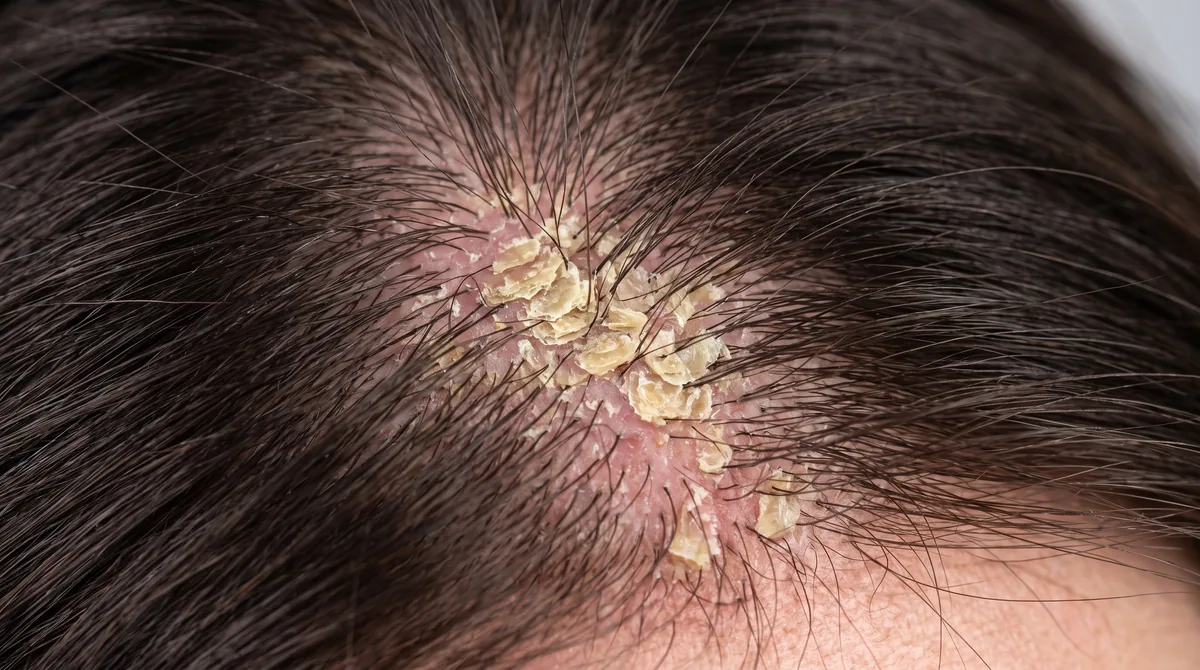
Seborrheic dermatitis is a chronic inflammatory skin condition that affects areas rich in sebaceous glands. Your scalp, face (especially around the nose and eyebrows), chest, and back are prime targets. The hallmark sign is thick, greasy, yellowish scale that adheres to the skin.
It’s not an infection. It’s not contagious. And it’s definitely not poor hygiene. According to the American Academy of Dermatology, seborrheic dermatitis affects about 11% of the population, with higher rates in adults aged 30-60. Men get it more often than women, possibly due to androgen hormone influence on sebum production.
The condition involves three main factors: overactive sebaceous glands producing excess oil, an overgrowth of Malassezia yeast (which lives on everyone’s skin but proliferates in oily environments), and an inflammatory immune response to the yeast’s byproducts. The yeast feeds on the oils, breaks them down into irritating fatty acids, and your skin reacts by producing more cells, which pile up as scale.
Unlike psoriasis (which produces silvery, dry scale) or eczema (which is usually dry and intensely itchy), seborrheic dermatitis scale is greasy and yellow-tinged. The redness underneath is usually mild. The itching varies, some people barely notice it, others can’t stop scratching.
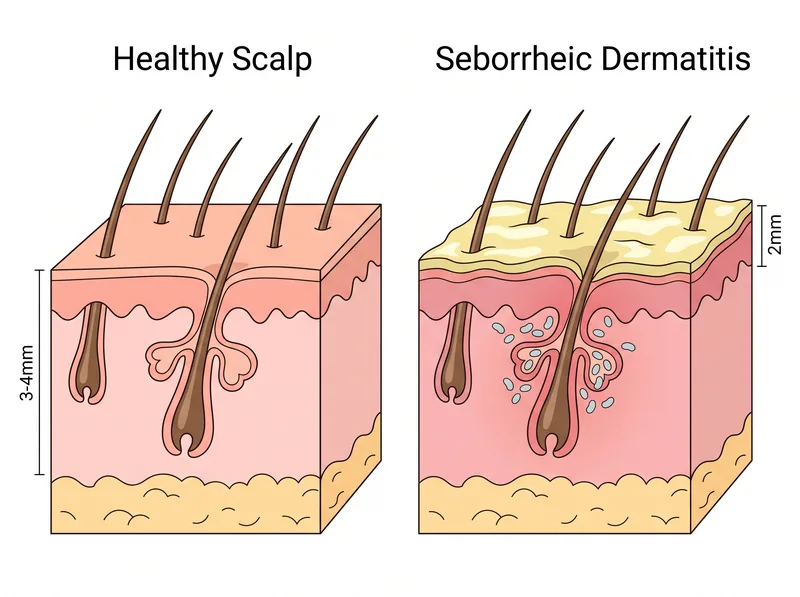 The difference between a healthy scalp (left) and one affected by seborrheic dermatitis (right). Note the thick, adherent yellow scale versus normal skin.
Why Standard Dandruff Shampoo Doesn’t Work
You’ve probably tried every dandruff shampoo at the pharmacy. Some helped a little. Most did nothing. Here’s why: regular anti-dandruff shampoos target dry scalp flaking or mild yeast overgrowth. They’re formulated for thin, white flakes that rinse away easily.
Seborrheic dermatitis scale is thick, adherent, and waxy. It doesn’t rinse off. The scale acts like a barrier, preventing active ingredients from reaching the inflamed skin underneath. Zinc pyrithione and selenium sulfide (common dandruff shampoo ingredients) can’t penetrate through that greasy layer effectively.
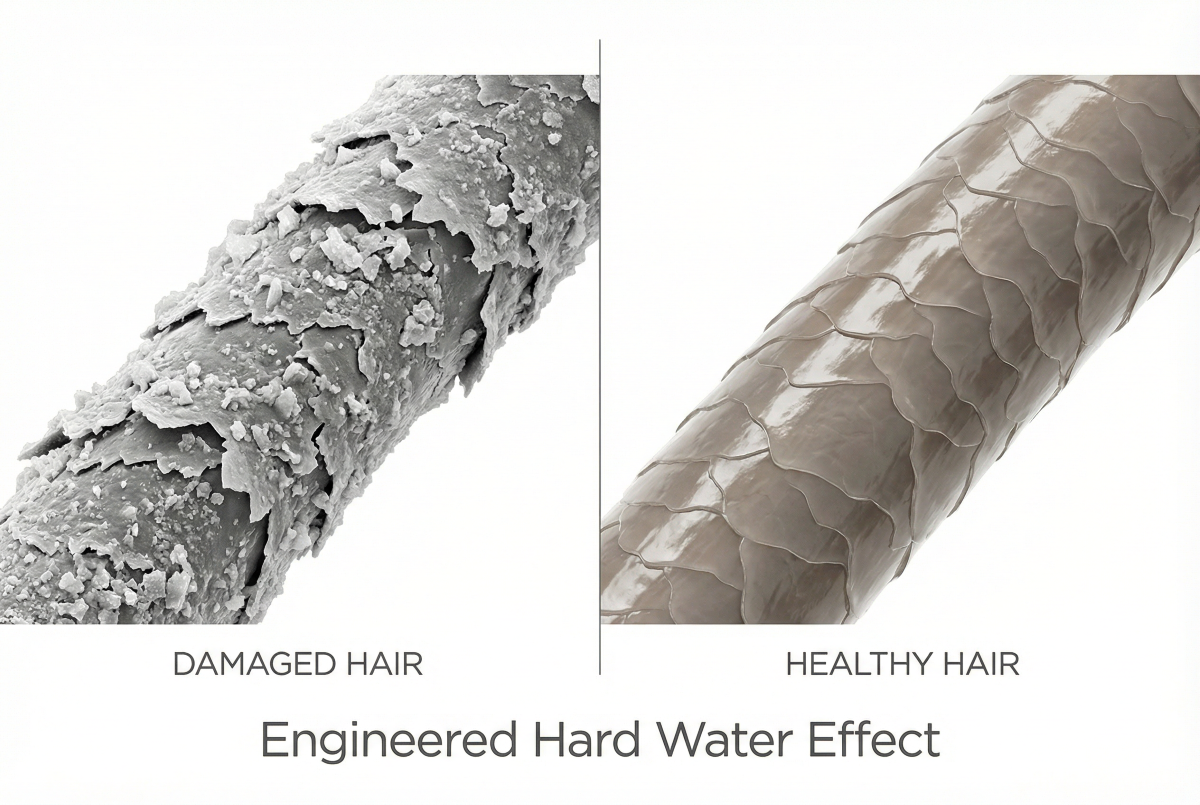
Plus, if your water is hard, you’re fighting a second battle. The minerals in hard water react with the oils and scale, forming insoluble compounds that coat your scalp. Research published in the International Journal of Trichology found that hard water increases scalp surface roughness and can worsen inflammatory scalp conditions by changeing the skin barrier.
That’s why the first step isn’t adding more active ingredients. It’s removing the buildup so treatments can actually work.
The Hard Water Factor Nobody Mentions
If you moved to the Gulf region and noticed your scalp condition worsened, the water is likely part of the problem. Gulf countries have some of the hardest water in the world due to desalination processes and high mineral content in groundwater sources.
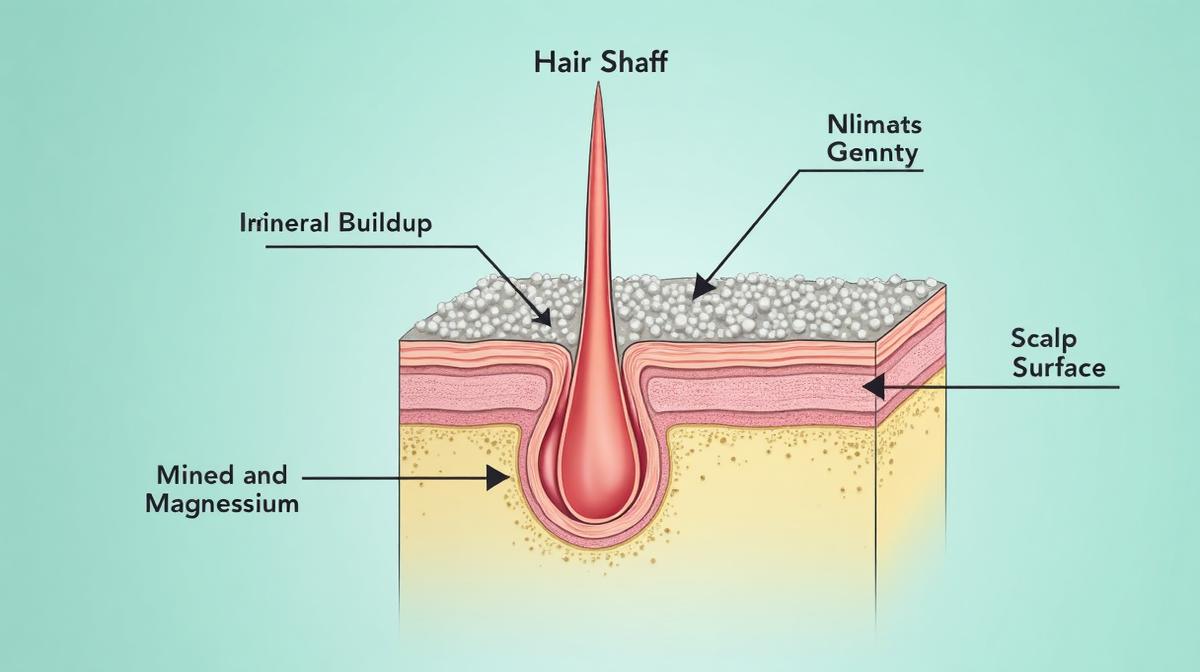
Hard water contains dissolved calcium and magnesium salts. When you wash your hair, these minerals react with sebum and soap, forming a sticky residue called soap scum. On a scalp already producing excess oil and scale, this residue adds another layer of buildup that traps dead skin cells and prevents them from shedding normally.
The mineral deposits also make the existing scale harder and more adherent. Instead of softening and lifting away during washing, the scale becomes almost cement-like. You can feel the difference: before hard water exposure, scale might flake off when you scratch. After, it’s stuck tight and comes off in thick chunks.
A chelating shampoo like Regrowth+ uses ingredients that bind to these mineral deposits and dissolve them, breaking up the waxy matrix so the scale can actually be removed. It’s not a treatment for seborrheic dermatitis itself, but it clears the pathway for medicated treatments to reach your scalp.
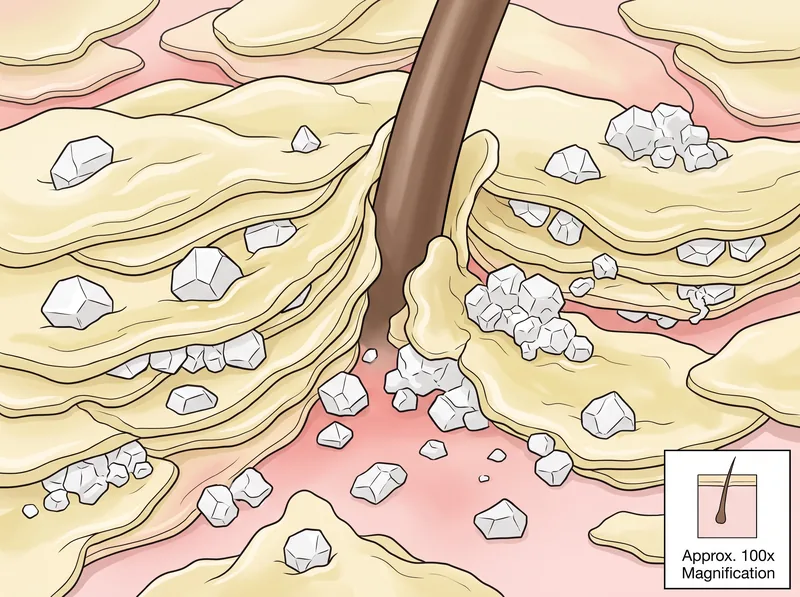 Hard water minerals bond to sebum and scale, making the buildup harder to remove and creating a cycle of worsening symptoms.
Medical Treatments That Actually Clear Scale
Once you’ve removed the mineral and oil buildup, medicated treatments can work. The gold standard for seborrheic dermatitis is ketoconazole, a prescription-strength antifungal shampoo that directly targets Malassezia yeast. A study in the Journal of the American Academy of Dermatology found that 2% ketoconazole shampoo significantly reduced seborrheic dermatitis symptoms in 73% of patients after four weeks of use.
Ketoconazole works by changeing the yeast cell membrane, reducing yeast population on the scalp. Less yeast means less inflammatory response, which means less scale production. You typically use it twice weekly, leaving it on the scalp for 3-5 minutes before rinsing.
For severe cases, dermatologists may prescribe topical corticosteroids for short-term use to reduce inflammation quickly. These aren’t for long-term use due to side effects like skin thinning, but they can break the itch-scratch cycle and calm an acute flare.
Selenium sulfide (2.5% prescription strength, stronger than over-the-counter versions) is another option. It has both antifungal and anti-scaling properties. Some people respond better to selenium sulfide than ketoconazole, it’s individual.
Salicylic acid shampoos help dissolve the bonds between dead skin cells, making scale easier to lift. They’re often used in combination with antifungal treatments. But salicylic acid alone won’t address the underlying yeast overgrowth.
The Maintenance Protocol That Prevents Flares
Seborrheic dermatitis is chronic. It doesn’t get cured, it gets managed. The goal is to keep it under control so you’re not dealing with visible scale and inflammation. That requires a consistent maintenance routine, not just treating flares when they happen.
Most dermatologists recommend a rotation system: use your medicated shampoo (ketoconazole or selenium sulfide) twice weekly, and use a gentle, non-irritating shampoo on other days. The medicated washes keep yeast levels down. The gentle washes prevent over-drying and irritation that can trigger more inflammation.
If you’re in a hard water area, incorporate a weekly chelating wash to prevent mineral buildup from accumulating. This keeps your scalp environment clean and allows the medicated treatments to maintain effectiveness.
Avoid triggers that make seborrheic dermatitis worse. Mayo Clinic identifies several common triggers: stress, cold dry weather, oily skin, infrequent shampooing (which allows oil and yeast to build up), and certain medical conditions like Parkinson’s disease or HIV that affect the immune system.
Some people find that reducing dietary sugar and refined carbohydrates helps. The theory is that Malassezia yeast may be influenced by systemic factors, though the evidence is mostly anecdotal. What’s clear is that anything that reduces inflammation system-wide (good sleep, stress management, anti-inflammatory diet) tends to help.
What to Do During an Acute Flare
Sometimes, despite your best efforts, you get a flare. The scale thickens, the redness intensifies, the itching drives you crazy. Here’s the protocol that works fastest.
First, do a pre-treatment oil soak. Apply mineral oil, coconut oil, or even olive oil to the scaly areas and leave it on for 30-60 minutes. This softens the thick scale and makes it easier to remove. Don’t skip this step, trying to scrub off thick scale without softening it first just irritates the skin more.
After the oil soak, use your medicated shampoo. Massage it into the scalp gently but thoroughly, focusing on affected areas. Leave it on for the full recommended time (usually 5 minutes for ketoconazole). The oil will have lifted the scale, allowing the medication to penetrate.
Use a soft silicone scalp brush or your fingertips (not nails) to gently loosen remaining scale while the medicated shampoo is on your scalp. Rinse thoroughly with warm water, not hot. Hot water increases inflammation.
If the flare is severe and you can’t get to a dermatologist immediately, over-the-counter hydrocortisone cream (1%) can be applied to very inflamed areas for a few days. Don’t use it long-term without medical supervision.
When to See a Dermatologist
Most cases of seborrheic dermatitis can be managed with over-the-counter treatments and the strategies outlined here. But some situations require professional evaluation.
See a dermatologist if the scale is extremely thick and doesn’t respond to medicated shampoos after 4-6 weeks of consistent use. You might need prescription-strength treatments or a different diagnosis. Psoriasis, eczema, and fungal infections can all mimic seborrheic dermatitis.
If you develop signs of infection (increasing pain, warmth, pus, spreading redness), get evaluated promptly. Scratching can break the skin barrier and allow bacterial infection, which requires antibiotic treatment.
Sudden onset of severe seborrheic dermatitis in someone who’s never had it before can occasionally signal an underlying medical condition affecting the immune system. It’s worth ruling out other causes, especially if you have other unexplained symptoms.
A dermatologist can also perform a scalp examination to confirm the diagnosis and rule out other conditions. Sometimes what looks like seborrheic dermatitis is actually scalp psoriasis or a contact dermatitis reaction to a hair product.
References
- Seborrheic Dermatitis: Overview - American Academy of Dermatology
- Effect of Hard Water on Hair Damage and Hair Care Practices - International Journal of Trichology (PubMed)
- Ketoconazole 2% Shampoo in the Treatment of Seborrheic Dermatitis - Journal of the American Academy of Dermatology (PubMed)
- Seborrheic Dermatitis: Symptoms and Causes - Mayo Clinic