Your hair has been trying to tell you something. Maybe it’s the way your once-shiny strands now look perpetually dull, no matter how expensive your conditioner. Or how your hair tangles the moment you step out of the shower, even though it never did that before. You’ve probably blamed your products, the heat, the stress. But here’s what nobody tells you: the water you’re washing with might be slowly destroying your hair from the outside in.
Hard water affects over 85% of households globally, and the Gulf region has some of the highest mineral concentrations in the world. Yet most people don’t connect their sudden hair problems to the invisible minerals coating every strand. This isn’t about vanity. It’s about understanding why your hair care routine stopped working the day you moved, or why your daughter’s hair suddenly became impossible to manage. The science is clear, and once you understand what’s happening at the microscopic level, everything else makes sense.
This article contains affiliate links. See our affiliate disclosure for details.
What Hard Water Actually Does to Your Hair
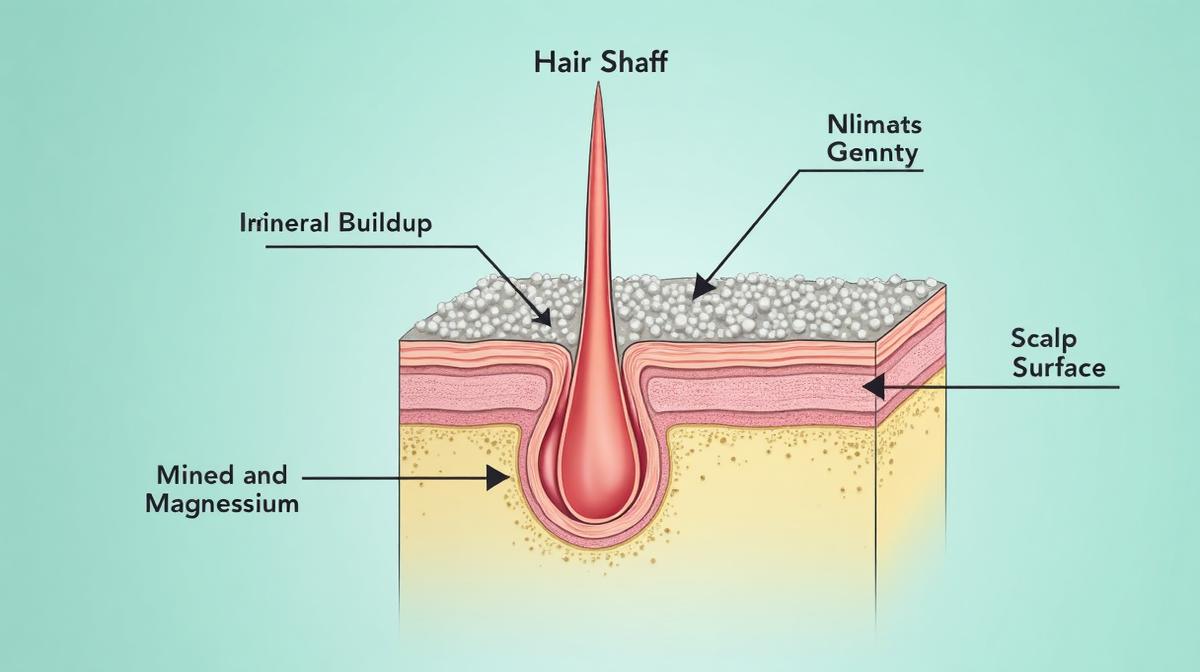
Hard water contains dissolved minerals, primarily calcium and magnesium. When you wash your hair, these minerals don’t rinse away. They bind to the hair shaft, creating a microscopic coating that accumulates with every wash. Think of it like soap scum on a shower door, except it’s happening on every single strand.
The mineral deposits do three things simultaneously. First, they create a physical barrier that prevents moisture from penetrating the hair shaft. Second, they raise the cuticle layer (the outermost protective layer of your hair), making strands rough and prone to tangling. Third, they change the hair’s pH balance, making it more alkaline and therefore more vulnerable to damage.
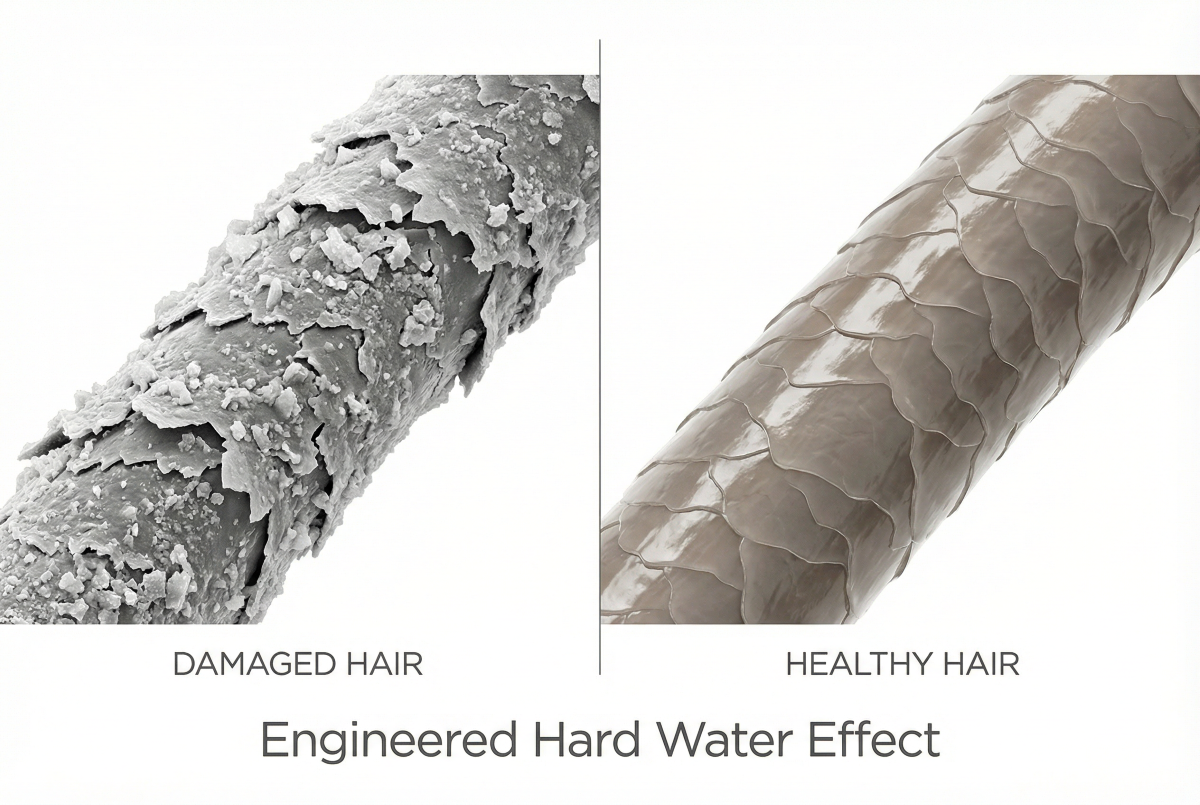
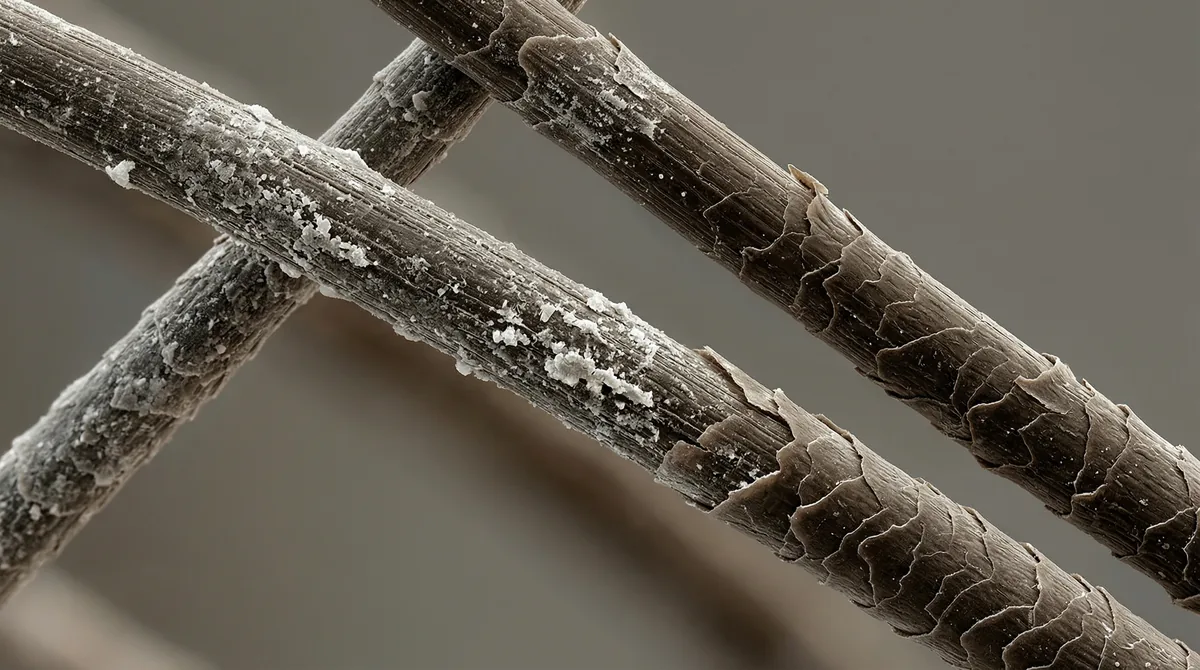
A study published in the International Journal of Trichology found that hair washed in hard water showed significantly increased surface roughness and reduced tensile strength compared to hair washed in soft water. The researchers used scanning electron microscopy to document the progressive damage, and the images are striking. After just four weeks of hard water exposure, hair cuticles showed visible lifting and irregular surface texture.
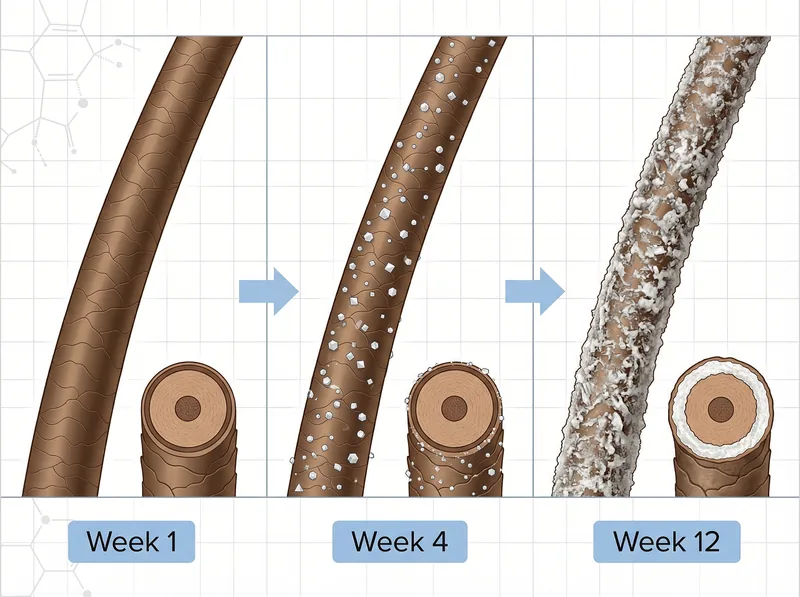 Hard water minerals create progressive buildup on hair strands, blocking moisture and causing damage over weeks of exposure.
The Progressive Damage Timeline
Hard water damage doesn’t happen overnight. It’s insidious because the changes are gradual enough that you might not connect them to your water supply. But the timeline is remarkably consistent across different hair types.
Week one: Your hair might actually feel slightly different, though most people don’t notice yet. The minerals begin their initial deposit phase. Week two to four: You start noticing your hair feels ‘different’ after washing. It might seem heavier, or like your conditioner isn’t absorbing properly. This is the mineral barrier forming. Week six to eight: Tangles become more frequent. Your hair doesn’t dry as quickly. Styling products seem less effective. The cuticle damage is now measurable.
By week twelve, the damage becomes obvious. Hair looks perpetually dull regardless of products used. Breakage increases. If you’re using heat styling tools, the damage accelerates because the mineral coating creates hot spots that literally cook your hair from the outside. And here’s the part that surprises most people: hard water can contribute to increased hair shedding by weakening the hair shaft at the follicle level.
But it gets worse. The mineral buildup doesn’t just damage your hair directly. It also interferes with every product you apply. Your shampoo can’t clean effectively because it’s fighting the mineral barrier. Your conditioner can’t moisturize because the minerals block penetration. Even treatments like hair masks or oils sit on top of the mineral layer rather than reaching the hair shaft itself.
Why Gulf Residents Face Amplified Damage
The Gulf region presents a perfect storm for hard water hair damage. The combination of desalinated water (which often has added minerals for taste and corrosion control), high ambient temperatures, and low humidity creates conditions that accelerate every aspect of the damage process.
Desalination plants add calcium and magnesium back into the water after processing. This is partly for taste, partly to prevent pipe corrosion, and partly to meet mineral content standards. The result? Water that’s technically safe to drink but harsh on hair and skin. The US Geological Survey defines hard water as anything over 120 mg/L of calcium carbonate. Many Gulf municipalities measure between 200-400 mg/L.
The heat matters more than you’d think. When you shower in hot water with high mineral content, the heat opens your hair cuticles wider, allowing more minerals to deposit deeper into the hair structure. Then you step into a low-humidity environment where your hair dries quickly, locking those minerals in place. It’s like the difference between letting paint dry slowly versus flash-drying it. The faster dry time means less opportunity for minerals to be brushed or rinsed away.
This explains why so many expats notice dramatic hair changes within weeks of arriving in the Gulf. It’s not the stress of moving (though that doesn’t help). It’s not suddenly using ‘different’ products. It’s the water chemistry interacting with environmental factors that simply don’t exist in most other regions. Your hair isn’t being dramatic. It’s responding to a legitimate chemical assault.
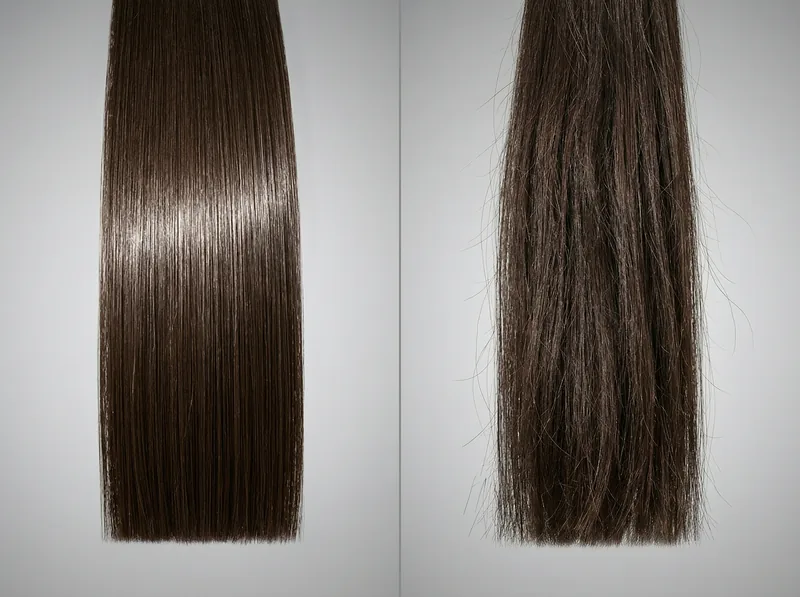 The difference between protected hair (left) and hair exposed to hard water without treatment (right) after three months.
The Hidden Connection to Treatment Failure
Here’s something most dermatologists won’t tell you because they don’t think about water quality: hard water can sabotage medical hair loss treatments. If you’re using minoxidil, finasteride, or even over-the-counter growth serums, the mineral barrier on your scalp and hair can reduce treatment effectiveness by up to 40%.
Research on minoxidil absorption shows that scalp pH and surface barriers significantly affect how well the medication penetrates to the follicle level. When your scalp is coated in mineral deposits, you’re essentially asking the medication to work through a chemical shield. Some of it gets through, but nowhere near the amount that would reach a clean, mineral-free scalp.
The same principle applies to any topical treatment, including natural options like rosemary oil. A comparative study published in SKINmed found that rosemary oil performed comparably to 2% minoxidil for androgenetic alopecia, but the study was conducted in a controlled environment with soft water. In real-world conditions with hard water, results would likely differ significantly.
This is why some people report that their hair loss treatments ‘stopped working’ after moving to a new city. The treatment didn’t change. The water did. And until you address the mineral barrier, you’re fighting an uphill battle with any topical therapy.
How to Protect Your Hair Starting Today
The solution isn’t complicated, but it does require understanding what actually works versus what’s marketed to work. Shower filters are the first thing most people try, and they’re largely ineffective for hard water minerals. Most filters target chlorine, sediment, and some heavy metals, but calcium and magnesium molecules are too small for standard filtration media to catch.
What actually works is chelation. This is a chemical process where certain ingredients bind to mineral deposits and allow them to be rinsed away. The most effective chelating agents for hair care are EDTA (ethylenediaminetetraacetic acid), citric acid, and phytic acid. A chelating shampoo like Regrowth+ uses a combination of these ingredients specifically formulated for Gulf water conditions.
But here’s the protocol that makes the difference: you can’t chelate once and call it done. The mineral buildup took weeks to form, and it takes consistent treatment to remove. Use a chelating shampoo once or twice a week, not daily. Daily chelation can strip your hair of beneficial oils. On non-chelating days, use a sulfate-free shampoo that won’t add to the mineral problem.
Between washes, protect your hair with products that create a barrier. Silicone-based serums get a bad reputation in natural hair care circles, but they’re actually protective against hard water because they prevent minerals from directly contacting the hair shaft. The key is using them strategically, not as a daily default. And once a month, do a clarifying treatment to reset your hair completely. This could be an apple cider vinegar rinse (one part vinegar to four parts water) or a professional chelating treatment.
When to Seek Professional Help
Most hard water damage is reversible with proper care, but there’s a point where professional intervention becomes necessary. If you’ve been dealing with hard water damage for more than six months without treatment, the cumulative effects might require more than at-home solutions.
See a trichologist or dermatologist if you’re experiencing increased shedding (more than 100-150 hairs per day), visible scalp irritation or inflammation, hair that breaks off rather than sheds with the root intact, or if your hair texture has changed dramatically and isn’t responding to chelating treatments within 4-6 weeks. These could indicate that the hard water has triggered or exacerbated an underlying condition like seborrheic dermatitis or telogen effluvium.
Professional treatments might include prescription-strength chelating shampoos, scalp treatments to address mineral-induced inflammation, or protein treatments to rebuild hair structure that’s been compromised by prolonged mineral exposure. Some dermatologists in the Gulf region now routinely test for mineral buildup when patients present with unexplained hair changes, because they’ve seen the pattern so frequently.
The good news? Even severe hard water damage is treatable. Hair has remarkable regenerative capacity when you remove the source of damage and give it the right support. But you have to address the water issue first. Everything else is just managing symptoms rather than solving the problem.
References
- Effect of Hard Water on Hair - International Journal of Trichology
- Hardness of Water - US Geological Survey
- Rosemary Oil vs Minoxidil for Alopecia - SKINmed Journal
- Water Quality and Hair Health - American Academy of Dermatology