You’re finding more hair in your brush than usual. Your ponytail feels thinner. The part down the center of your scalp seems wider every month. If you’re a woman experiencing hair loss, you’re not alone, and you’re probably frustrated by how little useful information exists about female hair loss treatment.
This article contains affiliate links. See our affiliate disclosure for details.
Here’s what makes female hair loss different from male pattern baldness: it’s rarely about a receding hairline. Instead, women typically experience diffuse thinning across the entire scalp, a widening center part, or sudden shedding that seems to come from nowhere. The causes are more complex, the treatments are different, and the emotional impact is often more severe because society expects women to have thick, healthy hair.
The good news? Effective hair fall treatment options exist for women. But you need accurate information to choose the right approach for your specific situation. This guide covers evidence-based treatments that actually work, from topical solutions to environmental factors that might be sabotaging your progress, especially if you live in the Gulf region.
Understanding Female Hair Loss Patterns
Before diving into treatments, you need to understand what type of hair loss you’re dealing with. Women experience several distinct patterns, and the treatment approach changes depending on the underlying cause.
Androgenetic alopecia (female pattern hair loss) is the most common type, affecting up to 40% of women by age 50. You’ll notice gradual thinning across the top of your scalp with a widening center part. Unlike men, your frontal hairline usually stays intact. This type is driven by genetics and hormones, specifically, increased sensitivity to androgens.
Telogen effluvium causes sudden, diffuse shedding across your entire scalp. It’s triggered by stress, illness, surgery, childbirth, or nutritional deficiencies. The good news? It’s usually temporary. Hair typically recovers within 6-12 months once the trigger is removed.
Traction alopecia results from hairstyles that pull on your hair, tight ponytails, braids, extensions, or constant heat styling. You’ll see thinning along your hairline and temples first. This type is completely preventable and often reversible if caught early.
Diffuse thinning without a clear pattern might indicate thyroid issues, iron deficiency, or autoimmune conditions. If your hair loss doesn’t fit the patterns above, see a dermatologist for blood work. Treating the underlying condition often resolves the hair loss.
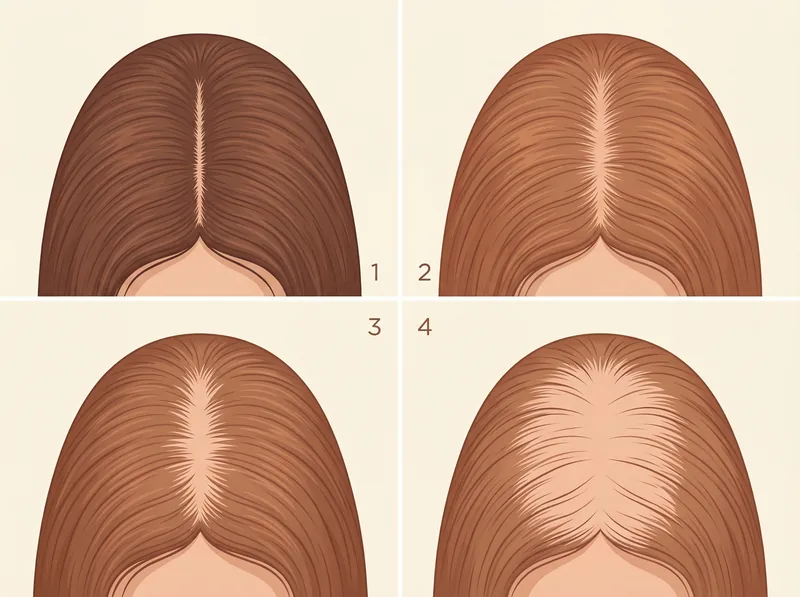 Common hair loss patterns in women: diffuse thinning, androgenetic alopecia, telogen effluvium, and traction alopecia
Topical Treatments That Actually Work
Let’s start with the treatments backed by the most clinical evidence. These aren’t miracle cures, but they can slow hair loss and stimulate regrowth when used consistently.
Minoxidil (2% or 5%) is the only FDA-approved topical treatment for female pattern hair loss. Studies show that 5% minoxidil produces better results than 2%, with about 40% of women seeing moderate to significant regrowth after 6-12 months. You apply it directly to your scalp twice daily. It works by prolonging the growth phase of hair follicles and increasing blood flow to the scalp.
Here’s what nobody tells you about minoxidil: you’ll experience increased shedding during the first 2-3 months. This is actually a good sign, old, weak hairs are being pushed out to make room for new growth. But if you live in an area with hard water, mineral buildup can prevent minoxidil from penetrating your scalp effectively.
Rosemary oil has emerged as a natural alternative with surprising clinical backing. A 2015 study found it performed as well as 2% minoxidil for androgenetic alopecia. You massage it into your scalp (diluted in a carrier oil) and leave it for at least 30 minutes before washing. It won’t work overnight, but after 6 months of consistent use, many women see measurable improvement.
Low-level laser therapy (LLLT) devices, combs, caps, or helmets that emit red light, have FDA clearance for treating hair loss. Clinical trials show they can increase hair density and thickness. You use them for 15-30 minutes several times per week. They’re expensive (£200-£600), but they work by stimulating cellular activity in hair follicles.
Oral Medications and Supplements
Topical treatments work on your scalp surface. Oral options address systemic causes of hair loss, hormones, inflammation, or nutritional deficiencies.
Spironolactone is an anti-androgen medication that blocks the effects of testosterone on hair follicles. Dermatologists prescribe it off-label for female pattern hair loss, especially if you have signs of androgen excess (acne, irregular periods, excess facial hair). It takes 6-12 months to see results, and you can’t use it if you’re pregnant or planning pregnancy.
Oral contraceptives can help if your hair loss is hormone-related. Pills containing anti-androgenic progestins (like drospirenone or cyproterone acetate) are most effective. They work by reducing circulating androgens and increasing sex hormone-binding globulin, which binds up free testosterone.
Iron supplementation is critical if you’re deficient. Iron deficiency is one of the most common causes of hair loss in premenopausal women. But don’t supplement blindly, get your ferritin levels tested first. You need ferritin above 40 ng/mL for optimal hair growth, and above 70 ng/mL if you want to see regrowth.
Biotin supplements are heavily marketed for hair growth, but here’s the truth: they only work if you’re actually deficient, which is rare. Most people get enough biotin from food. High-dose biotin (5,000-10,000 mcg) can also interfere with lab tests, giving false results for thyroid and cardiac markers.
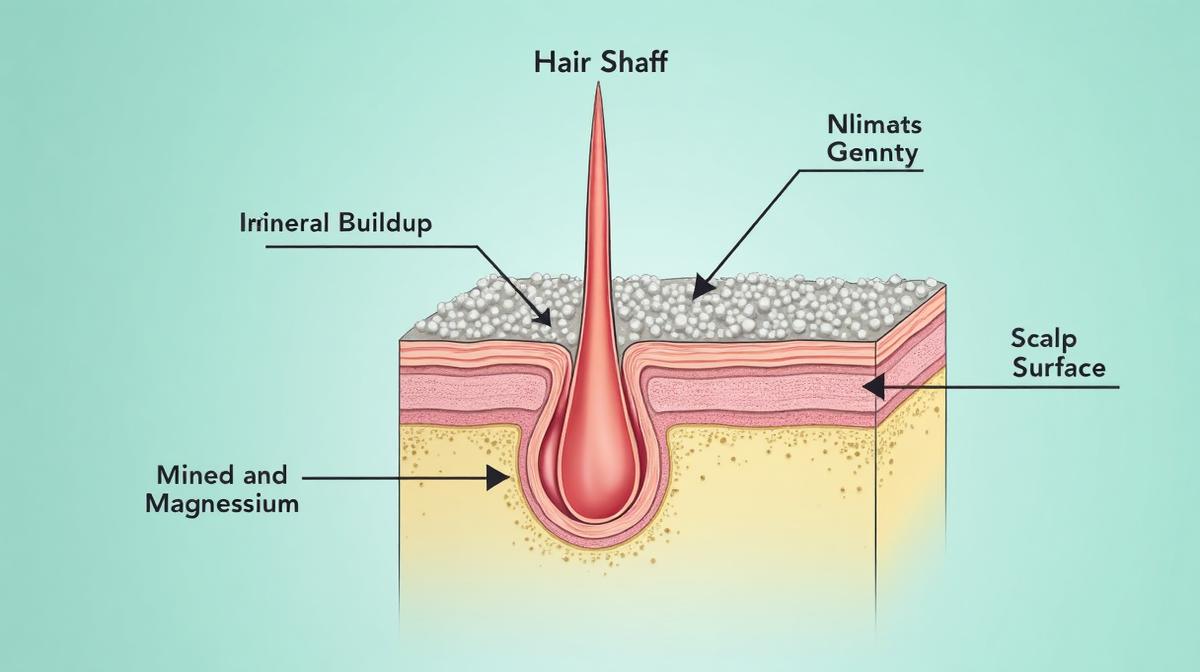
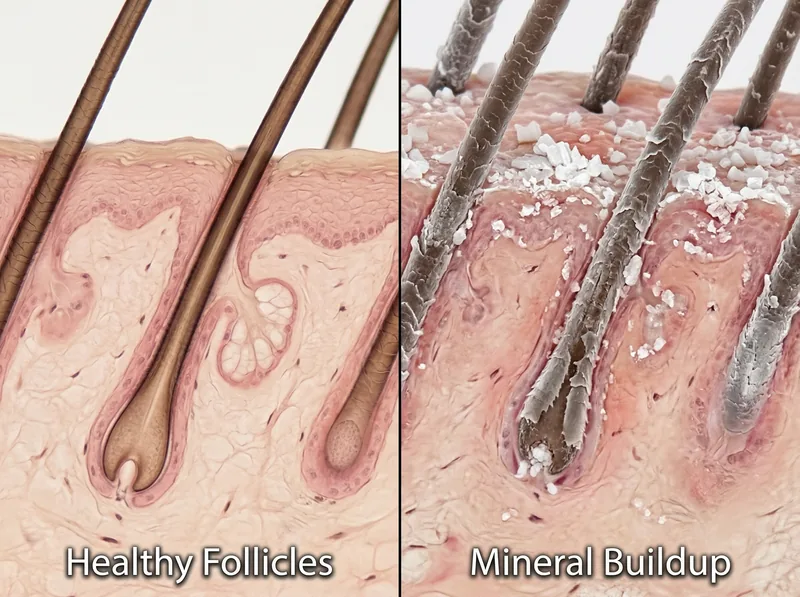 Mineral buildup from hard water can suffocate hair follicles, contributing to progressive thinning
Environmental Factors Sabotaging Your Treatment
You can use the best treatments available, but if environmental factors are damaging your hair and scalp, you won’t see the results you’re hoping for. This is especially true in the Gulf region.
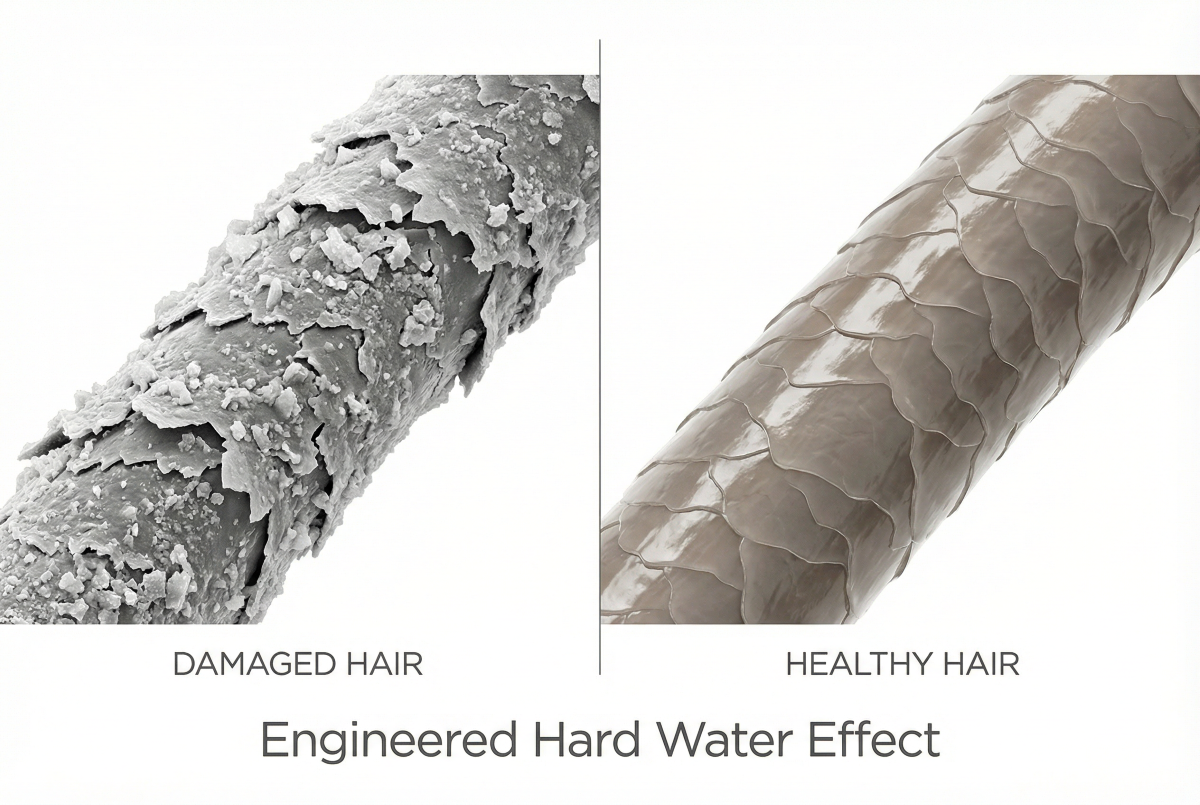
Hard water is probably the biggest hidden factor affecting hair health for women in the Gulf. The water contains high concentrations of calcium, magnesium, and other minerals that coat your hair shaft and clog your follicles. Over time, this buildup creates a barrier that prevents topical treatments from penetrating your scalp.
You’ll know you have mineral buildup if your hair feels rough and straw-like even after conditioning, if it tangles easily, or if you see white residue on your scalp. The buildup also raises your hair’s pH, which weakens the protein structure and makes breakage worse.
A chelating shampoo like Regrowth+ removes these mineral deposits by binding to the metals and rinsing them away. Use it once or twice weekly before applying your regular treatment products. This creates a clean foundation for minoxidil, rosemary oil, or any other topical solution to actually work.
Heat and UV exposure in the Gulf also accelerate hair damage. The intense sun breaks down the protein structure of your hair shaft, making it brittle and prone to breakage. Wear a hat or scarf when outdoors, and use leave-in products with UV protection.
Lifestyle Changes That Support Hair Regrowth
Treatment products address the biological mechanisms of hair loss. But your daily habits either support or undermine those treatments.
Protein intake matters more than most women realize. Your hair is made of keratin, a protein. If you’re not eating enough protein (aim for 0.8-1g per kg of body weight daily), your body will prioritize vital functions over hair growth. Include lean meats, fish, eggs, legumes, or protein supplements in every meal.
Stress management isn’t just wellness advice, it’s a clinical intervention for hair loss. Chronic stress pushes hair follicles into the resting phase prematurely, causing increased shedding. Studies consistently show that stress reduction techniques (meditation, exercise, therapy) can reduce telogen effluvium.
Sleep quality affects hair growth hormones. During deep sleep, your body releases growth hormone, which stimulates cell reproduction and hair follicle regeneration. Aim for 7-9 hours of quality sleep. If you’re struggling with sleep, address it, it’s not just about feeling rested.
Gentle hair handling prevents mechanical damage that worsens hair loss. Stop using tight hairstyles, reduce heat styling, and switch to a silk pillowcase to minimize friction. Use a wide-tooth comb instead of a brush when your hair is wet. These small changes reduce breakage significantly.
When to See a Specialist
Some hair loss requires professional diagnosis and prescription treatment. Don’t waste months on over-the-counter solutions if you have signs that indicate a more serious underlying condition.
See a dermatologist or trichologist if you’re experiencing sudden, rapid hair loss (losing more than 100-150 hairs daily for weeks), if you have bald patches or complete hair loss in certain areas, if your scalp is red, scaly, or painful, or if you have other symptoms like fatigue, weight changes, or irregular periods.
Your doctor will likely order blood tests checking thyroid function (TSH, T3, T4), iron levels (ferritin, serum iron, TIBC), vitamin D, vitamin B12, and possibly hormone levels (testosterone, DHEA-S). These tests reveal systemic causes that topical treatments can’t fix.
A scalp biopsy might be necessary if your diagnosis is unclear. It sounds invasive, but it’s a simple office procedure that provides definitive answers about what’s happening at the follicle level. This is especially useful for distinguishing between scarring and non-scarring alopecia.
Platelet-rich plasma (PRP) injections are an emerging treatment option offered by dermatologists. Your own blood is processed to concentrate growth factors, then injected into your scalp. Clinical evidence is still building, but early results are promising for androgenetic alopecia and alopecia areata.
Creating Your Personal Treatment Plan
Effective hair loss treatment for women isn’t about finding one magic product. It’s about creating a complete approach that addresses your specific type of hair loss, environmental factors, and lifestyle habits.
Start with the foundation: get blood work to rule out nutritional deficiencies and thyroid issues. If you find deficiencies, correct them first. You won’t see results from topical treatments if your body lacks the raw materials for hair growth.
Choose one evidence-based topical treatment (minoxidil or rosemary oil) and commit to it for at least 6 months. Consistency matters more than which option you choose. Apply it to a clean scalp, use a chelating shampoo weekly if you have hard water to ensure your treatment can actually penetrate.
Add supportive lifestyle changes: adequate protein, stress management, gentle hair handling, and UV protection. These won’t regrow hair on their own, but they create an environment where your primary treatment can work effectively.
Track your progress with photos taken in the same lighting every month. Hair regrowth is gradual, you won’t notice day-to-day changes. Monthly photos help you see whether your treatment is working or if you need to adjust your approach.
Be patient. Hair grows about half an inch per month. Even if new growth starts immediately, it takes months before you notice a visible difference in density. Most treatments require 6-12 months before you can fairly evaluate their effectiveness.
References
- Topical minoxidil in the treatment of female pattern hair loss - PubMed
- Low-level laser therapy for the treatment of androgenetic alopecia - PubMed Central
- Iron deficiency anemia: Symptoms and causes - Mayo Clinic
- Platelet-rich plasma for hair loss - American Academy of Dermatology
- Effects of stress on the body - Healthline