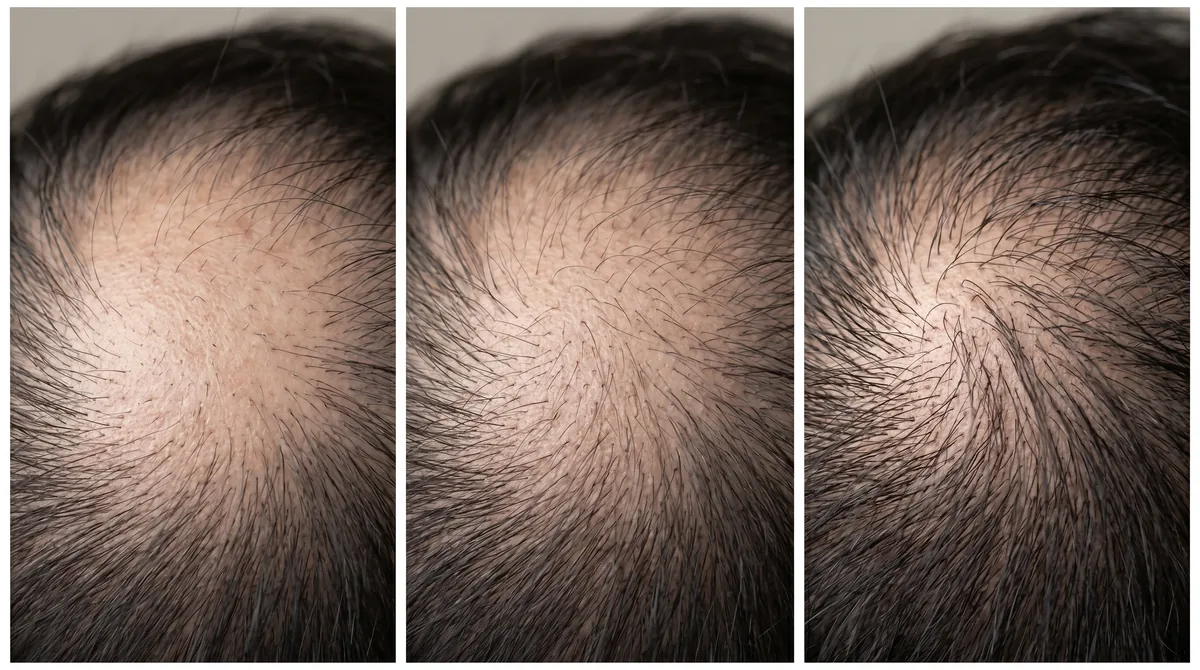
You’re eight weeks into a hair loss treatment. You’ve been consistent. You’ve followed every instruction. And your hair looks… exactly the same. Maybe worse. So you quit.
Here’s the thing: you just abandoned ship right before the biology started working. Most people do. This article contains affiliate links. See our affiliate disclosure for details.
The gap between when you start treatment and when you see results isn’t a design flaw. It’s how hair follicles work. And understanding that timeline is the difference between success and another failed attempt.
Let’s be honest about what the science actually shows. Not the marketing promises. Not the testimonials. The peer-reviewed, replicated, boring truth about how long hair regrowth takes and what you should expect each month.
Why Hair Regrowth Takes Months, Not Weeks
Hair doesn’t grow like grass. It grows in cycles. And those cycles have their own timeline that no product can shortcut.
The anagen phase is the growth phase. It’s when your follicle is actively producing a hair shaft. For scalp hair, anagen lasts 2-7 years. That’s the phase where growth happens.
When a follicle is damaged or miniaturized by DHT, it exits anagen early. The hair sheds. The follicle goes dormant in telogen (the resting phase) for 3-4 months before it can even attempt to start a new anagen cycle.
Here’s why that matters: when you start a treatment like minoxidil or address hard water damage, you’re not making existing hairs grow faster. You’re trying to push dormant follicles back into anagen. And that process takes months.
A study published in the Journal of the American Academy of Dermatology tracked minoxidil users and found that visible improvement typically began at 4-6 months. Not weeks. Months.
The follicle has to complete its current cycle, enter a new anagen phase, and produce a hair shaft thick enough to be visible. That’s not a quick process. It’s biology, and biology doesn’t care about your timeline.
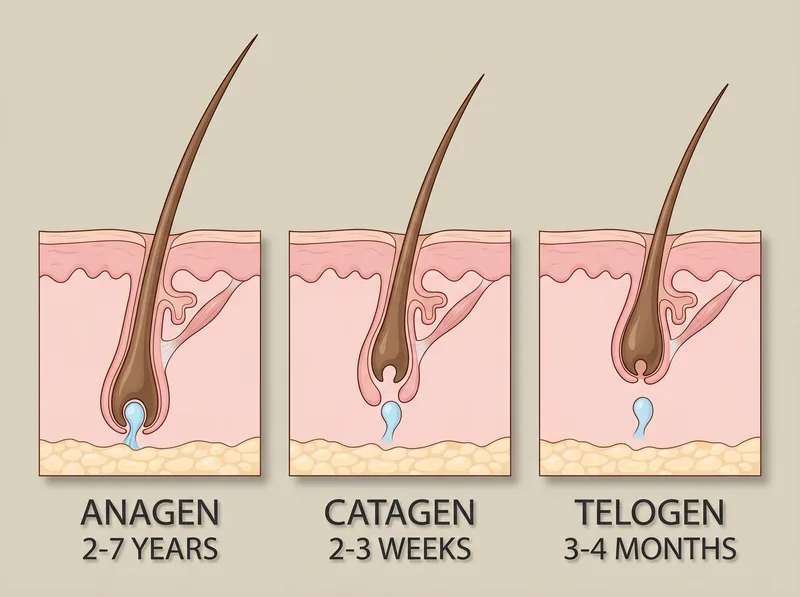 The hair growth cycle phases: anagen (growth), catagen (transition), and telogen (rest). Understanding this cycle explains why visible regrowth takes months, not weeks.
The Month-by-Month Reality: What Actually Happens
Month 1: Nothing visible. You might experience increased shedding if you’re using minoxidil (that’s the dormant hairs being pushed out to make room for new growth). Your scalp might feel different if you’ve switched to a chelating shampoo and removed mineral buildup. But no new hair yet.
Month 2: Still nothing visible. This is when most people start googling ‘why isn’t my treatment working.’ The answer: it is working, but at the cellular level. Follicles are responding to DHT blockers or improved scalp conditions, but they haven’t produced visible hair shafts yet.
Month 3: If you look very closely with good lighting, you might see fine vellus hairs (peach fuzz) emerging. These are baby hairs. They’re unpigmented and thin. Most people don’t notice them without actively looking. This is actually a positive sign, but it doesn’t look like ‘regrowth’ yet.
Month 4: Vellus hairs begin to thicken and darken. You might notice slightly less scalp visibility in certain lighting. Friends and family won’t notice. But if you take monthly photos in consistent lighting, you’ll see the difference.
Month 5: This is when terminal hairs (thick, pigmented hairs) start appearing in meaningful numbers. You’ll notice reduced scalp visibility. The density improvement becomes obvious to you, though others might not comment yet.
Month 6: The first point where other people might notice. Hair density has improved enough to change your overall appearance. This is the milestone most clinical studies use as the evaluation point because it’s when results become clinically significant.
Months 7-12: Continued improvement. Hair shafts continue thickening. Density continues increasing. But the rate of improvement slows. You’re no longer seeing dramatic month-over-month changes. You’re maintaining and gradually improving.
After 12 months: You’ve reached your maximum response to the treatment. Some follicles will have recovered. Others won’t. This is your new baseline. Continued treatment maintains this level. Stopping treatment often means regression within 3-6 months.
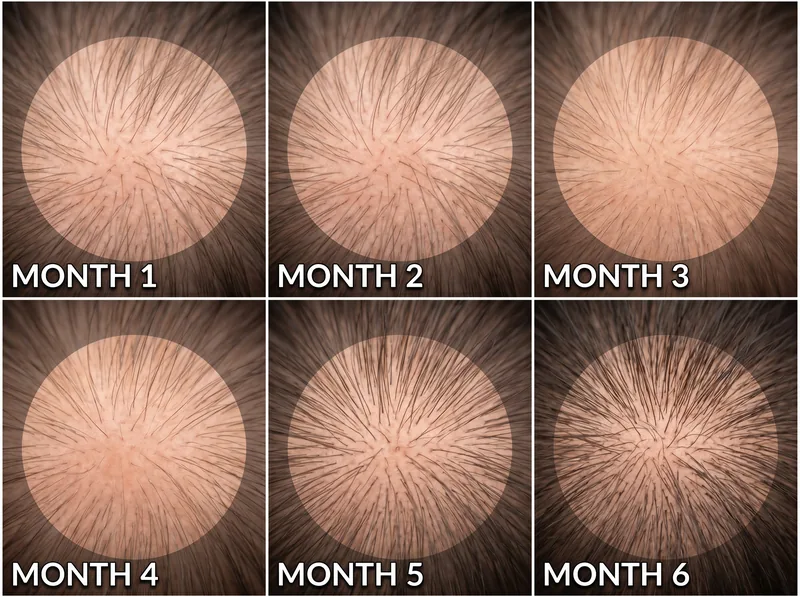 What to actually expect each month: Most visible improvement happens between months 4-6, not in the first weeks when most people quit.
Why Most People Quit at 8 Weeks (And Why That’s a Mistake)
Research on treatment adherence shows that 60-70% of people abandon hair loss treatments within the first three months. They quit right before the biology starts producing visible results.
The reason is simple: expectations don’t match reality. Marketing shows before-and-after photos. Testimonials describe rapid results. But the science tells a different story. And when your experience doesn’t match the promise, you assume the treatment isn’t working.
But here’s what’s actually happening at week 8: your follicles are responding. DHT levels at the follicle are decreasing (if you’re using a DHT blocker). Blood flow is improving (if you’re using minoxidil). Mineral buildup is cleared (if you’ve addressed hard water). The cellular environment is better.
You just can’t see it yet. Because the hair shaft that will eventually emerge is still forming inside the follicle. It hasn’t broken through the scalp surface. And when it does, it’ll be a fine vellus hair that takes another month or two to thicken into a visible terminal hair.
Quitting at 8 weeks is like planting a seed, watering it for two months, and then digging it up because you don’t see a tree yet. The biology was working. You just didn’t wait long enough to see the result.
A systematic review in Dermatologic Therapy found that patient adherence to hair loss treatments was the strongest predictor of success. Not the specific treatment. Not the severity of loss. Adherence.
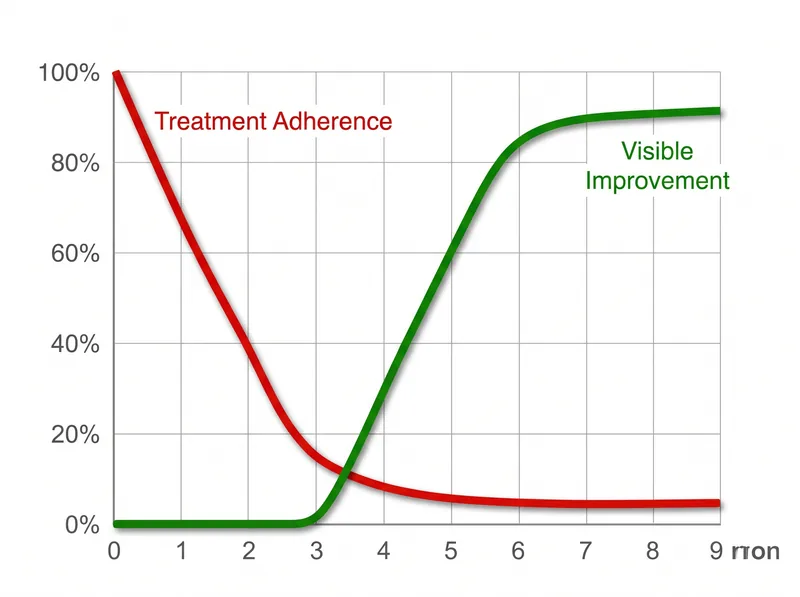 The adherence gap: Most people quit at 8 weeks, right before the anagen phase begins producing visible results. This is why realistic expectations matter.
The Hard Water Factor: Why Starting Clean Matters
If you’re in the Gulf region, there’s another timeline factor: hard water mineral buildup. And this one actually shortens your window for other treatments to work.
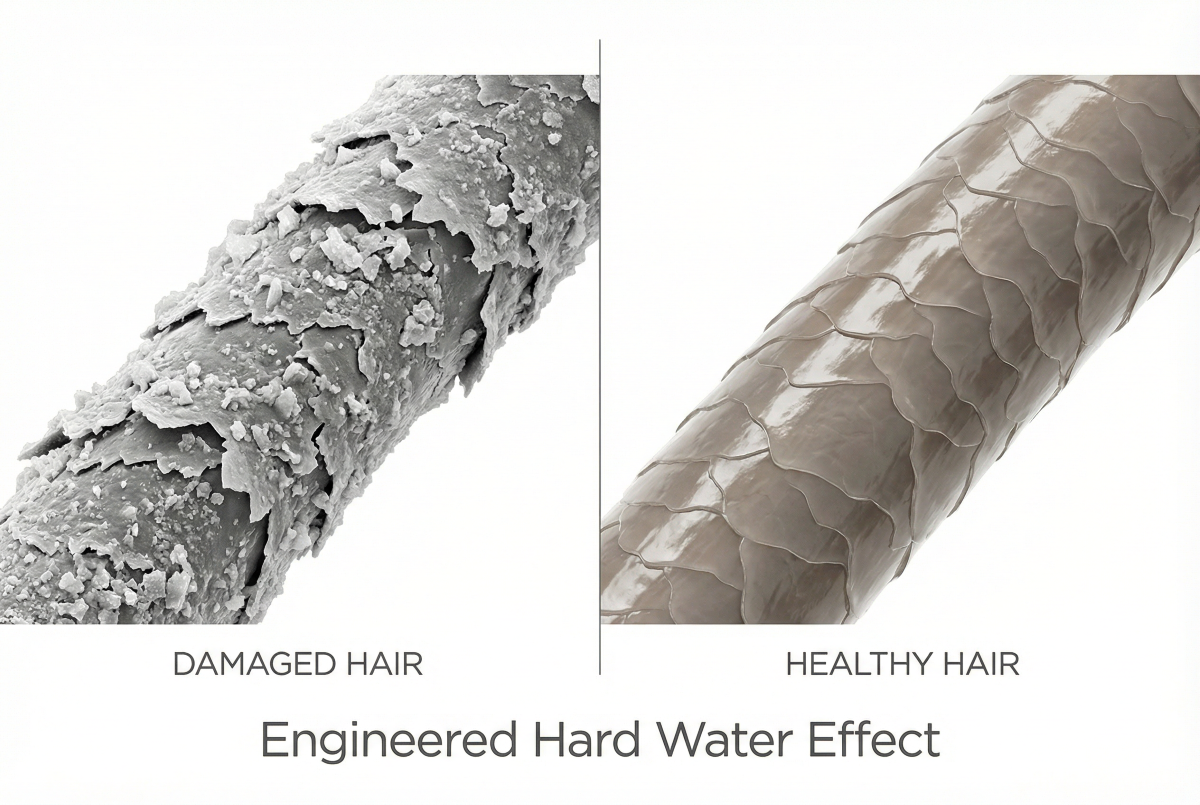
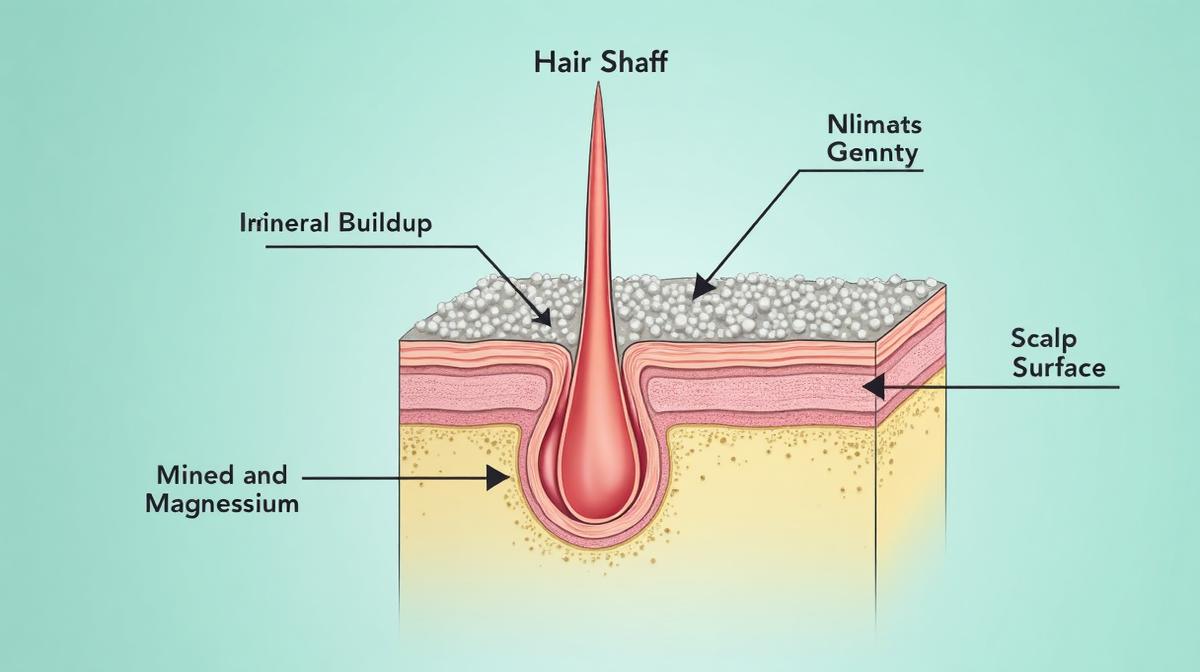
Hard water deposits calcium, magnesium, and silica on your scalp and hair shaft. Over time, this creates a physical barrier that blocks topical treatments from reaching the follicle. It also changes the scalp’s pH balance, which affects the follicle microenvironment.
Here’s why that matters for your timeline: if you start minoxidil or other treatments without first removing mineral buildup, you’re asking the treatment to penetrate through a barrier. It can’t. So you’re running the 6-month clock on a treatment that isn’t reaching the follicle at full strength.
A chelating shampoo like Regrowth+ removes that mineral barrier in the first few washes. That means when you start other treatments, they’re working on a clean scalp from day one. You’re not wasting the first 2-3 months fighting through buildup.
Think of it this way: if the anagen recovery timeline is fixed at 6 months, you want every day of those 6 months to count. Starting with a clean scalp gives your treatments their best chance to work within that window.
This isn’t about speeding up the biology. You can’t. But you can make sure nothing is blocking the biology from working at its natural pace. And in a region where hard water affects nearly everyone, that’s the difference between success and failure.
How to Track Progress Without Losing Your Mind
Waiting six months is hard. Especially when you’re checking the mirror every day. So here’s how to track progress in a way that actually shows change.
Take monthly photos in identical conditions. Same lighting. Same angle. Same time of day. Use your phone’s grid feature to frame the shot consistently. Focus on the crown and hairline. These photos will show changes that daily mirror checks can’t reveal because the changes are too gradual.
Don’t take weekly photos. You won’t see week-to-week change, and that’ll discourage you. Monthly is the right interval. It’s long enough for visible change but frequent enough to track progress.
Use a hair density app or scalp camera if you want objective data. These tools measure the number of hairs per square centimeter. They’re more accurate than visual assessment and can detect changes before they’re obvious to the naked eye.
Track shedding, not just growth. Count the hairs that come out in the shower or on your pillowcase. If shedding decreases over the first 3-4 months, that’s a positive sign even if you don’t see new growth yet. It means fewer follicles are exiting anagen prematurely.
Measure hair shaft thickness if possible. Use a micrometer or compare hair strands to a reference. Thicker shafts indicate healthier follicles even if density hasn’t improved yet. This can be an early indicator of treatment response.
Keep a treatment log. Note what you’re using, when you started, and any changes you make. This helps you identify what’s working and what isn’t. And if you eventually see a dermatologist, you’ll have detailed records to share.
When to Adjust Your Approach (And When to Stay the Course)
Six months is the evaluation point. That’s when you should assess whether your treatment is working. Not at 8 weeks. Not at 3 months. Six months.
If you see no improvement at all by month 6, no vellus hairs, no reduced shedding, no change in hair shaft thickness, then it’s time to adjust. Either the treatment isn’t right for your type of hair loss, or there’s an underlying factor you haven’t addressed.
But if you see any improvement, even subtle, stay the course. Improvement at 6 months predicts continued improvement through month 12. The biology is working. It’s just slow.
Common reasons for no improvement: incorrect diagnosis (you’re treating androgenetic alopecia but you actually have telogen effluvium), insufficient dosage (using 2% minoxidil when you need 5%), or unaddressed factors like nutritional deficiencies or hormonal issues.
If you’re not seeing results, don’t just add more treatments. That makes it impossible to know what’s working. Instead, see a dermatologist. Get a proper diagnosis. Rule out underlying conditions. Then adjust your approach based on that information.
A study in the International Journal of Trichology found that patients who consulted a specialist after 6 months of no improvement had significantly better outcomes than those who kept self-treating. Sometimes you need professional guidance to identify the missing piece.
The Maintenance Reality: What Happens After You See Results
Here’s the part nobody talks about: hair regrowth isn’t permanent unless you maintain the conditions that allowed it to happen.
If you stop using minoxidil, the hair you regrew will shed within 3-6 months. If you stop addressing hard water, mineral buildup will return and the cycle starts over. If you stop managing DHT, miniaturization resumes.
This isn’t a flaw in the treatment. It’s how hair biology works. The underlying cause of your hair loss, whether it’s DHT sensitivity, environmental factors, or nutritional deficiencies, doesn’t go away. You’re managing it, not curing it.
Maintenance is easier than the initial treatment phase. You’ve already done the hard part of restoring the follicles. Now you’re just keeping them in anagen. That usually means continuing your routine but potentially at a reduced frequency.
Some people can reduce minoxidil from twice daily to once daily after 12 months and maintain their results. Others can’t. It’s individual. But the key is: don’t stop abruptly. If you want to reduce, do it gradually and monitor for increased shedding.
For hard water, maintenance means continuing to use a chelating shampoo or installing a water softener. For DHT, it means continuing finasteride or topical blockers. For nutrition, it means maintaining adequate protein, iron, and vitamin intake.
Think of it like managing blood pressure. You don’t take medication for six months, see improvement, and then stop. You continue because the underlying condition is still there. Hair loss is the same. Management is ongoing.
References
- Topical minoxidil in the treatment of androgenetic alopecia - Journal of the American Academy of Dermatology
- Patient adherence to hair loss treatments: A systematic review - PubMed Central
- Outcome of dermatological consultation in hair loss patients - International Journal of Trichology
- Hair growth cycle and hair loss mechanisms - American Academy of Dermatology