You’ve probably seen the videos. Someone rolling a spiked device across their scalp, claiming it regrew their hairline. The comment sections fill up fast, half the people swear it worked, the other half call it pseudoscience. So what’s actually happening here?
This article contains affiliate links. See our affiliate disclosure for details.
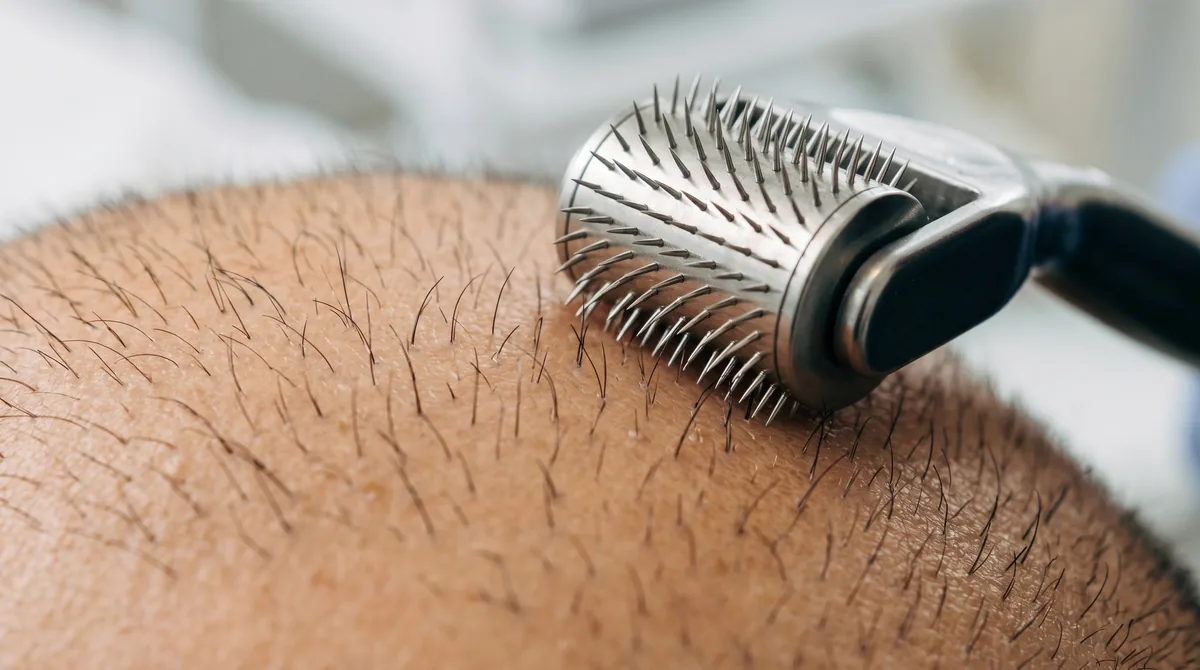
Microneedling (also called derma rolling when you do it yourself) involves puncturing the scalp with tiny needles to trigger a wound-healing response. The theory? Controlled injury stimulates growth factors, increases blood flow, and potentially wakes up dormant follicles. But here’s what most YouTube tutorials won’t tell you: the research shows it works best as combination therapy, not a standalone treatment. And there’s a technical detail about absorption that changes everything.
Let’s look at what the clinical trials actually show, the needle depths that worked, the frequencies that didn’t, and the one factor that determines whether any topical treatment (microneedling or not) can even reach your follicles. Because in the Gulf region, that factor is working against you every single day.
The Clinical Evidence: What Studies Actually Measured
The strongest evidence comes from randomized controlled trials comparing microneedling plus minoxidil against minoxidil alone. A 2013 study published in the International Journal of Trichology found that patients using 1.5mm microneedling weekly alongside minoxidil had significantly more hair regrowth than the minoxidil-only group. We’re talking about a mean change in hair count of 91.4 hairs in the combination group versus 22.2 hairs in the minoxidil-only group.
That’s not a small difference. It’s a 4x improvement.
But before you order a derma roller, understand what the study actually did. They used 1.5mm needles (deeper than most consumer devices). They microneedled until pinpoint bleeding occurred (which most people doing this at home avoid). And they did it under controlled conditions with proper sterilization protocols.
Other studies have replicated these findings. A 2015 systematic review in Dermatologic Surgery concluded that microneedling shows promise for androgenetic alopecia, particularly when combined with topical treatments. The mechanism appears to be twofold: the injury response itself stimulates growth factors (particularly platelet-derived growth factor and vascular endothelial growth factor), and the microchannels improve absorption of whatever you apply afterward.
Here’s what matters: microneedling isn’t magic. It’s a delivery system enhancement and a growth factor trigger. It makes other treatments work better. Used alone, the results are modest. Combined with proven treatments like minoxidil, the results are substantially better.
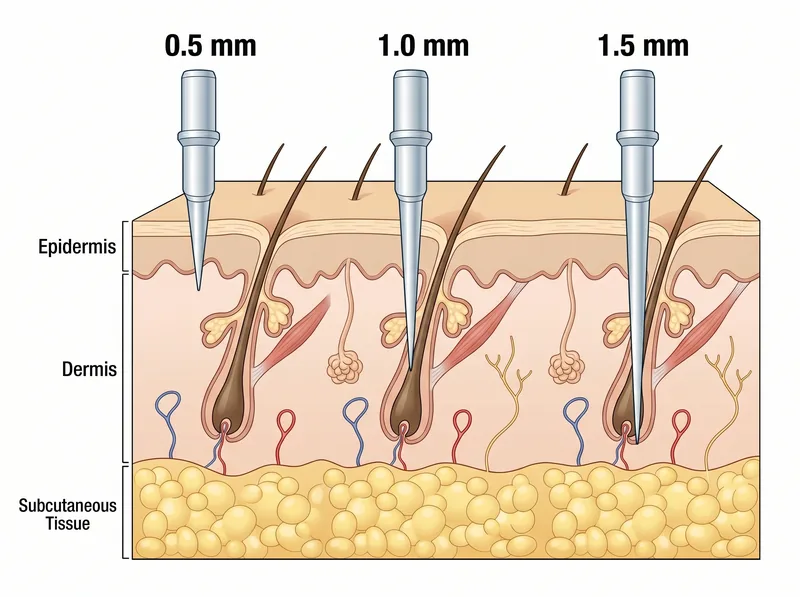 Different needle depths target different tissue layers. Research shows 1.5mm depth produces the strongest hair regrowth response.
Needle Depth and Frequency: The Technical Details That Matter
Not all microneedling is created equal. The depth you use determines what tissue layer you’re affecting and what biological response you trigger.
Research shows three distinct depth ranges with different effects:
Shallow depth (0.5mm): Penetrates only the epidermis. Improves product absorption but doesn’t trigger significant growth factor release. Studies using this depth show minimal hair regrowth when used alone. Think of this as surface-level enhancement, it helps topicals penetrate better but doesn’t activate the deeper healing response.
Moderate depth (1.0mm): Reaches the upper dermis where some follicle structures reside. Triggers mild inflammation and growth factor release. Some studies show modest results at this depth, but it’s not the optimal range for hair regrowth. This is the depth most consumer derma rollers target, which explains why home results are often underwhelming.
Deep depth (1.5mm): Penetrates to the level of the hair follicle bulb and dermal papilla. This is where the magic happens. The 2013 study that showed 4x improvement used this depth. It triggers strong growth factor release, increases blood flow to follicles, and creates microchannels deep enough to actually deliver topicals where they need to go. But it also requires proper technique and sterilization because you’re creating actual wounds.
Frequency matters too. The studies showing the best results used weekly sessions. More frequent isn’t better, your scalp needs time to heal between sessions. Daily microneedling would cause chronic inflammation and potentially damage follicles. Less frequent (every 2-3 weeks) may not maintain the growth factor stimulus consistently enough.
Here’s the practical reality: most people doing this at home use 0.5-1.0mm rollers because they’re less intimidating and cause less discomfort. But they’re also using depths that research shows are suboptimal. The depth that works requires a higher pain tolerance and more careful sterilization. It’s not something you do casually while watching Netflix.
The Combination Therapy Advantage: Why Microneedling Alone Isn’t Enough
Every major study showing significant hair regrowth from microneedling used it alongside another treatment. Usually minoxidil. Sometimes platelet-rich plasma. Never alone.
This isn’t a coincidence. Microneedling enhances absorption and triggers growth factors, but it doesn’t address the underlying cause of hair loss. If you have androgenetic alopecia (pattern hair loss), you’re dealing with DHT sensitivity. Microneedling doesn’t block DHT. If you have telogen effluvium from stress or nutritional deficiency, microneedling doesn’t fix the trigger. If you have hard water damage, microneedling doesn’t remove mineral buildup.
What it does do is make your scalp more receptive to treatments that target those causes. A 2019 study in the Journal of Cosmetic Dermatology compared four groups: microneedling alone, minoxidil alone, microneedling plus minoxidil, and a control group. The combination group showed significantly better results than either treatment alone. The microneedling-only group showed modest improvement over the control but far less than the combination group.
Translation? Microneedling is an amplifier, not a solution. It takes a treatment that works moderately well (like minoxidil) and makes it work substantially better. But used alone, you’re triggering a wound response without giving your follicles the chemical signals they need to actually regrow hair.
Think of it like tilling soil before planting. The tilling creates better conditions for growth, but you still need to plant seeds. Microneedling creates better conditions for topical treatments to work, but you still need the topical treatment to provide the actual growth stimulus.
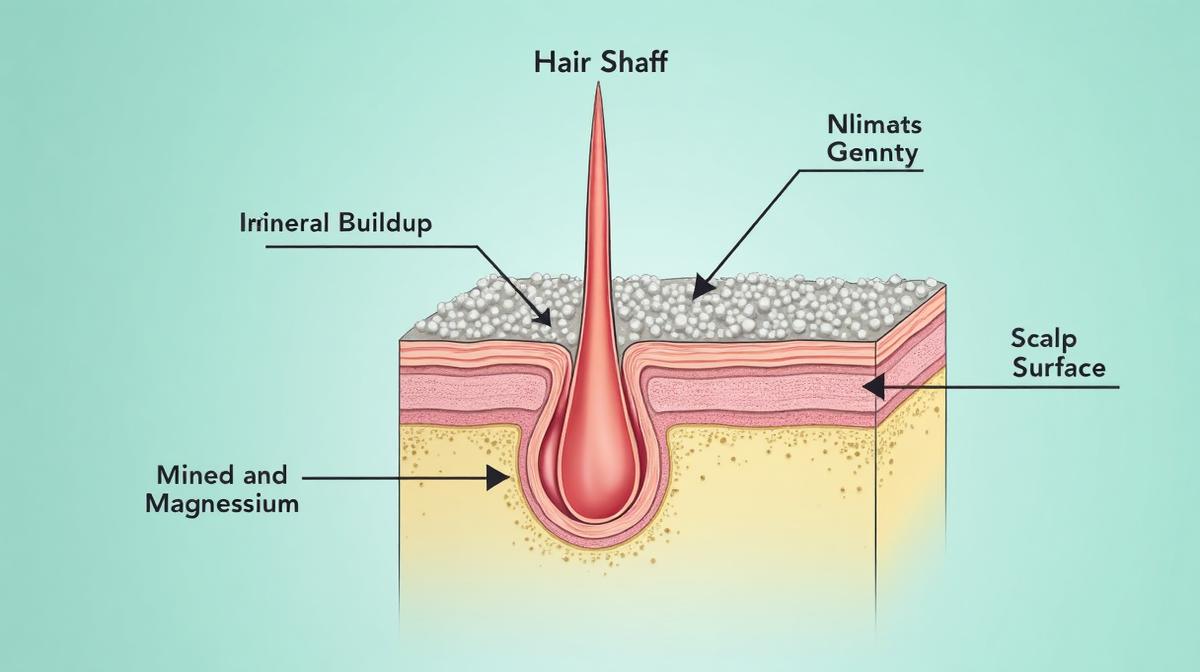
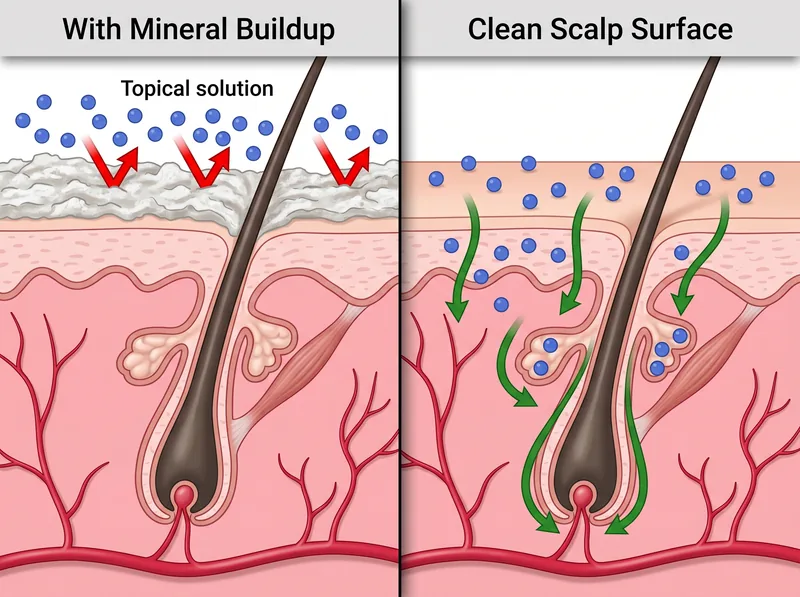 Mineral deposits create a physical barrier that prevents topical treatments from reaching follicles, even with microneedling.
The Absorption Problem Nobody Talks About
Here’s where the Gulf region throws a wrench in the whole process. Microneedling improves topical absorption by creating microchannels through the skin. But what happens when there’s a physical barrier sitting on top of your skin before you even start?
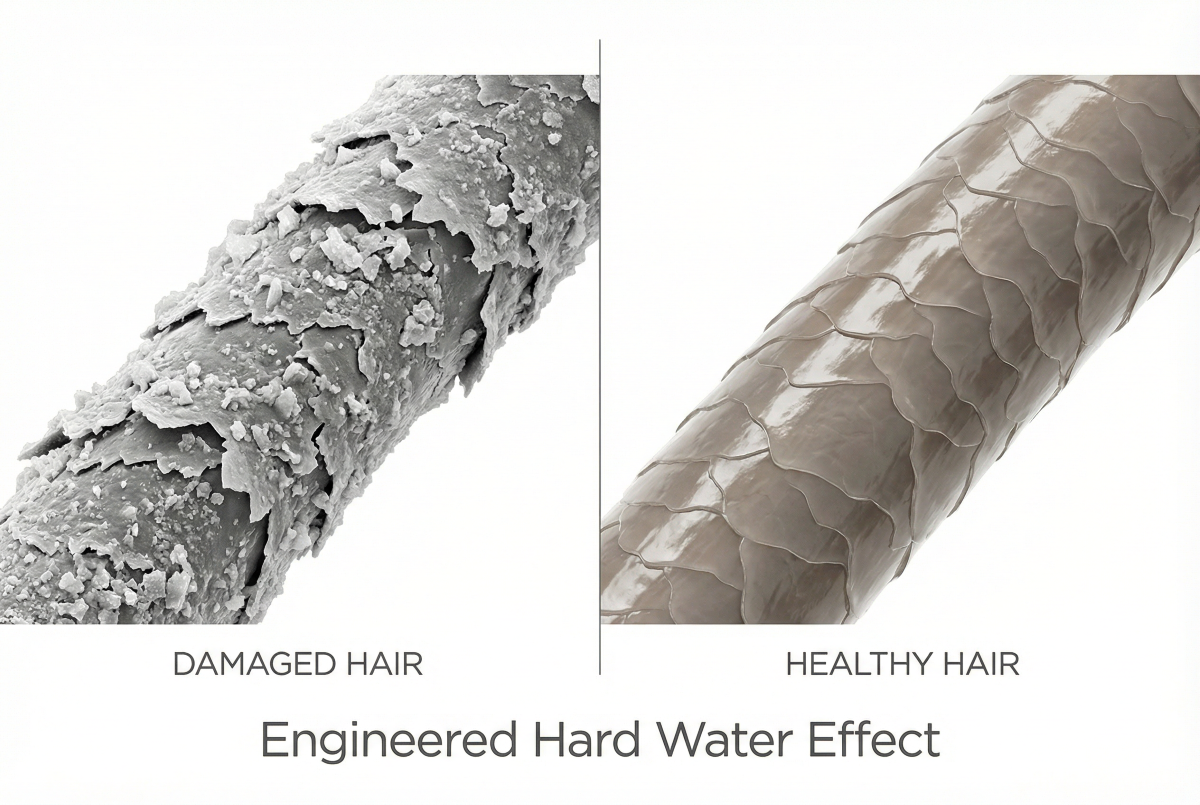
Mineral buildup from hard water creates a crusty layer on your scalp. Calcium carbonate, magnesium sulfate, and other dissolved minerals deposit on the skin surface every time you shower. Over weeks and months, this builds up into a film that blocks absorption of anything you apply topically, whether you’re microneedling or not.
Research on transdermal drug delivery shows that skin surface contamination significantly reduces absorption of topical medications. A study in the International Journal of Pharmaceutics found that even thin layers of surface residue can reduce drug penetration by 40-60%. And we’re not talking about thin layers in the Gulf, we’re talking about visible buildup that you can feel when you run your fingers across your scalp.
This is the hidden variable that explains why some people get great results from microneedling and others see nothing. If your scalp is clean, the microchannels work as intended. If your scalp has mineral buildup, you’re puncturing through a barrier layer that’s going to re-seal those channels with deposits before your topical treatment can penetrate.
The solution isn’t complicated, but it requires a step most people skip. You need to remove the mineral buildup before you microneedle. A chelating shampoo like Regrowth+ uses EDTA to bind and remove calcium and magnesium deposits, leaving your scalp surface clean. Then when you microneedle, you’re creating channels through clean skin, not mineral-clogged tissue. Your topical treatment can actually reach the follicles.
This is especially critical in the Gulf, where water hardness levels are among the highest in the world. You can follow the perfect microneedling protocol, correct depth, correct frequency, sterile technique, and still get poor results if you’re applying minoxidil to a mineral-encrusted scalp. The microchannels don’t matter if the surface layer is blocking everything.
Safety Considerations and Realistic Expectations
Let’s be direct about the risks. You’re puncturing your scalp with needles. Infection is possible if you don’t sterilize properly. Scarring is possible if you use too much pressure or microneedle too frequently. And if you have active scalp conditions like seborrheic dermatitis or psoriasis, microneedling can make them worse.
The studies showing positive results used medical-grade devices in clinical settings with proper sterilization protocols. When you do this at home with a $20 derma roller from Amazon, you’re taking on risks that weren’t present in the research.
Sterilization isn’t optional. Before each use, the device needs to be disinfected with 70% isopropyl alcohol for at least 10 minutes. After use, it needs to be cleaned and disinfected again. Many people skip this step or do a quick rinse, which is how you get scalp infections.
Pressure matters too. The goal is to create microchannels, not to stab your scalp. You should see pinpoint bleeding (tiny dots of blood, not flowing blood) if you’re using 1.5mm depth. If you’re seeing more than that, you’re using too much pressure and risking scarring. If you’re seeing no blood at all with 1.5mm needles, you’re not penetrating deep enough to get the growth factor response.
Realistic timeline: the studies showing significant results measured outcomes at 12 weeks. This isn’t a quick fix. You’re looking at three months of consistent weekly sessions before you can evaluate whether it’s working. And even then, the results are enhancement of existing treatments, not miraculous regrowth of completely bald areas.
Who shouldn’t microneedle? Anyone with active scalp infections, open wounds, or inflammatory scalp conditions. Anyone taking blood thinners or with clotting disorders. Anyone with a history of keloid scarring. And honestly, anyone who isn’t willing to follow proper sterilization protocols and technique, because doing it wrong can make your hair loss worse, not better.
References
- Microneedling in androgenetic alopecia; comparing two different depths of microneedles - International Journal of Trichology
- Microneedling in dermatology: a review - Dermatologic Surgery
- Microneedling therapy in atrophic facial scars: An objective assessment - Journal of Cosmetic Dermatology
- Effect of surface contamination on transdermal drug delivery - International Journal of Pharmaceutics