You’ve seen it all over social media. Influencers swear by it. Your friend’s cousin claims it transformed her hair. Rosemary water, just herbs and tap water in a spray bottle, is being hailed as the natural solution to thinning hair, slow growth, and lifeless strands.
But here’s the thing: trends aren’t the same as science. And when you’re dealing with hair loss or frustrating growth plateaus, you need more than viral anecdotes. You need evidence. This article contains affiliate links. See our affiliate disclosure for details.
The good news? There’s legitimate research behind rosemary and hair growth. The complicated part? Most DIY rosemary water preparations don’t deliver the concentration or formulation needed to replicate those clinical results. Even more problematic for Gulf residents: if you’re making rosemary water with hard tap water, you might be coating your hair with the very minerals that block absorption of beneficial compounds.
Let’s break down what actually works, what doesn’t, and what the science really says about rosemary for hair growth.
The Science Behind Rosemary and Hair Growth
Rosemary isn’t just a culinary herb. It contains several bioactive compounds that have demonstrated real effects on hair follicles in controlled studies. The most researched are carnosic acid and rosmarinic acid, antioxidant compounds that appear to influence cellular activity in the scalp.
A 2015 study published in SKINmed compared rosemary oil to minoxidil 2% in men with androgenetic alopecia. After six months, both groups showed significant increases in hair count. The rosemary oil group experienced less scalp itching than the minoxidil group, suggesting better tolerability.
That’s impressive. But notice what the study used: rosemary oil, not rosemary water. Oil-based extracts contain concentrated active compounds in a lipophilic (fat-soluble) carrier that can penetrate the scalp barrier. Water infusions? They’re a completely different story.
Carnosic acid works by protecting against oxidative stress and may stimulate cellular metabolism in hair follicles. Research in PLOS ONE found that carnosic acid promoted hair growth in mice by activating specific metabolic pathways. Rosmarinic acid has anti-inflammatory properties that could theoretically create a healthier scalp environment for growth.
Why DIY Rosemary Water Falls Short
The viral rosemary water recipes you see online typically involve steeping fresh or dried rosemary in water, either boiled or cold-infused, then transferring the liquid to a spray bottle. Some versions add it to shampoo. Others use it as a leave-in treatment.
The problem isn’t that rosemary water contains zero beneficial compounds. It’s that the concentration is unpredictable and usually insufficient to match clinical results. When you steep rosemary in water, you’re extracting water-soluble compounds, but many of rosemary’s most potent hair-growth actives are better extracted in alcohol or oil.
There’s no standardization. One batch might contain 0.5% active compounds. Another might have 2%. You can’t know without laboratory analysis, which defeats the purpose of a DIY solution. Clinical studies use standardized extracts with known concentrations, that’s how they establish effective dosing.
Shelf life is another issue. Homemade rosemary water has no preservatives. Within days, it becomes a breeding ground for bacteria and mold, especially in the warm, humid conditions common in the Gulf region. Spraying contaminated water on your scalp can trigger infections or inflammation, the exact opposite of what you’re trying to achieve.
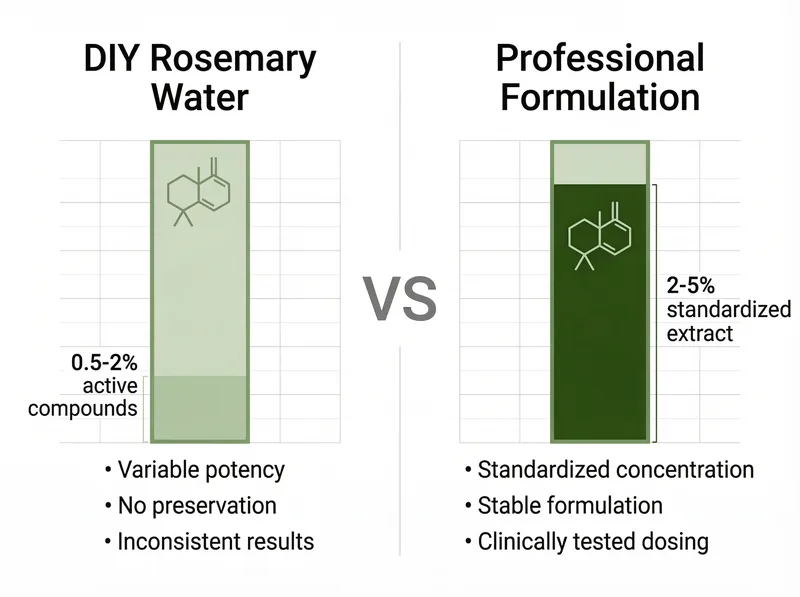 Active compound concentration varies dramatically between homemade rosemary water and professionally formulated products
The Hard Water Problem Nobody Mentions
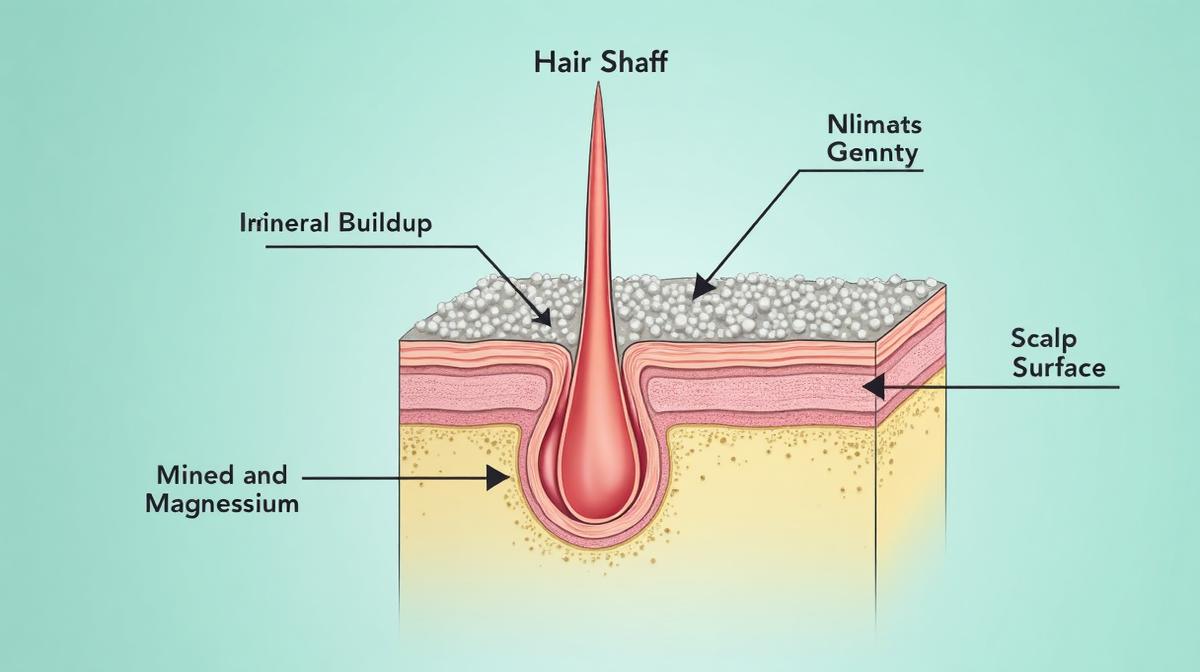
If you’re making rosemary water with tap water in the Gulf region, you’re introducing another variable that completely undermines the intended benefit: mineral content. Hard water in the GCC contains high concentrations of calcium, magnesium, and other dissolved minerals.
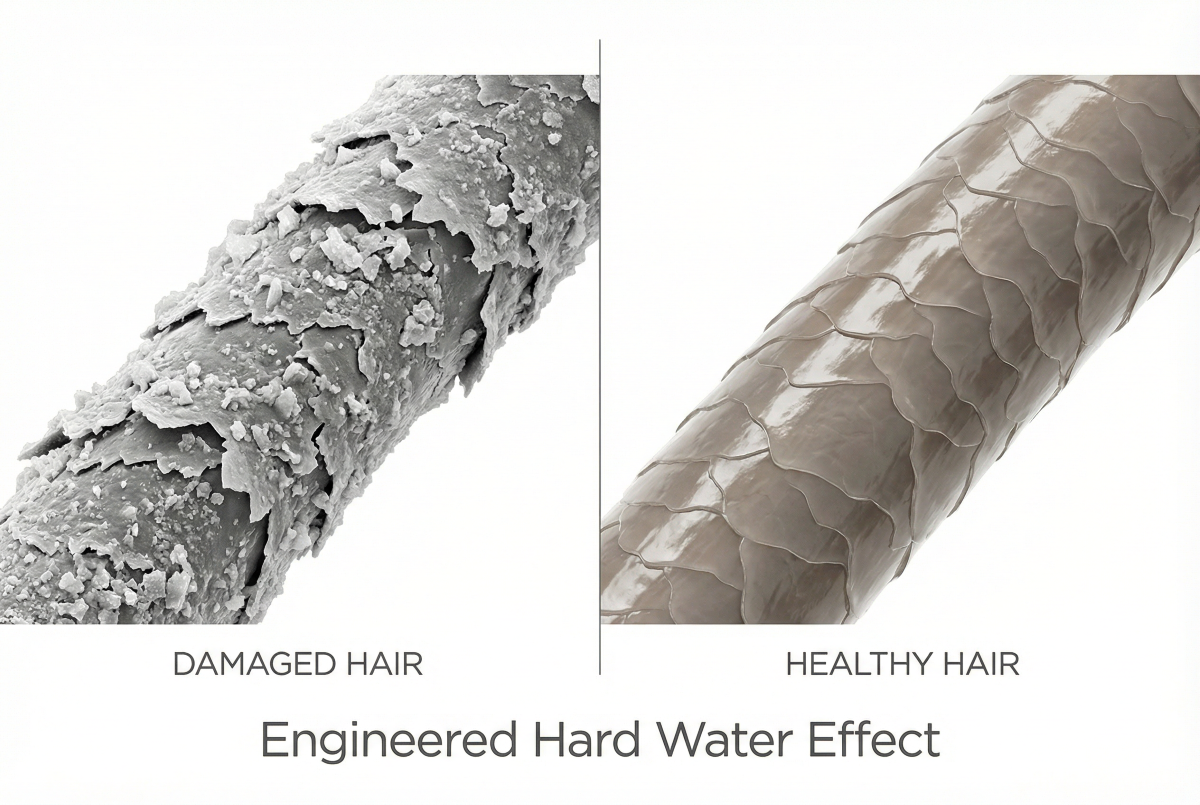
When you spray rosemary water made with hard tap water onto your hair, those minerals deposit on the hair shaft and scalp. They form a coating that blocks penetration of any beneficial compounds, whether from rosemary or other treatments. It’s like trying to water a plant through a plastic tarp.
Even worse, mineral buildup creates a rough surface texture on the hair cuticle, leading to tangles, breakage, and dullness. You might think you’re nourishing your hair with botanical extracts, but you’re actually layering it with the same minerals that cause documented hair damage and loss in regions with challenging water chemistry.
This is why professional formulations matter. A chelating shampoo like Regrowth+ removes mineral buildup before applying growth-supporting treatments. It creates a clean surface where active ingredients can actually reach the follicle. Skipping this step is like painting over rust, you’re not addressing the underlying barrier.
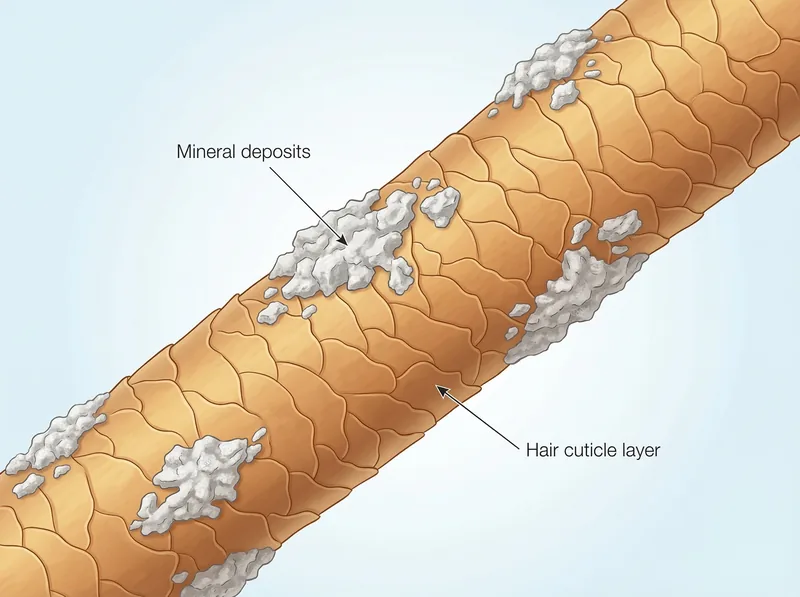 Hard water minerals create a barrier that prevents beneficial ingredients from penetrating the hair shaft
What Actually Works: Professional Formulations
Clinical-grade rosemary formulations solve the problems that DIY versions can’t. They use standardized extracts with verified concentrations of active compounds. They include penetration enhancers that help those compounds cross the scalp barrier. They’re preserved to remain stable and safe over months of use.
Professional products also combine rosemary extract with complementary ingredients that address multiple pathways of hair growth. Caffeine stimulates follicles. Niacinamide improves scalp circulation. Peptides signal cellular repair. A well-formulated product creates synergistic effects that a single-ingredient DIY solution simply can’t replicate.
Consistency matters. Clinical studies showing hair growth benefits use daily application of standardized formulations over months. That’s not achievable with a batch of rosemary water that spoils in a week. Professional products deliver the same concentration every time you use them.
If you’re serious about addressing hair thinning or growth concerns, invest in formulations designed for efficacy. Look for products that list rosemary extract concentration, include supporting actives, and, critically for Gulf residents, address the mineral buildup that sabotages absorption.
How to Use Rosemary-Based Treatments Effectively
Start with a clean slate. Before applying any growth treatment, remove mineral deposits and product buildup from your hair and scalp. This isn’t optional, it’s the foundation of treatment efficacy. Use a chelating shampoo weekly to maintain a clean surface.
Apply rosemary-based treatments to the scalp, not just the hair. The follicle is where growth happens. Massage the product in gently to improve absorption and stimulate circulation. Leave it on for the recommended duration, usually 30 minutes to overnight for leave-in treatments.
Be consistent. Hair growth is slow. Follicles cycle through growth phases that last months. You won’t see results from sporadic use. Commit to daily or every-other-day application for at least 12 weeks before evaluating effectiveness.
Combine treatments with nutritional support. Rosemary extract can’t compensate for deficiencies in protein, iron, or biotin. Hair growth requires adequate building blocks from your diet. Think of topical treatments and nutrition as complementary strategies, not substitutes.
When to Skip Rosemary Treatments
Rosemary isn’t appropriate for everyone. If you have active scalp conditions like seborrheic dermatitis, psoriasis, or open wounds, adding botanical extracts, especially DIY preparations, can worsen inflammation or introduce infection. Treat the underlying condition first.
Allergic reactions are possible. Rosemary contains volatile compounds that some people react to with redness, itching, or contact dermatitis. Patch test any new formulation on your inner arm before applying it to your scalp. Wait 24 hours to check for reactions.
Pregnant and breastfeeding women should consult healthcare providers before using concentrated rosemary extracts. While culinary amounts are safe, topical application of high-concentration extracts hasn’t been extensively studied in these populations.
If you’re experiencing sudden, severe hair loss, especially with scalp pain, scaling, or systemic symptoms, see a dermatologist. Rosemary water won’t treat autoimmune conditions, hormonal disorders, or nutritional deficiencies. Some causes of hair loss require medical intervention, not botanical extracts.
References
- Rosemary oil vs minoxidil 2% for the treatment of androgenetic alopecia: a randomized comparative trial - SKINmed
- Carnosic Acid Promotes Hair Growth through Akt/GSK-3β/β-Catenin Signaling Pathway - PLOS ONE
- Natural Ingredients for Hair Health - American Academy of Dermatology
- Hard Water Effects on Hair and Skin - International Journal of Trichology