This article contains affiliate links. See our affiliate disclosure for details.
Your scalp has a pH of about 5. Most shampoos? Closer to 9. That four-point gap isn’t just a number on a chemistry chart, it’s the difference between a healthy scalp barrier and one that’s constantly fighting to recover.
Here’s what nobody tells you: every time you wash your hair with an alkaline shampoo, you’re forcing your scalp to work overtime to restore its natural acidity. And if you’re in the Gulf, you’re dealing with a double hit, hard water pushes your scalp even further toward alkaline territory before the shampoo even touches it.
The science is clear. Your scalp’s acid mantle (that protective barrier sitting between pH 4.5 and 5.5) isn’t just a nice-to-have. It’s your first line of defense against bacteria, fungal overgrowth, moisture loss, and irritation. Change it repeatedly, and you’ll see the consequences: flaking, itching, increased hair shedding, and products that suddenly stop working.
What pH Actually Means for Your Scalp
pH measures how acidic or alkaline a substance is, on a scale from 0 (battery acid) to 14 (drain cleaner). Your scalp sits comfortably at 4.5 to 5.5, mildly acidic, like black coffee or tomato juice.
This acidity isn’t random. It’s the result of sebum (your scalp’s natural oil), sweat, and the metabolic byproducts of your skin’s microbiome. Together, these create what dermatologists call the acid mantle, a thin, slightly acidic film that covers your entire scalp.
The acid mantle does three critical things. It keeps the cuticle layer of your hair shaft flat and sealed (which means shinier, stronger hair). It creates an inhospitable environment for harmful bacteria and fungi (which means fewer scalp infections). And it regulates moisture loss through the skin barrier (which means less dryness and irritation).
When you apply an alkaline product, anything above pH 7, you temporarily neutralize that protective acidity. Your scalp can recover, but it takes time. Research published in the International Journal of Trichology found that it can take several hours for scalp pH to return to baseline after washing with high-pH shampoo. If you’re washing daily or every other day, your scalp never fully recovers.
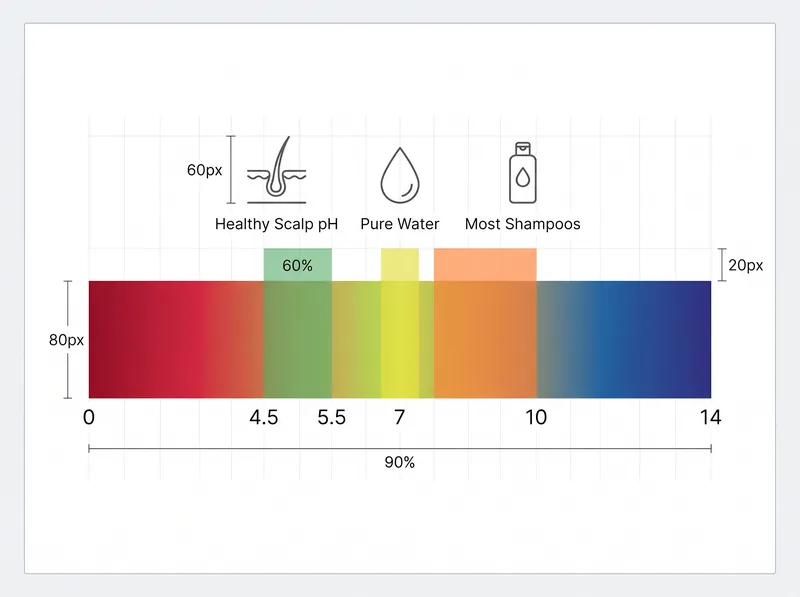 The pH gap: Your scalp sits at 4.5-5.5 (acidic), while most conventional shampoos range from 7-10 (neutral to alkaline)
Why Most Shampoos Are Alkaline (And Why That’s a Problem)
Traditional soap-based cleansers are inherently alkaline. Soap is made through saponification, a chemical reaction between fats and lye (sodium hydroxide), which has a pH around 14. The final product? Usually somewhere between pH 8 and 10.
Even modern sulfate-based shampoos tend to be alkaline, typically ranging from pH 6 to 9. Manufacturers formulate them this way because alkaline conditions help surfactants (cleaning agents) lift oil and dirt more effectively. It’s efficient chemistry. But efficiency doesn’t mean it’s good for your scalp.
When an alkaline shampoo hits your acidic scalp, several things happen at once. The hair cuticle swells and lifts (making hair more porous and vulnerable to damage). The lipid barrier between skin cells becomes disorganized (increasing water loss). And the microbial balance shifts (favoring overgrowth of organisms like Malassezia, the yeast responsible for dandruff).
You might not notice the damage immediately. But over weeks and months, you’ll see it: hair that tangles more easily, color that fades faster, scalp that feels tight or itchy after washing, and increased sensitivity to products that never bothered you before. This is pH changeion compounding over time.
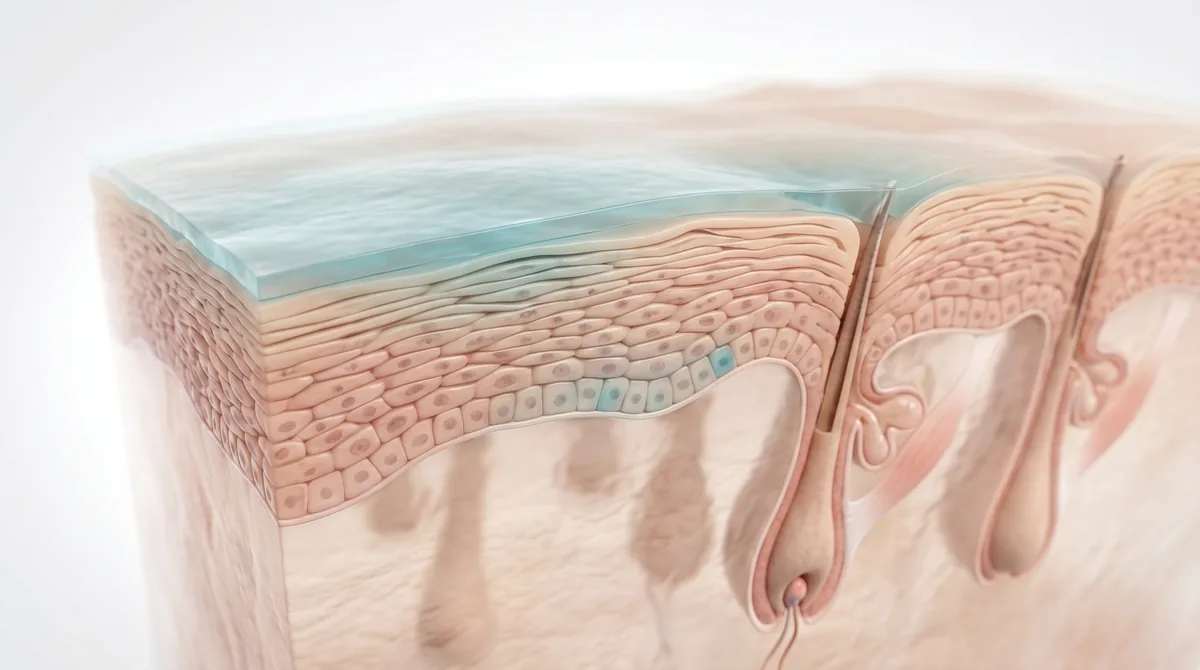
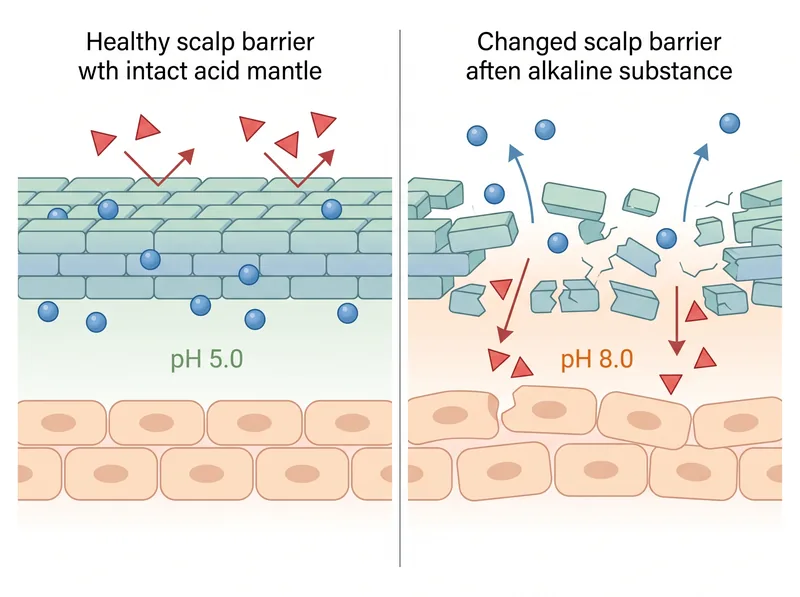 When alkaline shampoo meets your acidic scalp, it changes the protective barrier that keeps moisture in and irritants out
The Hard Water Problem Nobody Mentions
If you live in the Gulf region, you’re dealing with an additional pH challenge that most hair care advice completely ignores: hard water. Hard water in the GCC typically has a pH between 7.5 and 8.5, already on the alkaline side before you add shampoo.
When you wet your hair with alkaline water, you’re pre-conditioning your scalp toward alkalinity. Then you apply an alkaline shampoo (pH 8-9). The combined effect pushes your scalp pH even higher, sometimes above 9. That’s a four-point shift from your natural state.
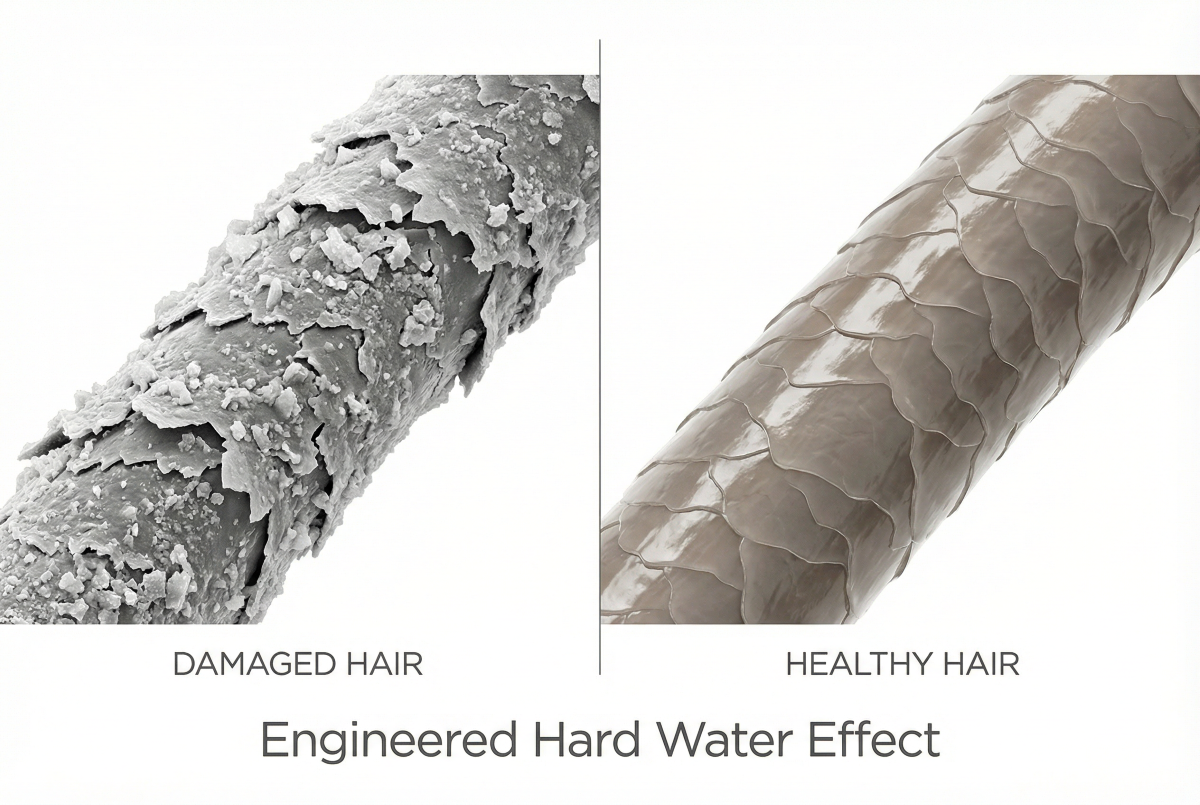
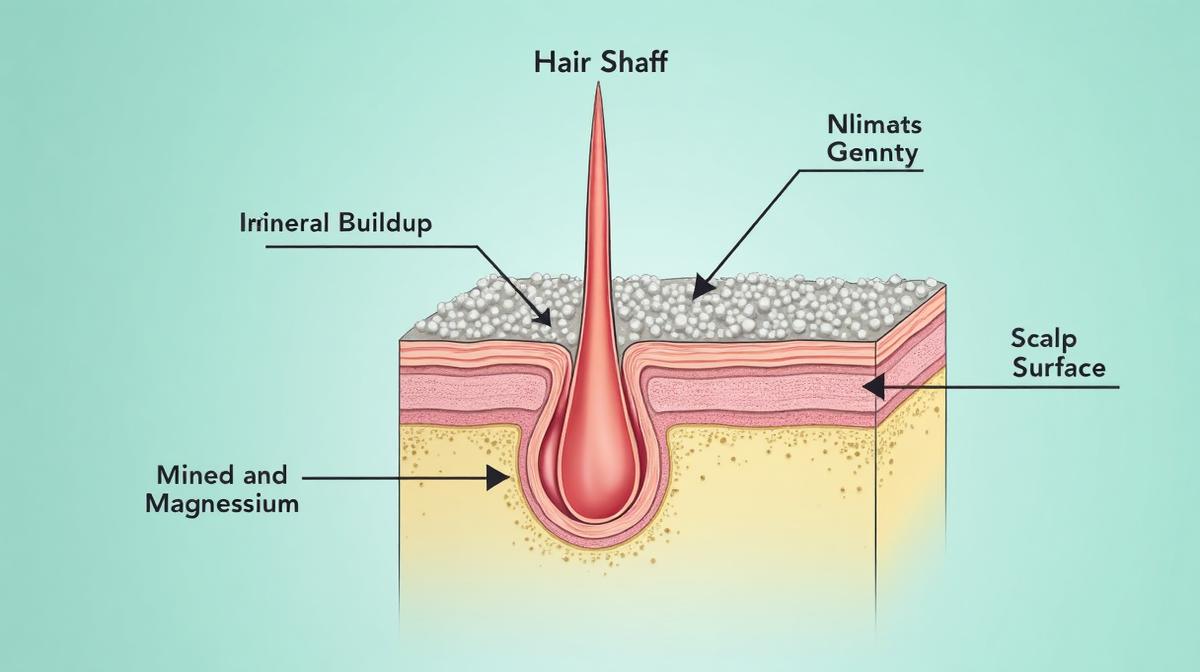
But it gets worse. Hard water doesn’t just raise pH, it deposits minerals (calcium, magnesium, silicates) onto your scalp and hair. These minerals form a film that prevents your scalp from easily returning to its natural pH. Studies in cosmetic science show that mineral buildup can keep scalp pH improved for 12-24 hours after washing.
This is why so many people in the Gulf struggle with persistent scalp issues despite trying multiple products. You’re not just fighting your shampoo’s pH, you’re fighting your water’s pH and the mineral barrier preventing recovery. A chelating shampoo like Regrowth+ addresses both problems: it removes mineral buildup while maintaining a pH-balanced formula that doesn’t further change your scalp’s natural acidity.
pH-Balanced Products: What the Science Actually Says
A pH-balanced shampoo is formulated to match your scalp’s natural pH range (4.5-5.5). This isn’t marketing speak, it’s a measurable formulation choice that requires different surfactants, acidifying agents, and buffering systems.
A 2014 study in the International Journal of Cosmetic Science compared scalp and hair condition between users of pH-balanced shampoos (pH 5.5) and traditional alkaline shampoos (pH 8-9). The pH-balanced group showed significantly less cuticle damage, lower transepidermal water loss, and reduced scalp irritation after four weeks.
Another study published in Skin Research and Technology found that maintaining scalp pH below 5.5 reduced the colonization of Malassezia yeasts by 40% compared to alkaline conditions. This has direct implications for anyone dealing with dandruff, seborrheic dermatitis, or persistent scalp itching.
The benefits compound over time. When your scalp isn’t constantly recovering from pH shock, it maintains a healthier microbiome, stronger barrier function, and better moisture retention. Hair grows from a healthier follicle environment, which means stronger strands from the root.
Why Apple Cider Vinegar Rinses Persist (And Their Limitations)
Apple cider vinegar has a pH around 3, more acidic than your scalp. When diluted properly (usually 1 part vinegar to 4 parts water), it creates a rinse with a pH around 4.5 to 5, close to your scalp’s natural state.
The folk remedy persists because it actually works, to a point. After washing with alkaline shampoo, an acidic rinse helps re-flatten the hair cuticle, restore shine, and neutralize the alkaline residue. You’re manually correcting the pH changeion your shampoo just caused.
But here’s the limitation: you’re still starting with the changeion. You’re still forcing your scalp through an alkaline spike, then trying to bring it back down. It’s damage control, not prevention. And if you have hard water, the vinegar rinse does nothing to remove the mineral deposits that keep your scalp pH improved between washes.
A better approach? Start with a pH-balanced, chelating shampoo that never changes your scalp’s acidity in the first place and actively removes the mineral buildup that prevents pH recovery. You’re addressing the root cause instead of managing symptoms.
How to Choose pH-Balanced Hair Products
First, check if the brand lists pH on the label or website. Many don’t, which should tell you something about their priorities. If a product claims to be pH-balanced but doesn’t specify the actual pH, you’re trusting marketing, not chemistry.
Look for products formulated between pH 4.5 and 5.5. Some brands go as low as 4.0 (fine for occasional use, but potentially too acidic for daily washing). Anything above 6.5 is not pH-balanced, regardless of what the label says.
If you’re dealing with hard water, prioritize chelating ingredients alongside pH balance. EDTA (ethylenediaminetetraacetic acid) or citric acid can help remove mineral deposits. But chelation alone isn’t enough, if the base formula is still alkaline, you’re only solving half the problem.
Pay attention to how your scalp feels 2-4 hours after washing. A properly pH-balanced product won’t leave your scalp feeling tight, itchy, or dry once it’s fully dry. If you’re experiencing those symptoms, your product’s pH is likely too high, even if it claims to be balanced.
What About Conditioners and Styling Products?
Conditioners are typically formulated between pH 3.5 and 5.5, more acidic than shampoos. This is intentional. After shampoo raises the cuticle, conditioner’s acidity helps re-seal it. The combination is supposed to balance out.
But if your shampoo is too alkaline (pH 9), and your conditioner is mildly acidic (pH 4.5), you’re still putting your scalp through a roller coaster. It’s better to start with a pH-balanced shampoo and let the conditioner reinforce that balance, not compensate for changeion.
Styling products vary widely. Gels and mousses tend to be slightly acidic (pH 5-6). Hair sprays can be more alkaline (pH 7-8) because alcohol raises pH. If you’re using multiple products daily, those small pH shifts add up.
The practical takeaway: your shampoo matters most because it’s the product that directly contacts your scalp and determines the baseline pH environment everything else builds on. Get that right, and the rest of your routine becomes easier to improve.
References
- Effect of shampoo pH on the ultrastructure of the cuticular layer - International Journal of Trichology
- The effect of shampoo pH on hair: Myth or reality? - International Journal of Cosmetic Science
- Influence of pH on the growth of Malassezia species - Skin Research and Technology
- Hard water effects on hair and scalp barrier function - ScienceDirect