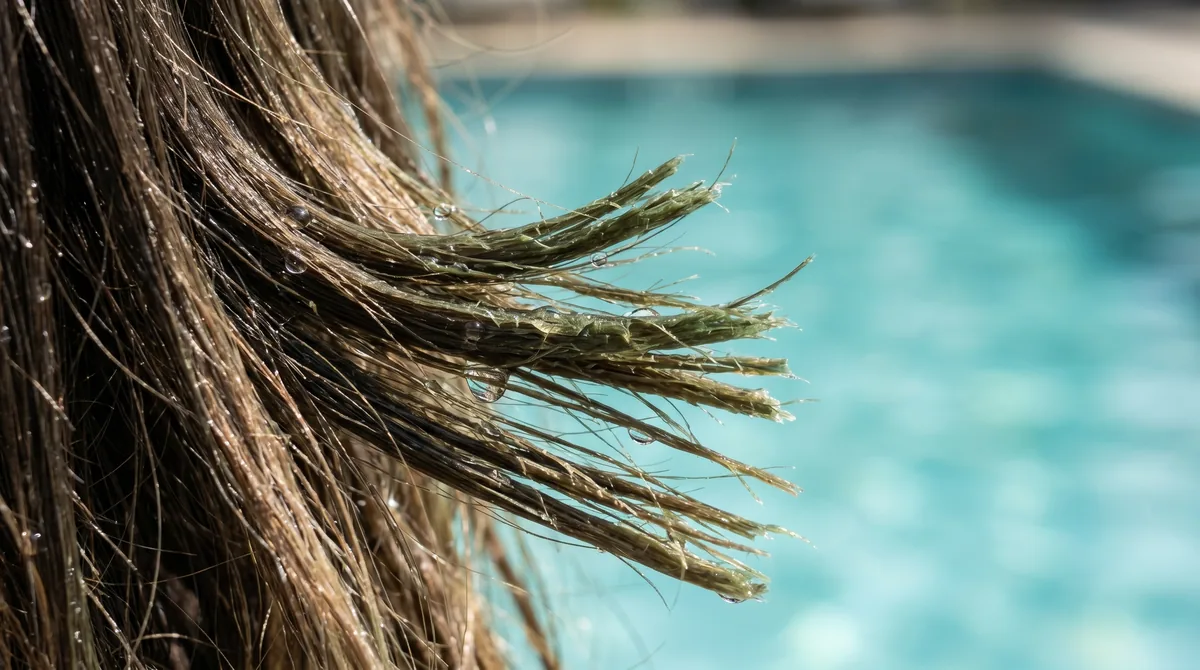
Your hair felt fine before you started using the pool. Now it’s straw-like, breaking at the ends, maybe even showing that telltale greenish tint. You’ve blamed the chlorine, bought a “swimmer’s shampoo,” and nothing’s changed.
Here’s what’s actually happening: pool chlorine doesn’t just damage your hair on its own. In the Gulf region, you’re dealing with a double-assault system. The hard water you shower with before and after swimming deposits minerals into your hair shaft. Then chlorine oxidizes those minerals, creating a chemical reaction that amplifies damage exponentially. This article contains affiliate links. See our affiliate disclosure for details.
Most swimmer hair care advice ignores this compounding effect. It treats chlorine damage and hard water damage as separate problems, when they’re actually working together to destroy your hair structure. That’s why standard purple shampoos and clarifying treatments fail, they’re only addressing half the problem.
This guide covers the complete protection and repair system for swimmers in hard water regions. You’ll learn pre-swim protocols that actually block chlorine penetration, post-swim chelating routines that remove both chlorine and mineral residue, and repair strategies for hair that’s already damaged. The science is clear, and the solutions work.
Why Pool Chlorine Damages Hair Differently in Hard Water Areas
Chlorine alone is harsh. It’s an oxidizing agent designed to kill bacteria, and it doesn’t discriminate between bacterial cell walls and the protein bonds in your hair. When you swim, chlorine penetrates the cuticle layer and oxidizes the disulfide bonds that give hair its strength and elasticity.
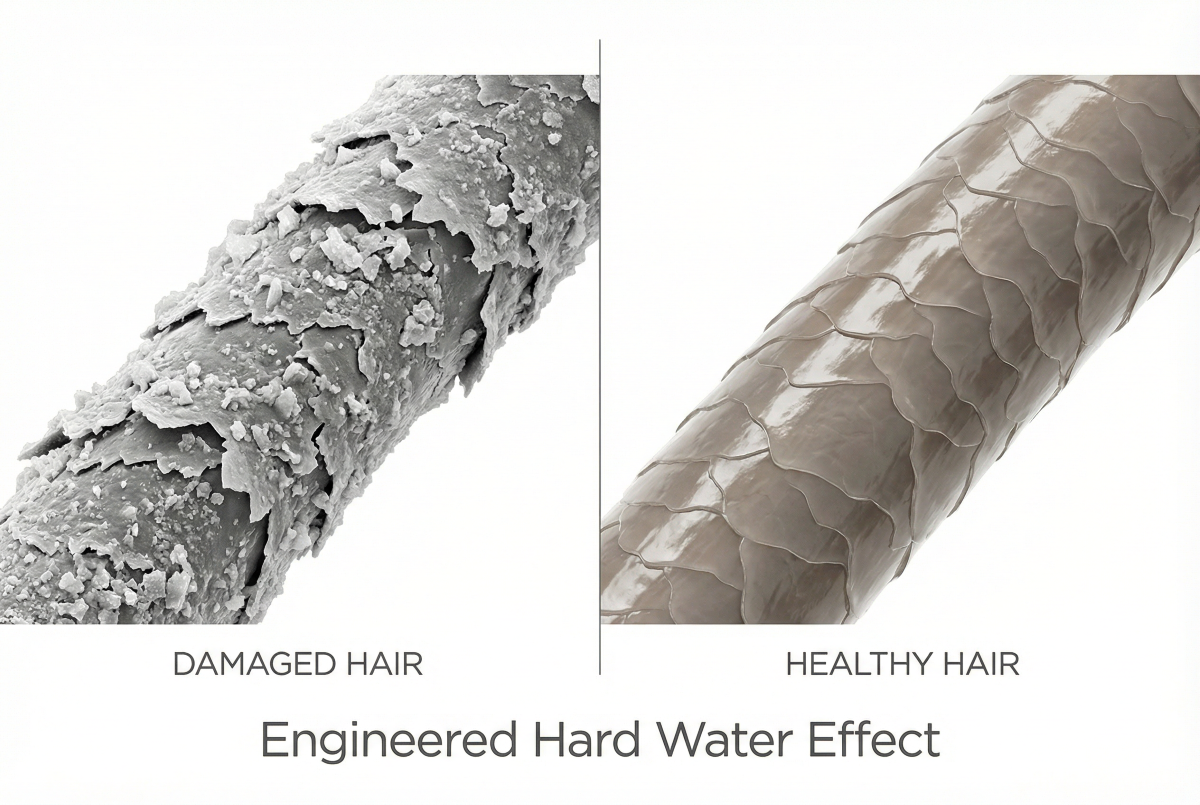
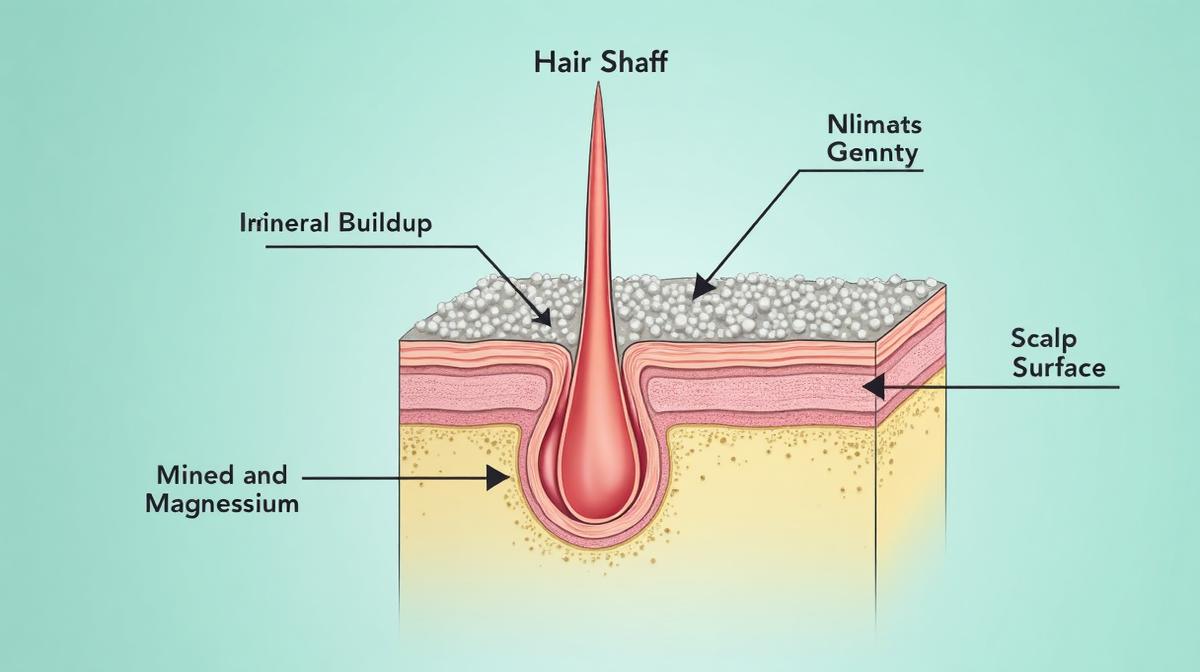
But here’s the critical part: research published in the International Journal of Trichology shows that mineral-laden hair absorbs significantly more chlorine than mineral-free hair. The calcium and magnesium deposits from hard water create a porous, rough surface that acts like a sponge for chlorine molecules.
When chlorine oxidizes those embedded minerals, it creates copper and iron compounds that bind permanently to your hair protein. This is what causes the green tint in blonde hair and the brittle, straw-like texture in all hair types. The damage isn’t just additive, it’s multiplicative.
Gulf residents face some of the hardest water in the world, with total dissolved solids often exceeding 500 ppm. If you’re swimming regularly without addressing the mineral foundation, you’re essentially pre-loading your hair with chlorine magnets before you even enter the pool.
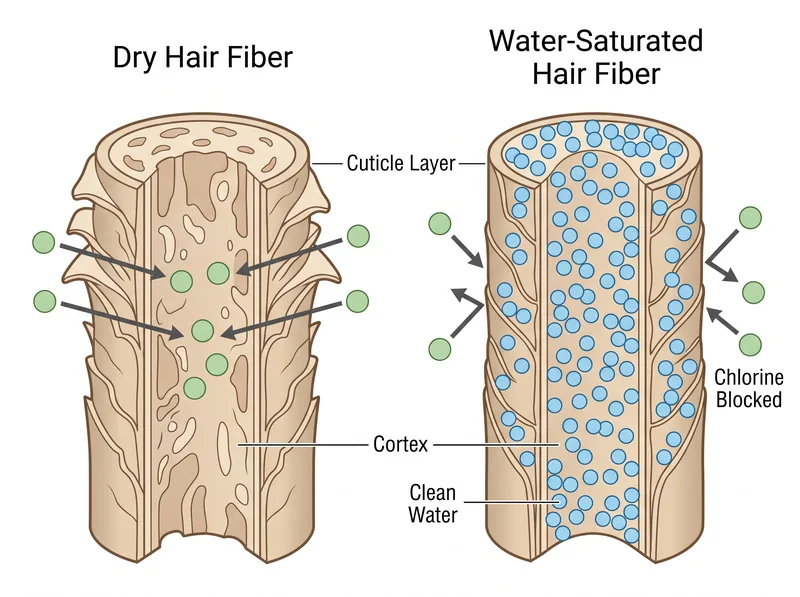 Pre-soaking saturates hair with clean water, blocking chlorine penetration into the cortex
The Pre-Swim Protocol That Actually Works
Most swimmers wet their hair before entering the pool. That’s good. But they’re using the wrong water.
The principle is simple: hair can only absorb a limited amount of liquid. If you saturate your hair with clean water before swimming, there’s less room for chlorinated pool water to penetrate. The problem? If you’re pre-soaking with hard tap water, you’re depositing the very minerals that will amplify chlorine damage.
Here’s the protocol that works: bring a spray bottle filled with filtered or distilled water to the pool. Before swimming, thoroughly saturate your hair until it’s dripping. Not damp, soaked. You want every strand fully hydrated with mineral-free water.
Then apply a thin layer of natural oil. Coconut oil, argan oil, or even olive oil creates a hydrophobic barrier. You don’t need much, a quarter-sized amount distributed through mid-lengths and ends. This isn’t about deep conditioning; it’s about creating a physical barrier between chlorine and your hair shaft.
If you swim regularly (three or more times per week), consider investing in a quality swim cap. But not the cheap latex ones that tear and let water in. Look for silicone caps that actually create a seal. They won’t keep your hair completely dry, but they’ll reduce chlorine exposure by 60-70%.
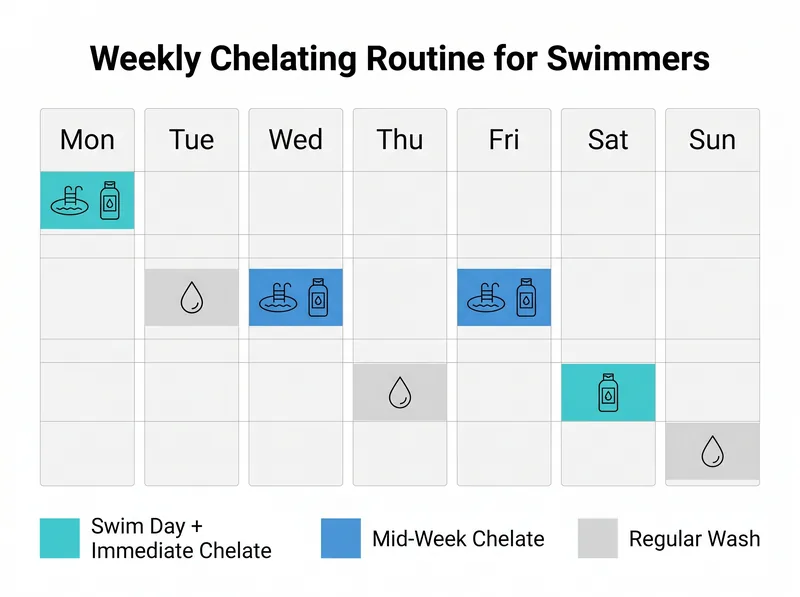 Swimmers in the Gulf need chelating treatment twice weekly to address both chlorine and mineral buildup
Post-Swim Chelating: Removing Both Chlorine and Minerals
The moment you exit the pool, your hair is loaded with chlorine and oxidized minerals. You have about 30 minutes before this chemical cocktail starts causing permanent structural damage. Don’t waste it.
Rinse immediately with the cleanest water available. If the pool showers use hard water (and most do), bring your own filtered water in a rinse bottle. You need at least a liter to thoroughly flush chlorine from shoulder-length hair. Longer hair needs more.
Here’s where most swimmer routines fail: they use regular shampoo or “clarifying” shampoo that strips oils but doesn’t actually remove mineral deposits. You need a chelating shampoo, one that contains EDTA, citric acid, or other chelating agents that bind to minerals and chlorine residue and pull them out of your hair.
A chelating shampoo like Regrowth+ is specifically formulated to remove both hard water minerals and chlorine buildup. Unlike regular clarifying shampoos that just strip surface oils, chelating formulas actually break the chemical bonds between minerals and your hair protein.
Use the chelating shampoo immediately after swimming. Lather twice, the first wash removes surface chlorine, the second wash chelates embedded minerals. Leave the second lather on for 2-3 minutes before rinsing. This contact time is critical for the chelating agents to work.
If you swim daily, chelate after every swim. If you swim 2-3 times per week, chelate after each swim plus once mid-week to address hard water exposure from regular showers. Your hair needs consistent mineral removal to stay healthy in this environment.
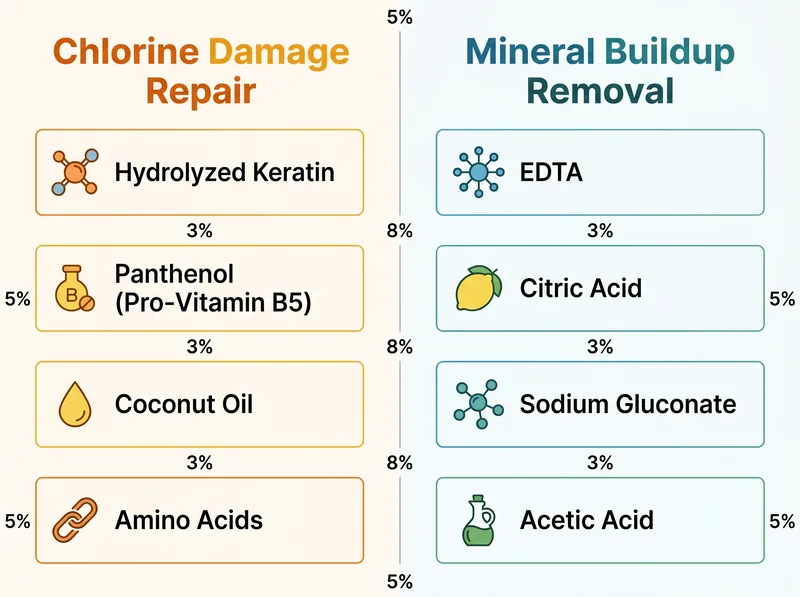 Different damage types require different repair ingredients, chlorine damage needs protein, mineral damage needs chelation
Repairing Chlorine-Damaged Hair: What Actually Rebuilds Structure
Once chlorine has oxidized your hair’s disulfide bonds, you can’t reverse that damage. But you can rebuild structural integrity using the right ingredients. The key is understanding what type of damage you’re repairing.
Chlorine damage creates porosity, it literally punches holes in your cuticle layer and cortex. This makes your hair absorb moisture too quickly and lose it just as fast, leading to that dry, frizzy, straw-like texture. The solution isn’t more moisture; it’s protein.
Studies in the Journal of Cosmetic Science show that hydrolyzed keratin and amino acid treatments can partially restore the protein structure in chemically damaged hair. Look for leave-in treatments containing hydrolyzed keratin (molecular weight under 1000 Da for penetration), panthenol, and amino acids like cysteine and methionine.
Apply protein treatments to damp hair after chelating. Focus on mid-lengths and ends where damage is most severe. Don’t overdo it, protein overload makes hair brittle. Once or twice a week is sufficient for most swimmers.
Between protein treatments, use a lightweight conditioner with film-forming agents like cyclomethicone or amodimethicone. These create a temporary protective coating that smooths the cuticle and reduces friction damage. Avoid heavy oils and butters, damaged, porous hair can’t absorb them, and they’ll just create buildup.
For severe damage (hair that’s breaking, extremely tangled, or showing significant elasticity loss), you may need professional treatment. The American Academy of Dermatology recommends in-salon keratin treatments or bond-building treatments for hair with extensive chemical damage. These are expensive but can restore manageability to hair that’s otherwise unworkable.
Building a Sustainable Swimmer Hair Care Routine
Protection and repair are pointless if you can’t maintain them long-term. Here’s a realistic routine that works for regular swimmers in hard water areas:
Swim days: Pre-soak with filtered water and oil barrier. Immediately post-swim, rinse thoroughly and chelate. Apply protein leave-in treatment to damp hair. Air dry or use low heat.
Non-swim days: Wash with gentle sulfate-free shampoo (not chelating, daily chelating will strip your hair). Use moisturizing conditioner. Apply leave-in protection before heat styling.
Weekly maintenance: One deep protein treatment (if swimming 3+ times per week). One clarifying chelating wash mid-week to address shower hard water buildup. Monthly trim to remove damaged ends before they split further up the shaft.
The biggest mistake swimmers make is inconsistency. They chelate once, see improvement, then go back to regular shampoo. Or they use chelating shampoo daily and wonder why their hair feels like straw. The routine works when you follow it systematically.
Track your hair’s response. If it feels gummy or overly soft, you’re over-conditioning and need more protein. If it feels dry and brittle, you’re over-chelating or over-proteining and need more moisture. Adjust the balance based on texture feedback, not arbitrary schedules.
References
- Hair Cosmetics: An Overview - International Journal of Trichology
- Hardness of Water - US Geological Survey
- Protein Treatments for Chemically Damaged Hair - Journal of Cosmetic Science
- How to Repair Damaged Hair - American Academy of Dermatology