This article contains affiliate links. See our affiliate disclosure for details.
Your hair’s been thinning for months. You’ve tried different shampoos, cut back on heat styling, even switched your pillowcase. Nothing’s working. Here’s what most people miss: the problem might not be what you’re doing to your hair, but what you’re not feeding your body.
Vitamin B12 deficiency is shockingly common, especially among the growing number of plant-based eaters in the Gulf region. And one of its earliest visible symptoms? Hair thinning that starts so gradually you barely notice until you’re pulling alarming amounts from your brush. The connection between B12 and hair growth isn’t just nutritional folklore, it’s rooted in how your follicles actually function at a cellular level.
But here’s the thing. If you’re living in the Gulf, fixing your B12 levels is only half the battle. The region’s hard water creates a parallel problem that no amount of supplementation can solve. Let’s break down both issues and why you need to address them together.
How B12 Actually Affects Your Hair Follicles
Your hair follicles are some of the fastest-dividing cells in your entire body. Every single day, the matrix cells at the base of each follicle split and multiply to push your hair shaft upward. That process requires two things B12 provides: rapid DNA synthesis and oxygen delivery.
B12 (cobalamin) acts as a cofactor for enzymes that enable cell division. Without adequate B12, your follicle cells can’t replicate efficiently. Growth slows. The anagen (growth) phase shortens. More follicles shift into telogen (resting phase) prematurely. The result? Diffuse hair thinning across your entire scalp, not just in androgenic patterns.
Second, B12 is essential for forming healthy red blood cells. Deficiency causes megaloblastic anemia, your bone marrow produces oversized, dysfunctional red blood cells that can’t carry oxygen properly. Your follicles, which demand constant oxygen and nutrients, essentially suffocate. They miniaturize. Hair shafts thin. Shedding increases.
This isn’t speculation. Studies show that correcting B12 deficiency in anemic patients often restores normal hair growth within months, though the timeline varies based on severity and how long the deficiency persisted.
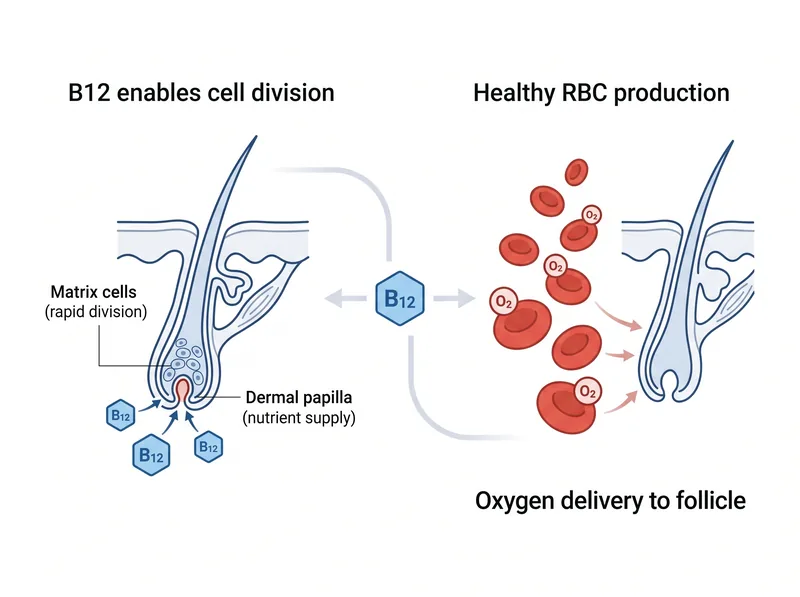 B12 enables rapid cell division in hair follicles and ensures oxygen delivery through healthy red blood cells
Who’s Actually at Risk for B12 Deficiency
Let’s be direct: if you eat animal products regularly, you’re probably fine. B12 occurs naturally only in animal foods, meat, fish, eggs, dairy. Your body stores several years’ worth in your liver. But certain groups face serious risk.
Vegetarians and vegans top the list. Plant foods contain zero bioavailable B12 unless they’re fortified. Research shows up to 86% of vegans and 50% of vegetarians are B12 deficient if they don’t supplement. The Gulf’s large South Asian expat population, many following vegetarian diets for religious or cultural reasons, faces particularly high rates.
People over 50 also struggle. As you age, your stomach produces less intrinsic factor, a protein required to absorb B12 from food. You might eat plenty of B12-rich foods but absorb almost none of it. Anyone taking metformin for diabetes or proton pump inhibitors for acid reflux faces the same absorption problem.
And here’s one most people miss: if you’ve had weight loss surgery (gastric bypass, sleeve gastrectomy), your altered digestive anatomy makes B12 absorption extremely difficult. Supplementation becomes mandatory, not optional.
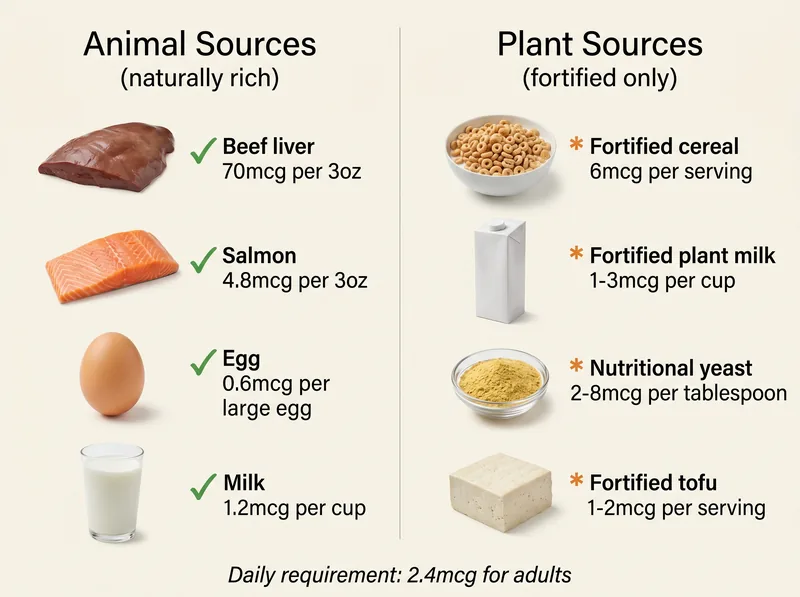 Plant-based eaters need fortified foods or supplements since B12 occurs naturally only in animal products
Recognizing B12 Deficiency Before It’s Obvious
Hair thinning is rarely the first symptom. By the time you notice increased shedding, you’ve likely been deficient for months. Earlier signs include persistent fatigue that doesn’t improve with sleep, tingling or numbness in your hands and feet (peripheral neuropathy), difficulty concentrating, and unexplained mood changes.
The problem? These symptoms are vague. They overlap with stress, poor sleep, thyroid issues, and dozens of other conditions. Most people dismiss them until something more visible appears, like hair loss.
A simple blood test reveals the truth. Ask your doctor for serum B12 levels (normal range: 200-900 pg/mL, though functional deficiency can occur even above 200) and methylmalonic acid (MMA) levels, which catch deficiency earlier. If you’re vegetarian, vegan, over 50, or on medications that affect absorption, get tested annually. Don’t wait for symptoms.
One important note: if you’re experiencing unexplained hair fall in the Gulf, B12 might be only part of the picture. The region’s environmental factors create additional challenges that nutritional fixes alone can’t address.
Fixing B12 Deficiency: What Actually Works
If you’re deficient, supplementation is non-negotiable. But not all B12 supplements are equal. The form matters. Cyanocobalamin is synthetic, cheap, and requires your body to convert it to active forms. Methylcobalamin and adenosylcobalamin are pre-activated and absorb more efficiently, though they cost more.
Dosing depends on severity. Mild deficiency? 1000mcg daily orally usually works. Moderate to severe? You might need weekly intramuscular injections (1000mcg) for a month, then monthly maintenance. Vegans and vegetarians should take at least 250-500mcg daily as prevention, even if levels currently test normal.
Sublingual tablets (dissolve under your tongue) bypass stomach absorption issues and work well for people with intrinsic factor deficiency or digestive problems. They’re more reliable than standard oral tablets if you have absorption issues.
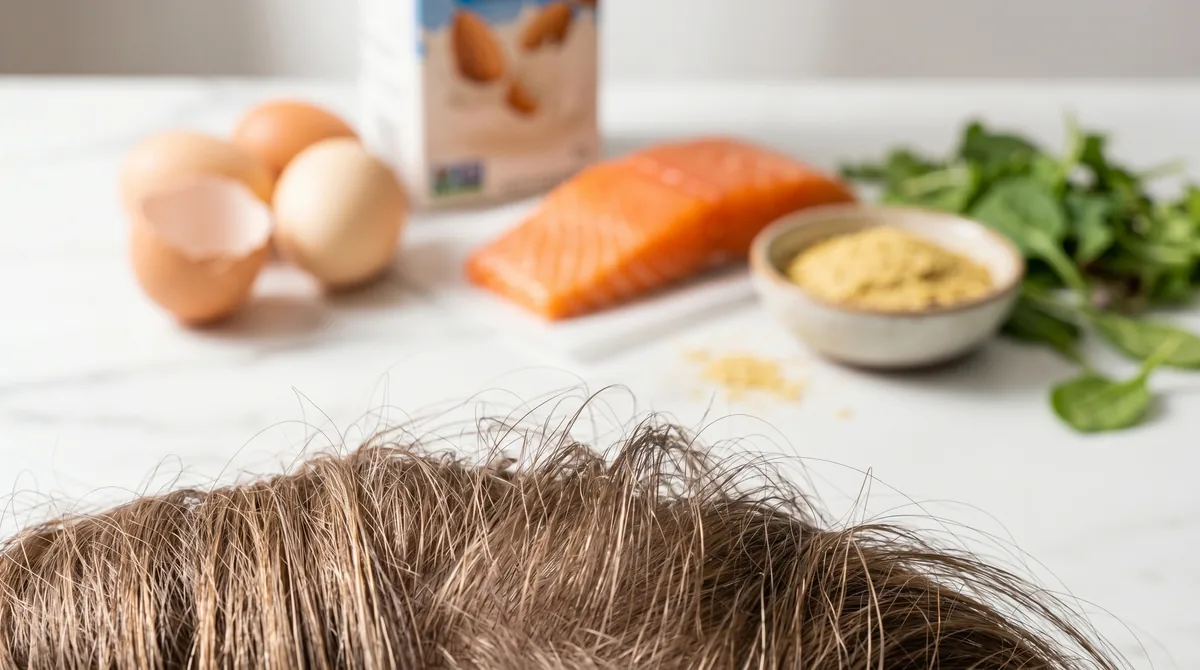
Dietary sources work if you eat animal products. Beef liver is absurdly rich in B12 (one 3oz serving provides nearly 30 times your daily requirement), but most people won’t eat liver regularly. More realistic: salmon, eggs, fortified cereals, and dairy. Vegans must rely on fortified foods (plant milks, nutritional yeast, cereals) or supplements, there’s no plant-based whole food option.
Timeline for improvement: you’ll likely feel energy return within weeks. Hair regrowth takes longer, expect 3-6 months before you notice reduced shedding and new growth, since follicles need time to shift back into anagen phase and produce thicker shafts.
Why B12 Alone Won’t Solve Gulf Hair Problems
Here’s what frustrates people: they fix their B12 levels, wait months, and their hair still looks thin and lifeless. The reason? If you’re living in the Gulf, you’re dealing with a second, completely separate issue that B12 supplementation can’t touch.
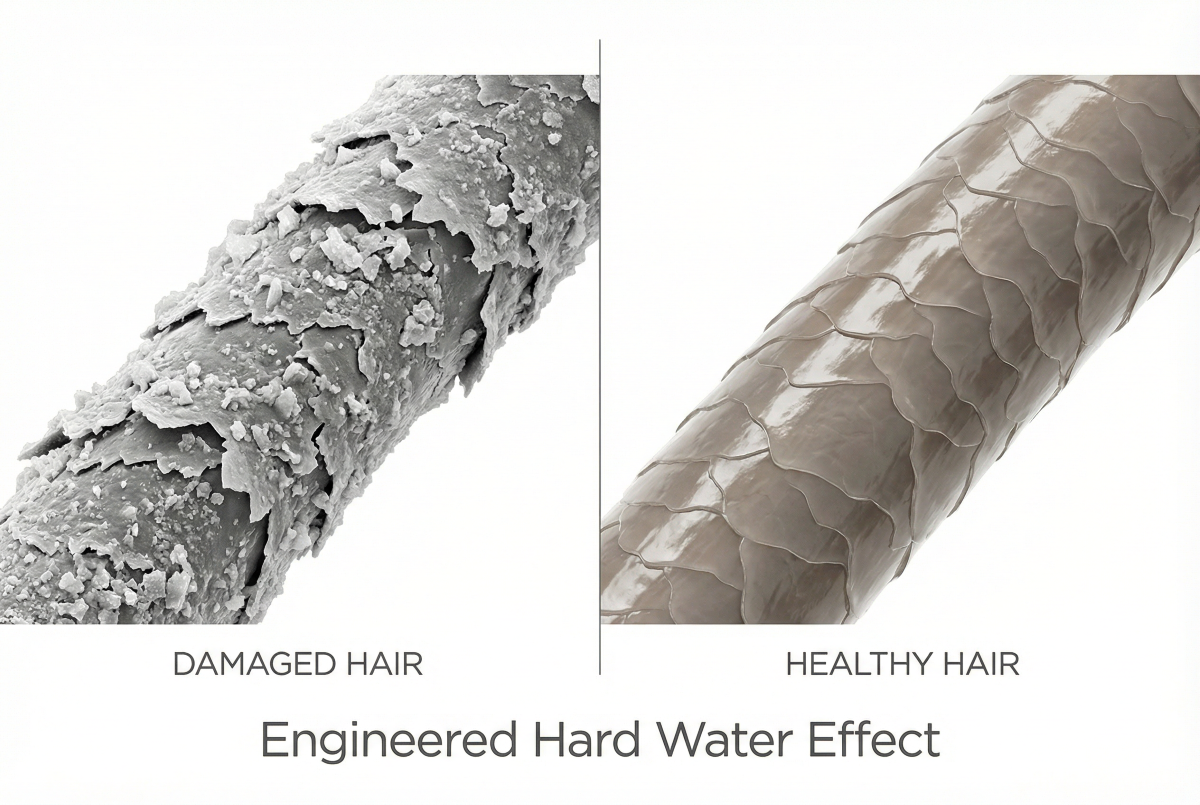
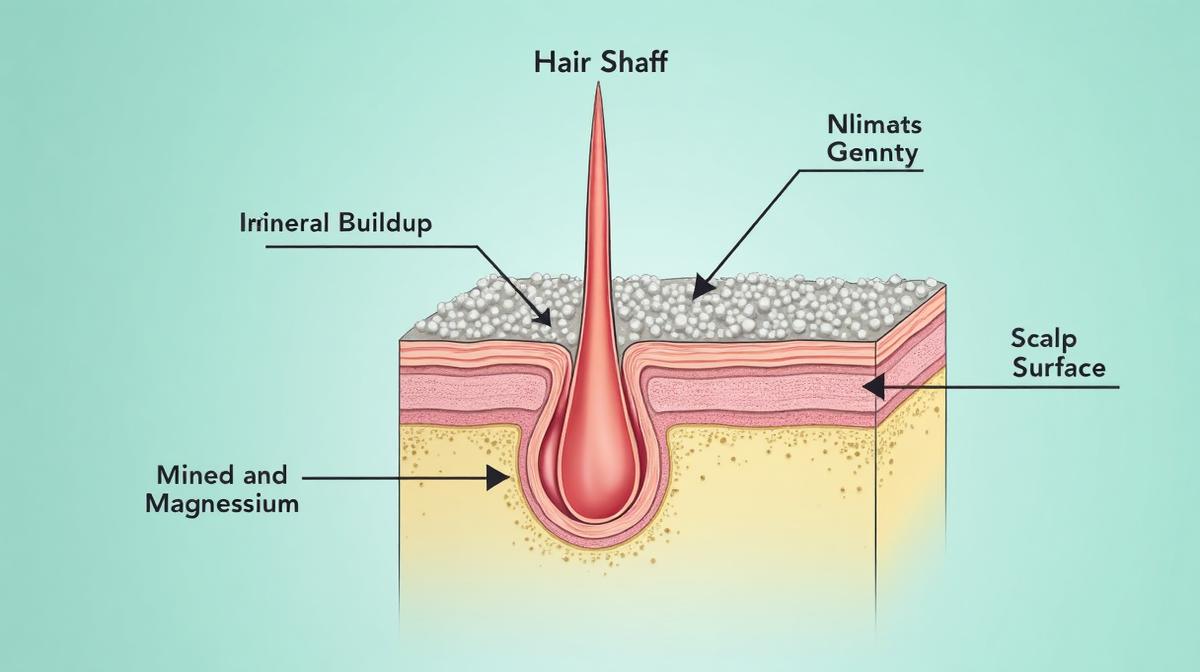
The region’s water supply is among the hardest in the world, loaded with calcium and magnesium minerals. Every time you shower, those minerals coat your hair shafts and accumulate on your scalp. Over time, this creates a barrier that blocks moisture, makes hair feel rough and brittle, and can even interfere with how topical treatments penetrate your scalp.
Think of it this way: B12 fixes the internal factory (your follicles’ ability to produce healthy hair). But hard water damages the external product (the hair shafts themselves) and clogs the delivery system (your scalp’s ability to absorb nutrients and treatments). You need both problems solved.
This is where a chelating shampoo like Regrowth+ becomes essential for Gulf residents. It specifically removes mineral buildup that regular shampoos leave behind, creating a clean foundation for your newly B12-fueled follicles to actually produce healthy, resilient hair. Nutritional fixes work from the inside; proper cleansing works from the outside. You need both layers of the strategy.
The best approach? Address B12 deficiency through supplementation or diet changes, and simultaneously switch to a chelating shampoo that handles the environmental damage. Neither alone is enough if you’re dealing with both problems.
Other Nutrients That Work With B12 for Hair Health
B12 doesn’t operate in isolation. Several other nutrients work synergistically to support hair growth, and deficiency in any of them can limit how well B12 supplementation works.
Iron is critical. Even if your B12 levels normalize, iron deficiency anemia will continue causing hair loss. Women are particularly at risk, especially those with heavy menstrual periods. Get your ferritin levels tested (aim for at least 40-70 ng/mL for optimal hair growth, not just the lower limit of normal).
Folate (vitamin B9) works hand-in-hand with B12 in DNA synthesis. Deficiency in either vitamin can cause similar symptoms, including hair thinning. Good sources: leafy greens, legumes, fortified grains. If you’re supplementing B12, consider a B-complex that includes folate rather than isolated B12.
Vitamin D deficiency is endemic in the Gulf despite the abundant sunshine, cultural dress codes and indoor lifestyles mean many residents get minimal sun exposure. Low vitamin D correlates with telogen effluvium and alopecia areata. Get tested and supplement if you’re below 30 ng/mL.
Zinc and biotin also matter, though true deficiency is less common. If you’re addressing B12, consider a complete approach that includes these supporting nutrients rather than isolated supplementation.
References
- Vitamin B12 and Hair Loss: A Systematic Review - PubMed
- Vitamin Deficiency Anemia: Symptoms and Causes - Mayo Clinic
- Vitamin B12 Among Vegetarians: Status, Assessment and Supplementation - PubMed
- Iron Deficiency and Hair Loss: The Connection - PubMed Central
- The Role of Vitamin D in Hair Follicle Biology - PubMed