You’ve tried six different shampoos in the last year. Each one promised thicker hair, stronger roots, visible growth. And each one failed. Here’s what nobody tells you: the problem isn’t the shampoo ingredients. It’s what’s coming out of your shower.
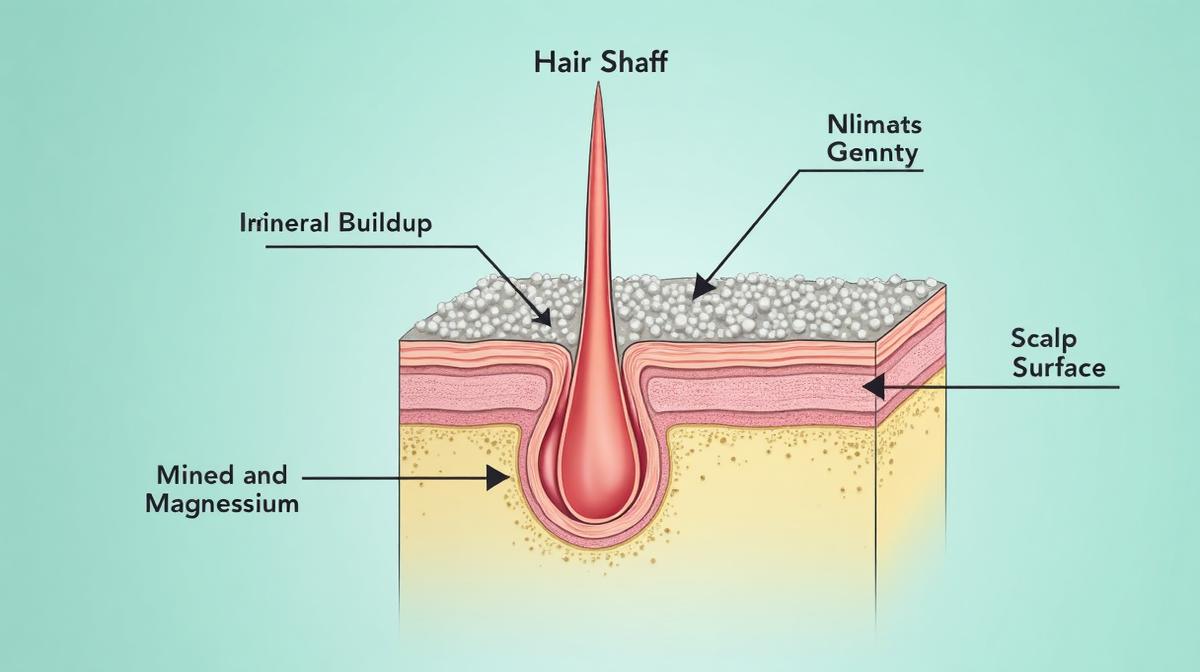
In the Gulf region, hard water contains 3-5 times more minerals than most global standards. That calcium and magnesium doesn’t just rinse away. It bonds to your scalp, creating an invisible barrier that suffocates follicles and blocks every active ingredient you’re paying for. Your expensive hair growth shampoo? It’s fighting a losing battle before it even touches your scalp.
But here’s the thing: some shampoos are engineered differently. They don’t just deliver actives, they remove the mineral deposits first. That’s the difference between a product that works in London and one that works in the Gulf. This guide breaks down what actually matters when you’re choosing a shampoo for hair loss in high-mineral water conditions.
Why Most Hair Growth Shampoos Fail in the Gulf
Let’s be honest about the science. Hair growth shampoos work through three mechanisms: they stimulate blood flow to follicles, they block DHT (the hormone that miniaturizes hair), and they reduce scalp inflammation. Research published in the British Journal of Dermatology confirms these pathways are legitimate. Caffeine increases microcirculation. Saw palmetto inhibits 5-alpha reductase. Ketoconazole reduces fungal inflammation.
But there’s a massive assumption built into all that research: the scalp is clean. The follicles are accessible. The active ingredients can actually penetrate. In the Gulf, that assumption collapses. When your water contains 400+ ppm of dissolved minerals, every shower deposits a layer of calcium carbonate and magnesium sulfate on your scalp. According to the US Geological Survey, water above 180 ppm is considered very hard, and most Gulf water exceeds double that threshold.
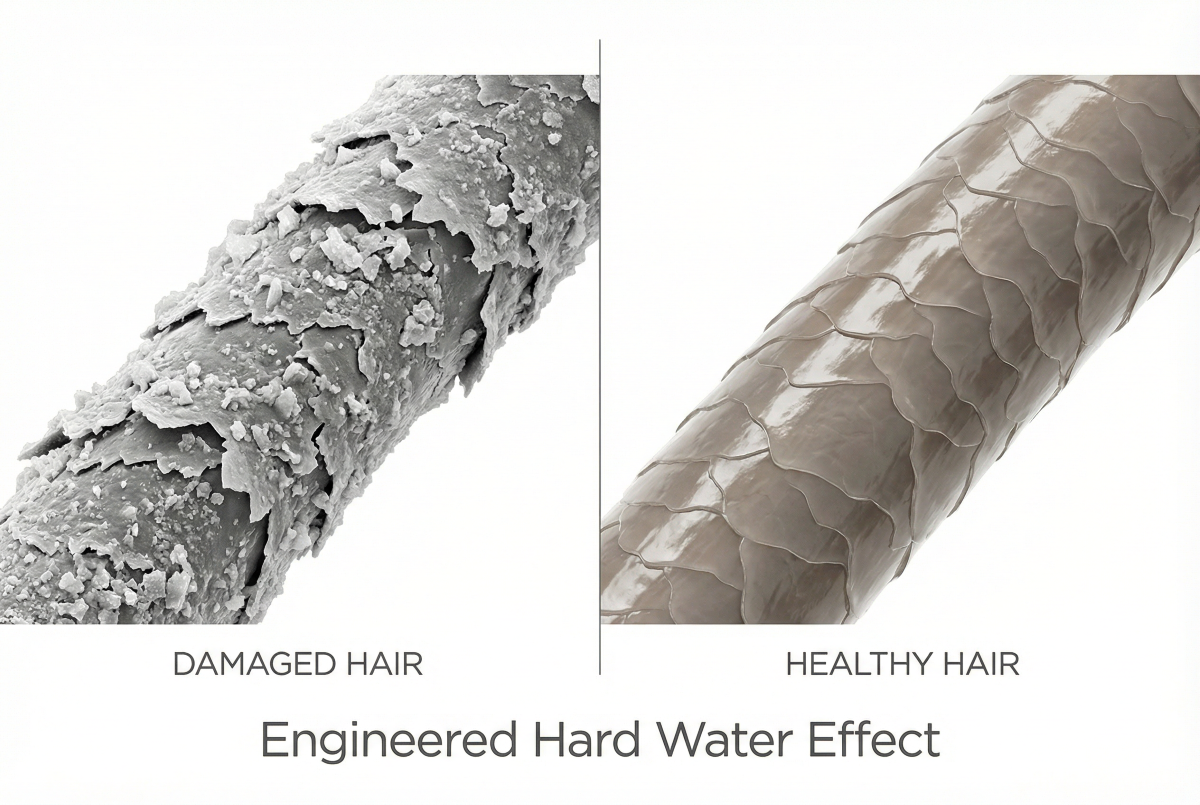
Here’s what happens at the follicle level: mineral deposits create a physical barrier. They coat the hair shaft, making it brittle. They clog the sebaceous glands, changeing natural oil production. And they change your scalp pH from a healthy 4.5-5.5 to an alkaline 7-8, which weakens the hair cuticle and accelerates breakage. Your shampoo’s active ingredients? They’re sitting on top of that mineral layer, never reaching the follicle.
This is why expats in the region report sudden hair thinning within months of arrival. It’s not stress. It’s not the climate alone. It’s the water chemistry interacting with products that weren’t designed for these conditions. The shampoo that worked perfectly in your home country becomes functionally useless here.
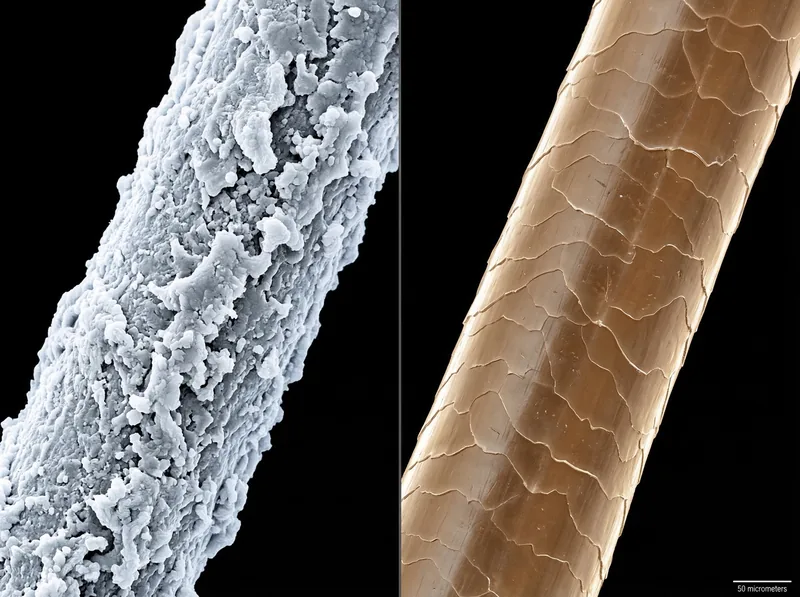 Left: Mineral deposits choking a follicle in hard water regions. Right: A clean follicle after proper chelation.
What to Look for in a Hair Loss Shampoo (Gulf-Specific Criteria)
Forget the ingredient lists for a moment. Before you evaluate actives, you need to answer one question: does this shampoo chelate? Chelation is the chemical process of binding to metal ions (like calcium and magnesium) and removing them. Without chelation, you’re building a mineral fortress around your follicles. With it, you’re creating a clean slate for actives to work.
The most effective chelating agents are EDTA (ethylenediaminetetraacetic acid) and citric acid. According to cosmetic chemistry research, EDTA is particularly effective at sequestering hard water minerals. It doesn’t just prevent new deposits, it actively removes existing buildup. Look for it in the first 10 ingredients. If it’s buried at the bottom of the list, the concentration is too low to matter.
Once chelation is handled, then you evaluate actives. Here’s what has actual clinical backing: Caffeine at 0.001-0.005% concentration stimulates follicles and extends the growth phase. Saw palmetto extract blocks DHT conversion. Biotin strengthens the hair shaft (though it won’t regrow lost hair). Niacinamide reduces inflammation and improves scalp barrier function. Ketoconazole at 1-2% addresses fungal overgrowth that contributes to shedding.
But here’s the critical part: concentration matters more than presence. A shampoo can list all these ingredients and still be worthless if they’re present at homeopathic levels. Unfortunately, most brands don’t disclose concentrations. That’s where clinical studies become your guide, if a brand cites peer-reviewed research on their specific formulation (not just the ingredients in general), they’re more likely to be using effective doses.
And one more thing: pH balance. Your shampoo should be formulated between 4.5-5.5 to match your scalp’s natural acidity. Alkaline shampoos (pH 7+) lift the hair cuticle, making it porous and weak. In hard water, this creates a double assault, minerals bond more easily to raised cuticles, and the hair becomes even more brittle.
The Hard Water Problem: Why Location Changes Everything
Here’s something most dermatologists outside the region don’t understand: hair loss in the Gulf has a different primary driver than hair loss in Europe or North America. In temperate climates with soft water, the main culprits are genetics (androgenetic alopecia), stress (telogen effluvium), and nutritional deficiencies. Those factors exist here too. But they’re amplified by environmental assault.
Hard water hair loss operates through cumulative damage. Every shower deposits 5-10mg of minerals on your scalp. Over months, that buildup becomes visible, a white, chalky residue that won’t rinse away. Your hair feels straw-like. Your scalp itches. And follicles that were genetically programmed to grow hair for another decade start miniaturizing prematurely.
The science is clear: mineral-coated follicles produce thinner, weaker hair shafts. Studies on hair morphology show that calcium deposits physically constrict the follicle opening, reducing the diameter of emerging hair. Over time, this mimics the pattern of androgenetic alopecia, even in people without genetic predisposition.
This is why a shampoo that works brilliantly in London might do nothing in the Gulf. It’s not that the ingredients are wrong. It’s that they never reach the target. A chelating shampoo like Regrowth+ addresses this by stripping mineral buildup first, then delivering actives to a clean scalp. It’s the only approach that makes sense in high-mineral water conditions.
And no, a shower filter isn’t enough. Most filters reduce chlorine and some sediment, but they don’t remove dissolved calcium and magnesium. The shower filter myth is one of the most persistent in hair care, people spend hundreds on filtration systems that don’t address the core problem. You need chelation at the product level.
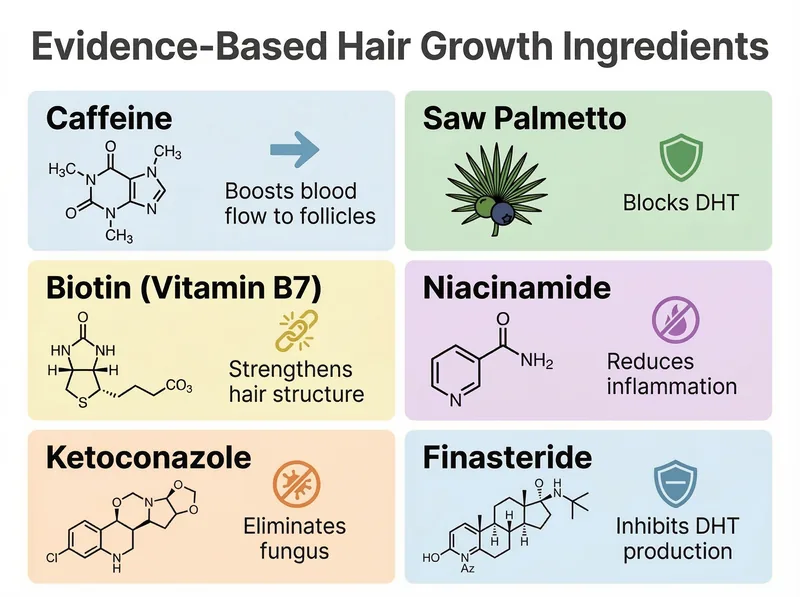 The five ingredients with actual clinical evidence for hair growth and scalp health.
Active Ingredients That Actually Work (When They Can Reach Your Scalp)
Caffeine is the most underrated ingredient in hair growth formulations. Research from the University of Jena demonstrated that caffeine penetrates the hair follicle within two minutes of application and stimulates growth for up to 24 hours. It works by counteracting the effects of testosterone on hair growth, extending the anagen (growth) phase. But, and this is critical, it only works if it reaches the follicle. In mineral-coated scalps, it doesn’t.
Saw palmetto is the natural DHT blocker. It inhibits 5-alpha reductase, the enzyme that converts testosterone to dihydrotestosterone. DHT is the primary driver of androgenetic alopecia in genetically susceptible individuals. Clinical trials published in PubMed Central show that topical saw palmetto can reduce hair loss and improve density. The effective concentration is 1-2% in leave-on formulations, higher in rinse-off products like shampoo.
Niacinamide (vitamin B3) is the anti-inflammatory workhorse. It improves scalp barrier function, reduces redness, and supports healthy sebum production. Dermatology research confirms that niacinamide at 2-5% concentration strengthens the skin barrier and reduces transepidermal water loss. For scalp health, this translates to better follicle environment and reduced irritation-induced shedding.
Ketoconazole deserves special mention. It’s an antifungal, but its benefits for hair growth go beyond treating dandruff. Studies show ketoconazole 2% shampoo can improve hair density and reduce shedding, possibly by reducing scalp inflammation and changeing DHT pathways. It’s one of the few ingredients where the shampoo formulation is actually more effective than leave-on treatments, because the antifungal action requires contact time.
Biotin is overhyped but not useless. It won’t regrow hair you’ve lost, but it can strengthen existing hair and reduce breakage. That matters in the Gulf, where mineral damage makes hair brittle. Think of biotin as structural support, not a growth stimulant.
Why Generic Recommendations Don’t Work Here
Search ‘best shampoo for hair loss’ and you’ll find dozens of listicles recommending the same global brands. They’re not wrong, those products work in the markets they were designed for. But they weren’t engineered for 450 ppm water. They assume your shower water is soft or moderately hard. They assume mineral buildup isn’t a factor.
This is the fundamental problem with importing hair care advice from Western markets. The environmental conditions are different. The water chemistry is different. And the failure modes are different. A shampoo that chelates might be unnecessary in Scotland. In the Gulf, it’s non-negotiable.
Even products marketed as ‘clarifying’ or ‘deep cleansing’ often miss the mark. They remove product buildup and excess oil, but they don’t address mineral deposits. You need a formulation with actual chelating agents, EDTA, citric acid, or phytic acid, at concentrations high enough to sequester metals. Most clarifying shampoos use sulfates to strip everything away, which damages your hair cuticle and makes mineral bonding worse.
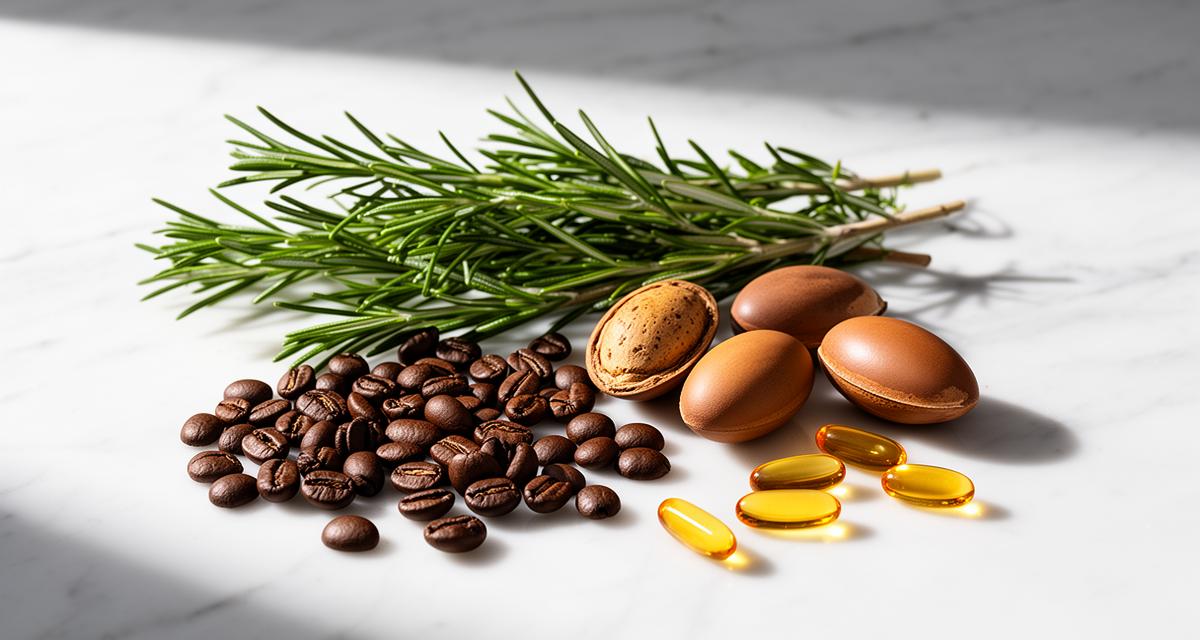
And then there’s the ingredient theater problem: brands that list every trending active (caffeine, biotin, keratin, argan oil, rosemary extract) at meaningless concentrations. It looks impressive on the label. It does nothing for your hair. You’re paying for marketing, not efficacy.
The Regrowth+ Difference: Engineered for GCC Water
Most shampoos are formulated in labs with soft water. They’re tested in soft water. And they fail in hard water. Regrowth+ was designed with the opposite assumption: what if the water itself is the problem? What if you need to fix the environment before delivering actives?
The formulation starts with dual chelation: EDTA to remove existing mineral deposits, and citric acid to prevent new bonding. This creates a clean scalp surface within the first wash. Then it delivers a clinically-backed concentration of caffeine (to stimulate follicles), saw palmetto (to block DHT), and niacinamide (to reduce inflammation). The pH is formulated at 5.0, slightly acidic to seal the hair cuticle and prevent mineral adhesion.
But here’s what sets it apart: it’s the only shampoo designed specifically for Gulf water chemistry. Not adapted. Not reformulated. Designed from scratch for high-mineral conditions. That means higher chelator concentrations than you’d find in a European shampoo. It means actives that can penetrate through the residual minerals that even chelation can’t fully remove. And it means testing protocols that simulate 400+ ppm water, not the 50 ppm used in most cosmetic labs.
Does that make it the ‘best’ shampoo for hair loss universally? No. If you live in an area with soft water, you don’t need this level of chelation. But if you’re in the Gulf, if your water leaves white spots on your glassware and your hair feels like straw, this is the formulation that addresses your actual problem.
How to Evaluate Any Hair Loss Shampoo (Your Checklist)
First: check for chelating agents in the top 10 ingredients. EDTA, citric acid, or phytic acid. If they’re absent, the shampoo won’t address mineral buildup. Second: look for clinical concentrations of actives. Caffeine should be listed in the first third of ingredients. Saw palmetto should be present as an extract, not just fragrance. Ketoconazole should be at 1-2% (this will be listed on the front label if present).
Third: verify pH. If the brand doesn’t disclose it, that’s a red flag. Effective shampoos are formulated between 4.5-5.5. Anything higher damages your cuticle. Fourth: ignore filler ingredients. Argan oil, coconut oil, and keratin sound luxurious, but they don’t address hair loss. They’re conditioning agents, not actives. They make your hair feel better temporarily while doing nothing for growth.
Fifth: check for sulfate type. Not all sulfates are equal. Sodium lauryl sulfate (SLS) is harsh and strips your scalp’s natural oils, making mineral bonding worse. Sodium laureth sulfate (SLES) is milder. Even better: look for sulfate-free formulations that use gentler surfactants like coco-glucoside or decyl glucoside. These clean effectively without compromising your scalp barrier.
Sixth: read the fine print on claims. ‘Clinically proven’ should reference a specific study on the formulation, not just the ingredients. ‘Dermatologist tested’ is meaningless, it just means a dermatologist looked at it once. ‘Results in 30 days’ should come with before/after photos and methodology. If a brand makes bold claims without backing them up, walk away.
What You Can’t Fix With Shampoo Alone
Here’s the reality check: shampoo is one tool in a larger strategy. If you have genetic hair loss (androgenetic alopecia), you need medical intervention, minoxidil, finasteride, or both. If you have nutritional deficiencies (iron, vitamin D, protein), you need to address your diet. If you have thyroid dysfunction or hormonal imbalances, you need to see an endocrinologist.
Shampoo can improve your scalp environment. It can remove barriers to growth. It can deliver actives that support healthier follicles. But it can’t override genetics or fix systemic health issues. Set realistic expectations. A good shampoo should reduce shedding, improve hair texture, and create conditions for better growth. It won’t give you a full head of hair if your follicles are permanently miniaturized.
That said, in the Gulf specifically, improving your shampoo choice has outsized impact. Because environmental damage is such a dominant factor here, fixing the water problem can produce results that look dramatic. People who switch to chelating shampoos often report 30-40% reduction in shedding within weeks. That’s not because the shampoo is magic, it’s because they were losing hair unnecessarily due to mineral damage.
Combine the right shampoo with scalp treatments, proper nutrition, and stress management, and you’re addressing hair loss from multiple angles. That’s when you see real, sustained improvement.
References
- Caffeine and Its Pharmacological Benefits in the Management of Androgenetic Alopecia - British Journal of Dermatology
- Hardness of Water: USGS Water Science School - US Geological Survey
- Serenoa repens for Androgenic Alopecia: A Systematic Review - PubMed Central
- Nicotinamide Improves Epidermal Barrier Function - PubMed
- Ketoconazole Shampoo: Effect of Long-Term Use in Androgenic Alopecia - PubMed