Your doctor says your blood work is fine. Hemoglobin’s normal. Iron’s within range. But your hair keeps falling out in the shower, thinning at the crown, shedding across your pillow. You’re told it’s stress. Genetics. Aging. The real culprit? A single number most standard panels don’t even check.
This article contains affiliate links. See our affiliate disclosure for details.
Ferritin. It’s the stored form of iron in your body, and it’s the most commonly missed marker in hair loss cases. Here’s what happens: Your hemoglobin (the iron in your red blood cells) can test completely normal while your ferritin sits dangerously low. Your body prioritizes survival over vanity. It’ll keep your blood oxygenated and let your hair starve.
Standard blood panels check hemoglobin. They skip ferritin. And that’s where the disconnect lives. You can have ‘normal’ iron levels and still suffer from iron deficiency hair loss because your storage tanks are empty. Hair follicles are metabolically demanding. They need consistent iron delivery to fuel the rapid cell division that creates each strand. When ferritin drops below a critical threshold, hair shedding accelerates and growth stalls.
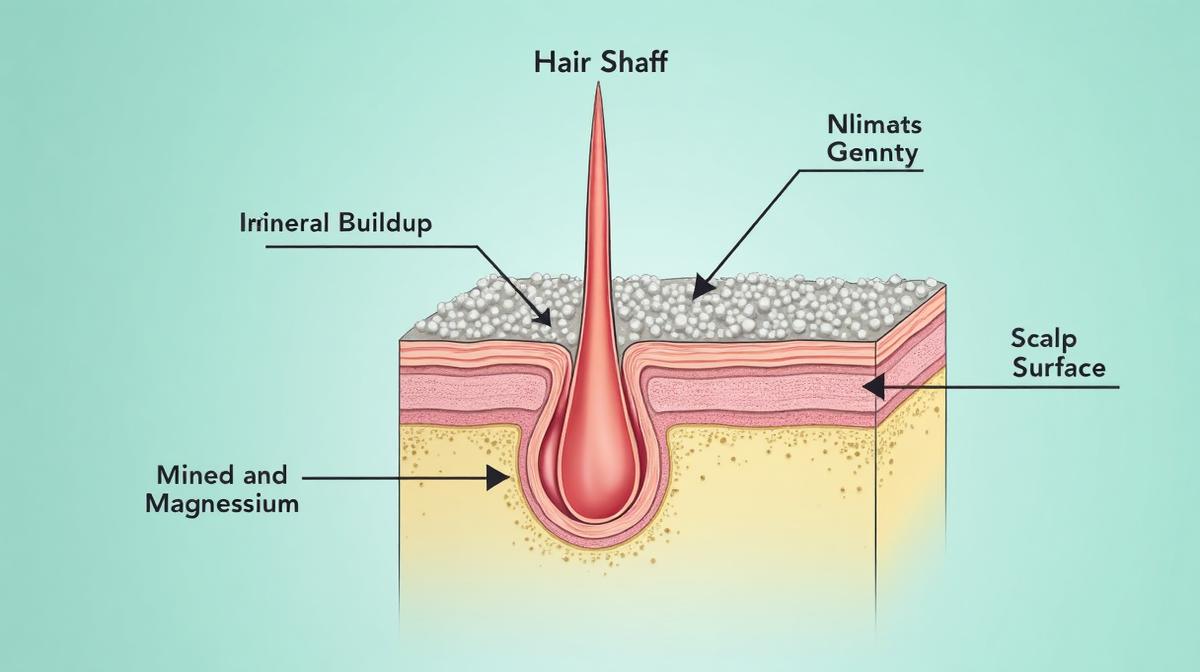
This isn’t rare. Studies show that up to 72% of women with unexplained hair loss have low ferritin, even when hemoglobin is normal. And in the Gulf region, the problem compounds: environmental factors like hard water create mineral buildup on the scalp that blocks nutrient delivery to follicles, meaning even adequate ferritin levels can’t reach the hair roots effectively.
Why Ferritin Matters More Than Hemoglobin for Hair
Iron exists in your body in two primary forms: circulating iron (bound to hemoglobin in red blood cells) and stored iron (ferritin, held in your liver, spleen, and bone marrow). When you get a standard blood test, doctors check hemoglobin. That tells them if you’re anemic, if your blood can carry enough oxygen. But it tells them nothing about your reserves.
Think of it like checking your wallet while ignoring your bank account. You might have enough cash for today (hemoglobin), but if your savings are depleted (ferritin), you’re one unexpected expense away from trouble. Hair follicles are that unexpected expense. They’re non-essential tissue. Your body will drain ferritin stores to maintain critical functions long before it compromises hair growth.
Research published in the Journal of the American Academy of Dermatology found that women with ferritin levels below 40 ng/mL experienced significantly more hair shedding than those with higher levels, even when hemoglobin remained normal. Another study in Dermatology Practical & Conceptual demonstrated that raising ferritin above 70 ng/mL improved hair regrowth in women with chronic telogen effluvium.
The threshold matters. Most labs flag ferritin as ‘low’ only when it drops below 15-20 ng/mL. But for hair? You need 70+ ng/mL. That’s the level where follicles have consistent access to iron for the protein synthesis required to build keratin. Below that, you’re in a gray zone where you’re not anemic, but your hair is suffering.
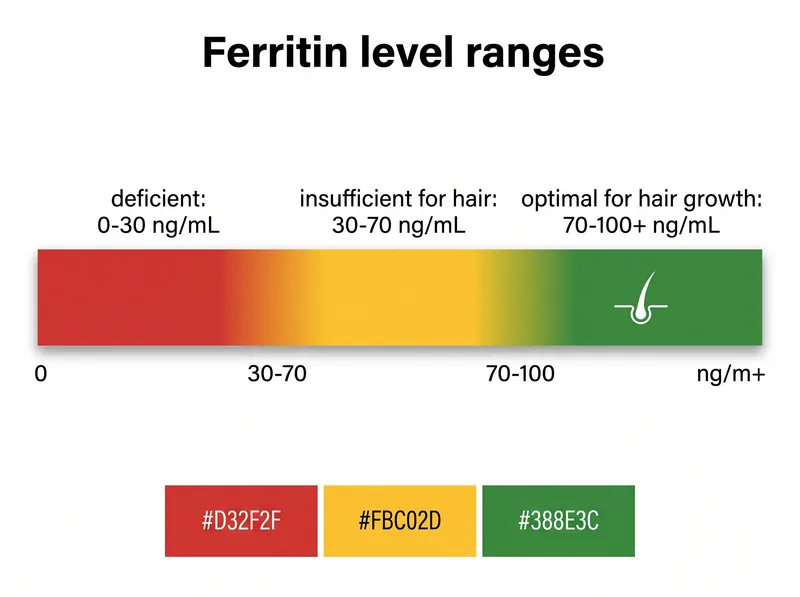 Ferritin levels for hair health: Standard labs may report ‘normal’ at 20 ng/mL, but hair follicles need 70+ ng/mL to function optimally.
The Standard Blood Panel Gap
Walk into most clinics and request a ‘complete blood count’ (CBC). You’ll get hemoglobin, hematocrit, red blood cell count, white blood cell count, and platelets. Ferritin? Not included. It’s a separate test. Doctors order it only when they suspect anemia or iron deficiency based on symptoms like fatigue, weakness, or pale skin.
Hair loss doesn’t trigger that reflex. It’s dismissed as cosmetic. So the test doesn’t get ordered. You leave with ‘normal’ results and no answers. This is the gap. And it’s why so many people, especially women, spend years trying topical treatments, expensive shampoos, and hair supplements without addressing the root cause.
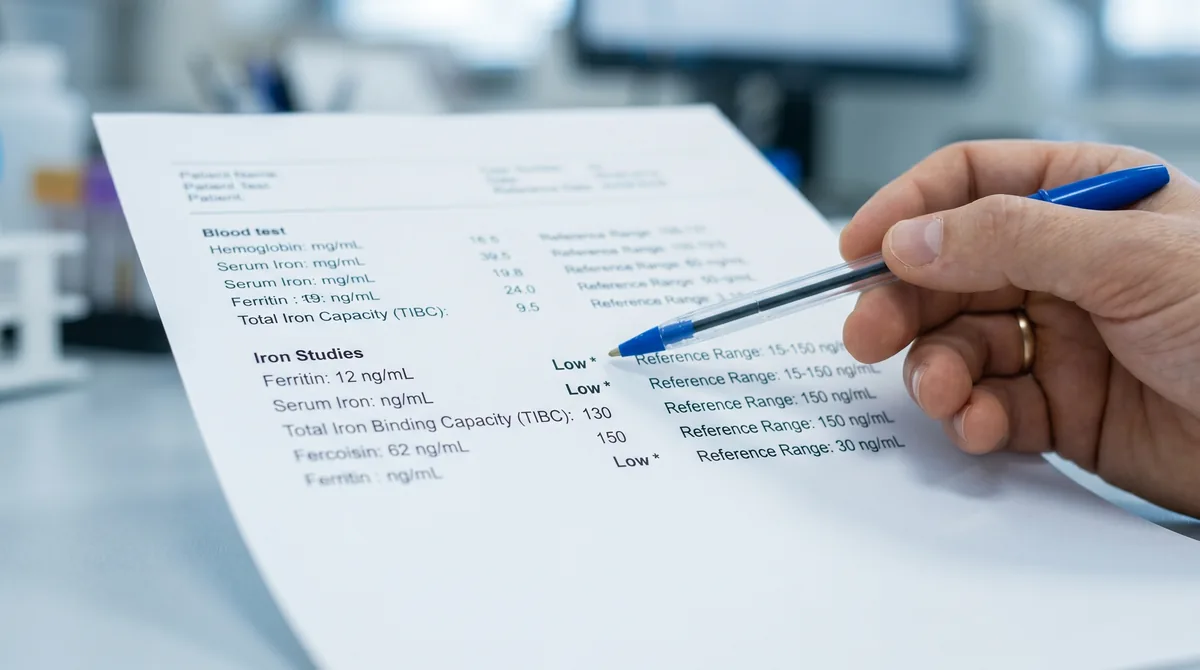
Here’s what you need to request specifically: serum ferritin, serum iron, total iron-binding capacity (TIBC), and transferrin saturation. These four markers together paint the full picture of your iron status. Ferritin shows your stores. Serum iron shows what’s circulating. TIBC shows your body’s capacity to transport iron. Transferrin saturation shows how much of that capacity is being used.
If your ferritin is below 70 ng/mL and you’re experiencing hair loss, you’ve found a likely contributor. If it’s below 40 ng/mL, it’s almost certainly involved. And if it’s below 20 ng/mL, you’re in deficiency territory that requires immediate correction, not just for hair, but for overall health.
Optimal Ferritin Levels for Hair Growth
The medical community disagrees on optimal ferritin ranges. Standard lab reference ranges list ‘normal’ as 12-150 ng/mL for women and 12-300 ng/mL for men. But ‘normal’ doesn’t mean ‘optimal.’ A ferritin level of 20 ng/mL won’t cause anemia, but it will cause hair loss.
Trichologists, specialists in hair and scalp health, target ferritin levels of 70-100 ng/mL for patients with hair loss. This isn’t arbitrary. Studies consistently show improved hair density and reduced shedding when ferritin is maintained above 70 ng/mL. Below that threshold, hair follicles enter a state of chronic stress, shortening the anagen (growth) phase and extending the telogen (resting) phase before shedding.
For context: a healthy hair follicle spends 2-7 years in anagen, producing a long, thick strand. When iron is insufficient, anagen shortens to months. The strand miniaturizes. The follicle ejects it prematurely. You see increased shedding and thinner regrowth. Over time, this pattern creates visible thinning, especially at the crown and part line.
Getting ferritin from 20 to 70 ng/mL doesn’t happen overnight. Iron stores replenish slowly. Oral supplementation typically raises ferritin by 10-15 ng/mL per month, meaning it can take 3-6 months to reach optimal levels. And then another 3-6 months for hair growth to reflect the change, since hair grows at roughly half an inch per month and damaged follicles need time to reset their growth cycle.
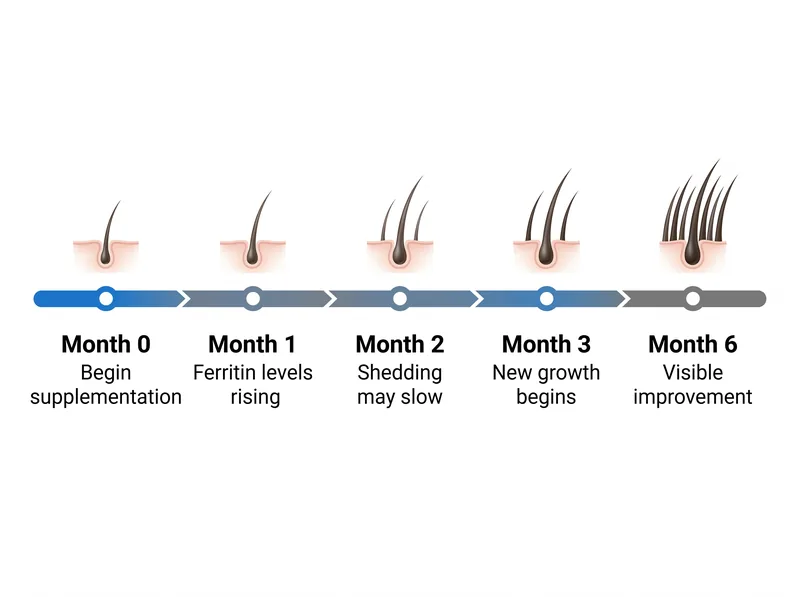 Hair growth timeline after correcting ferritin deficiency: Visible improvement typically appears 3-6 months after levels normalize.
Supplementation Protocols That Work
If your ferritin is low, supplementation is the most direct fix. But not all iron supplements are equal. Absorption varies wildly based on form, dosage, and what you take it with. Ferrous sulfate is the most commonly prescribed form, it’s cheap and effective, but it causes gastrointestinal distress (nausea, constipation, stomach pain) in many people.
Ferrous bisglycinate (iron chelate) is better tolerated. It’s bound to amino acids, which improves absorption and reduces GI side effects. Studies show it’s absorbed at rates comparable to ferrous sulfate but with significantly fewer complaints. If you’ve tried iron supplements before and quit because they made you feel terrible, try bisglycinate.
Dosage matters. Most protocols start with 65-100 mg of elemental iron daily, taken on an empty stomach with vitamin C (which enhances absorption). Avoid taking iron with calcium, coffee, tea, or dairy, these inhibit absorption. Retest ferritin every 8-12 weeks to track progress and adjust dosage. Once you reach 70+ ng/mL, you may drop to a maintenance dose or cycle off entirely, depending on dietary iron intake.
Some people don’t respond to oral supplementation. Conditions like celiac disease, inflammatory bowel disease, or H. pylori infection can block iron absorption. In these cases, intravenous (IV) iron may be necessary. IV iron bypasses the gut and delivers iron directly into the bloodstream, raising ferritin levels rapidly, often within weeks instead of months. This is a medical procedure requiring a prescription and supervision.
But here’s the critical piece most people miss: fixing ferritin is an internal solution. If external factors are blocking nutrient delivery to your scalp, you won’t see the full benefit. In the Gulf region, hard water creates calcium and magnesium buildup on the scalp that forms a barrier between your bloodstream and your hair follicles. Even with optimal ferritin, those minerals can prevent iron from reaching the roots. That’s where a chelating shampoo like Regrowth+ becomes relevant, it removes the mineral layer, allowing nutrients to penetrate.
Why It Takes 3-6 Months to See Results
You start supplementing. Ferritin rises. But your hair still looks thin. Why? Because hair growth is slow. Each strand grows about 0.5 inches per month. When you correct a ferritin deficiency, you’re not repairing existing hair, you’re changing the conditions for new growth.
Here’s the timeline: Month 1-2, your ferritin levels start climbing. Follicles begin receiving adequate iron. But they’re still in their current growth cycle. Month 3, follicles that were in telogen (resting) start entering anagen (growth). You may notice shedding slowing down. Month 4-6, new growth becomes visible. Strands are thicker, stronger, less prone to breakage. By month 6-9, you see measurable improvement in density.
This delayed response frustrates people. They supplement for a month, see no change, and quit. Or they assume the iron wasn’t the problem. But the biology is clear: hair responds to systemic changes on a lag. You’re not fixing the hair you see. You’re fixing the hair that hasn’t grown yet.
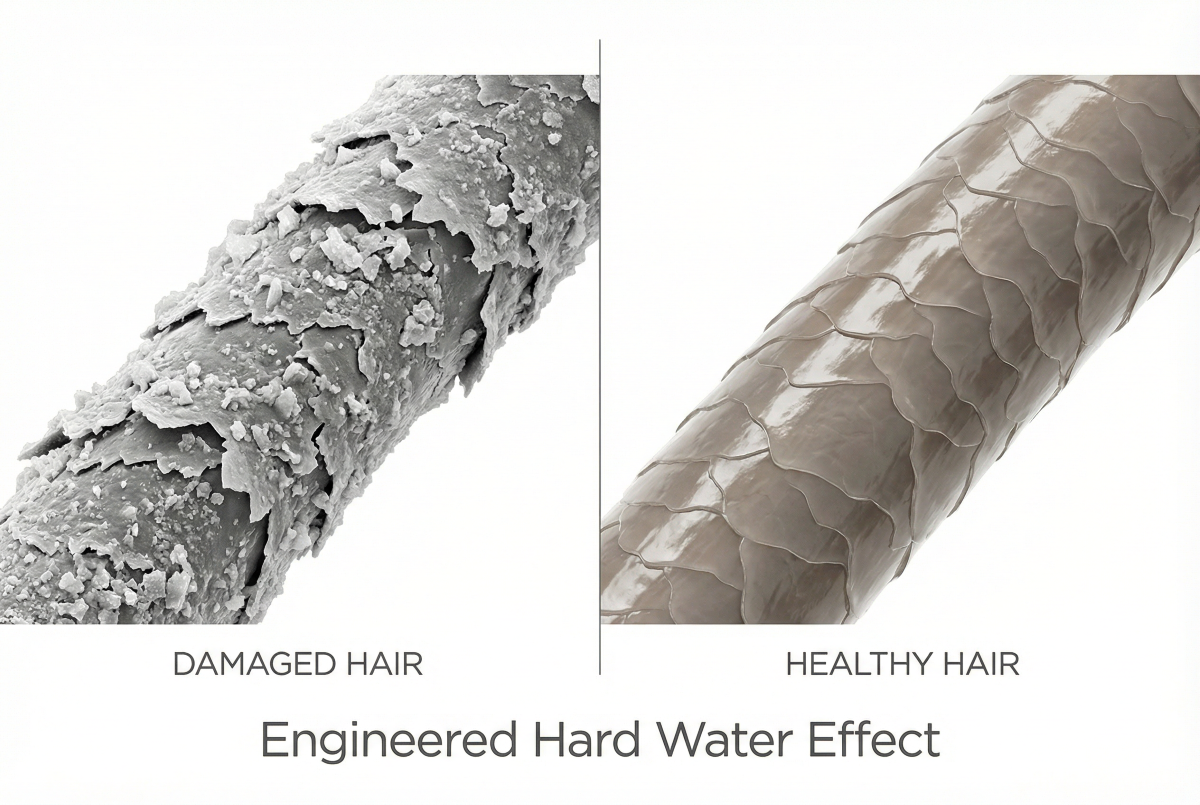
During this waiting period, addressing external factors accelerates visible improvement. Hard water damage creates immediate, visible thinning by coating strands and weakening structure. Removing that buildup with a chelating treatment can improve hair appearance within weeks, while the internal ferritin correction works in the background.
The Gulf Region Factor
Iron deficiency is common globally, but the Gulf region adds a compounding variable: water quality. The water here is among the hardest in the world, with total dissolved solids (TDS) often exceeding 500 ppm. That’s calcium, magnesium, and trace minerals that deposit on your scalp with every shower.
These deposits don’t just coat the hair shaft, they penetrate the scalp surface, creating a mineralized layer that blocks pores and restricts nutrient flow. Even if your ferritin is optimal, if your scalp is encased in mineral buildup, iron can’t reach the follicles efficiently. It’s like trying to water a plant through a plastic sheet.
This is why many Gulf residents experience hair loss even with normal bloodwork. The internal supply is fine. The delivery system is blocked. And because most doctors aren’t trained to consider environmental factors like water hardness, the connection gets missed. You’re told your labs are normal, so the problem must be genetic or stress-related.
The solution requires both levers: internal correction (ferritin supplementation) and external removal (chelating shampoo to strip mineral buildup). One without the other leaves half the problem unsolved. You can raise ferritin to 100 ng/mL, but if your scalp is coated in calcium, you won’t see the full benefit. Conversely, you can remove the buildup, but if ferritin is 20 ng/mL, follicles still lack the raw materials for growth.
References
- Serum ferritin and hair loss: a review - Journal of the American Academy of Dermatology
- The role of nutrition and diet in female hair loss - Dermatology Practical & Conceptual
- Iron deficiency anemia: Symptoms, causes, and treatment - Cleveland Clinic
- Iron absorption and bioavailability: An updated review - PubMed Central