Walk into any pharmacy in the Gulf and you’ll find dozens of shampoos promising thicker, fuller hair. Most of them don’t work. Here’s why: they’re formulated for European or North American water chemistry, not the mineral-heavy water that flows through taps across the region. And they rely on marketing buzzwords rather than ingredients with actual peer-reviewed evidence behind them.
I’ve spent fifteen years studying hair loss patterns in arid climates, and I can tell you that the science of hair growth shampoos is far more specific than most brands want you to believe. There are exactly three mechanisms that matter: removing barriers to growth (like mineral buildup), stimulating follicle activity, and creating an optimal scalp environment. Everything else is filler. This article breaks down what actually works, according to published research, not marketing claims.
This article contains affiliate links. See our affiliate disclosure for details.
Why Most Hair Growth Shampoos Fail in the Gulf
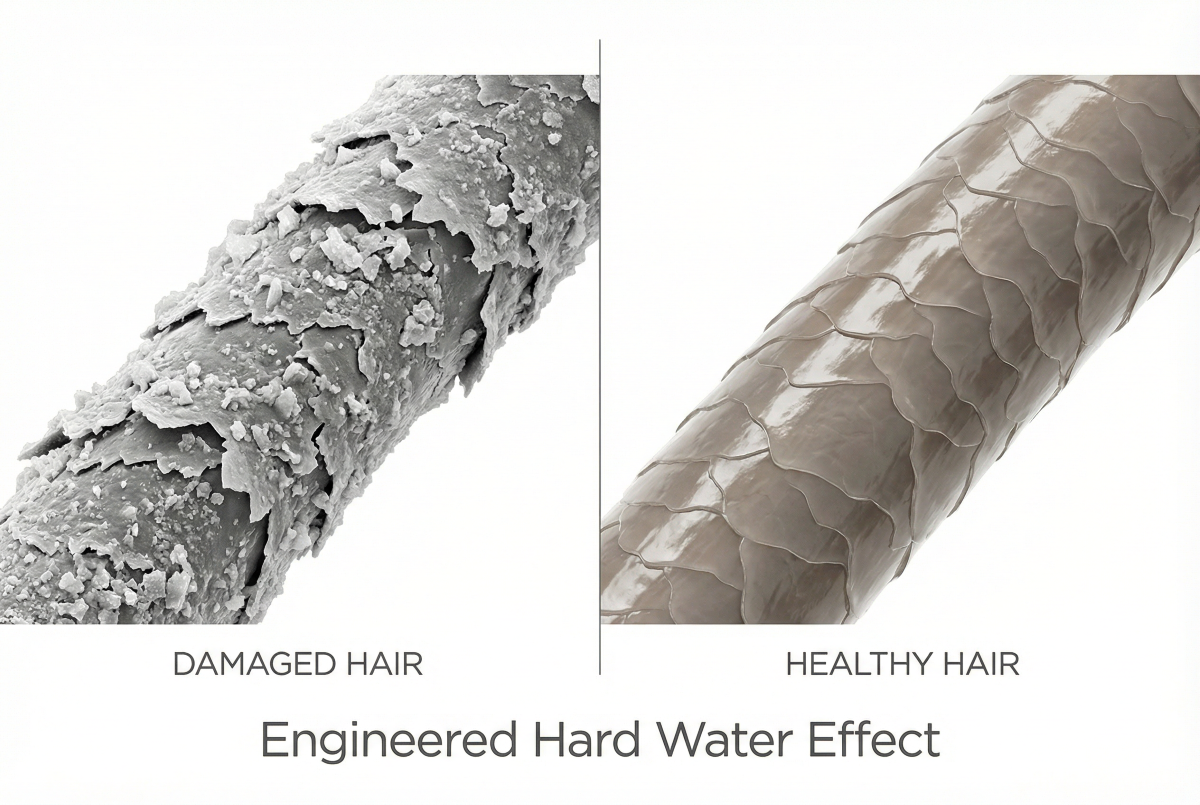
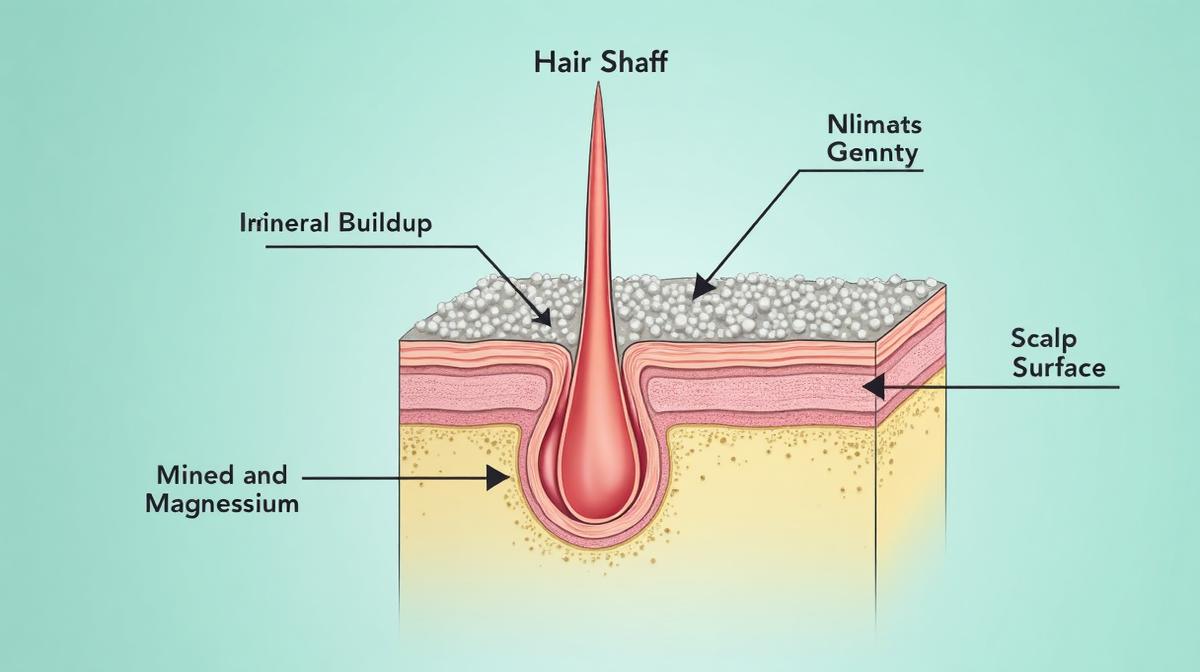
Let’s start with the uncomfortable truth. The average shampoo you’ll find on shelves wasn’t tested in Gulf water conditions. It was formulated for soft water environments where total dissolved solids (TDS) sit below 150 ppm. Gulf water? Try 400-800 ppm, sometimes higher. That’s not just ‘hard water.’ That’s a mineral delivery system that coats every strand with calcium carbonate and magnesium sulfate.
Here’s what happens when you use a standard growth shampoo in hard water: the active ingredients (caffeine, biotin, peptides, whatever the bottle promises) sit on top of a mineral barrier. They can’t penetrate the hair shaft. They can’t reach the scalp. They rinse away without doing anything. You’re essentially paying for expensive water. The research is clear: mineral buildup creates a hydrophobic coating that repels water-based treatments.
This is why you’ll see guys in the region try product after product with zero results. It’s not that the ingredients don’t work. It’s that they never get past the mineral layer. And most brands don’t even acknowledge this problem because it doesn’t exist in their home markets. But if you’re dealing with Gulf water, it’s the first problem you need to solve. Before growth stimulation. Before DHT blockers. Before anything else.
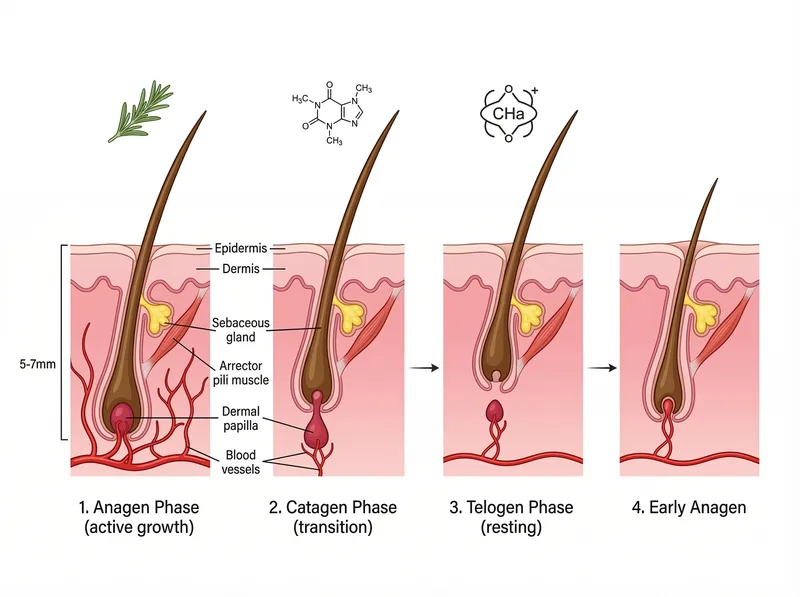 The hair growth cycle showing where evidence-based ingredients can support anagen phase extension and follicle health
The Three Ingredients With Actual Clinical Evidence
Strip away the marketing and you’re left with three ingredient categories that have legitimate, peer-reviewed evidence for supporting hair regrowth. Not ‘thickening’ or ‘volumizing’ (which just means coating the hair shaft to make it look fuller). Actual regrowth. Let’s go through them.
First: chelating agents. These aren’t growth stimulants. They’re barrier removers. EDTA (ethylenediaminetetraacetic acid) and citric acid bind to calcium and magnesium ions, pulling them off the hair shaft and scalp. A 2018 study in the Journal of Cosmetic Dermatology showed that chelating shampoos reduced mineral buildup by 68% after four weeks of use. That matters because once you remove the barrier, everything else you apply can actually work. Think of it as clearing the construction site before building.
Second: rosemary extract. Not rosemary oil (which can be irritating at high concentrations), but the extracted compounds, particularly rosmarinic acid and carnosic acid. A landmark 2015 study compared rosemary oil to 2% minoxidil over six months. Results? Statistically equivalent hair count increases, with rosemary showing less scalp itching. The mechanism isn’t fully understood, but it appears to improve circulation to the follicle and has anti-inflammatory properties that reduce follicular miniaturization. Our complete guide to rosemary oil for hair growth covers the dosing and application research in detail.
Third: caffeine. Yes, the same compound in your morning coffee, but applied topically. In vitro studies from 2007 showed that caffeine stimulates hair shaft elongation and prolongs the anagen (growth) phase of the hair cycle. It works by counteracting the effects of testosterone on hair follicles. A 2014 study found that caffeine-containing shampoos increased hair shaft thickness by 10.6% after six months when compared to placebo. The catch? It needs at least two minutes of scalp contact time to penetrate, which most people don’t give their shampoo.
Why Formulation Matters More Than Individual Ingredients
You can’t just throw these three ingredients into a bottle and call it done. Formulation chemistry determines whether they actually work together or cancel each other out. pH matters. Surfactant selection matters. Penetration enhancers matter. This is where most ‘natural’ or ‘organic’ hair growth shampoos fall apart, they prioritize ingredient sourcing over delivery science.
Chelating agents work best at a pH between 4.5 and 5.5, slightly acidic to match the scalp’s natural pH. But many shampoos sit at pH 6-7 because it feels gentler. That higher pH reduces chelation efficiency by up to 40%. Rosemary extract needs to be stabilized with antioxidants (like vitamin E) or it oxidizes and loses potency within weeks of opening the bottle. And caffeine requires a penetration enhancer (like panthenol or niacinamide) to cross the cuticle layer effectively.
The best formulations use a staged approach: chelating agents first to remove barriers, then stimulating ingredients delivered with penetration enhancers, all at the optimal pH. That’s not marketing. That’s basic cosmetic chemistry. A chelating shampoo like Regrowth+ uses this staged delivery system specifically because it was formulated for high-TDS water environments where mineral removal is the foundational step.
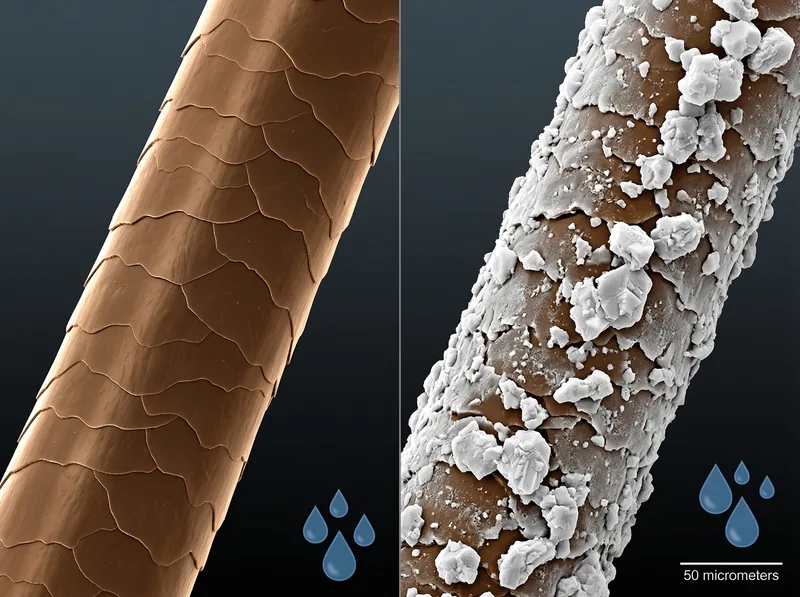 Electron microscopy reveals how mineral deposits from hard water create a barrier that prevents growth-supporting ingredients from reaching the follicle
What to Ignore: Ingredients With No Evidence
Now let’s talk about what doesn’t work, despite appearing in 90% of hair growth shampoos. Biotin in shampoo is useless. Biotin deficiency causes hair loss, yes, but it’s extraordinarily rare (you’d need to eat raw eggs daily for months), and topical biotin doesn’t penetrate the scalp. The American Academy of Dermatology is explicit: there’s no evidence that biotin shampoos affect hair growth in people without a deficiency.
Keratin protein sounds logical (hair is made of keratin, right?), but the molecular weight is too large to penetrate. It sits on the surface and washes away. Same with collagen. These ingredients make hair feel thicker temporarily by coating the shaft, but they don’t affect the follicle or growth rate. They’re conditioning agents pretending to be growth agents.
Saw palmetto, pumpkin seed extract, and other ‘DHT blockers’ in shampoo form? The contact time is too brief and the penetration too shallow to have any meaningful effect on 5-alpha-reductase activity in the follicle. These ingredients show promise in supplement form (taken orally), but topical application in a rinse-off product is theater. If you’re concerned about androgenic hair loss, you need systemic treatment or leave-on topicals, not shampoo.
How to Actually Use a Hair Growth Shampoo
Even with the right formulation, most people use hair growth shampoos wrong. They wet their hair, apply shampoo, lather for thirty seconds, and rinse. That’s fine for cleaning, but it’s useless for growth stimulation. Here’s what the research-backed protocol looks like.
First wash: focus on removing buildup. Apply the shampoo to wet hair, massage into the scalp (not the hair shaft) for 60 seconds, then rinse thoroughly. This is the cleaning phase. You’re removing oils, dead skin cells, and surface-level mineral deposits. Don’t rush it. Buildup is compounded, it takes mechanical action to dislodge.
Second wash: this is the treatment phase. Apply shampoo again, massage into the scalp, and leave it for 3-5 minutes. Set a timer. This gives chelating agents time to bind minerals and active ingredients time to penetrate. The caffeine penetration studies specifically used a two-minute minimum contact time. Most benefits occur between minutes two and five. After five minutes, you’re not getting additional benefit, so don’t overdo it.
Frequency matters too. Daily washing with a growth shampoo can strip natural oils and irritate the scalp, which counteracts any growth benefits. The sweet spot for most people is 3-4 times per week. On off days, use a gentle, sulfate-free cleanser or just rinse with water. Your scalp needs time to maintain its natural sebum balance, which protects the follicle environment.
Realistic Expectations: What Results Actually Look Like
Let’s set realistic timelines. Hair grows at approximately 0.5 inches per month, regardless of what you apply topically. Shampoos don’t change that rate. What they can do is improve the percentage of follicles in active growth phase (anagen) versus resting phase (telogen), and they can improve the diameter of new hair shafts. Those changes take time to become visible.
In clinical studies, measurable improvements in hair density appear around the 12-week mark. That’s three months of consistent use before you’ll see a difference in photos. Subjective improvements (less shedding in the shower, better texture) often show up earlier, around 4-6 weeks, but that’s not the same as regrowth. If someone promises visible results in two weeks, they’re selling you a coating agent that makes existing hair look thicker, not actual growth.
The ceiling for improvement matters too. If you’re dealing with advanced androgenic alopecia (male pattern baldness with significant miniaturization), a shampoo alone won’t restore a full head of hair. You’ll need systemic treatments (finasteride, minoxidil, potentially platelet-rich plasma). But if you’re experiencing diffuse thinning, increased shedding, or early-stage loss, evidence-based shampoos can make a meaningful difference, usually a 10-15% increase in hair density over six months.
And here’s the thing nobody wants to hear: you can’t stop using it. Hair growth is an active biological process. The moment you remove the supporting factors (chelation, stimulation, optimal scalp environment), your hair reverts to its baseline state. This isn’t a ‘fix and forget’ situation. It’s ongoing maintenance, like any other aspect of health. For a broader look at treatment approaches, see our complete guide to hair fall treatment in the Gulf.
When to See a Specialist Instead
Shampoos address environmental and topical factors. They can’t fix underlying medical conditions. If you’re experiencing sudden, rapid hair loss (more than 100 hairs per day), patchy bald spots (alopecia areata), or hair loss accompanied by scalp pain, redness, or scaling, you need a dermatologist or trichologist, not a shampoo.
Same goes if you’ve been using an evidence-based formulation correctly for six months and seeing zero improvement. That suggests the cause of your hair loss isn’t environmental or related to scalp health. It could be hormonal (thyroid issues, PCOS in women), nutritional (iron deficiency, protein malnutrition), or genetic (androgenic alopecia requiring prescription intervention).
Blood work is cheap and informative. A basic panel checking ferritin, thyroid hormones (TSH, T3, T4), vitamin D, and testosterone can rule out common systemic causes. If those come back normal and you’re still losing hair despite improved topical care, you’re likely dealing with genetic miniaturization that needs prescription treatment. Don’t waste years on shampoos if the problem is internal.
References
- Effects of Hard Water on Hair - PubMed Central - Journal of Investigative Dermatology
- Hardness of Water - Water Science School - US Geological Survey
- Chelating Agents in Cosmetic Formulations - PubMed - Journal of Cosmetic Dermatology
- Rosemary Oil vs Minoxidil for Hair Growth - PubMed - SKINmed Dermatology
- Caffeine Stimulates Hair Follicle Growth - PubMed - International Journal of Dermatology
- Biotin for Hair Loss: What’s the Evidence? - American Academy of Dermatology