This article contains affiliate links. See our affiliate disclosure for details.
Your scalp is producing oil right now. But here’s what most people don’t realize: the quality of that oil, its composition, its inflammatory potential, its ability to protect or damage follicles, depends almost entirely on the fats you’ve eaten over the past three months.
That’s because sebaceous glands don’t manufacture lipids from scratch. They assemble them from circulating fatty acids in your bloodstream. If your diet is rich in omega-3s like EPA and DHA, your sebum becomes anti-inflammatory, fluid, and protective. If it’s dominated by omega-6s and saturated fats, your sebum turns pro-inflammatory, oxidizes faster, and clogs follicles.
This isn’t speculation. It’s basic lipid biochemistry. And it’s why omega-3 supplementation shows up in clinical trials for androgenetic alopecia, telogen effluvium, and inflammatory scalp conditions, not because fish oil is a miracle cure, but because it shifts the internal lipid environment that follicles depend on.
But here’s the catch: omega-3s address internal inflammation and lipid balance. They can’t remove mineral buildup, product residue, or the external factors that coat follicles in the Gulf’s hard water environment. That’s where a chelating shampoo like Regrowth+ becomes necessary, to clear the external barrier while omega-3s improve the internal one. This article explains the mechanism behind the internal half of that equation.
How Omega-3s Modulate Follicle Inflammation
Hair follicles are metabolically active structures. They’re constantly dividing, differentiating, and producing keratin, a process that generates oxidative stress and triggers low-grade inflammation. Under normal conditions, this inflammation is tightly regulated by signaling molecules called eicosanoids, which are derived from fatty acids in cell membranes.
Here’s where diet matters. Eicosanoids are produced from two competing pathways: the omega-6 pathway (which produces pro-inflammatory compounds like prostaglandin E2 and leukotriene B4) and the omega-3 pathway (which produces anti-inflammatory compounds like prostaglandin E3 and specialized pro-resolving mediators called resolvins and protectins).
Both pathways use the same enzymes, cyclooxygenase (COX) and lipoxygenase (LOX). When you consume more omega-3s, EPA and DHA compete with arachidonic acid (an omega-6) for access to these enzymes. The result? Your follicles produce fewer inflammatory signals and more anti-inflammatory ones.
In practical terms, this means less follicle miniaturization, less sebaceous gland hyperactivity, and less oxidative damage to the hair shaft during its growth phase. Studies in mice show that topical omega-3 application can even prolong anagen (the active growth phase) by reducing inflammatory cytokines like TNF-alpha and IL-1beta.
But this isn’t a topical mechanism. It’s systemic. The omega-3s you consume get incorporated into cell membranes throughout your body, including the keratinocytes and dermal papilla cells that make up the follicle. Over weeks to months, this shifts the baseline inflammatory state of your scalp tissue.
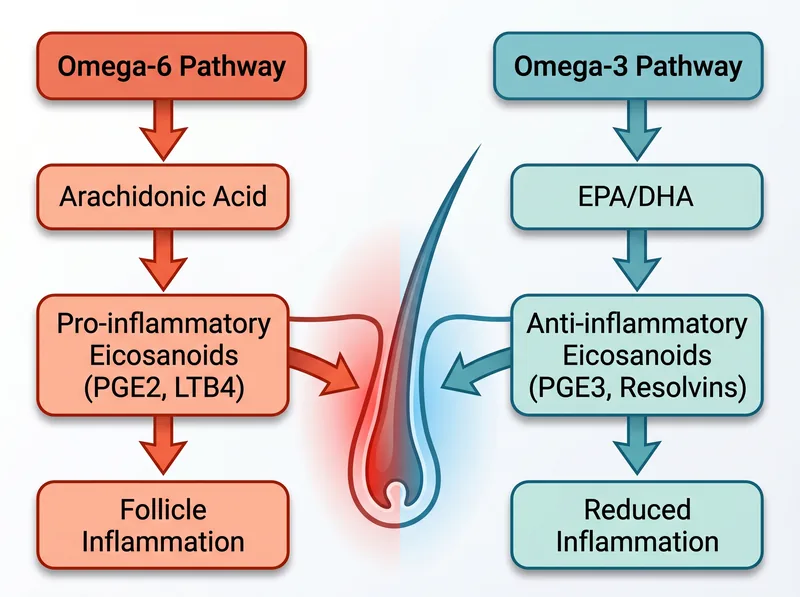 Omega-3s compete with omega-6 fatty acids in the eicosanoid pathway, producing anti-inflammatory compounds that protect follicle cells from oxidative stress.
EPA, DHA, and Sebum Composition
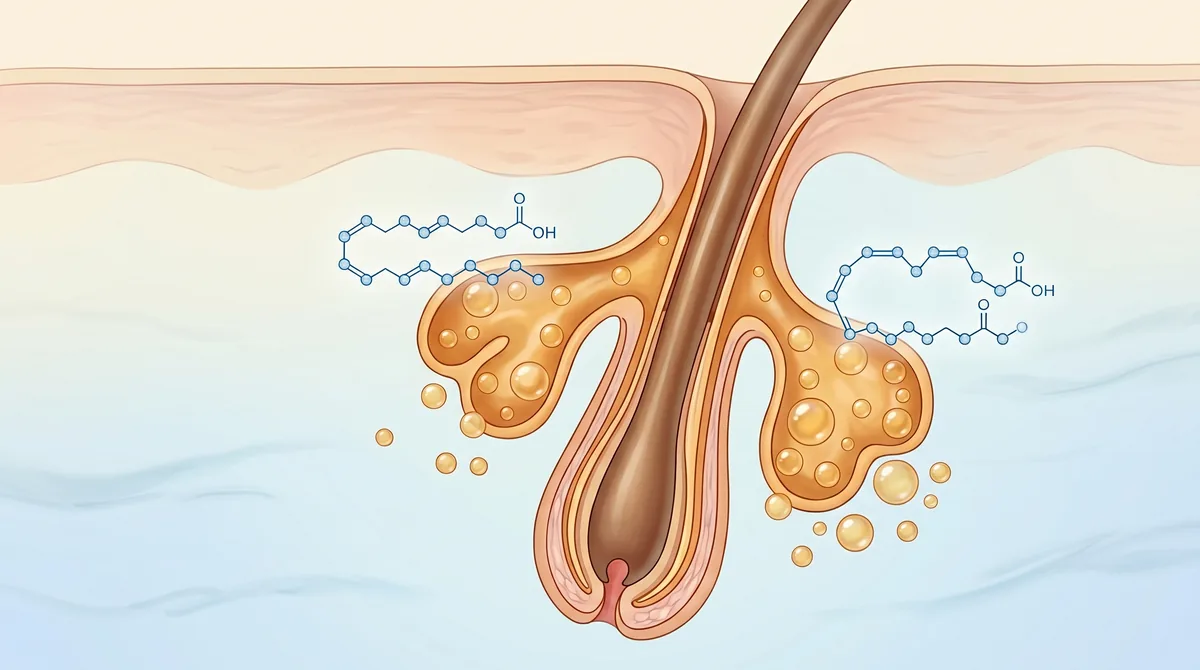
Sebum is often blamed for hair loss, but the issue isn’t sebum itself, it’s sebum quality. Healthy sebum is a complex mixture of triglycerides, wax esters, squalene, and free fatty acids. It lubricates the hair shaft, prevents moisture loss, and provides antimicrobial protection. Unhealthy sebum oxidizes quickly, turns rancid, and feeds inflammatory bacteria like Cutibacterium acnes.
The difference comes down to fatty acid composition. Research shows that people with higher omega-3 intake have sebum with lower levels of saturated fatty acids and higher levels of polyunsaturated fatty acids, including EPA and DHA. This makes the sebum more fluid, less prone to oxidation, and less likely to clog follicles.
Here’s why that matters: oxidized sebum produces lipid peroxides, which are toxic to follicle cells. They damage mitochondria, change keratinocyte differentiation, and trigger inflammatory cascades that push follicles into premature telogen (the resting phase). By improving sebum composition, omega-3s reduce this oxidative burden.
There’s also an antimicrobial angle. EPA and DHA have been shown to inhibit the growth of scalp bacteria that thrive on degraded sebum. This doesn’t mean omega-3s treat seborrheic dermatitis directly, but they create a less favorable environment for microbial overgrowth, which indirectly reduces inflammation.
One caveat: this process takes time. Sebaceous glands don’t turn over overnight. You’re looking at 8-12 weeks of consistent omega-3 intake before you see measurable changes in sebum composition. That’s why short-term supplementation studies often show minimal effects, they’re not long enough to capture the lipid remodeling process.
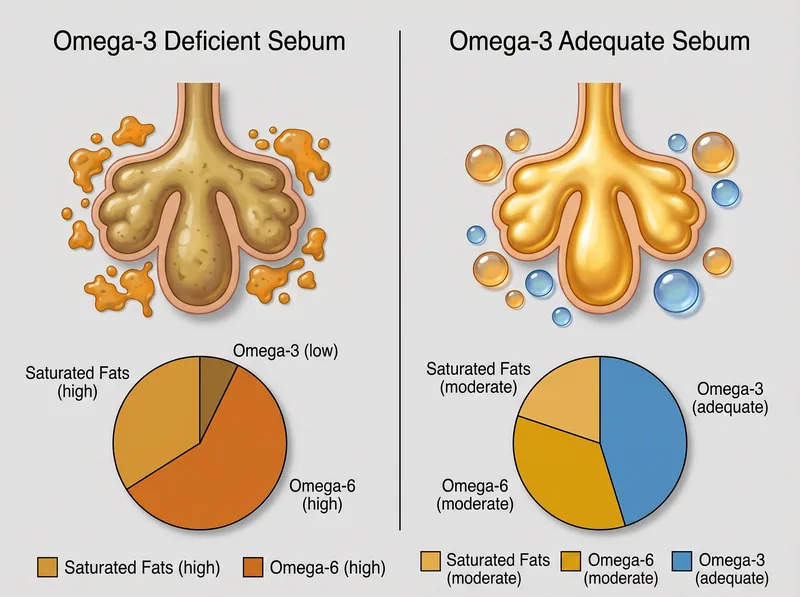 Adequate omega-3 intake shifts sebum composition toward anti-inflammatory lipids, reducing follicle clogging and oxidative damage.
Scalp Barrier Function and Lipid Membrane Integrity
Your scalp’s outermost layer, the stratum corneum, is a lipid-rich barrier that prevents water loss and blocks irritants. This barrier is made of ceramides, cholesterol, and free fatty acids arranged in a lamellar (layered) structure. When this structure is changeed, you get transepidermal water loss (TEWL), increased sensitivity, and chronic low-grade inflammation.
Omega-3s strengthen this barrier by integrating into the lipid bilayers of keratinocytes. Studies on atopic dermatitis (a condition characterized by barrier dysfunction) show that EPA and DHA supplementation reduces TEWL and improves skin hydration. The mechanism? Omega-3s increase the production of ceramides and improve the fluidity of cell membranes, making them more resilient to environmental stressors.
For the scalp, this translates to better moisture retention and less reactivity to hard water, UV exposure, and chemical treatments. A stronger barrier means follicles are less exposed to external irritants, which reduces the inflammatory load that can trigger shedding.
There’s also a connection to the scalp microbiome. A healthy lipid barrier supports a balanced microbial community by providing the right pH and lipid environment. When the barrier is compromised, opportunistic organisms proliferate, leading to conditions like folliculitis and seborrheic dermatitis. Omega-3s don’t directly kill bacteria, but they create conditions that favor a healthier microbiome.
Again, this is a slow process. Barrier repair takes weeks, not days. And it’s cumulative, chronic omega-3 deficiency leads to chronic barrier dysfunction, which compounds over time.
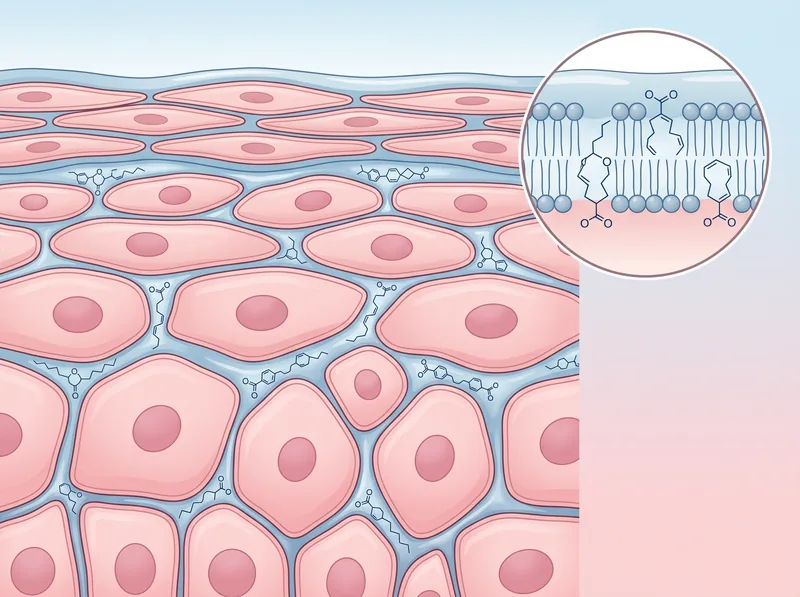 Omega-3s integrate into cell membranes and the intercellular lipid matrix, improving scalp barrier integrity and moisture retention.
Why Omega-3s Alone Aren’t Enough in the Gulf
Everything above describes the internal lipid environment, the biochemical foundation that determines whether your follicles operate in a pro-inflammatory or anti-inflammatory state. But in the Gulf region, there’s an external layer of complexity that omega-3s can’t address: mineral buildup.
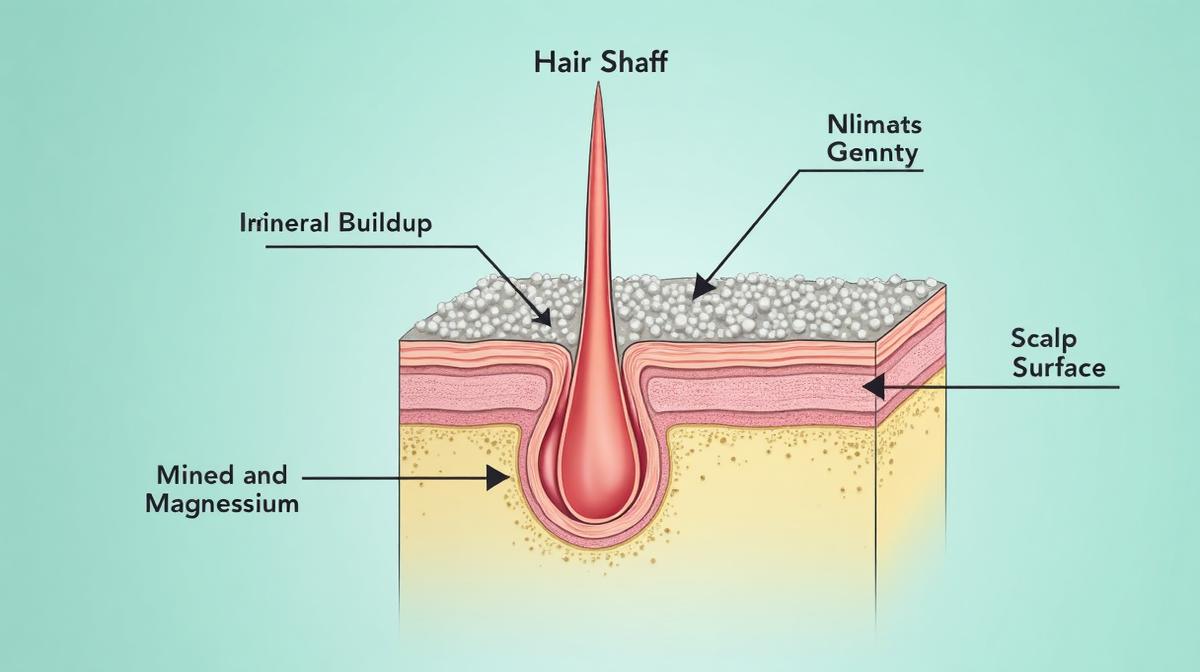
The region’s water has some of the highest total dissolved solids (TDS) levels globally, often exceeding 500 ppm. Calcium, magnesium, and silicates accumulate on the scalp with every shower, forming a coating that blocks sebaceous glands, traps oxidized sebum, and prevents topical treatments from penetrating. This mineral layer creates a physical barrier that no amount of internal lipid improvation can overcome.
Think of it like this: omega-3s improve the quality of the oil your scalp produces, but if that oil is trapped under a layer of mineral scale, it can’t do its job. The sebum oxidizes in place, feeding inflammation instead of preventing it. This is why expats in the Gulf often see hair loss accelerate despite otherwise healthy diets.
The solution isn’t either/or, it’s both. Omega-3 supplementation addresses the internal inflammatory state and sebum quality. A chelating shampoo addresses the external mineral buildup. Used together, they create an environment where follicles can actually benefit from improved lipid metabolism.
This is also why minoxidil often underperforms in hard water areas. The active ingredient can’t penetrate a mineral-coated scalp. Clearing that buildup first, then improving internal factors like omega-3 status, is the sequence that produces results.
EPA vs. DHA: Which Matters More for Hair?
Most omega-3 supplements contain both EPA (eicosapentaenoic acid) and DHA (docosahexaenoic acid), but they have slightly different roles. EPA is the primary anti-inflammatory fatty acid, it’s the one that competes with arachidonic acid in the eicosanoid pathway. DHA, on the other hand, is more structural, it integrates into cell membranes and improves their fluidity and signaling capacity.
For hair health, both matter. A 2015 study on female pattern hair loss found that a combination of EPA, DHA, and antioxidants improved hair density and reduced shedding over six months. The researchers noted that DHA was particularly important for follicle cell membrane integrity, while EPA reduced inflammatory markers in scalp biopsies.
If you’re choosing a supplement, look for a ratio of roughly 2:1 or 3:2 EPA to DHA. That’s the ratio found in most fish oil supplements and the one used in clinical trials. Algal oil (a vegan source) tends to be DHA-dominant, which is fine but may require a slightly higher dose to get equivalent anti-inflammatory effects.
Dosing matters too. Most studies showing hair benefits use 1-2 grams of combined EPA/DHA per day. That’s higher than the general health recommendation (250-500 mg) but still well within safe limits. You’re looking at 2-3 standard fish oil capsules daily, or 1-2 teaspoons of liquid fish oil.
One practical note: omega-3s are fragile. They oxidize easily, especially in liquid form. Buy supplements that are third-party tested for oxidation (look for low peroxide values) and store them in the fridge. Rancid fish oil is worse than no fish oil, it introduces oxidative stress instead of reducing it.
Timeline: When to Expect Changes
Omega-3 supplementation for hair health is a long game. Here’s what the research shows: at 4 weeks, you’ll see changes in blood lipid profiles (higher EPA/DHA, lower omega-6 ratios). At 8 weeks, sebum composition starts to shift. At 12 weeks, inflammatory markers in skin biopsies begin to drop. At 6 months, you might see measurable changes in hair density or shedding rate.
This timeline frustrates people. We’re used to topical treatments that promise results in weeks. But omega-3s aren’t a topical treatment, they’re a systemic intervention that requires cellular remodeling. Sebaceous glands don’t regenerate overnight. Cell membranes don’t flip their lipid composition in days.
The good news? The benefits are cumulative and sustainable. Unlike minoxidil (which requires continuous use to maintain results), omega-3s build a healthier baseline that persists as long as you maintain intake. Stop taking them, and you’ll gradually revert to your previous lipid profile over 3-6 months.
One marker to track: the omega-3 index. This is a blood test that measures EPA and DHA as a percentage of total red blood cell fatty acids. An optimal level for general health is 8% or higher. For hair health, there’s no specific target, but dermatology research suggests that people with omega-3 indices below 4% are more likely to have inflammatory skin conditions.
If you’re serious about this, get tested before starting supplementation, then retest at 12 weeks. It’s the only way to know if your dose is adequate and if you’re absorbing omega-3s properly (some people have genetic variations that impair conversion).
Dietary Sources vs. Supplementation
Can you get enough omega-3s from food alone? Theoretically, yes. Practically, it’s hard. To hit 1-2 grams of EPA/DHA daily, you’d need to eat fatty fish (salmon, mackerel, sardines) 3-4 times per week. That’s doable if you love fish. It’s not sustainable for most people.
Plant-based omega-3s (alpha-linolenic acid, or ALA, found in flaxseeds and walnuts) don’t count toward this target. The human body can convert ALA to EPA and DHA, but the conversion rate is abysmal, typically less than 5% for EPA and less than 0.5% for DHA. You’d need to consume massive amounts of ALA to get meaningful EPA/DHA levels.
That’s why supplementation is the pragmatic choice. Fish oil is the most studied and widely available. Krill oil is more expensive but may have better absorption due to its phospholipid structure. Algal oil is the only vegan option with meaningful DHA content, though it’s typically lower in EPA.
One dietary consideration for Gulf residents: local fish consumption can be high in mercury, especially larger predatory species like kingfish and tuna. If you’re eating fish frequently, choose smaller species (sardines, anchovies) or supplement instead. Third-party tested fish oil is molecularly distilled to remove heavy metals.
Also worth noting: omega-3s are fat-soluble, so they absorb better when taken with a meal that contains fat. Empty-stomach supplementation reduces bioavailability by up to 50%. Take your fish oil with breakfast or lunch, not on its own.
References
- Omega-3 fatty acids and inflammatory processes: from molecules to man - PubMed
- Effect of a nutritional supplement on hair loss in women - PubMed
- Omega-3 fatty acids in dermatology: A review - PubMed
- Effects of eicosapentaenoic acid on skin barrier function - PubMed
- Omega-3 index and cardiovascular health - PubMed