Your hair is 95% keratin protein. Every strand growing from your scalp is built from amino acids your body extracts from food. But here’s what most people don’t realize: the protein you ate yesterday isn’t building today’s hair. Hair growth operates on a metabolic timeline measured in months, not days.
If you’re experiencing increased shedding or slower growth, protein deficiency might be the culprit. But the relationship between dietary protein and hair health isn’t as simple as ‘eat more chicken, grow more hair.’ Your body prioritizes protein allocation ruthlessly. Hair follicles are low on that priority list, sitting well below vital organs, muscle repair, and immune function.
This creates a hidden problem for many Gulf residents. Between fasting periods, restrictive diets, and the regional preference for carbohydrate-heavy meals, protein intake often falls below the threshold needed to support optimal hair growth. The deficiency doesn’t announce itself with dramatic symptoms. It creeps in slowly, first as brittle nails, then sluggish wound healing, and finally as noticeable hair thinning months after your intake dropped.
This article contains affiliate links. See our affiliate disclosure for details.
The good news? Once you understand the numbers and the mechanisms, fixing protein-related hair loss is straightforward. This guide breaks down exactly how much protein your hair needs, which sources work best, and how to identify whether deficiency is actually your problem. Because in the Gulf’s hard water environment, protein intake alone won’t solve hair loss if mineral buildup is blocking absorption.
The Protein-Hair Growth Connection: What Actually Happens
Hair follicles are protein factories. Each follicle contains specialized cells called keratinocytes that synthesize keratin, the structural protein that forms your hair shaft. This process demands a constant supply of amino acids, the building blocks of protein.
Here’s the mechanism: when you consume protein, your digestive system breaks it down into individual amino acids. These enter your bloodstream and circulate to tissues throughout your body. Hair follicles extract specific amino acids, particularly cysteine, methionine, and lysine, to construct keratin filaments.
The problem is prioritization. Your body treats hair as a non-essential tissue. When protein intake drops below optimal levels, your system redirects amino acids to critical functions: maintaining heart muscle, producing antibodies, repairing tissue damage. Hair follicles get what’s left over.
This explains why protein deficiency causes telogen effluvium, a form of diffuse hair shedding that appears 2-3 months after the nutritional deficit begins. The follicles don’t die. They just shift prematurely into the resting phase because they lack the raw materials to continue active growth.
Research shows that severe protein restriction can push up to 30% of follicles into telogen simultaneously. That’s the difference between normal shedding (50-100 hairs daily) and alarming handfuls in the shower (200+ hairs daily). But the timeline matters: you won’t see the shedding until months after your diet changed.
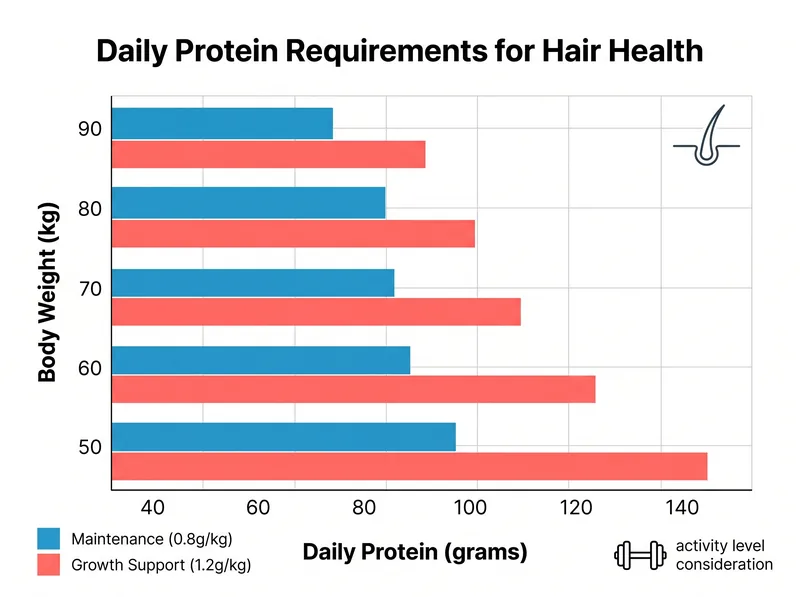 Daily protein targets for hair maintenance and growth, adjusted for body weight and activity level
How Much Protein Your Hair Actually Needs
The standard recommendation, 0.8 grams per kilogram of body weight, is designed to prevent deficiency diseases, not improve hair growth. For hair health, you need more.
Here’s the breakdown:
For basic hair maintenance: 0.8-1.0g per kg body weight. A 70kg person needs 56-70g daily. This prevents deficiency-related shedding but doesn’t necessarily support optimal growth or recovery from existing thinning.
For active hair growth support: 1.2-1.6g per kg body weight. That same 70kg person needs 84-112g daily. This range provides enough amino acids for follicles to maintain anagen (growth phase) duration and produce thicker, more resilient hair shafts.
For recovery from severe shedding: 1.5-2.0g per kg body weight for 3-6 months, then taper to maintenance. This aggressive approach floods the system with amino acids, ensuring follicles have unlimited access to building blocks during the recovery phase.
These numbers assume you’re consuming complete proteins with all nine essential amino acids. If you’re relying heavily on plant sources, you may need to increase total intake by 10-20% to compensate for lower bioavailability. Plant proteins are less efficiently absorbed than animal sources.
Activity level matters too. If you’re training intensely or doing manual labor, your muscle repair demands compete with hair growth for the same amino acid pool. Add an extra 0.2-0.3g per kg to account for increased protein turnover.
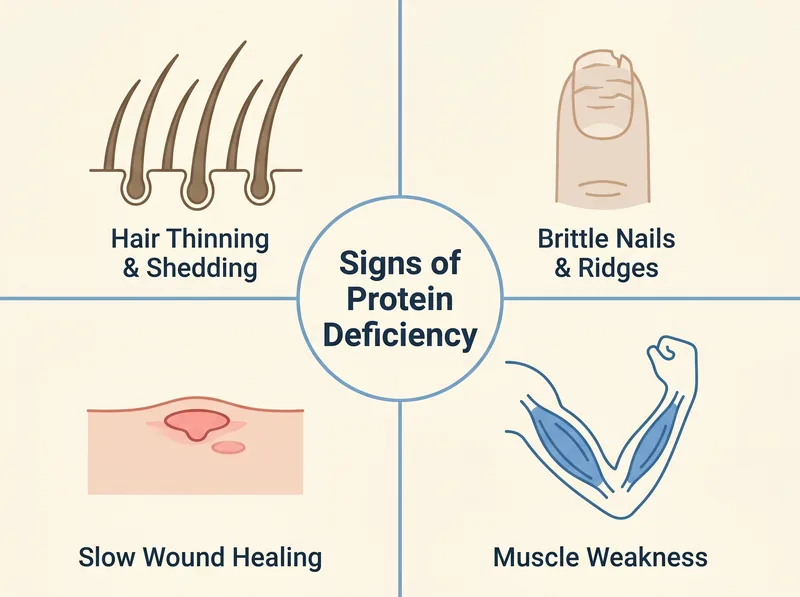 Protein deficiency shows up in multiple body systems before you notice hair changes
Signs You’re Not Getting Enough Protein
Protein deficiency announces itself through multiple body systems before you notice hair changes. Here’s what to watch for:
Hair-specific signs: Increased shedding that persists for weeks, hair that breaks easily near the roots, new growth that feels finer or more fragile than older hair, and a noticeable decrease in growth rate. You might also see changes in hair texture, formerly thick hair becoming limp or losing its natural wave pattern.
Nail changes appear earlier than hair changes. Look for horizontal ridges across multiple nails (Beau’s lines), brittleness that causes nails to split or peel in layers, and slow growth. If your nails aren’t reaching the edge of your fingertip within 3-4 weeks, that’s a red flag.
Wound healing provides another clear signal. Minor cuts or scrapes that take more than 7-10 days to close completely suggest your body lacks the collagen-building amino acids needed for tissue repair. This is especially noticeable if you exercise regularly and minor muscle strains linger longer than usual.
Muscle weakness or loss, even without changing your exercise routine, indicates severe deficiency. Your body is breaking down muscle tissue to liberate amino acids for critical functions. By the time this happens, your hair follicles have been starved for months.
Fatigue and brain fog can also signal inadequate protein. Neurotransmitters like serotonin and dopamine are built from amino acids. When intake drops, mental clarity suffers. If you’re sleeping enough but still feel exhausted, check your protein intake before blaming stress or thyroid function.
In the Gulf region, I see this pattern frequently in expats who’ve adopted restrictive eating patterns or increased fasting without adjusting their feeding windows to include adequate protein. The combination of reduced eating time and high temperatures (which increase protein turnover) creates a perfect storm for deficiency.
 Complete vs incomplete proteins: what your hair follicles can actually use
Animal vs Plant Proteins: What Your Hair Can Use
Not all protein sources deliver the same benefit to hair follicles. The key difference is amino acid completeness and bioavailability, how many essential amino acids the food contains and how efficiently your body can extract them.
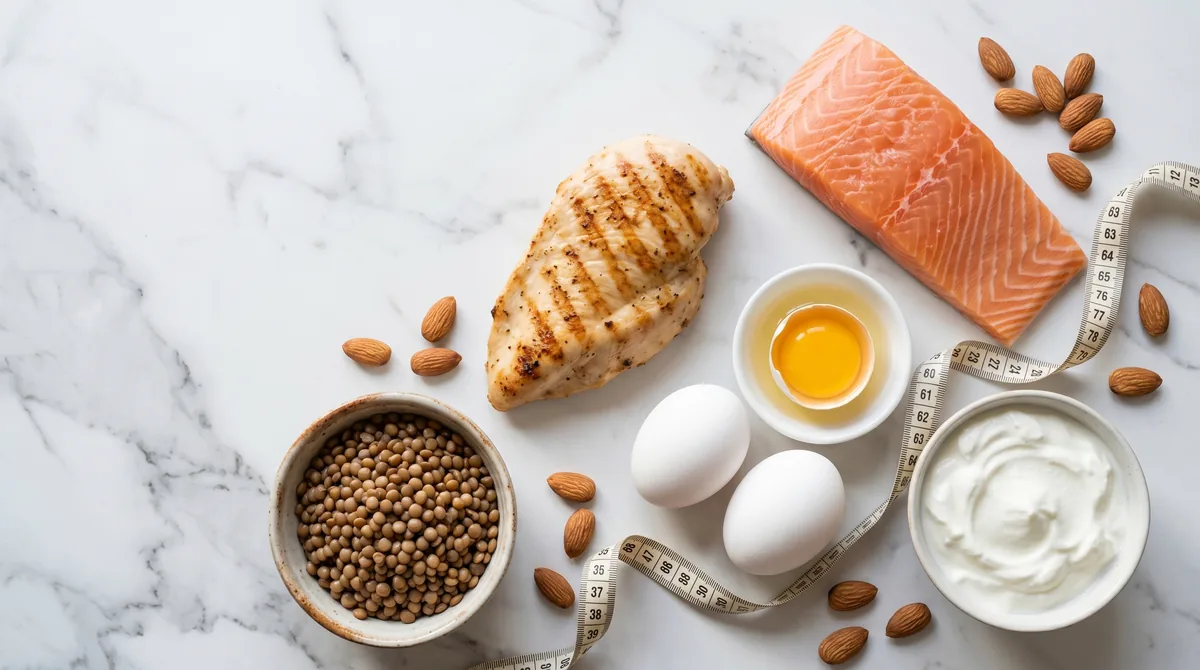
Animal proteins are complete: they contain all nine essential amino acids in ratios that closely match human tissue requirements. Chicken, fish, eggs, and dairy score between 90-95% on bioavailability scales. Your body can extract and use nearly all the amino acids these foods provide.
Beef and lamb are particularly rich in methionine and cysteine, the sulfur-containing amino acids that form the disulfide bonds giving hair its strength. Salmon and mackerel add omega-3 fatty acids that reduce follicle inflammation. Eggs provide biotin alongside protein, supporting keratin synthesis from multiple angles.
Plant proteins are incomplete: most lack one or more essential amino acids, or contain them in suboptimal ratios. Lentils are low in methionine. Rice is low in lysine. Nuts are low in leucine. This doesn’t make them useless, it just means you need to combine sources strategically.
The exception: quinoa, soy, and hemp seeds are complete plant proteins. They contain all nine essential amino acids, though bioavailability still lags behind animal sources at 60-75%. If you’re plant-based, these should form the foundation of your protein intake.
Complementary pairing solves the incompleteness problem: rice + lentils, hummus + whole wheat pita, peanut butter + whole grain bread. When eaten within the same day, these combinations provide complete amino acid profiles. You don’t need to combine them in the same meal, that’s an outdated concept, but you do need variety throughout the day.
For hair health specifically, animal proteins have a clear advantage. Studies comparing omnivorous and vegetarian diets show higher rates of telogen effluvium in strict plant-based eaters, particularly those not supplementing with B12 or monitoring total protein intake carefully.
Common Protein Deficiencies in Gulf Diets
Living in the Gulf creates specific nutritional challenges that increase protein deficiency risk. I’ve identified four patterns that appear repeatedly in clinical practice:
Pattern one: carbohydrate displacement. Traditional Gulf meals are rice-heavy, kabsa, biryani, machboos. These dishes contain protein, but the ratio is often 3:1 or 4:1 carbs to protein. A typical serving might deliver 15-20g protein alongside 80-100g carbohydrates. Eat this way three times daily and you’re barely reaching 60g protein, well below the growth-support threshold for most adults.
Pattern two: intermittent fasting without protein timing. Ramadan and other fasting practices compress eating into narrow windows. If you’re only eating between sunset and sunrise, you need to pack your entire daily protein requirement into two or three meals. Most people don’t. They break fast with dates and juice, eat a carb-heavy iftar, then fail to consume adequate protein before suhoor. The result: 16-18 hours of fasting followed by inadequate protein refeeding.
Pattern three: plant-based transitions without planning. The shift toward plant-based eating is growing in Gulf cities, but many people eliminate animal products without understanding complementary protein pairing. They replace chicken with more vegetables and rice, drastically cutting total protein intake without realizing it. Within 3-4 months, hair shedding begins.
Pattern four: heat-suppressed appetite. Gulf summers are brutal. When it’s 45°C outside, appetite naturally decreases. Many people skip breakfast, eat light lunches, and only consume substantial meals after sunset when temperatures drop. This pattern naturally reduces protein intake because you’re eating fewer total meals.
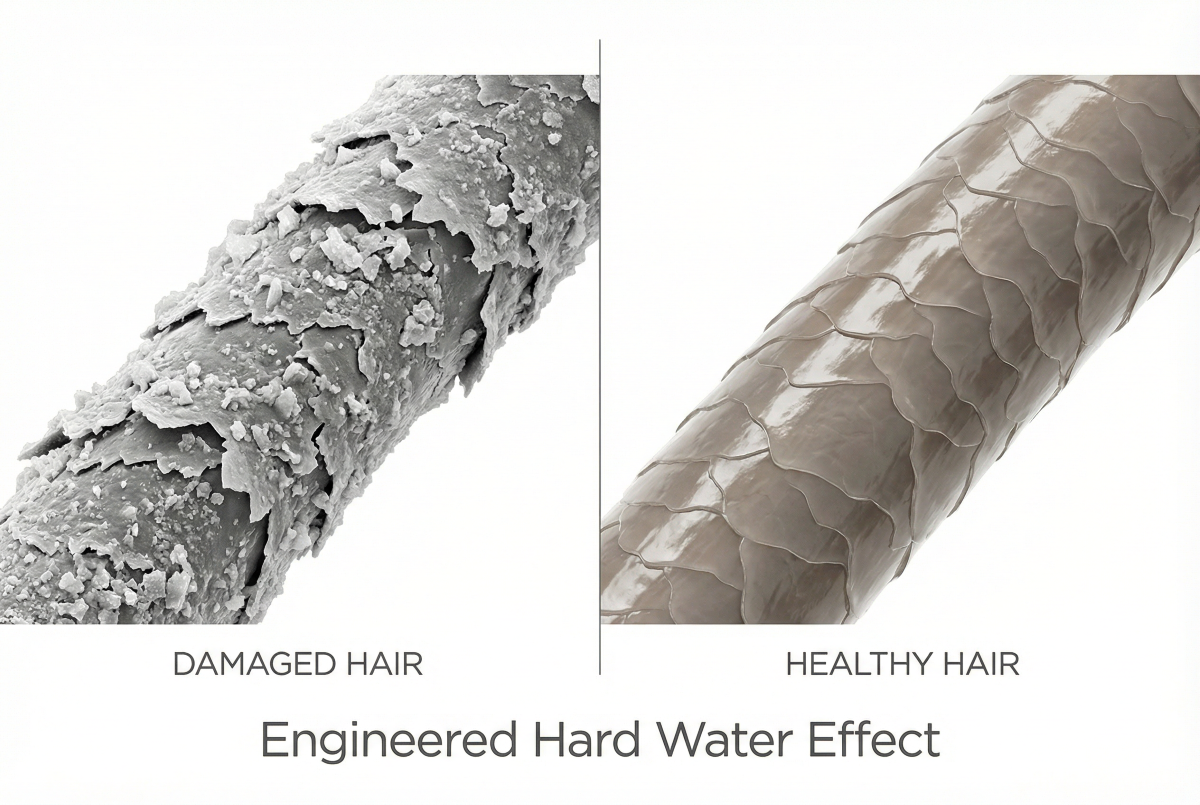
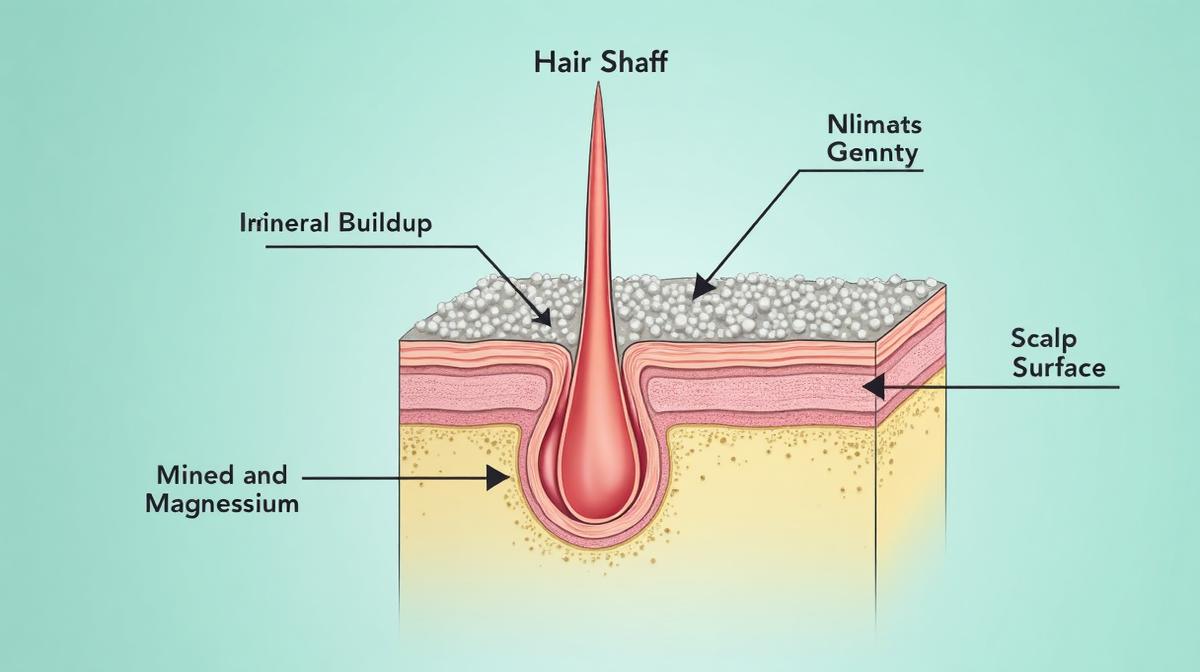
The hard water factor compounds all of this. Even if you’re eating adequate protein, mineral buildup from Gulf water can prevent your scalp from properly utilizing nutrients. Calcium and magnesium deposits form a barrier on the scalp surface, interfering with follicle function. This is why many Gulf residents see hair improvement only after addressing both protein intake and water quality with a chelating shampoo like Regrowth+ that removes mineral buildup before it blocks nutrient delivery to follicles.
Protein Timing and Distribution
When you eat protein matters as much as how much you eat. Your body can only process a finite amount of amino acids per meal, typically 25-40g depending on body size and activity level. Anything beyond that gets oxidized for energy or converted to glucose, not stored for later hair growth.
This means the ‘one huge steak for dinner’ approach is inefficient. If you consume 80g of protein in a single meal, your body will use perhaps 35g for tissue building and burn the rest. You’d get better results splitting that into two 40g meals six hours apart.
The research supports even distribution: studies show that consuming 20-30g of protein per meal, spread across 3-4 meals daily, produces superior muscle protein synthesis compared to uneven distribution. While these studies focus on muscle, the same metabolic principles apply to hair follicles.
For hair growth specifically, aim for: 25-35g at breakfast, 25-35g at lunch, 25-35g at dinner, and optionally 10-15g in a snack if you’re hitting higher protein targets. This keeps amino acid levels consistently improved throughout the day, ensuring follicles never face a shortage.
Post-workout timing matters too. If you exercise, consume 20-30g of protein within two hours of finishing. This supports muscle repair, preventing your body from cannibalizing muscle tissue for amino acids, which would otherwise compete with hair follicle needs.
Before bed protein can support overnight tissue repair. A slow-digesting source like Greek yogurt or casein protein provides a steady amino acid release during the 7-8 hours you’re not eating. This is particularly useful if you’re in a growth-support phase trying to maximize follicle access to building blocks.
When Protein Isn’t Enough: The Missing Factors
Here’s the hard truth: you can hit your protein targets perfectly and still experience hair loss. Protein is necessary but not sufficient for optimal hair growth. Other factors frequently sabotage results:
Iron deficiency is the most common protein accomplice. Even with adequate amino acids, follicles can’t synthesize keratin efficiently if ferritin (stored iron) drops below 40-50 ng/mL. Many doctors miss this because standard iron tests show ‘normal’ levels that are actually suboptimal for hair growth. Women are particularly vulnerable due to menstrual blood loss.
Vitamin D deficiency affects follicle cycling. Low vitamin D levels can push follicles into telogen prematurely, regardless of protein status. Gulf residents often show deficiency despite abundant sunshine because cultural dress codes limit skin exposure and indoor lifestyles reduce sun contact.
Thyroid dysfunction changes the entire hair growth cycle. Both hypothyroidism and hyperthyroidism cause diffuse shedding that protein supplementation won’t fix. If you’re eating adequate protein but still shedding heavily, request a full thyroid panel, TSH, Free T3, Free T4, and thyroid antibodies.
Chronic stress improves cortisol, which redirects resources away from hair growth toward survival functions. You can eat 150g of protein daily, but if you’re in a constant state of physiological stress, your body will prioritize other tissues over hair follicles.
The Gulf’s hard water creates a unique challenge that protein alone can’t overcome. Mineral deposits coat the scalp and hair shaft, interfering with nutrient absorption and creating a hostile environment for follicle function. This is why addressing water quality is essential, the protein you’re consuming can’t reach follicles effectively if mineral buildup blocks the pathway.
Medication side effects can override nutritional interventions. Beta blockers, antidepressants, and hormonal contraceptives all list hair loss as potential side effects. If your shedding started shortly after beginning a new medication, talk to your prescriber about alternatives before assuming it’s protein-related.
Building Your Protein Strategy
Start by calculating your baseline needs. Multiply your weight in kilograms by 0.8 to get minimum daily protein. Then multiply by 1.2-1.6 to get your growth-support target. That’s your range.
Track for one week. Use a food tracking app to log everything you eat. You’ll likely discover you’re eating less protein than you estimated. Most people overestimate protein content in mixed dishes and underestimate how much they need.
Identify your gaps. Are you skipping protein at breakfast? Is lunch too carb-heavy? Are you eating adequate total protein but consuming it all in one meal? The tracking data will reveal your specific pattern.
Build a rotation of high-protein meals you actually enjoy. Forcing yourself to eat chicken breast three times daily isn’t sustainable. Find 10-15 protein-rich meals you like and rotate through them. This prevents decision fatigue and ensures consistency.
Prep protein in advance. Grill chicken, hard-boil eggs, portion out Greek yogurt, cook a batch of lentils. Having ready-to-eat protein sources eliminates the ‘I’m too tired to cook’ excuse that leads to carb-heavy convenience meals.
Supplement strategically if needed. If you consistently fall short of targets despite meal planning, a high-quality protein powder can fill gaps. Whey protein isolate offers the best amino acid profile and absorption. Plant-based eaters should choose pea + rice protein blends for completeness.
Retest at three months. Hair growth operates on a 3-4 month cycle. You won’t see results from dietary changes for at least 12 weeks. Track your shedding rate, take progress photos, and assess whether new growth feels thicker or stronger. If you’re still seeing excessive shedding after three months of adequate protein, investigate the other factors mentioned above.
References
- Protein and Amino Acids for Hair Health - PubMed
- Plant vs Animal Protein Bioavailability - PubMed Central
- Dietary Patterns and Hair Loss in Vegetarian Diets - PubMed
- Protein Distribution and Tissue Synthesis - PubMed
- Thyroid Function and Hair Growth Cycles - PubMed Central