You’ve washed your hair this morning. By lunch, it’s already greasy. You’re not imagining it.
Sebum overproduction isn’t just about hygiene or the products you’re using. It’s a biological feedback loop involving hormones, climate, and (especially in the Gulf) the mineral content of your water. When your scalp suddenly becomes an oil slick within hours of washing, something in that loop has shifted. Understanding what triggers your sebaceous glands to go into overdrive is the first step toward fixing it.
This article contains affiliate links. See our affiliate disclosure for details.
Here’s what’s actually happening beneath your scalp, and why Gulf residents face a compounded challenge that makes the grease feel even worse than it is.
How Sebaceous Glands Actually Work
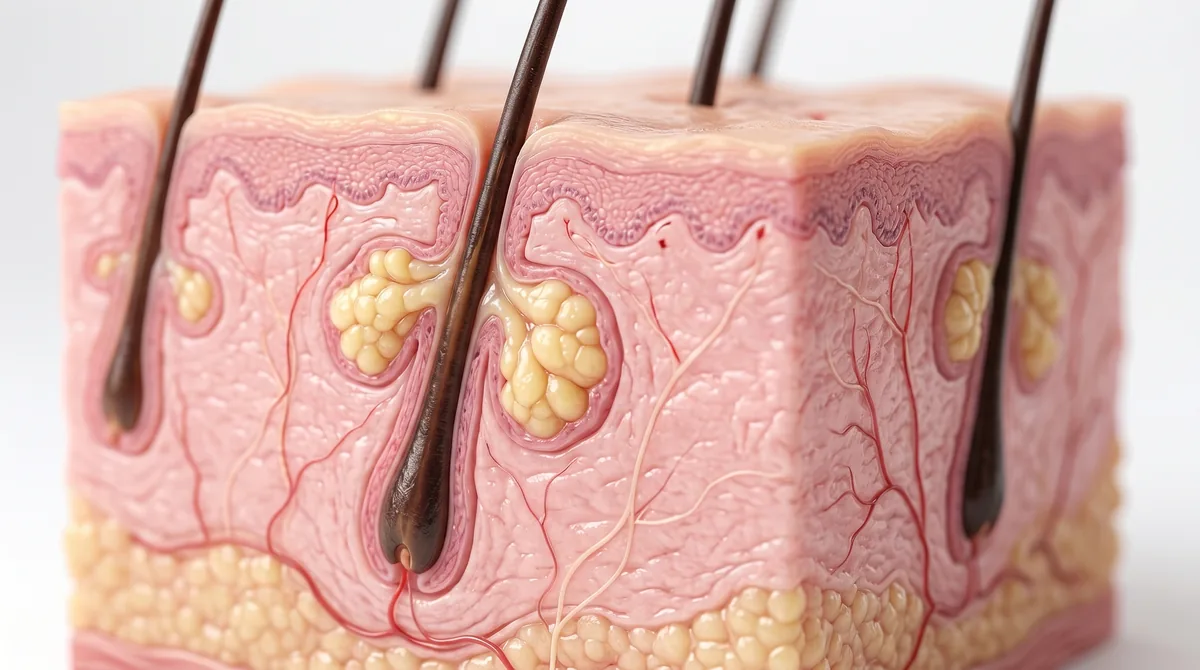
Your scalp contains thousands of sebaceous glands, each one attached to a hair follicle. These glands produce sebum, an oily substance made of triglycerides, fatty acids, wax esters, and squalene. Sebum’s job is protective: it waterproofs your scalp, carries fat-soluble antioxidants to the skin surface, and maintains the acid mantle that keeps harmful bacteria in check.
But here’s the thing. Sebaceous glands don’t have an off switch. They respond to signals, primarily androgens (male hormones present in all genders). When androgen receptors on the gland are activated, the gland enlarges and produces more sebum. Research published in the Journal of Investigative Dermatology confirms that even small increases in circulating androgens can significantly boost sebum output.
This is why teenagers experience greasy hair during puberty. It’s also why some people notice their scalp becomes oilier during specific times of the month, during periods of high stress, or after moving to a hot climate. The glands aren’t malfunctioning; they’re responding to environmental and internal cues exactly as designed.
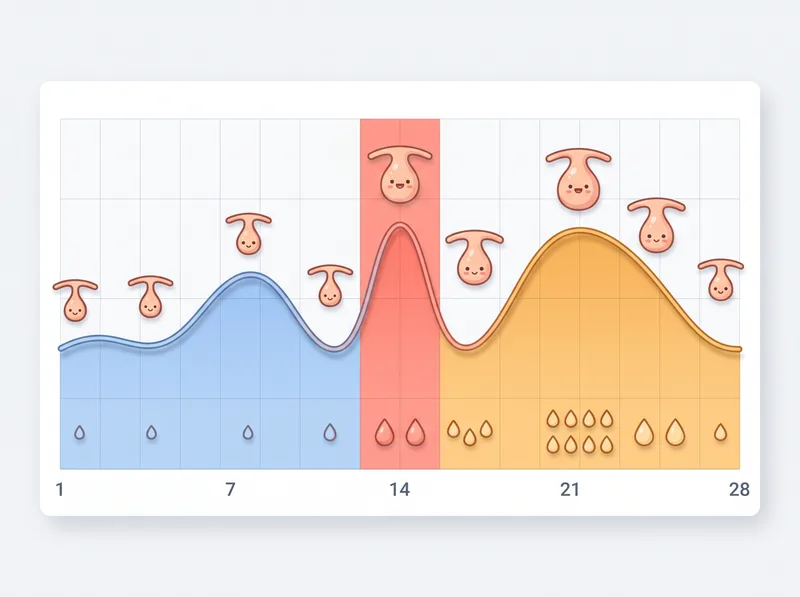 Hormonal fluctuations trigger sebaceous gland activity, with androgen peaks causing increased sebum output
Hormonal Triggers Behind Sudden Oiliness
Androgens are the primary driver. Testosterone and its more potent derivative, dihydrotestosterone (DHT), bind to receptors on sebaceous glands and stimulate sebum production. Women produce androgens in smaller amounts than men, but fluctuations during the menstrual cycle, pregnancy, or perimenopause can cause noticeable changes in scalp oiliness.
A study in Clinical and Experimental Dermatology found that sebum production peaks during the luteal phase (days 15-28 of the cycle), when progesterone rises and indirectly increases androgen activity. This is why many women notice greasier hair in the week before their period.
Stress adds another layer. Cortisol, the stress hormone, doesn’t directly increase sebum production, but it triggers a cascade that does. Improved cortisol stimulates the adrenal glands to produce more androgens. It also increases insulin resistance, which further amplifies androgen activity. Chronic stress creates a feedback loop: more cortisol, more androgens, more sebum.
Polycystic ovary syndrome (PCOS) is the most common hormonal condition causing persistent scalp oiliness in women. PCOS involves improved androgens, and one of the hallmark symptoms is seborrhea (excessive sebum production). If your scalp has been consistently oily for months and you’re also experiencing irregular periods or thinning hair at the crown, it’s worth discussing PCOS screening with your doctor.
Climate and Temperature: Why the Gulf Makes It Worse
Heat is a direct sebum trigger. Research in the International Journal of Dermatology shows that for every 1°C increase in ambient temperature, sebum production increases by approximately 10%. In the Gulf, where summer temperatures routinely exceed 40°C, your sebaceous glands are working overtime.
It’s not just outdoor heat. Indoor environments matter too. Constant transitions between air-conditioned interiors and scorching outdoor temperatures cause your scalp to overproduce sebum as a protective response. Your skin interprets the temperature fluctuations as stress and compensates by increasing oil output.
Humidity plays a role, but not the one most people think. High humidity doesn’t increase sebum production, but it does prevent sebum from evaporating or being absorbed by the air. The oil stays on your scalp and hair, making it feel greasier faster. In the Gulf’s dry heat, sweat mixes with sebum, creating a sticky film that’s harder to rinse away.
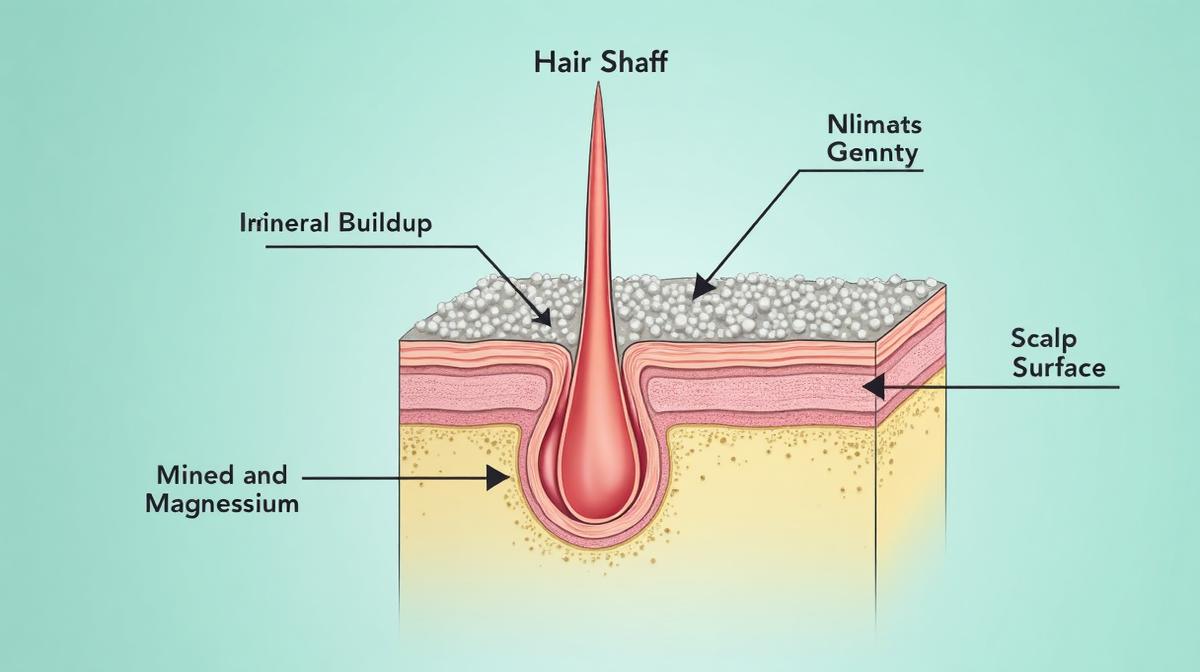
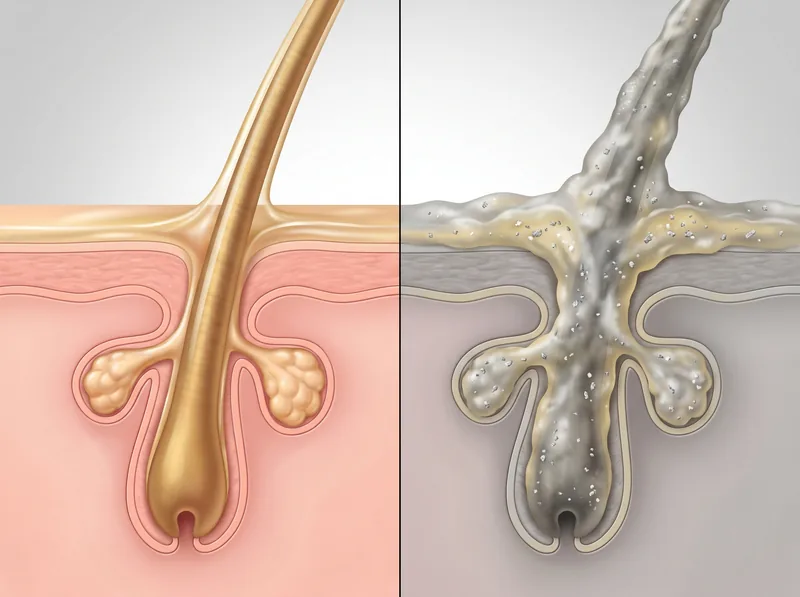 Mineral deposits from hard water bind to sebum, creating a heavy, greasy film that’s harder to remove
The Hard Water Factor: Mineral Residue Amplifies Grease
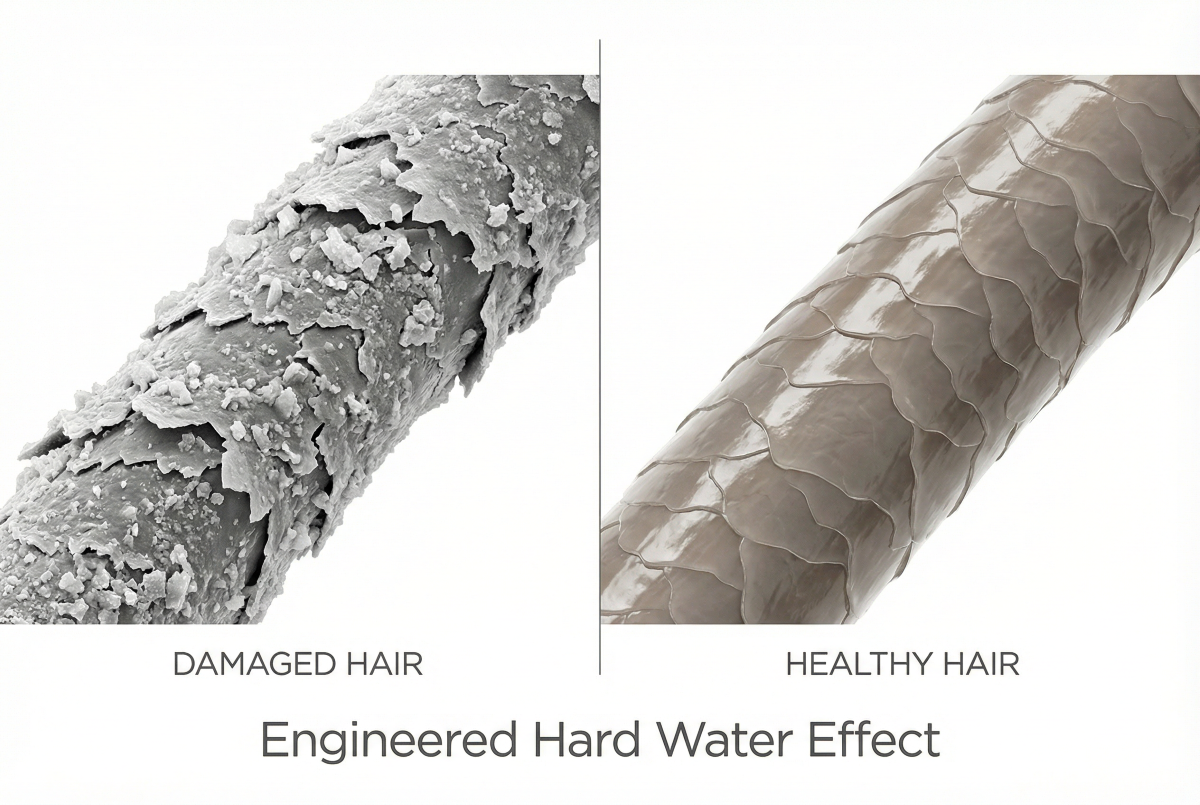
This is where Gulf residents face a compounded problem. Hard water, which is nearly universal across the region, contains high levels of dissolved minerals, primarily calcium and magnesium. When you wash your hair with hard water, these minerals bind to sebum and form insoluble compounds that don’t rinse away cleanly.
The result? A heavy, waxy film that makes your hair look and feel greasier than it actually is. You’re not producing more sebum than someone in a soft-water region, but the sebum you do produce is being trapped on your scalp by mineral deposits. Hard water effects on hair extend beyond dryness; they also worsen the perception of oiliness.
Here’s what’s happening at the molecular level. Calcium ions in hard water react with the fatty acids in sebum to form calcium salts. These salts are sticky and hydrophobic (water-repelling), which means regular shampoo can’t dissolve them. The more you wash with hard water, the thicker this residue layer becomes. You end up in a cycle: your hair feels greasy, so you wash it more often, but each wash adds more mineral buildup, making the grease worse.
A chelating shampoo like Regrowth+ is specifically formulated to break down these mineral-sebum complexes. Chelating agents bind to calcium and magnesium ions and pull them off the hair shaft, allowing the trapped sebum to be rinsed away. For Gulf residents dealing with both natural oiliness and hard water amplification, chelating treatment is essential.
The Over-Washing Rebound Effect
When your scalp feels greasy, the instinct is to wash it more frequently. But over-washing triggers a rebound effect that makes the problem worse.
Here’s why. Harsh shampoos (especially sulfate-heavy formulas) strip all the sebum from your scalp. Your sebaceous glands detect this sudden absence of oil and interpret it as a signal to produce more. The American Academy of Dermatology notes that this feedback loop is one of the most common causes of persistent oiliness.
The solution isn’t to stop washing. It’s to wash less aggressively. Use a gentle, pH-balanced shampoo that removes excess sebum without completely stripping your scalp’s natural oils. If you’re washing daily, try extending to every other day. Your scalp will adjust within 1-2 weeks, and sebum production will normalize.
For people in the Gulf, this means balancing two opposing needs: removing mineral buildup (which requires a stronger chelating shampoo) while avoiding over-stripping (which requires gentler daily cleansing). The strategy is to use a chelating shampoo once or twice a week to remove residue, and a mild sulfate-free shampoo on other days.
Product Buildup and Silicone Traps
Many shampoos and conditioners contain silicones (dimethicone, cyclomethicone, amodimethicone) that coat the hair shaft to create smoothness and shine. But silicones are hydrophobic. They repel water and trap sebum beneath them.
If you’re using silicone-heavy products and washing with hard water, you’re creating a triple barrier: mineral deposits, silicone coating, and trapped sebum. Your hair feels greasy and heavy no matter how often you wash.
Check your product labels. If you see ingredients ending in ‘-cone’ or ‘-xane,’ you’re using silicone-based products. Switch to water-soluble alternatives or use a clarifying shampoo once a week to remove buildup. Chelating shampoos can also remove silicone residue along with mineral deposits.
Diet and Sebum Production: The Insulin Connection
Diet doesn’t directly control your sebaceous glands, but it influences the hormones that do. High-glycemic foods (white bread, sugary snacks, processed carbs) cause rapid spikes in blood sugar and insulin. Improved insulin increases androgen production, which in turn stimulates sebum output.
A study in the American Journal of Clinical Nutrition found that participants following a low-glycemic diet experienced a significant reduction in sebum production compared to those on a high-glycemic diet. The effect was measurable within 12 weeks.
This doesn’t mean you need to eliminate carbs. It means choosing complex carbs (whole grains, legumes, vegetables) that release glucose slowly and don’t spike insulin. If you’ve noticed your scalp becoming oilier after dietary changes, this connection is worth exploring.
When to See a Specialist
Sudden, persistent oiliness that doesn’t respond to product changes or washing adjustments may indicate an underlying condition. Seborrheic dermatitis, a chronic inflammatory condition, causes both oily scalp and flaking. Seborrheic dermatitis differs from simple dandruff in severity and requires targeted treatment.
Other red flags: oiliness accompanied by hair thinning, scalp pain, or changes in hair texture. These symptoms warrant a consultation with a dermatologist or trichologist who can assess hormonal factors, scalp health, and rule out conditions like PCOS or thyroid dysfunction.
For most people, though, oily scalp is manageable with the right combination of product adjustments, washing frequency, and (in the Gulf) addressing the hard water factor that amplifies the problem.
References
- Androgens and sebaceous gland activity - Journal of Investigative Dermatology
- Sebum production during menstrual cycle - Clinical and Experimental Dermatology
- Temperature effects on sebum secretion - International Journal of Dermatology
- Low-glycemic diet and sebum reduction - American Journal of Clinical Nutrition
- Healthy hair care practices - American Academy of Dermatology