This article contains affiliate links. See our affiliate disclosure for details.
You’ve earned the grey. But somewhere between “distinguished” and “disheveled,” things went sideways. The silver that looked sharp at the barber’s chair now has a dull, yellowish cast. It feels wiry. It won’t cooperate. And the routine that worked for your hair at 30 doesn’t cut it anymore.
Here’s what most men don’t realize: grey hair isn’t just hair without color. It’s structurally different. The protein composition changes, the cuticle lifts, and the strand becomes a magnet for mineral deposits and environmental grime. If you’re living in the Gulf region, where hard water is the norm, those changes hit even harder.
This isn’t a style guide. It’s a strand-level breakdown of what grey hair actually needs, why it yellows, and how to build a routine that keeps silver looking like a deliberate choice.
What Changes When Hair Loses Its Pigment
Melanin does more than give hair its color. It acts as a structural reinforcement inside the cortex, the middle layer of each strand. When melanocytes stop producing melanin (a process driven by genetics, oxidative stress, and age), the cortex becomes less dense. The strand literally has less material inside it.
That matters. Less internal structure means the cuticle layer sits differently. Research published in the Journal of Investigative Dermatology found that grey hair has a rougher cuticle surface, with scales that lift more easily than those on pigmented strands. This increased porosity is the root cause of nearly every grey hair complaint: dryness, frizz, yellowing, and that coarse, wiry texture.
Grey strands also contain more air pockets where melanin used to be. These tiny voids scatter light differently, which is why grey hair can look dull or flat even when it’s clean. The silver shine you want? It only happens when the cuticle is smooth enough to reflect light evenly.
One more thing. Grey hair tends to have a rounder cross-section than pigmented hair on the same head. That’s why it often sticks up or refuses to lie flat. It’s not misbehaving. It’s a different shape.
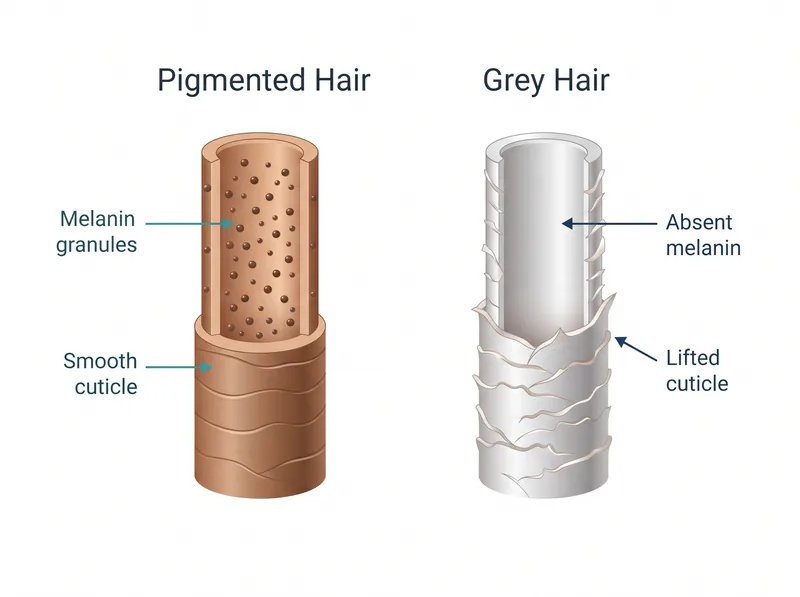 Grey hair has a more porous cuticle and lacks the melanin that helps pigmented hair retain moisture and resist environmental damage.
The Moisture and Protein Balance Grey Hair Demands
Every hair strand needs both moisture and protein. But the ratio shifts when hair goes grey.
Pigmented hair produces sebum that travels down the shaft, providing natural lubrication. Grey hair produces less sebum (the scalp’s oil output decreases with age), and the lifted cuticle means whatever moisture does arrive escapes faster. According to a 2019 review in the International Journal of Trichology, age-related changes in hair fiber include decreased lipid content, which directly affects how grey strands retain hydration.
So grey hair is chronically under-moisturized. But here’s the trap: if you overload it with heavy conditioners and oils, you’ll weigh it down and create buildup that makes yellowing worse. The answer isn’t more product. It’s the right product, applied strategically.
Protein matters too. Grey hair’s keratin structure is intact, but the absence of melanin means there’s less cross-linking within the cortex. Lightweight protein treatments (hydrolyzed keratin, silk amino acids) can temporarily fill those gaps and smooth the cuticle. Heavy protein treatments, on the other hand, can make grey hair brittle. Balance is everything.
Why Grey Hair Yellows (and Why It’s Worse in the Gulf)
That brassy, yellowish tint on grey hair isn’t your imagination. It’s chemistry.
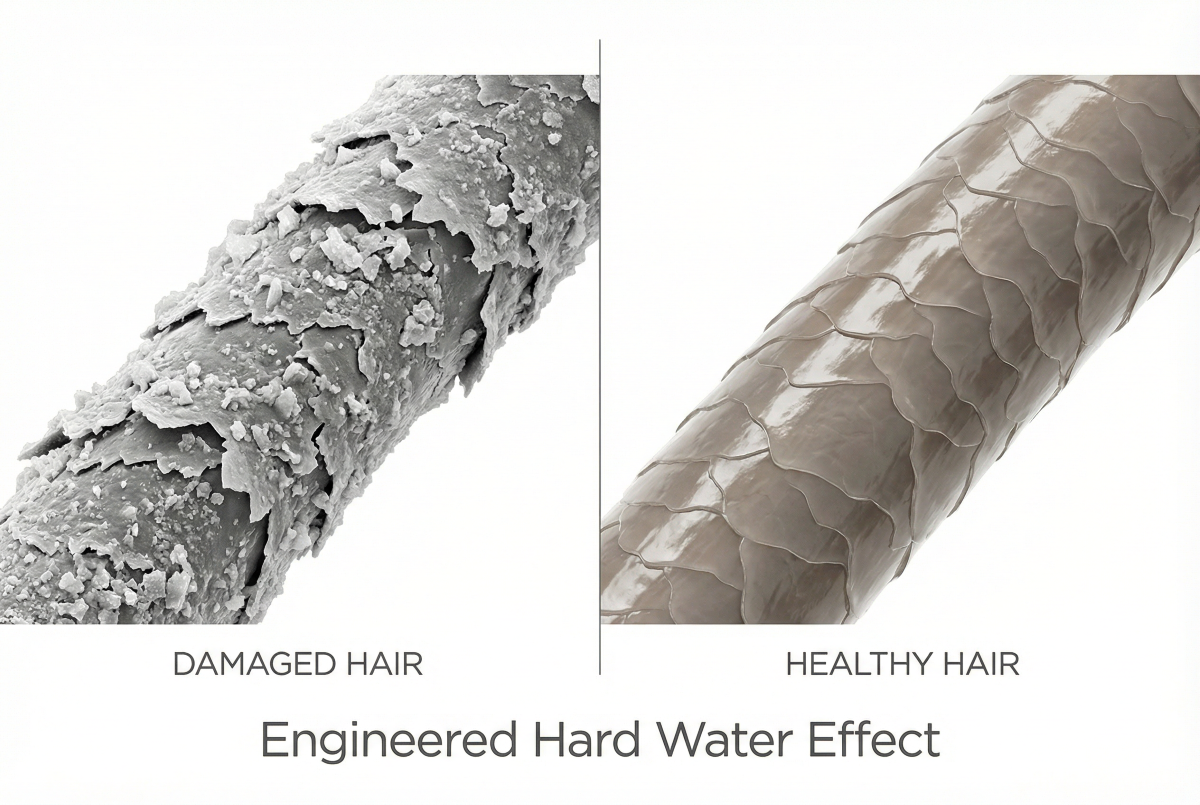
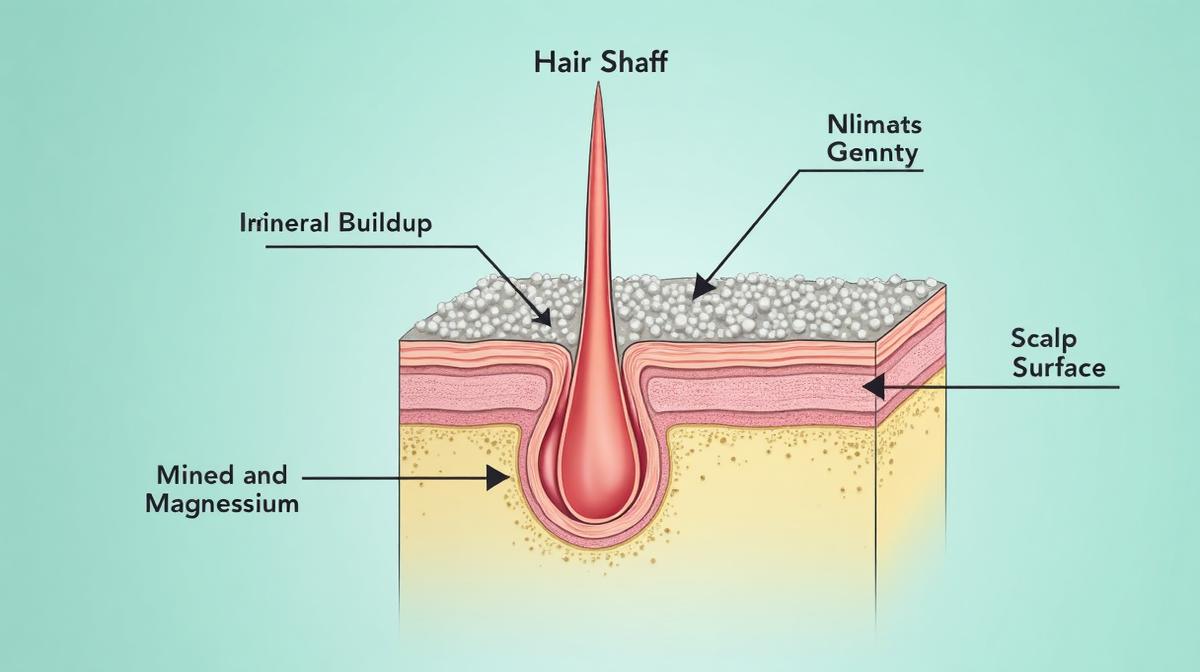
Three things cause it. First and most significant for Gulf residents: hard water mineral deposits. Calcium and magnesium ions in high-TDS water bind to the hair’s keratin. On pigmented hair, you might not notice. On white and silver strands, those mineral deposits create a visible warm-toned film. The higher the water hardness, the faster the yellowing. And Gulf water is among the hardest in the world, often exceeding 400 ppm TDS.
Second: UV oxidation. Sunlight breaks down the amino acid tryptophan in unpigmented keratin, producing a yellow chromophore. A 2009 study in Photochemistry and Photobiology confirmed that UV exposure causes measurable yellowing in white hair fibers. In a region with intense year-round sun exposure, this is a constant factor.
Third: product and pollution residue. Grey hair’s porous cuticle grabs onto styling product residue, cooking smoke, pollution particles, and chlorine from swimming pools. All of these contribute to discoloration over time.
Bottom line? If your grey hair looks yellow, it’s almost certainly an external deposit problem, not something wrong with the hair itself. And that means it’s fixable.
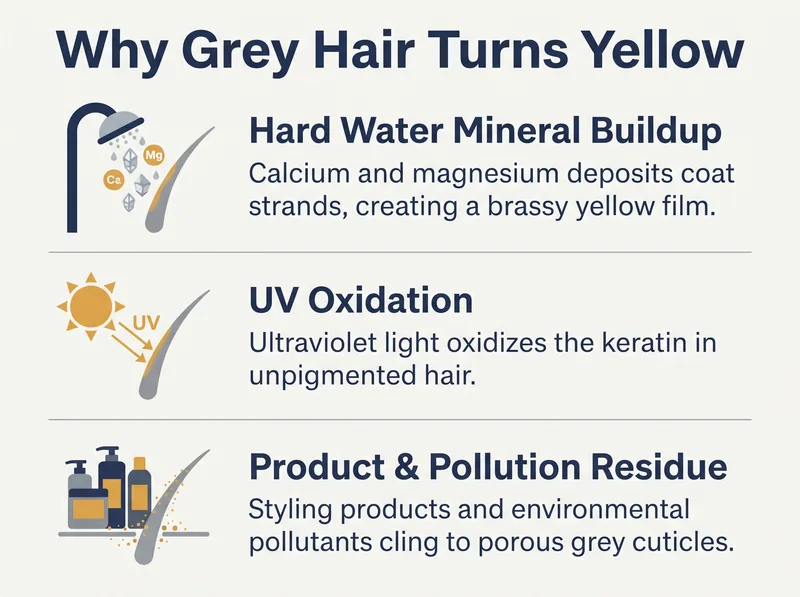 The three primary causes of yellowing in grey hair, with hard water mineral deposits being the most common culprit in the Gulf region.
Building a Grey Hair Routine That Actually Works
Forget the 12-step routines. Grey hair care for men comes down to four principles: cleanse correctly, remove mineral buildup, condition strategically, and protect from UV.
Start with your wash frequency. Most men with grey hair should wash every two to three days, not daily. Daily washing strips what little natural oil grey strands produce. But waiting too long allows mineral and product buildup to accumulate. Find the rhythm that keeps your scalp clean without drying out the lengths.
Use a sulfate-free shampoo for regular washes. Sulfates are aggressive surfactants that strip moisture from already-dry grey hair. Look for gentle cleansers based on cocamidopropyl betaine or sodium cocoyl isethionate. These clean without wrecking the cuticle.
Once a week (or every two weeks if your water isn’t extremely hard), swap in a chelating shampoo. This is the single most important step for preventing yellowing. Chelating agents like EDTA and citric acid bind to mineral deposits and pull them off the strand. A chelating wash like Regrowth+ Hair Protection & Growth Booster Shampoo is formulated specifically for mineral-heavy water environments and works well as a periodic deep cleanse for grey hair.
After every wash, condition. But only the mid-lengths and ends. Grey hair at the root doesn’t need conditioner; it needs a clean, healthy scalp. Apply a lightweight, silicone-free conditioner from ear level down, leave it for two minutes, and rinse with the coolest water you can tolerate. Cool water helps flatten the cuticle.
Tackling Yellowing: Purple Shampoo and Beyond
Purple shampoo gets a lot of attention. Here’s what it actually does: the violet pigments in these shampoos sit on the hair’s surface and neutralize yellow tones through basic color theory (purple is opposite yellow on the color wheel). It works. But it’s a cosmetic fix, not a structural one.
If your yellowing is caused by mineral buildup, purple shampoo is masking the problem. You need to chelate first, then use purple shampoo if a slight warm cast remains. Think of chelating as cleaning the canvas and purple shampoo as adjusting the color balance.
Use purple shampoo once a week at most. Overuse deposits too much violet pigment, and your grey hair will develop a lavender or blue-grey tint. Not the look you’re going for. Leave it on for three to five minutes, then rinse thoroughly.
For men who spend significant time outdoors, a leave-in spray with UV filters provides another layer of protection against photo-yellowing. Look for products containing benzophenone-4 or ethylhexyl methoxycinnamate. These absorb UV radiation before it can oxidize your keratin.
Taming Texture: Dealing with Wiry, Coarse Grey Strands
That coarse, springy texture isn’t damage. It’s the natural character of unpigmented hair. But you can work with it.
A light leave-in conditioner or hair cream applied to damp hair after washing makes a real difference. You want something water-based, not oil-based. Oil sits on top of porous grey hair and attracts dust and pollutants. Water-based products absorb into the strand and provide internal hydration.
For styling, matte-finish products work better on grey hair than glossy ones. High-shine gels and pomades can make grey hair look greasy or plastic. A matte clay or paste gives texture and hold without that artificial sheen. Apply to towel-dried hair, work it through with your fingers, and style as usual.
And don’t fight the texture entirely. Grey hair has natural body and volume that thinning pigmented hair often lacks. A good barber who understands grey hair will cut with the grain of your hair’s new texture, not against it. Ask for texturizing cuts rather than blunt, heavy layers.
Scalp Care Doesn’t Stop Because Hair Went Grey
Here’s something men overlook: the scalp ages too. Sebum production drops. Cell turnover slows. The scalp microbiome shifts. And in hard water environments, mineral deposits don’t just coat the hair. They coat the scalp, clogging follicles and creating an environment where irritation and flaking thrive.
A healthy scalp produces healthier grey hair. Period. If you’re seeing flakes, itching, or increased shedding alongside your greying, those are scalp issues, not grey hair issues. Address them separately.
Weekly scalp massage (two to three minutes during your wash) increases blood flow to follicles. It’s simple, free, and backed by research showing improved hair thickness with consistent scalp massage over 24 weeks. Use your fingertips, not your nails. Circular motions. No special tools required.
If you notice persistent scalp dryness or flaking, consider whether your water quality is the underlying cause. Many men in the Gulf treat dandruff symptoms for years without realizing that mineral buildup on the scalp is driving the irritation.
Nutrition for Stronger, Brighter Grey Hair
You can’t eat your way back to brown hair. But you can eat your way to stronger, shinier grey hair.
Grey hair is still keratin, and keratin production requires adequate protein, iron, zinc, and B vitamins. A well-rounded diet with sufficient lean protein (at least 0.8g per kilogram of body weight daily) supports the structural integrity of every strand your follicles produce.
Omega-3 fatty acids deserve special attention. They support the lipid layer that helps grey hair retain moisture. Fatty fish, walnuts, and flaxseed are your best sources. If your diet is low in omega-3s, your grey hair will feel drier and look duller regardless of what products you use.
Antioxidants matter too. Vitamins C and E help neutralize the oxidative stress that accelerates greying and damages existing grey strands. But skip the mega-dose supplements. Get these from food: citrus, berries, nuts, leafy greens. Your hair doesn’t need a pill. It needs a plate.
References
- Hair Fiber Characteristics and Methods to Evaluate Hair Physical and Mechanical Properties - International Journal of Trichology (PMC)
- Photoyellowing of Human Hair - Photochemistry and Photobiology (PubMed)
- Standardized Scalp Massage Results in Increased Hair Thickness - ePlasty (PubMed)
- Nutrition and Healthy Eating - Mayo Clinic