You’re 24 and noticing more hair in the shower drain than you remember from college. Your part looks wider in certain lighting. That cowlick at your crown seems more visible lately. You’re wondering: is this just what happens when you leave your teens behind, or is something actually wrong?
Here’s the thing, your twenties are when subtle hair changes start appearing, and most of them are completely normal. But this decade is also when early-onset androgenic alopecia often begins, when post-college stress catches up with your follicles, and when lifestyle shifts (like relocating to a hard-water region for work) can trigger shedding that looks a lot like permanent loss. The difference between normal and concerning isn’t always obvious.
This guide breaks down which changes are expected in your twenties and which are red flags requiring intervention. We’ll cover the biology of early adulthood hair shifts, the overlooked environmental triggers that affect young professionals in the Gulf, and the specific warning signs that mean you should see a dermatologist now rather than waiting to see if it gets worse. Because when it comes to hair loss in your twenties, early action makes the difference between reversible shedding and permanent thinning.
Normal Hair Changes in Your Twenties
Your hair follicles don’t stay frozen at age 18. Even in completely healthy individuals, the hair growth cycle shifts slightly during your twenties. The anagen phase (active growth) shortens from an average of 6-7 years in your late teens to about 5-6 years by your late twenties. That’s normal. The percentage of follicles in anagen drops from around 90% to 85%. Also normal.
What this means in practice: you might notice your hair doesn’t grow quite as long as it did in high school before it naturally sheds and regrows. If you used to grow waist-length hair easily and now it seems to stop at mid-back, that’s the anagen shortening at work. Not pathological, just biology.
Texture changes are common too. Many people notice their hair becomes slightly less dense or changes from stick-straight to having a slight wave (or vice versa). Hormonal shifts in your twenties, even without any medical condition, can alter the shape of your hair follicle opening, which changes the curl pattern of emerging strands. A study published in the British Journal of Dermatology found that hair diameter and density both peak in the late teens and begin a gradual, normal decline starting around age 20-25.
But there’s a difference between gradual and sudden. If your hair texture changed dramatically over 3-6 months rather than evolving slowly over years, that’s not normal aging, that’s a response to a trigger.
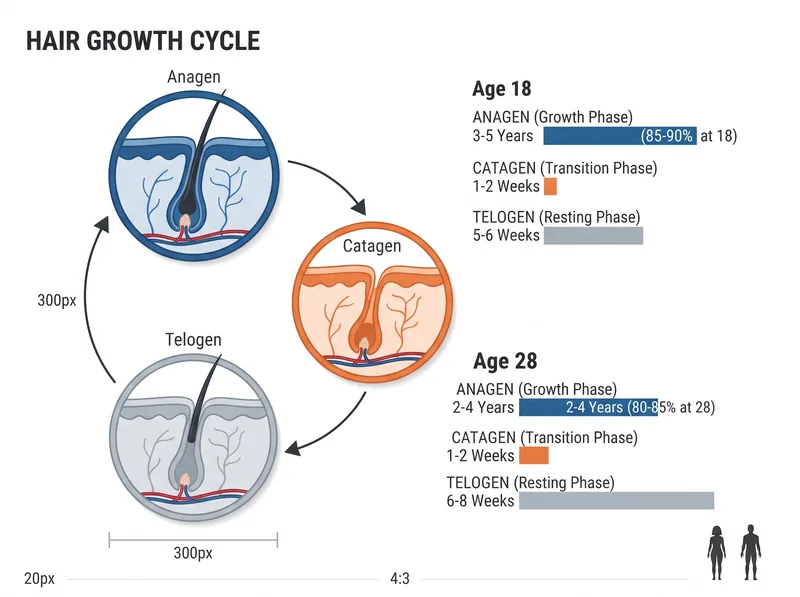 The hair growth cycle naturally shifts in your twenties, with anagen (growth phase) shortening slightly even in healthy follicles.
Early Androgenic Alopecia: The Pattern to Watch
Androgenic alopecia doesn’t wait until middle age to start. In men, it often begins in the early twenties with recession at the temples or thinning at the crown. In women, it typically shows up as widening of the center part and diffuse thinning across the top of the scalp while the hairline remains intact. The key word is pattern, this isn’t random shedding all over.
The mechanism is DHT (dihydrotestosterone) sensitivity. Some follicles, genetically programmed to react to normal levels of this hormone, begin miniaturizing, producing progressively finer, shorter hairs with each cycle until they eventually stop producing visible hair altogether. This process is progressive. It doesn’t spontaneously reverse.
How to tell if you’re seeing early androgenic alopecia versus normal shedding: look at the quality of regrowth. When hair sheds due to stress or nutritional deficiency, it grows back at the same thickness. When follicles are miniaturizing due to DHT, the new hairs come in visibly thinner and lighter in color. You’ll see a mix of thick terminal hairs and fine vellus-like hairs in the affected areas. That’s the diagnostic sign.
If you’re seeing this pattern, don’t wait. The American Academy of Dermatology is explicit: early intervention with minoxidil, finasteride (for men), or spironolactone (for women) can halt progression and often regrow some of what’s been lost. But once follicles have been dormant for more than a year or two, they’re much harder to reactivate. Waiting to see if it gets worse guarantees it will.
Post-College Stress and Telogen Effluvium
You graduated, started a demanding job, maybe moved to a new city, adjusted to adult financial stress, and three months later your hair started falling out in alarming amounts. That delayed timing is the signature of telogen effluvium, a stress response where follicles prematurely enter the resting phase and shed en masse.
The biology: a major stressor (physical or emotional) triggers a larger-than-normal percentage of follicles to switch from anagen to telogen simultaneously. Because telogen lasts about three months before the hair sheds, you don’t see the fallout until long after the triggering event. This confuses people. They think, ‘But I’m not stressed now,’ not realizing the shedding reflects what happened last quarter.
Telogen effluvium in your twenties is extremely common and usually reversible. The follicles aren’t damaged, they’re just out of sync. Once the stressor resolves and you give your system time to recalibrate, growth resumes normally. But here’s the catch: if the stress is chronic (ongoing work pressure, poor sleep, restrictive dieting), the shedding continues in waves. You never fully recover before the next round starts.
The differential diagnosis that matters: telogen effluvium causes diffuse thinning all over the scalp, not concentrated in a pattern. If you’re losing hair evenly from front to back, top to sides, that points to telogen effluvium rather than androgenic alopecia. If it’s concentrated at the hairline, temples, or crown, that’s more concerning for genetic loss. Many young adults have both happening simultaneously, which is why a dermatologist evaluation matters.
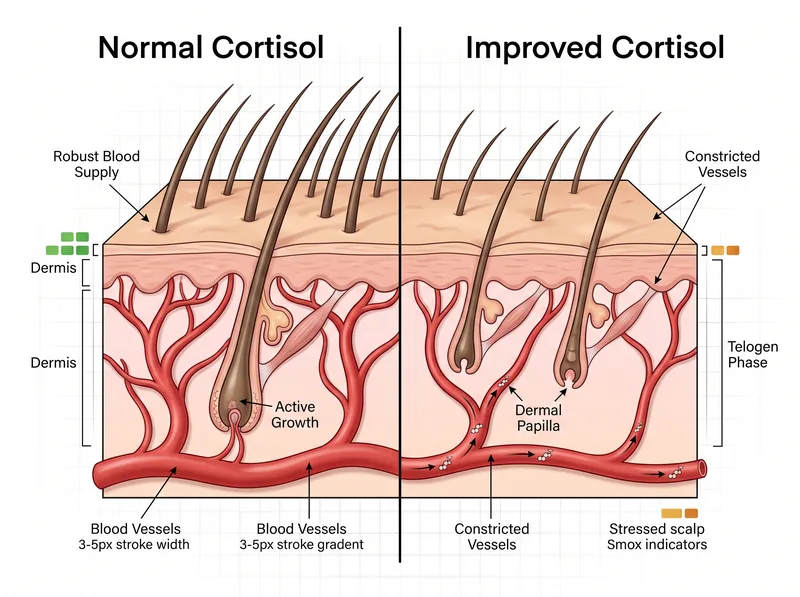 Chronic stress improves cortisol, which changes the hair cycle and can push follicles into premature shedding.
The Hard Water Factor Nobody Talks About
You moved to the Gulf for work in your mid-twenties. Within six months, your hair feels different, drier, rougher, harder to manage, and you’re seeing more shedding than you ever did back home. Your first instinct is to blame stress or a new job schedule. But the real culprit might be what’s coming out of your showerhead.
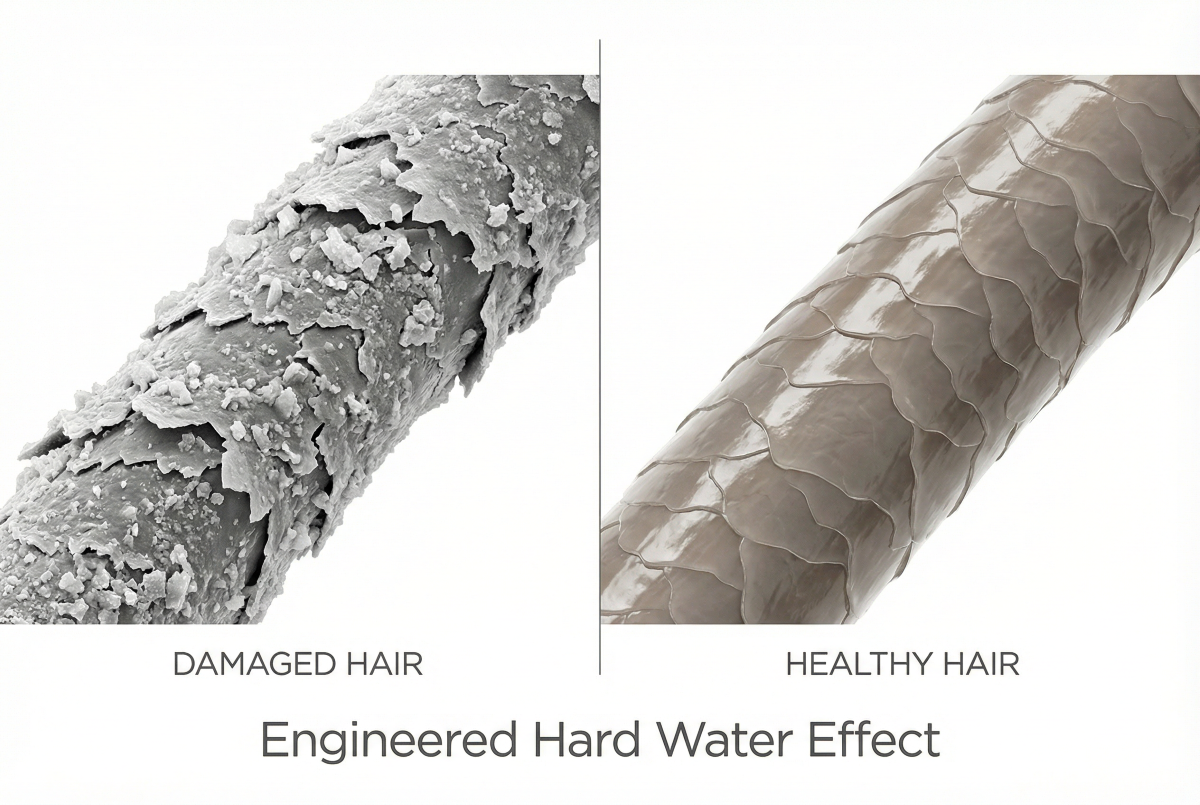
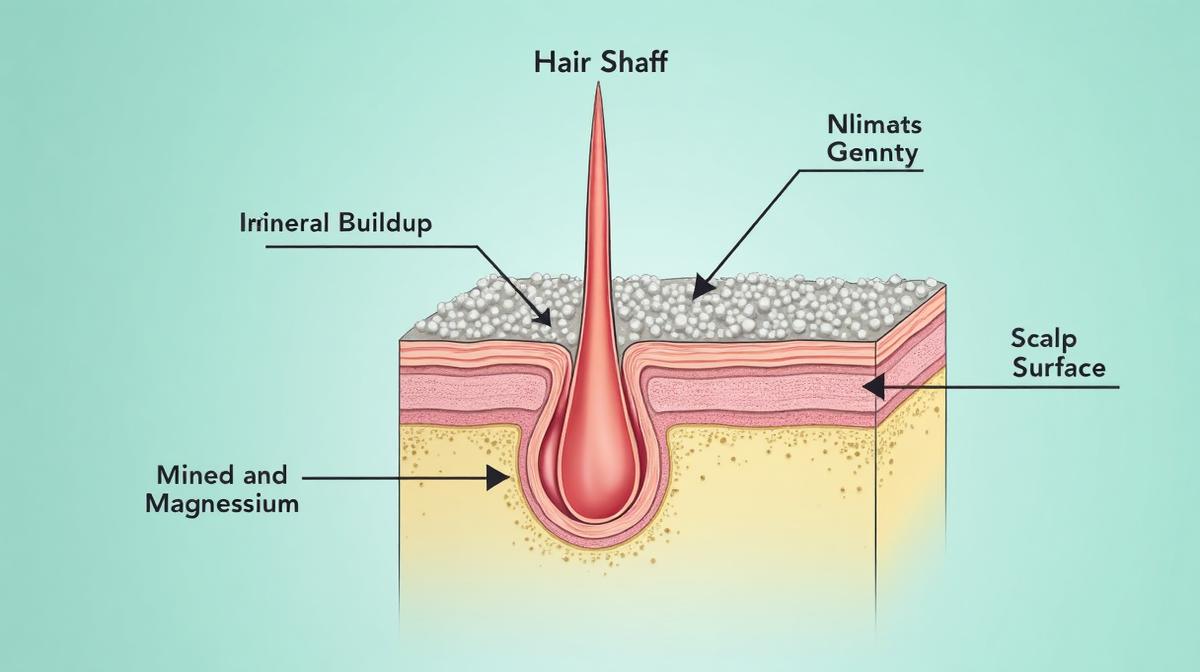
Hard water in the Gulf region contains extremely high levels of calcium, magnesium, and mineral salts. These deposits coat the hair shaft and accumulate on the scalp, creating a physical barrier that prevents moisture penetration and changes the follicle environment. Over time, this mineral buildup can trigger inflammation and oxidative stress at the follicle level, pushing more hairs into telogen phase and weakening the anchoring of existing strands.
This isn’t a fringe theory. A study in the International Journal of Trichology found that hard water exposure significantly increased hair surface roughness, reduced tensile strength, and caused tangling and breakage. The mechanism isn’t just cosmetic damage, it’s physiological changeion of the scalp microbiome and follicle health.
The problem is that hard water hair loss looks identical to other forms of diffuse shedding. You can’t tell by looking whether your increased hair fall is from work stress, dietary changes, or mineral buildup. That’s why young professionals who relocate to hard-water regions often spend months trying stress management and supplements while the actual trigger, water chemistry, goes unaddressed. A chelating shampoo like Regrowth+ is specifically formulated to remove these mineral deposits and restore the scalp environment, which is often the missing piece when standard hair loss treatments aren’t working.
Nutritional Deficiencies in the Post-College Years
College dining halls, for all their flaws, usually provided consistent meals. Post-graduation, many young adults shift to irregular eating patterns, meal skipping, or restrictive diets that create nutritional gaps their hair follicles can’t tolerate. Hair is a non-essential tissue, your body will redirect nutrients to vital organs first. When intake is borderline, hair suffers.
The most common deficiencies affecting hair in your twenties: iron (especially in menstruating women), vitamin D, zinc, and protein. Ferritin (stored iron) below 40 ng/mL is associated with increased hair shedding even when hemoglobin is normal and you’re not technically anemic. Most doctors don’t check ferritin unless you’re overtly anemic, so this deficiency goes undetected in young adults with unexplained hair loss.
Crash dieting is another major trigger. When you drop calories suddenly or eliminate entire macronutrient groups, your body interprets this as famine and shuts down non-essential processes, including hair growth. The shedding starts 2-3 months after the diet begins, right when you’re feeling proud of the weight loss. Then you panic, stop the diet, and assume the hair loss was unrelated. But the damage is done, and it takes months of adequate nutrition to reverse.
Protein matters more than most people realize. Your hair is made of keratin, a structural protein. If you’re not consuming enough protein to meet your body’s baseline needs (roughly 0.8g per kg of body weight minimum, more if you’re active), your follicles can’t produce strong, healthy hair shafts. Vegan and vegetarian diets aren’t inherently problematic, but they require more intentional planning to hit protein and iron targets. Many young adults transitioning to plant-based eating in their twenties don’t make those adjustments and end up with subclinical protein deficiency that manifests as brittle, thinning hair.
Postpartum Hair Loss in Your Twenties
If you had a baby in your early to mid-twenties, the postpartum hair shedding that hits around 3-4 months after delivery can be genuinely alarming. You’re already dealing with sleep deprivation, hormonal chaos, and the stress of new parenthood, and now you’re losing hair in clumps every time you shower. It feels like something is seriously wrong.
But postpartum telogen effluvium is one of the most predictable, normal forms of hair shedding that exists. During pregnancy, improved estrogen keeps a larger percentage of follicles in anagen, which is why many women notice thicker, fuller hair while pregnant. After delivery, estrogen drops rapidly, and all those extra follicles that were held in growth phase simultaneously shift to telogen and shed. It’s dramatic but temporary.
The timeline: shedding peaks around 3-5 months postpartum and usually resolves by 12 months. By your baby’s first birthday, your hair density should be back to pre-pregnancy baseline. If you’re still seeing excessive shedding beyond 12 months, that’s no longer normal postpartum loss, it’s either chronic telogen effluvium from ongoing stress and sleep deprivation, or it’s unmasking an underlying condition like thyroid dysfunction or androgenic alopecia that was masked by pregnancy hormones.
The compounding factor for young mothers in the Gulf: if you’re also dealing with hard water exposure and postpartum nutritional depletion (iron stores tank during pregnancy and breastfeeding), the hair loss can be more severe and prolonged than typical postpartum shedding. This is where addressing multiple triggers simultaneously, chelating the mineral buildup, correcting iron deficiency, managing stress, becomes essential rather than just waiting it out.
When to See a Dermatologist (Don’t Wait)
Most people wait too long. They assume hair loss in their twenties is just stress or a phase, so they try home remedies and over-the-counter supplements for six months or a year before seeking professional evaluation. By then, if it’s androgenic alopecia, they’ve lost ground that’s difficult to regain. If it’s a nutritional deficiency, they’ve suffered unnecessarily. If it’s a scalp condition, it’s progressed.
See a dermatologist now (not in six months) if you notice any of these signs: sudden increase in shedding lasting more than three months, visible thinning in a pattern (temples, crown, part width), change in hair texture where new growth is noticeably finer than older hair, scalp symptoms like itching, burning, or flaking that coincide with hair loss, or family history of early hair loss and you’re seeing similar changes.
The diagnostic workup should include a visual scalp exam (often with dermoscopy to look at follicle patterns), a detailed history covering stress, diet, medications, and recent life changes, and bloodwork checking thyroid function, iron studies (including ferritin), vitamin D, and in some cases hormone levels. A complete panel costs about the same as three months of random supplements, but it gives you actual answers instead of guesswork.
Early intervention options for androgenic alopecia include topical minoxidil (over-the-counter, works for both men and women), oral finasteride for men (prescription, blocks DHT conversion), and oral spironolactone for women (prescription, reduces androgen activity). For telogen effluvium, the focus is identifying and removing triggers, correcting deficiencies, managing stress, addressing environmental factors like water quality. The earlier you start appropriate treatment, the better the outcome. Follicles that have been dormant for years are much harder to reactivate than those caught in the early stages of miniaturization.
References
- Age-associated hair greying and hair loss - British Journal of Dermatology
- Hair Loss: Early Treatment Matters - American Academy of Dermatology
- Hard water and hair: An unacknowledged connection - International Journal of Trichology
- Serum ferritin and diffuse hair loss in women - Journal of the American Academy of Dermatology
- Postpartum telogen effluvium: clinical presentation and management - Dermatology Practical & Conceptual