You’re losing hair in the shower. Again. The drain clogs every few days, and you’re starting to panic. But here’s what nobody tells you: that shedding? It’s probably normal. And more importantly, it’s probably reversible.
Your hair doesn’t grow continuously. It cycles through distinct phases, growing, transitioning, resting, shedding. Understanding this cycle changes everything about how you approach hair loss. Because once you know which phase your follicles are stuck in, you can actually do something about it.
This isn’t about accepting hair loss. It’s about understanding the biology well enough to fix it. Let’s break down the three phases of the hair growth cycle and why most shedding isn’t permanent damage, it’s just a changeed timeline.
The Three Phases: Anagen, Catagen, Telogen
Your scalp contains roughly 100,000 follicles. Right now, about 85-90% are in anagen (active growth), 1-2% are in catagen (transition), and 10-15% are in telogen (rest). This distribution is normal. This is healthy.
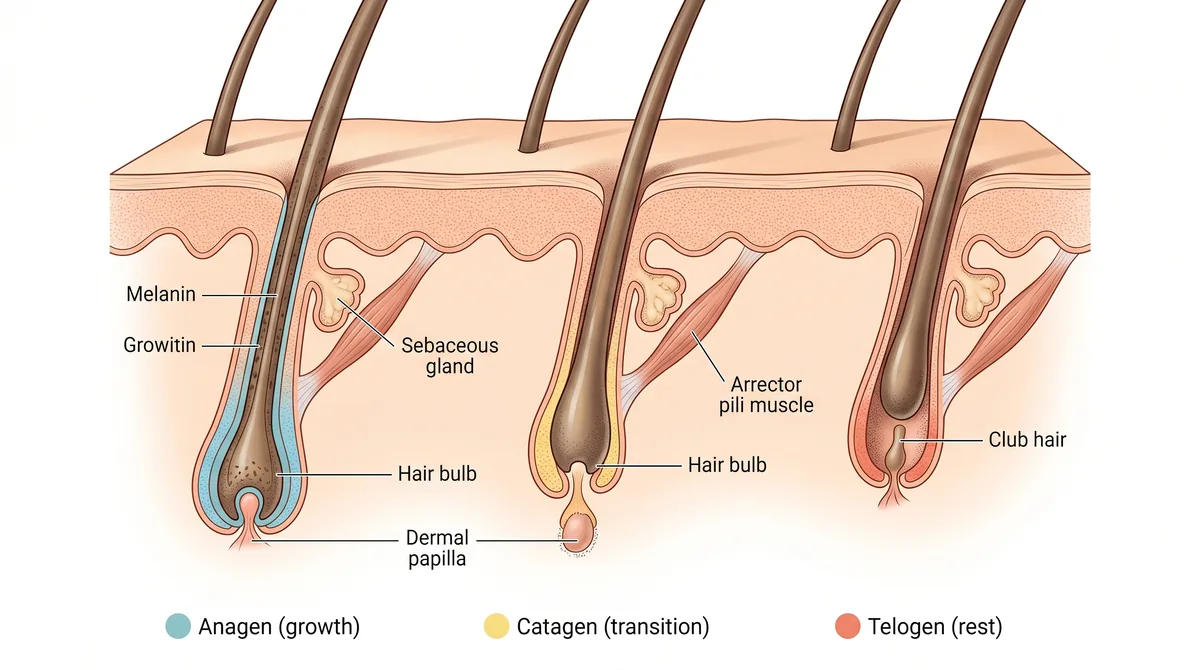
Anagen is the growth phase. It lasts 2-7 years, depending on genetics, age, and health status. During anagen, cells in the hair bulb divide rapidly, pushing the hair shaft upward through the follicle. The dermal papilla supplies nutrients and growth signals. Melanocytes inject pigment. The hair grows about half an inch per month.
Catagen is the transition phase. It lasts just 2-3 weeks. The follicle shrinks, detaches from the dermal papilla, and stops producing new cells. The hair becomes a ‘club hair’, a strand with a rounded, keratinized base. It’s no longer growing, but it hasn’t fallen out yet.
Telogen is the resting phase. It lasts about 3 months. The follicle is dormant. The club hair sits in place, anchored but inactive, while a new anagen hair begins forming beneath it. Eventually, the new hair pushes the old one out. You see it in the shower drain. That’s normal shedding, 50 to 100 hairs per day.
The problem isn’t the cycle itself. The problem is when something forces too many follicles into telogen at once. That’s when you notice excessive shedding, and that’s when people panic.
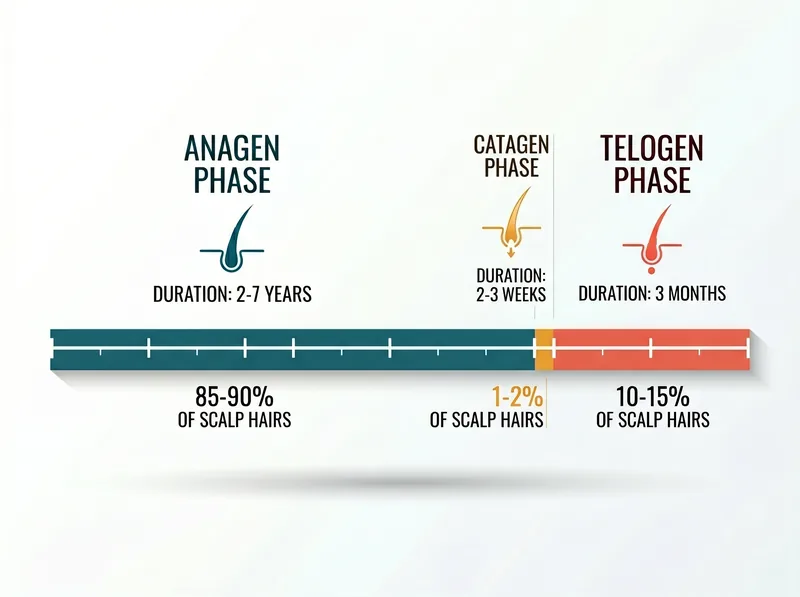 The hair growth cycle timeline: anagen lasts 2-7 years, catagen 2-3 weeks, and telogen approximately 3 months before natural shedding.
Why Follicles Shift Phases Prematurely
Follicles don’t randomly decide to stop growing. They respond to signals. Hormonal changes (postpartum, thyroid dysfunction, DHT sensitivity), nutritional deficiencies (iron, B12, protein), physical stress (surgery, illness, fever), and environmental insults all trigger premature phase shifts.
Here’s the mechanism: stress signals activate genes that halt cell division in the hair bulb. The follicle interprets this as a survival threat and shifts into catagen, then telogen. It’s a protective response. The follicle goes dormant to conserve resources.
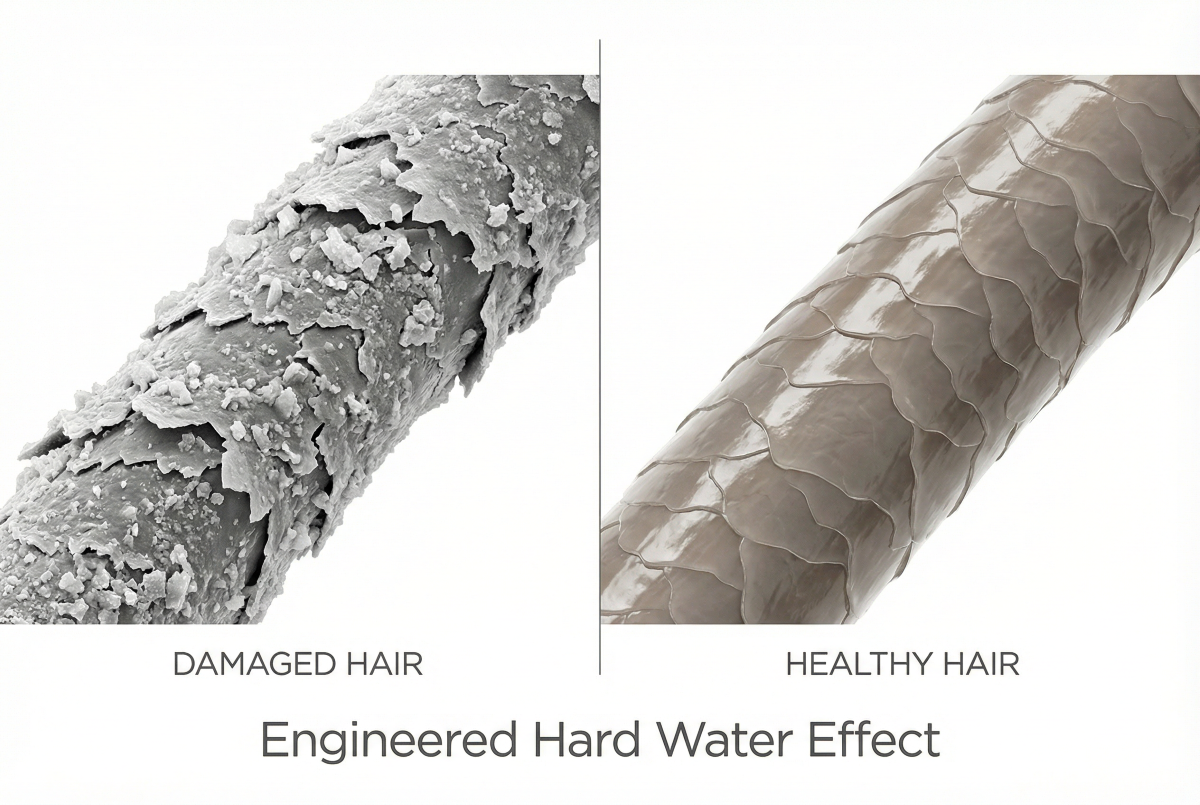
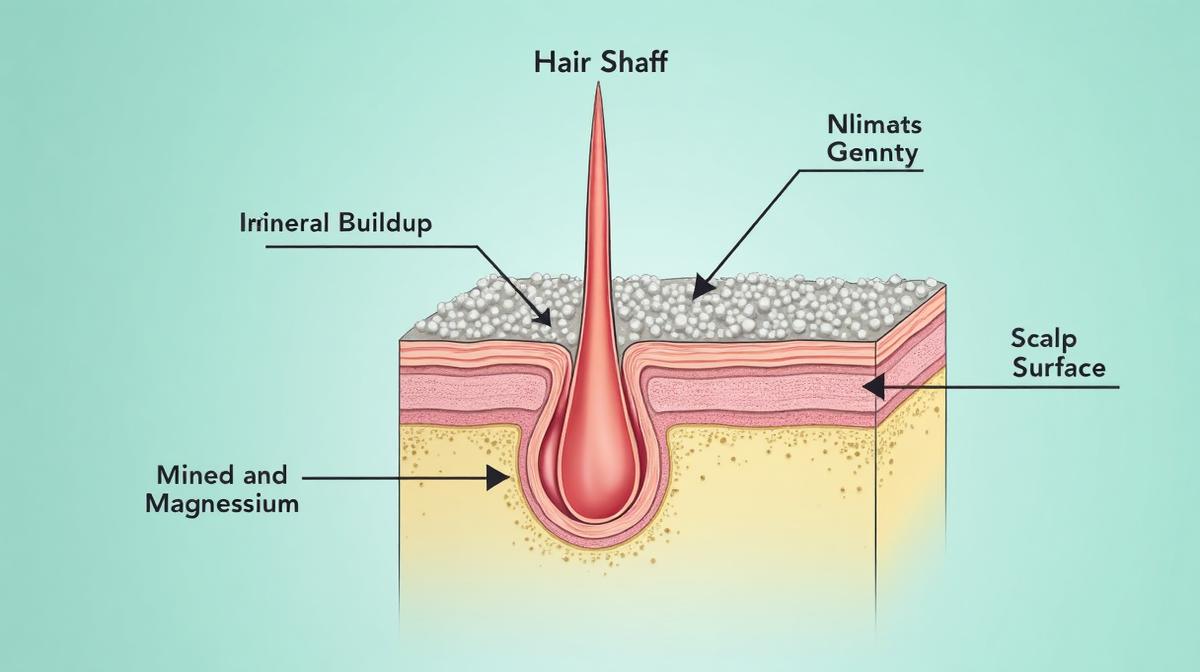
In the Gulf region, one of the most common triggers is hard water mineral buildup. Calcium and magnesium deposits coat the hair shaft and scalp surface, creating a physical barrier that changes nutrient delivery to the follicle. The follicle senses reduced function and shifts into telogen prematurely.
This is why expats often notice increased shedding within months of moving to the region. It’s not genetic hair loss. It’s not aging. It’s an environmental stressor forcing follicles out of anagen before they’ve completed their natural growth cycle. And because it’s environmental, it’s reversible.
Studies show that telogen effluvium, the medical term for stress-induced shedding, resolves once the trigger is removed. The follicles don’t die. They just need the right conditions to re-enter anagen.
The Reversibility Window: What Actually Regenerates
Here’s the critical distinction: follicles in telogen aren’t dead. They’re dormant. As long as the dermal papilla remains intact, the follicle can regenerate. You can restart the cycle.
Permanent hair loss (androgenetic alopecia, scarring alopecia) occurs when the follicle structure itself is destroyed, miniaturized beyond function or replaced by scar tissue. But that’s not what’s happening in most cases of sudden shedding. Most people experiencing increased hair fall have structurally intact follicles stuck in telogen.
The reversibility window depends on how long the follicle has been dormant. Follicles can remain in extended telogen for months, even years, without permanent damage. But the longer they stay inactive, the harder it becomes to reactivate them. That’s why early intervention matters.
Reactivating dormant follicles requires removing the trigger (environmental stressor, nutritional deficiency, hormonal imbalance) and providing the conditions for anagen re-entry. That means improving scalp health, ensuring nutrient delivery, and eliminating physical barriers like mineral buildup.
For hard water-related shedding, the solution is straightforward: remove the mineral deposits, restore scalp barrier function, and the follicles naturally shift back into anagen. This is why chelating treatments work, they don’t ‘grow’ hair, they remove the obstacle preventing natural growth.
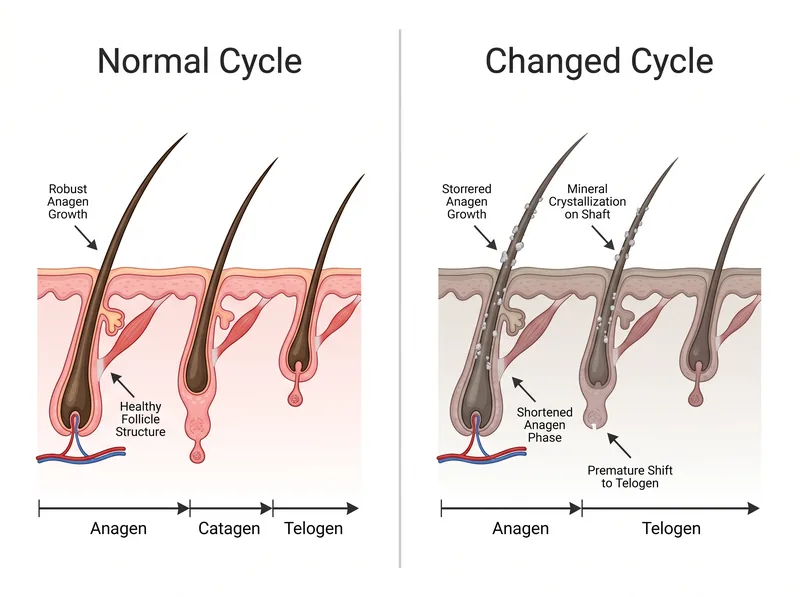 Environmental stressors like mineral buildup can prematurely shift follicles from anagen to telogen, accelerating shedding beyond the natural 50-100 hairs per day.
How to Support the Natural Cycle
Supporting the hair growth cycle isn’t about forcing follicles to grow faster. It’s about removing barriers and providing what follicles need to complete their natural phases.
First: address environmental factors. If you’re in a hard water area, mineral buildup is likely shortening your anagen phase. A chelating shampoo like Regrowth+ removes calcium and magnesium deposits, restoring normal follicle function. This isn’t a growth stimulant, it’s environmental correction.
Second: improve nutrition. Follicles in anagen have high metabolic demands. They need iron (for oxygen transport), B vitamins (for cell division), protein (for keratin synthesis), and zinc (for enzyme function). Deficiencies in any of these can prematurely trigger catagen.
Third: manage inflammation. Chronic scalp inflammation changes the hair cycle by creating a hostile environment for follicle function. This is why conditions like seborrheic dermatitis are associated with increased shedding, the inflammation itself is a phase-shift trigger.
Fourth: protect against oxidative stress. UV exposure, pollution, and chemical treatments generate free radicals that damage follicle cells. Antioxidants (vitamin E, polyphenols from green tea, rosemary extract) help neutralize this damage and maintain normal cycle progression.
The goal isn’t to hack the cycle. It’s to stop changeing it. When you remove the stressors, the follicles do what they’re designed to do: grow, rest, shed, and grow again. That’s the cycle. That’s reversibility.
When to Worry: Distinguishing Normal from Pathological
Not all shedding is reversible. Knowing the difference between telogen effluvium (temporary, reversible) and androgenetic alopecia (progressive, requires intervention) matters.
Telogen effluvium presents as diffuse shedding across the entire scalp. You lose volume, but you don’t see distinct bald patches. The shedding typically starts 2-3 months after the triggering event (stress, illness, environmental change). Hair comes out easily, no tugging required. And critically, the follicles remain visible as tiny dots on the scalp.
Androgenetic alopecia (pattern hair loss) presents differently. Shedding is concentrated in specific areas, temples and crown for men, widening part for women. The hairline recedes in a characteristic M-shape. The follicles miniaturize over time, producing progressively thinner, shorter hairs until they stop producing visible hair altogether.
If you’re seeing diffuse shedding without pattern recession, you’re likely dealing with telogen effluvium. If you’re seeing pattern changes, temples receding, crown thinning, part widening, that’s androgenetic alopecia. The former is reversible with trigger removal. The latter requires targeted treatment to slow progression.
When in doubt, see a dermatologist. A simple pull test (tugging on 50-60 hairs to see how many come out) and scalp examination can distinguish between the two. Early diagnosis changes outcomes. Telogen effluvium resolves in 6-9 months with trigger removal. Androgenetic alopecia is progressive, waiting makes it harder to treat.
References
- Hair Growth Cycle and Hair Loss - American Academy of Dermatology
- Telogen Effluvium: A Complete Review - PubMed
- The Biology of Hair Follicles - PubMed Central
- Androgenetic Alopecia: Pathogenesis and Management - PubMed