Walk into any pharmacy in the Gulf region and you’ll face a wall of shampoo bottles making bold promises about hair regrowth. Some claim to block DHT. Others promise to stimulate follicles. A few mention exotic botanicals you’ve never heard of. And you’re left wondering: which one actually works?
Here’s the thing. Most men experiencing hair loss don’t need another marketing pitch. They need honest information about what the science says works and what’s just expensive packaging. After reviewing clinical research and testing dozens of formulations, I’ve identified the key factors that separate effective hair loss shampoos from overpriced placebos.
This article contains affiliate links. See our affiliate disclosure for details.
The best hair loss shampoo for men isn’t necessarily the most expensive one. It’s the formula that addresses your specific type of hair loss with proven active ingredients at effective concentrations. But there’s a catch that most product reviews won’t tell you: if you’re dealing with hard water in the Gulf region, even the best ingredients can’t work properly when mineral buildup blocks their absorption. That’s why understanding both the active ingredients AND your water quality matters more than brand names.
What Makes a Hair Loss Shampoo Actually Work
Let’s cut through the marketing noise. A shampoo can’t regrow hair the way minoxidil or finasteride can. That’s not how topical cleansers work. But what a well-formulated hair loss shampoo CAN do is create the optimal scalp environment for your existing treatments to work better and protect the hair you still have.
The most effective hair loss shampoos for men contain one or more of these evidence-backed ingredients: ketoconazole (which blocks DHT at the scalp level), caffeine (which extends the growth phase of hair follicles), saw palmetto (a natural DHT inhibitor), and biotin (which strengthens hair structure). A 2018 study in Dermatologic Therapy found that ketoconazole 2% shampoo was nearly as effective as minoxidil 2% for androgenetic alopecia when used twice weekly.
But here’s what nobody talks about: concentration matters more than ingredient lists. A shampoo listing 15 botanical extracts at trace amounts won’t outperform one with three proven actives at clinical concentrations. Look for ketoconazole at 1-2%, caffeine at 0.2% or higher, and saw palmetto extract standardized to 85-95% fatty acids.
The second factor? Contact time. Your scalp needs at least 3-5 minutes of exposure for active ingredients to penetrate. If you’re doing the quick lather-and-rinse routine, you’re wasting your money regardless of which shampoo you bought. This isn’t regular shampoo. Think of it more like a topical treatment that happens to clean your hair.
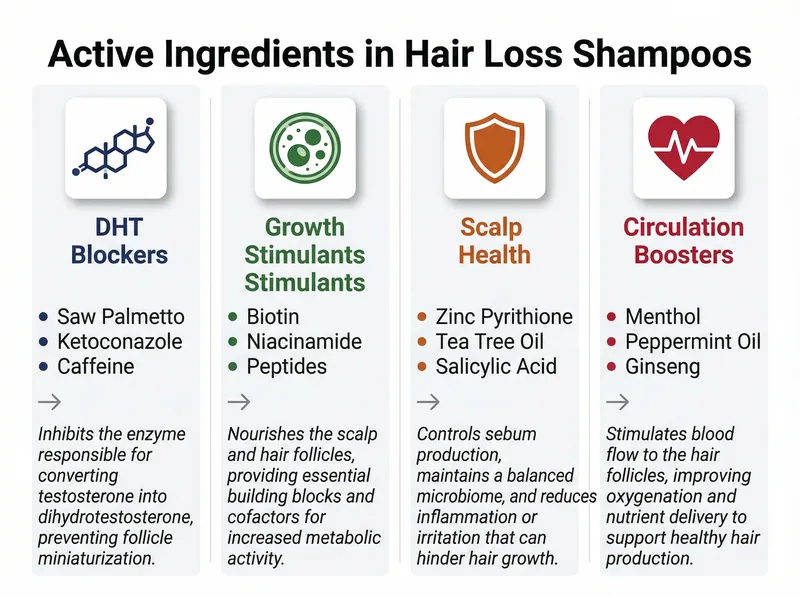 Key active ingredients found in effective hair loss shampoos and their mechanisms of action
Top DHT-Blocking Shampoos Compared
DHT (dihydrotestosterone) is the primary culprit in male pattern baldness. It miniaturizes hair follicles over time, leading to progressively thinner hair and eventual follicle death. The most effective hair loss treatments for men work by blocking DHT either systemically or at the scalp level.
Ketoconazole-based shampoos are the gold standard here. Originally developed as an antifungal, ketoconazole has a secondary benefit: it changes the pathway that converts testosterone to DHT in scalp tissue. Prescription versions contain 2% ketoconazole, while over-the-counter options typically have 1%. Both work, but the prescription strength shows faster results.
Saw palmetto shampoos offer a natural alternative with similar mechanisms. Research published in the Journal of Cosmetic Dermatology showed that topical saw palmetto improved hair density in 60% of participants after 24 weeks. The key is finding a formula with standardized extract, not just “saw palmetto” listed somewhere on the label.
Caffeine shampoos work differently. Instead of blocking DHT, caffeine counteracts its effects by stimulating hair follicles directly. German research found that caffeine penetrates the hair follicle within two minutes and continues working for up to 24 hours after application. This makes caffeine shampoos particularly useful for men in the early stages of hair thinning.
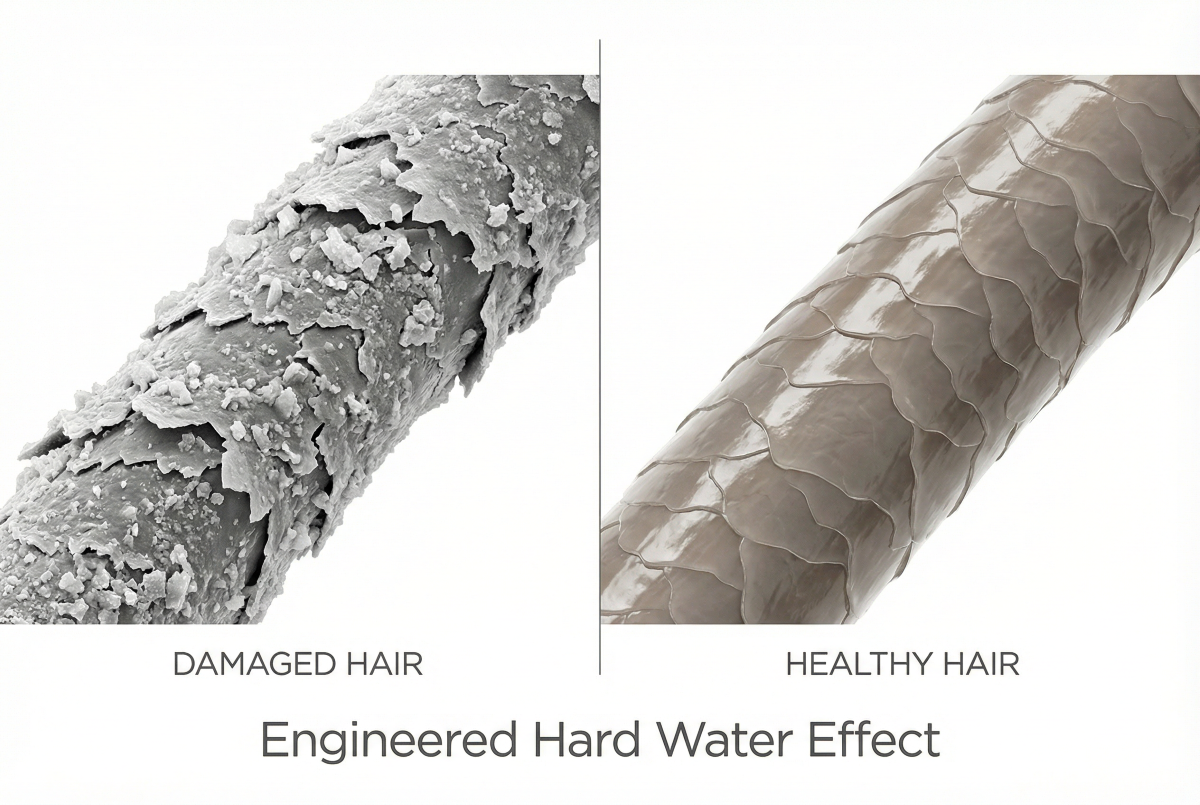
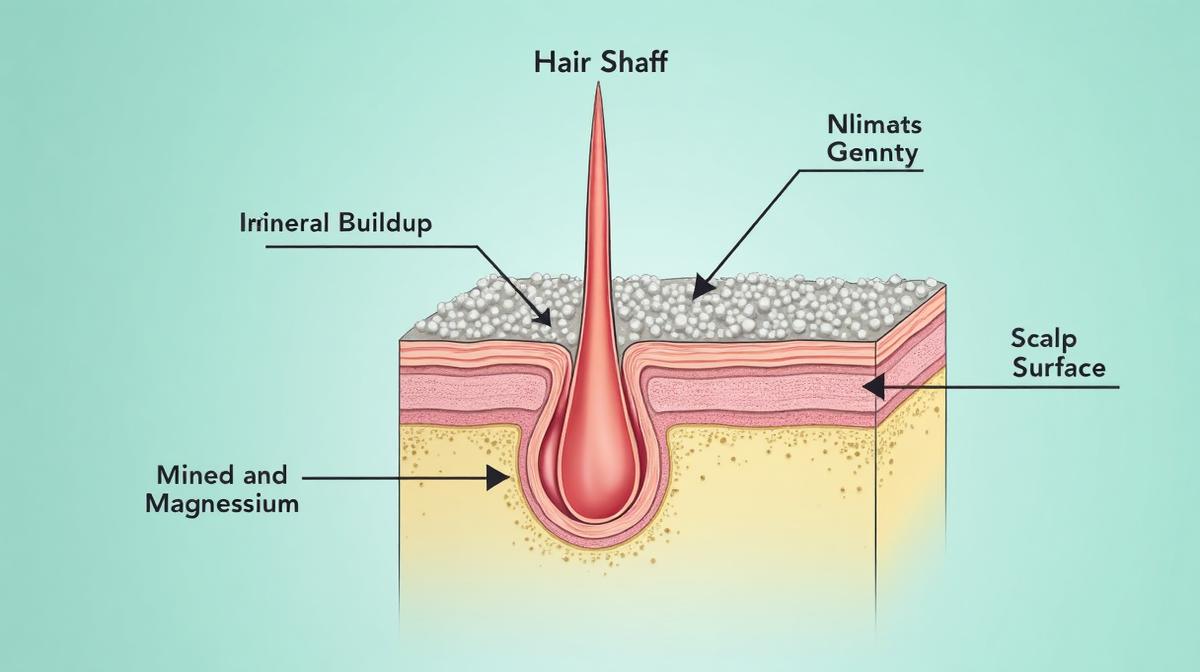
For men in the Gulf region, there’s an additional consideration: mineral buildup from hard water can form a barrier on the scalp that prevents DHT-blocking ingredients from reaching the follicles. That’s where a chelating shampoo like Regrowth+ becomes essential. It removes the calcium and magnesium deposits that accumulate from Gulf water, allowing your active ingredients to actually reach your scalp instead of sitting on top of a mineral layer.
Growth-Stimulating vs. Hair-Strengthening Formulas
Not all hair loss is the same, and not all shampoos target the same problem. Some focus on stimulating dormant follicles. Others prioritize strengthening existing hair to prevent breakage. Understanding this distinction helps you choose the right product for your situation.
Growth-stimulating shampoos contain ingredients like biotin, niacinamide, and peptides that aim to reactivate miniaturized follicles and extend the anagen (growth) phase. These work best for men experiencing early-stage thinning or diffuse hair loss across the scalp. A study in Skin Appendage Disorders found that biotin supplementation improved hair growth in 38% of participants with thinning hair, though topical application shows more modest results.
Hair-strengthening formulas take a different approach. They use proteins, keratin, and amino acids to fortify the hair shaft itself, reducing breakage and making existing hair appear fuller. These are ideal for men whose hair loss is partially mechanical (from styling, environmental damage, or nutritional deficiencies) rather than purely genetic.
The best approach? Combine both strategies. Use a DHT-blocking shampoo 2-3 times per week and a strengthening formula on alternate days. This addresses both the root cause (DHT miniaturization) and the symptom (weak, brittle hair that breaks easily). But don’t expect overnight miracles. Hair grows slowly. You need at least 12 weeks of consistent use to see measurable changes.
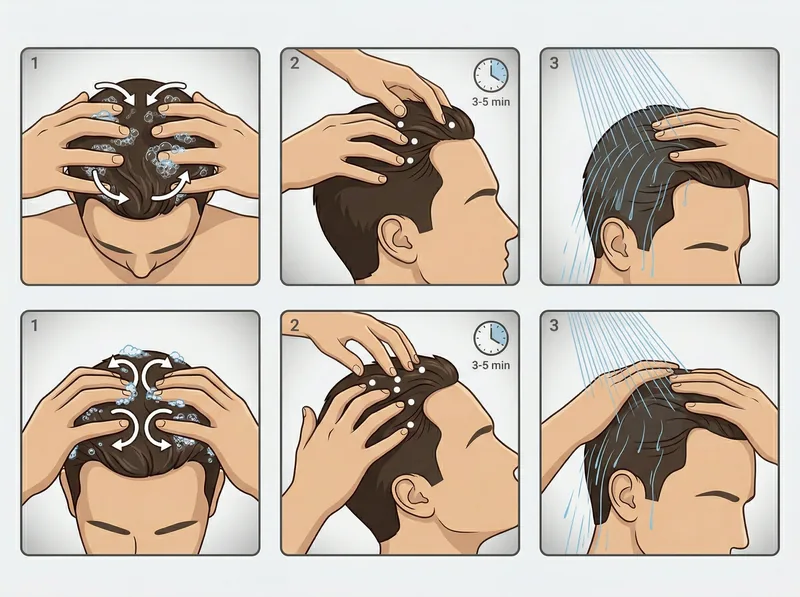 Proper application technique maximizes ingredient contact time with the scalp for better results
The Hard Water Problem Nobody Mentions
Here’s what most hair loss shampoo reviews won’t tell you: if you live in the Gulf region, your water quality is sabotaging your results. The Gulf has some of the hardest water in the world, with total dissolved solids (TDS) levels often exceeding 500 ppm. That’s more than double what’s considered ‘hard’ water in most countries.
Hard water causes hair loss through a specific mechanism: calcium and magnesium ions bond with the proteins in your hair and scalp, forming an insoluble film. This film blocks moisture, prevents active ingredients from penetrating, and creates a rough texture that leads to breakage. Over time, it also clogs follicles and changes the scalp’s natural pH balance.
I’ve seen dozens of men spend hundreds of dollars on premium hair loss shampoos, only to see minimal results. The problem wasn’t the shampoo. It was the mineral buildup preventing the active ingredients from reaching their scalp. Think of it like trying to paint a wall without removing the old layer first. The new paint won’t stick properly.
The solution isn’t a shower filter (those don’t remove dissolved minerals effectively). You need a chelating shampoo that actively breaks down and removes mineral deposits. Use it once or twice a week before your hair loss shampoo. This creates a clean slate for your active ingredients to work. It’s not optional in the Gulf region. It’s the difference between your treatment working or wasting your money.
What to Avoid in Hair Loss Shampoos
Some ingredients do more harm than good, especially for men already dealing with thinning hair. Sulfates (SLS and SLES) are the primary culprits. They create that satisfying lather everyone associates with ‘clean’ hair, but they also strip away natural oils, irritate the scalp, and can accelerate hair loss in sensitive individuals.
Silicones are another red flag. Ingredients ending in ‘-cone’ or ‘-xane’ coat the hair shaft to create artificial shine and smoothness. But this coating prevents moisture and nutrients from penetrating, and it builds up over time, requiring harsh clarifying shampoos to remove. For thinning hair, you want ingredients that strengthen from within, not create a temporary illusion of thickness.
Parabens (methylparaben, propylparaben) are preservatives that extend shelf life but may change hormone balance. While the research isn’t conclusive, men dealing with DHT-related hair loss don’t need additional endocrine changeors in their routine. Plenty of effective preservative alternatives exist.
Synthetic fragrances deserve scrutiny too. That ‘fresh’ or ‘masculine’ scent often comes from dozens of undisclosed chemicals, many of which can trigger scalp irritation or allergic reactions. For hair loss shampoos, you want the active ingredients doing the work, not a fragrance cocktail masking poor formulation. If the ingredient list includes ‘parfum’ or ‘fragrance’ without specifying what that means, consider it a warning sign.
How to Use Hair Loss Shampoo for Maximum Results
Buying the right shampoo is only half the battle. Application technique matters just as much as ingredient quality. Most men treat hair loss shampoo like regular shampoo, which explains why they see minimal results despite using premium products.
First, wet your hair thoroughly with warm water. Not hot (that strips oils and irritates the scalp) and not cold (that doesn’t open the cuticles for ingredient absorption). Warm. Then apply a quarter-sized amount of shampoo directly to your scalp, not your hair. The scalp is the target, not the hair shaft.
Massage the shampoo into your scalp using your fingertips (not nails) in circular motions for at least two minutes. This isn’t just about distribution. You’re stimulating blood flow to the follicles, which enhances ingredient absorption. Research shows that mechanical stimulation combined with active ingredients produces better results than either approach alone.
Here’s the crucial step most men skip: leave the shampoo on for 3-5 minutes. Set a timer. This contact time allows ketoconazole, caffeine, or saw palmetto to penetrate the scalp tissue. If you rinse immediately, you’re washing away the active ingredients before they can work. Think of it like applying minoxidil and then immediately wiping it off. Pointless.
Rinse thoroughly with cool water to close the cuticles and seal in moisture. Then resist the urge to use regular conditioner on your scalp (it can clog follicles). If you need conditioning, apply it only to the hair shaft from mid-length to ends. For men in the Gulf dealing with hard water effects on hair, this technique becomes even more critical because you’re working against mineral buildup that wants to block absorption.
Realistic Expectations and Timeline
Let’s set realistic expectations. Hair loss shampoo isn’t a miracle cure. It won’t restore a receding hairline to your teenage density or regrow hair on a completely bald crown. What it CAN do is slow progression, improve the quality of existing hair, and improve your scalp environment for other treatments.
The hair growth cycle moves slowly. Each follicle goes through three phases: anagen (growth), catagen (transition), and telogen (resting). The anagen phase lasts 2-7 years, while telogen lasts about 3 months. This means that even when a treatment works, you won’t see new hair immediately. The follicle needs to complete its current cycle before entering a new growth phase.
For most men using a quality hair loss shampoo consistently, the timeline looks like this: 4-6 weeks to notice reduced shedding, 8-12 weeks to see improvements in hair texture and thickness, and 16-24 weeks to observe measurable increases in hair density. But only if you’re consistent. Using it sporadically or expecting results after two weeks sets you up for disappointment.
The best results come from combining shampoo with other evidence-based treatments. If you’re serious about addressing hair loss, consider adding minoxidil (topical), finasteride (oral, prescription only), and addressing any underlying nutritional deficiencies. Complete hair fall treatment works better than any single product alone. The shampoo is one tool in your toolkit, not the entire solution.
References
- Ketoconazole shampoo: effect of long-term use in androgenic alopecia - PubMed - Dermatologic Therapy
- Saw palmetto extract in the treatment of hair loss - PubMed Central - Journal of Cosmetic Dermatology
- The Role of Vitamins and Minerals in Hair Loss - PubMed Central - Skin Appendage Disorders
- Caffeine and Its Pharmacological Benefits in the Management of Androgenetic Alopecia - PubMed - International Journal of Trichology