Your friend swears castor oil transformed her hair. Your aunt’s been using it for decades. Instagram is full of before-and-after photos. But when you actually search for the science, you find almost nothing.
Here’s the uncomfortable truth: castor oil is one of the most-recommended natural hair treatments with the least clinical evidence. There are no large-scale human studies proving it grows hair. None. The claims rest almost entirely on tradition, anecdote, and a single fatty acid that sounds impressive but hasn’t been tested in controlled trials.
That doesn’t make everyone wrong. But it does mean we need to separate what we know from what we assume. This article reviews the actual research on castor oil for hair growth, explains why the ricinoleic acid mechanism is more theory than fact, and explores why this thick oil can be particularly problematic for scalps in Gulf climates. If you’ve been waiting for castor oil to work, this might explain why it hasn’t.
The Clinical Evidence (Or Lack of It)
Let’s start with what we actually know from controlled research. A complete search of PubMed reveals exactly zero randomized controlled trials testing castor oil for androgenetic alopecia or telogen effluvium. There are no peer-reviewed studies comparing castor oil to placebo for hair density, growth rate, or thickness.
The only published research examines castor oil as a vehicle for delivering other active ingredients, not as a treatment itself. One small study from 2003 used castor oil as the carrier base for minoxidil formulations. Another looked at castor oil’s antimicrobial properties against scalp bacteria. Neither tested whether castor oil alone affects hair growth.
Compare this to rosemary oil, which has at least one head-to-head trial against 2% minoxidil showing comparable results. Or to minoxidil itself, which has over 150 clinical trials documenting efficacy, dosing, and side effects. The evidence gap is massive.
This doesn’t prove castor oil doesn’t work. It proves we don’t know if it works. And in evidence-based medicine, those are very different statements.
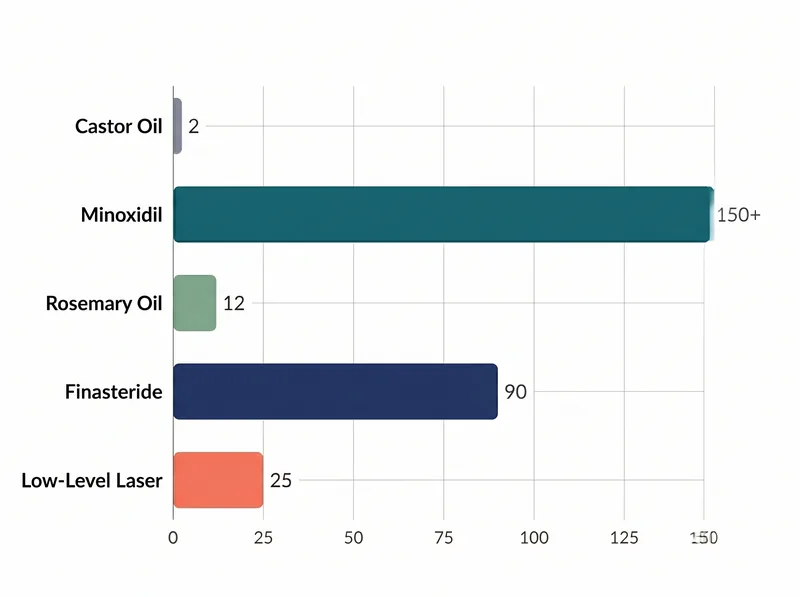 Clinical evidence for castor oil remains limited compared to proven treatments like minoxidil
The Ricinoleic Acid Theory
Most castor oil claims center on ricinoleic acid, a fatty acid that makes up about 90% of castor oil’s composition. Proponents argue that ricinoleic acid improves scalp circulation, reduces inflammation, and stimulates prostaglandin E2 receptors that promote hair growth.
Here’s what we actually know: ricinoleic acid does have anti-inflammatory properties in laboratory studies. It can inhibit certain inflammatory pathways in isolated cell cultures. And prostaglandin E2 is indeed involved in hair follicle cycling.
But there’s a giant leap from ‘this molecule does something in a petri dish’ to ‘applying this oil to your scalp will grow hair.’ That leap requires human studies. Clinical trials. Dose-response data. Comparison to controls. None of that exists for castor oil and hair growth.
The prostaglandin connection is particularly misleading. Yes, latanoprost (a prostaglandin analog used for glaucoma) was found to thicken eyelashes as a side effect. But latanoprost is a specific synthetic compound applied directly to lash roots at precise concentrations. Castor oil is a complex mixture of fatty acids sitting on top of your scalp. The mechanism isn’t comparable.
Why Jamaican Black Castor Oil Isn’t Different
Jamaican black castor oil has developed a cult following, with claims it’s more effective than regular castor oil due to roasting the beans before extraction. The dark color and ash content supposedly make it superior.
The reality is less impressive. Jamaican black castor oil gets its color from roasted bean particles and ash that remain in the oil after processing. It has a slightly different pH (more alkaline) and contains trace minerals from the ash. That’s the entire difference.
The fatty acid profile is nearly identical to regular castor oil. Ricinoleic acid content is the same. There are no unique compounds that would explain superior hair growth effects. And critically, there are no studies comparing Jamaican black castor oil to regular castor oil for hair outcomes.
The premium price reflects marketing and cultural tradition, not demonstrated efficacy. If regular castor oil doesn’t have evidence, neither does the Jamaican variety.
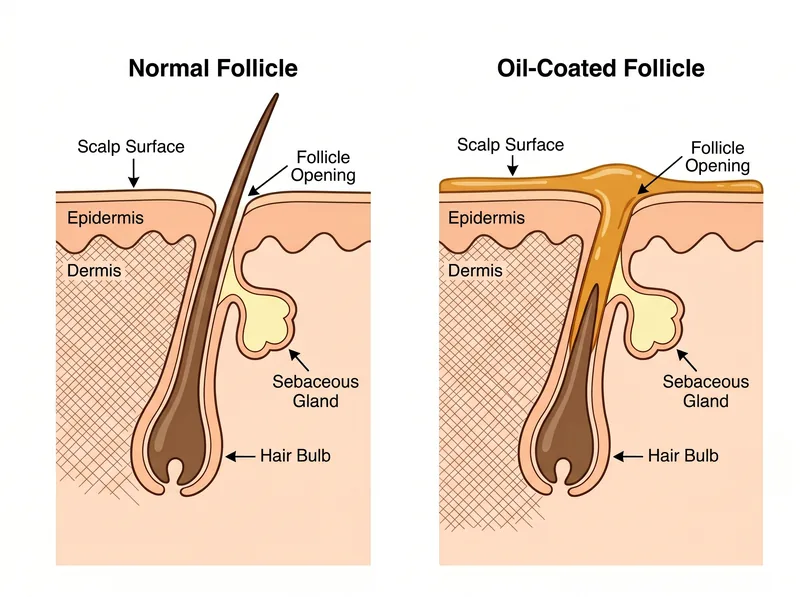 Castor oil’s high viscosity can create a barrier on the scalp rather than penetrating to follicles
The Gulf Climate Problem
Even if castor oil had proven benefits, its physical properties make it problematic for Gulf residents. Castor oil has a viscosity of about 650 centipoise at room temperature. That’s roughly 650 times thicker than water. It’s one of the heaviest oils used in cosmetics.
This matters because Gulf humidity and heat already stress sebaceous glands. Your scalp produces more sebum in hot weather. Adding a thick, occlusive oil on top creates a barrier that traps heat, sweat, and dead skin cells against the scalp surface.
The result is often the opposite of what you’re trying to achieve. Clogged follicles. Increased inflammation. Seborrheic dermatitis flare-ups. And in the worst cases, a condition called folliculitis where bacteria multiply in the trapped sebum and cause infected bumps around hair follicles.
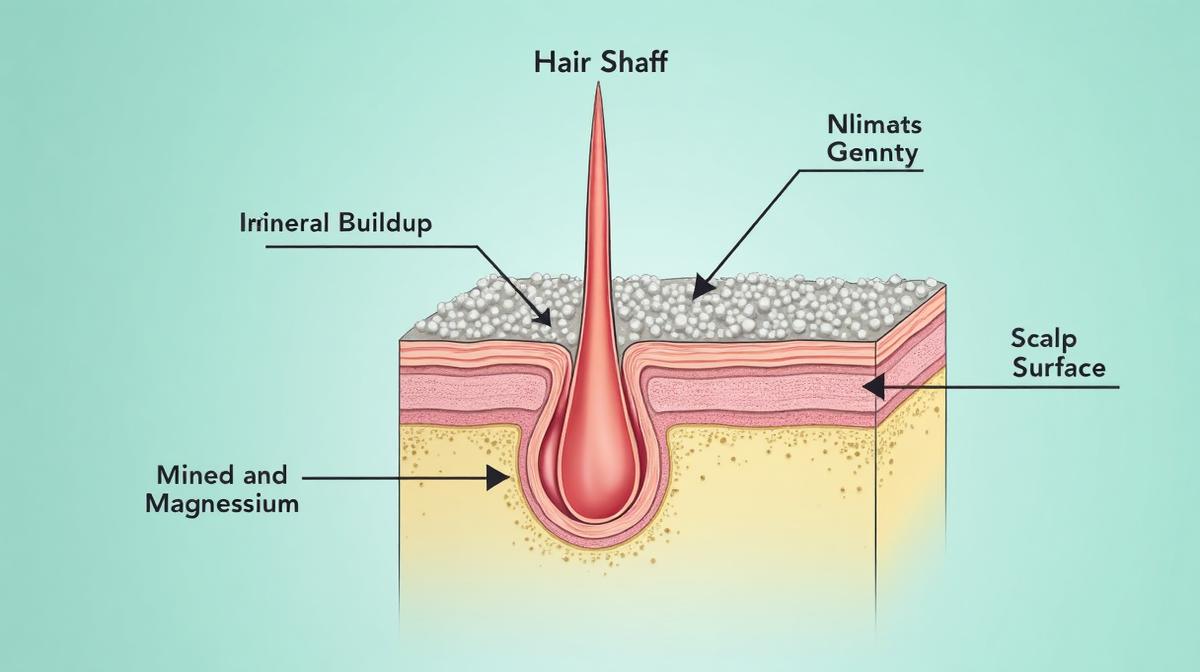
Castor oil’s comedogenic rating is 1 on a scale of 0-5, meaning it’s considered mildly pore-clogging. But that rating was developed for facial skin. Scalp follicles, which are larger and produce more sebum, are more vulnerable. In Gulf climates where you’re already fighting hard water mineral buildup, adding thick oil makes the problem worse.
If you’re using castor oil and noticing increased scalp itching, flaking, or small bumps along your hairline, the oil itself may be the cause. A chelating shampoo like Regrowth+ can help remove the buildup, but preventing it means reconsidering whether castor oil belongs in your routine at all.
What Actually Has Evidence
If you’re looking for treatments with real clinical backing, several options have substantially more evidence than castor oil. Minoxidil remains the gold standard with over 150 studies and FDA approval for both men and women. It works by prolonging the growth phase of hair follicles and increasing blood flow to the scalp.
Rosemary oil has one well-designed trial showing it performed as well as 2% minoxidil after six months of use. The study was small (100 participants) but properly controlled with standardized application protocols. That’s infinitely more evidence than castor oil has.
Biotin supplementation helps if you’re actually deficient, though most people aren’t. Caffeine-based topicals have about 18 published studies showing modest improvements in hair shaft thickness. Saw palmetto has 8 studies with mixed but generally positive results for male pattern hair loss.
The point isn’t that these treatments are miracle cures. It’s that they have data. Researchers have tested them, measured outcomes, and published results that other scientists can review and replicate. That’s how we separate treatments that work from treatments that just have good marketing.
For women dealing with hair loss, the evidence hierarchy matters even more because hormonal factors complicate treatment. Spending months on an unproven remedy delays access to treatments that actually have documented efficacy.
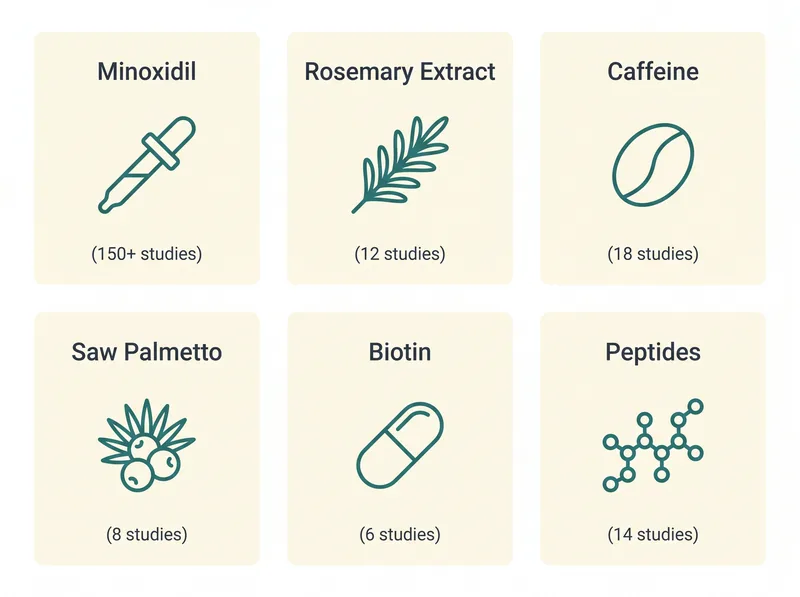 Evidence-based alternatives to castor oil with proven efficacy in clinical trials
When Castor Oil Might Help (And When It Won’t)
This doesn’t mean castor oil is useless. It has legitimate applications, just not the ones most people use it for. Castor oil is an excellent emollient for dry, damaged hair shafts. If your hair is brittle from chemical processing or heat damage, castor oil can coat the cuticle and temporarily improve appearance.
It’s also effective for eyelash and eyebrow conditioning. The small application area means you’re not dealing with scalp coverage issues, and the goal is moisturizing existing hairs, not growing new ones. Many people report their lashes look fuller and healthier with regular castor oil application.
But growing new hair from dormant follicles? Reversing androgenetic alopecia? Stopping postpartum shedding? There’s no evidence castor oil does any of that. And the opportunity cost is real. If you spend six months applying castor oil while your hair loss progresses, you’ve lost six months you could have spent on proven treatments.
The honest answer is this: if you enjoy the ritual of oiling your hair and castor oil makes your existing hair feel better, keep using it. But don’t expect it to solve hair loss. And if you’re in the Gulf dealing with hard water, humidity, and mineral buildup, you’re probably better off with lighter alternatives that won’t compound your scalp issues.
References
- Rosemary oil vs minoxidil 2% for the treatment of androgenetic alopecia: a randomized comparative trial - PubMed
- Ricinoleic acid inhibits inflammatory pathways in vitro - ScienceDirect
- Prostaglandin analogs and eyelash growth - American Academy of Dermatology
- Comedogenicity testing and ingredient safety - Personal Care Products Council