Copper peptides, specifically GHK-Cu, have become the latest darling of the hair growth industry. Scroll through any hair care forum and you’ll find threads dissecting serums, debating concentrations, and sharing (often conflicting) results. But here’s the thing: the hype has outpaced the science by a significant margin.
This article contains affiliate links. See our affiliate disclosure for details.
GHK-Cu (glycyl-L-histidyl-L-lysine copper complex) isn’t new. It was discovered in human plasma in the 1970s and has been studied for wound healing and skin remodeling for decades. The hair growth application? That’s more recent. And while the preliminary data is intriguing, it’s far from conclusive.
If you’re considering a copper peptide serum, you deserve to know what the research actually shows, not what marketing claims suggest. This review examines the mechanism, the evidence quality, and what you need to understand before spending money on peptide treatments.
What Are Copper Peptides and How Do They Work?
Copper peptides are small protein fragments (peptides) bound to a copper ion. The most studied form for hair and skin is GHK-Cu, a tripeptide naturally present in human blood, saliva, and urine. Levels decline with age, dropping about 60% between ages 20 and 60.
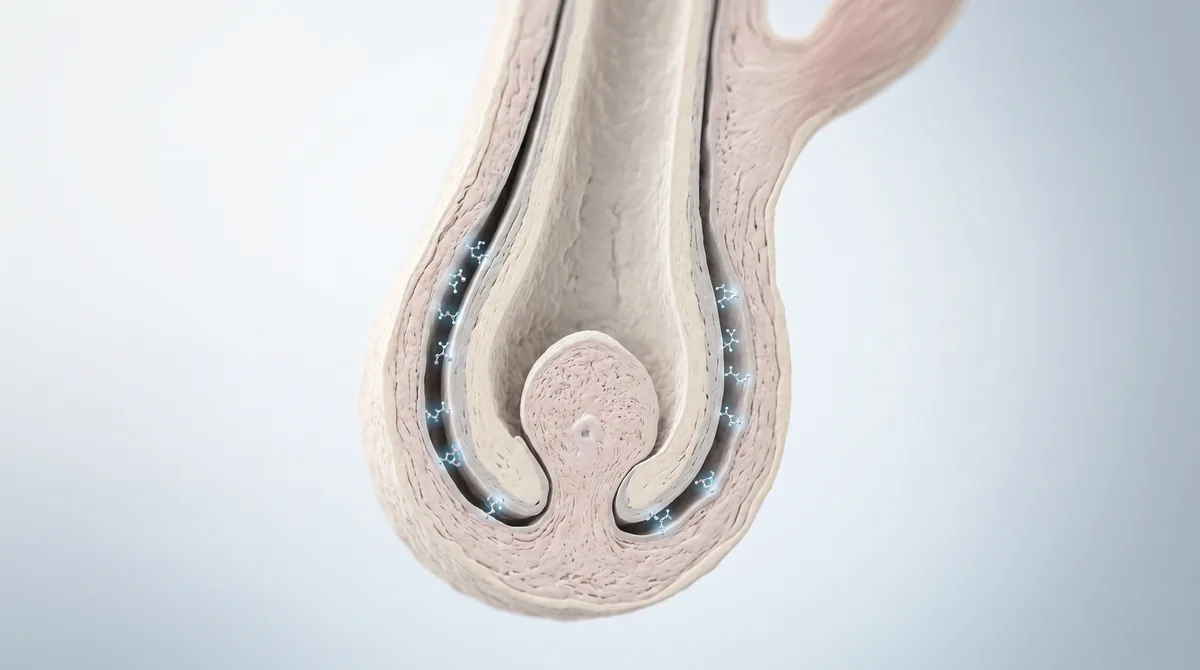
The proposed mechanism for hair growth involves several pathways. GHK-Cu is thought to stimulate vascular endothelial growth factor (VEGF), which improves blood flow to the follicle. It may also increase follicle size, prolong the anagen (growth) phase, and reduce inflammation around the follicle.
In cell culture studies, GHK-Cu has been shown to promote keratinocyte proliferation and migration, both critical for the hair growth cycle. It also appears to modulate gene expression related to tissue remodeling and repair.
But (and this is a significant but) most of this evidence comes from in vitro studies or wound healing contexts, not scalp-specific hair growth trials. The leap from petri dish to your scalp isn’t automatic.
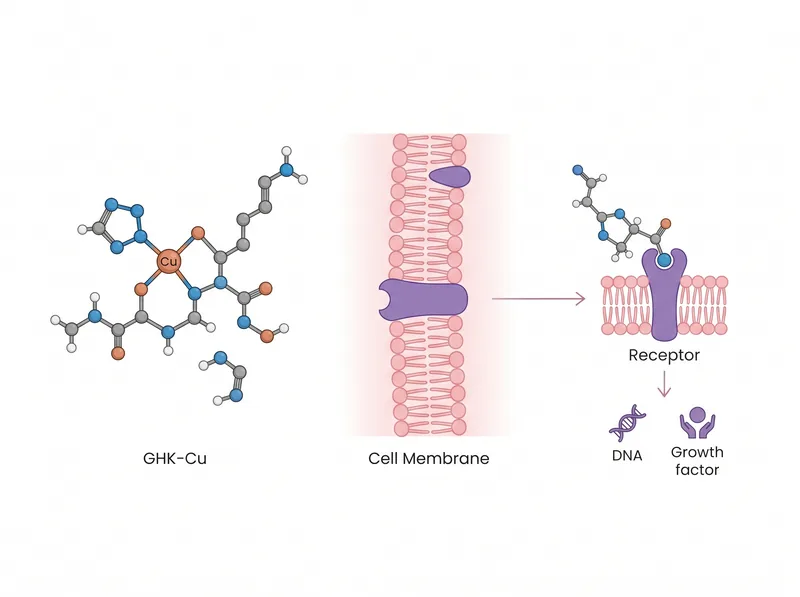 GHK-Cu peptides bind to follicle cell receptors, triggering signaling cascades that may influence hair growth factors.
The Research: What Studies Actually Show
Let’s be clear about the evidence base. There are no large-scale, double-blind, placebo-controlled trials of GHK-Cu for androgenetic alopecia (pattern hair loss). None. The studies that do exist are small, often uncontrolled, and sometimes funded by companies selling peptide products.
A 2007 study published in the Journal of Dermatological Science found that a peptide-copper complex increased hair follicle size and prolonged the anagen phase in mice. Encouraging, but mice aren’t humans. Their hair growth cycles differ significantly.
A small human trial from 2012 tested a topical copper peptide product on 30 men with early hair loss. After 12 weeks, participants showed a modest increase in hair density compared to baseline. However, there was no placebo group, so we can’t rule out natural variation or observer bias.
More recent research has focused on combining GHK-Cu with other actives like minoxidil. A 2015 study suggested that copper peptides might enhance minoxidil absorption by improving scalp microcirculation. Interesting, but it doesn’t tell us whether GHK-Cu alone is effective.
The bottom line? The research is preliminary. GHK-Cu shows biological plausibility, it does things in the lab that could theoretically support hair growth. But we don’t have strong human data proving it works as a standalone treatment for hair loss.
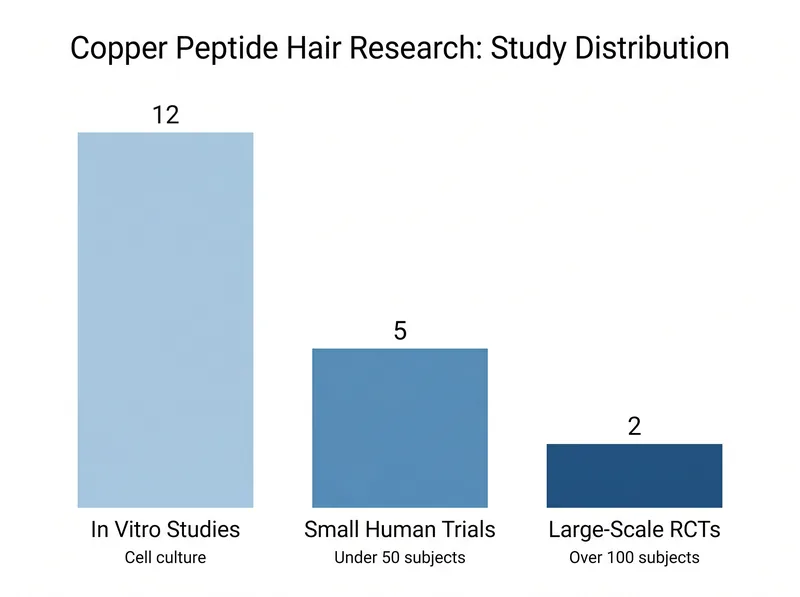 Most copper peptide hair studies are small-scale or in vitro. Large-scale human trials remain limited.
Copper Peptide Serums: Product Landscape and Formulation Issues
Walk into any beauty retailer and you’ll find a dozen copper peptide serums, each claiming to be the breakthrough you’ve been waiting for. Concentrations range from 0.5% to 3%. Prices vary wildly. And formulation quality? That’s where things get complicated.
GHK-Cu is notoriously unstable. It degrades when exposed to light, heat, and certain pH levels. Many serums use copper peptides in forms that may not penetrate the scalp effectively. Some products combine peptides with ingredients that could theoretically interfere with absorption (like certain oils or silicones).
Then there’s the scalp barrier problem. Your scalp isn’t a passive sponge. The stratum corneum (outermost skin layer) is designed to keep things out. For peptides to work, they need to penetrate through this barrier and reach the follicle. That’s a tall order for a relatively large molecule.
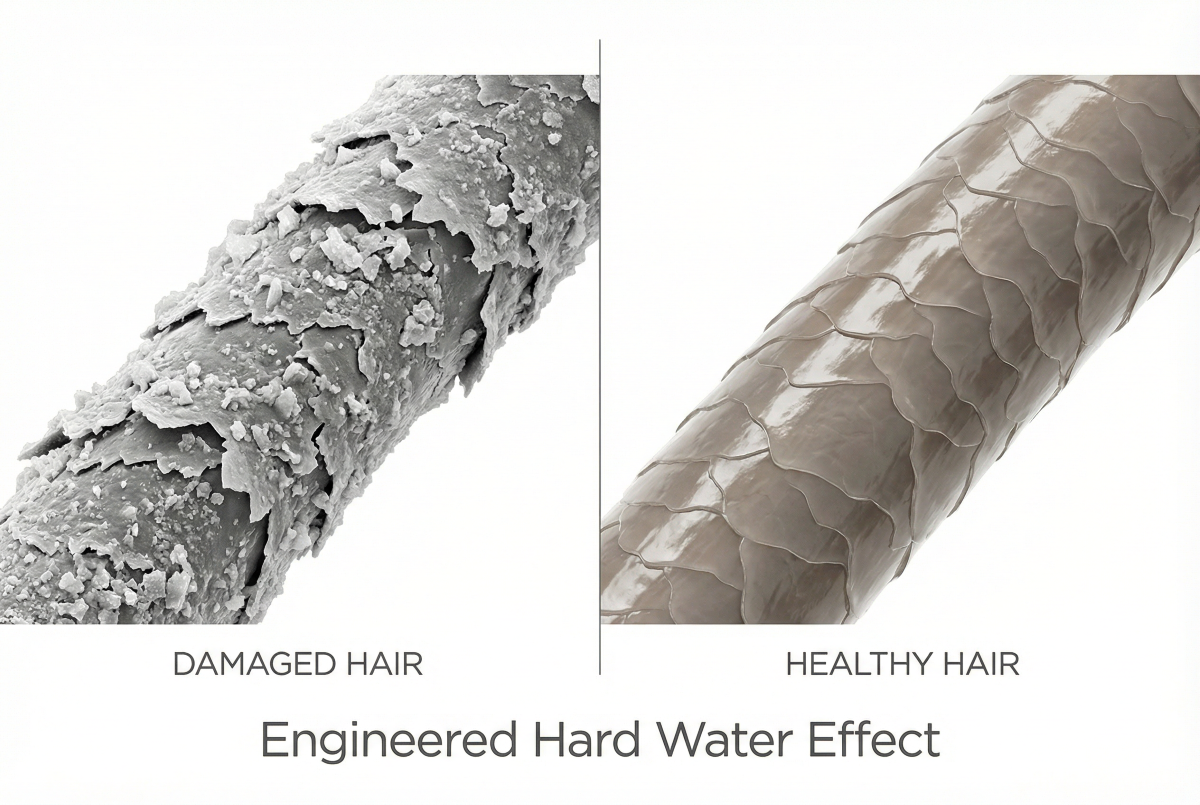
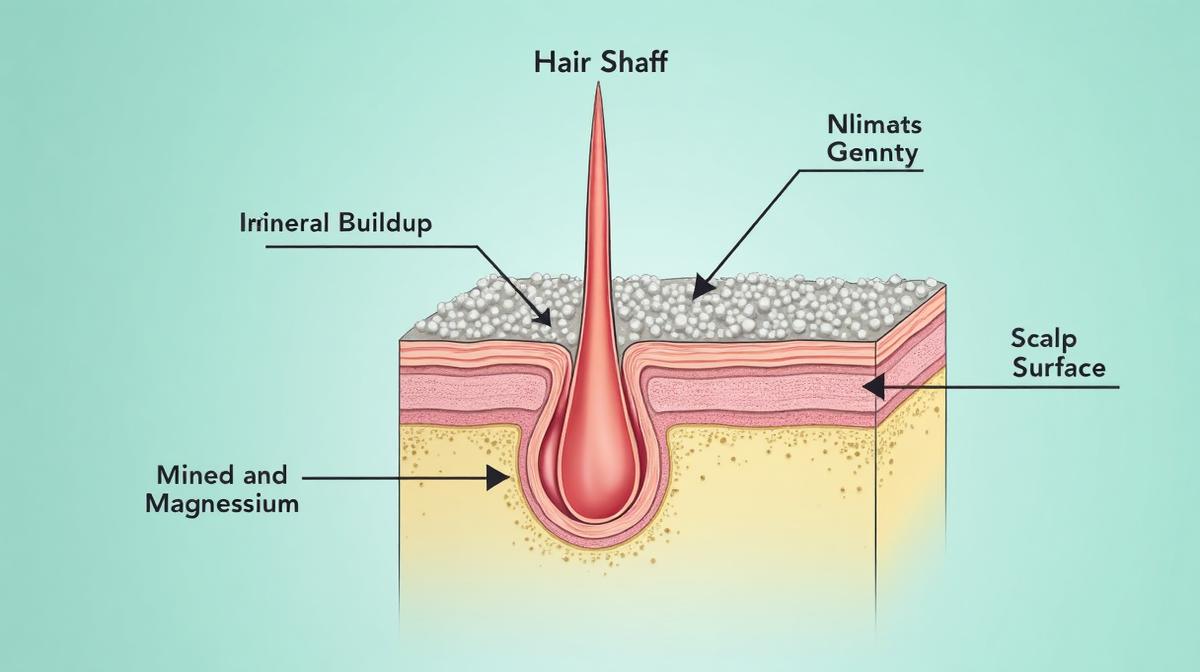
Here’s what most brands won’t tell you: if your scalp has mineral buildup, excess sebum, or product residue, topical absorption plummets. A peptide serum applied to a coated scalp is like trying to water a plant through a plastic sheet. This is where chelating shampoos become relevant, they strip away the barrier that blocks penetration.
In the Gulf region, where hard water deposits calcium and magnesium on the scalp, this issue is even more pronounced. A chelating shampoo like Regrowth+ removes mineral buildup, creating a clean surface for actives to absorb. It’s basic chemistry: you can’t deliver ingredients through a mineralized barrier.
Comparing Copper Peptides to Proven Treatments
Let’s put copper peptides in context. How do they stack up against treatments with strong evidence?
Minoxidil has decades of research, FDA approval, and consistent results across multiple large trials. We know it works. We know the response rate (about 60% of users see regrowth). We know the side effects. Copper peptides? We have promising cell studies and a handful of small trials.
Finasteride (for men) blocks DHT, the hormone that miniaturizes follicles in pattern hair loss. It’s been studied in thousands of patients. Copper peptides don’t address the hormonal component of androgenetic alopecia at all.
Even rosemary oil, which has limited but direct human trial data, has more evidence than GHK-Cu for scalp application. A 2015 study compared rosemary oil to 2% minoxidil and found comparable results. No such head-to-head trial exists for copper peptides.
This doesn’t mean copper peptides don’t work. It means we don’t know yet. If you’re dealing with significant hair loss, relying on peptides as your primary treatment is a gamble. They might be a useful adjunct, something you add to a proven regimen, but they’re not a replacement for evidence-based therapies.
Who Might Benefit (and Who Shouldn’t Bother)
If you’re in the early stages of thinning and willing to experiment, copper peptide serums might be worth trying, with realistic expectations. They’re unlikely to cause harm (beyond wasting money if they don’t work), and the theoretical mechanism is sound enough to justify cautious optimism.
People who’ve plateaued on minoxidil sometimes add peptides to see if they can push results further. There’s anecdotal support for this, though no clinical data. The idea is that peptides work through different pathways, so combining them could be synergistic.
Who shouldn’t bother? Anyone expecting dramatic regrowth from peptides alone. If you have moderate to advanced hair loss, you need treatments with proven efficacy. Start with minoxidil, consider finasteride (if you’re male and cleared by a doctor), and address any underlying issues like ferritin deficiency or scalp inflammation.
Also, if you’re not willing to prep your scalp properly, skip the peptides. Applying a serum to a dirty, mineral-coated scalp is throwing money away. You need a clean absorption surface, which means regular use of a clarifying or chelating shampoo.
How to Use Copper Peptide Serums (If You Decide To)
If you’re going to try a copper peptide serum, do it right. Apply it to a clean, dry scalp, ideally after washing with a chelating shampoo to remove buildup. Use it consistently for at least 12 weeks before evaluating results. Hair growth is slow. You won’t see changes in a month.
Most products recommend once or twice daily application. Follow the instructions on your specific product. More isn’t better, overloading your scalp with serum can cause greasiness and may even impede absorption.
Store the product properly. Keep it in a cool, dark place. If your serum turns green or develops an off smell, it’s degraded. Toss it.
Track your progress objectively. Take photos in consistent lighting every 4 weeks. Measure shedding (count hairs in the shower drain). Don’t rely on subjective feelings, confirmation bias is real, especially when you’ve spent money on a product.
And be honest with yourself. If you’re not seeing results after 3-4 months, accept it and move on. There’s no shame in trying something that doesn’t work. The shame is in clinging to a failing strategy when better options exist.
References
- Copper peptides in wound healing and anti-aging - PubMed
- Effect of a peptide-copper complex on hair follicle growth in vitro - Journal of Dermatological Science
- Topical peptides for skin and hair: mechanisms and applications - PubMed Central
- Minoxidil: mechanisms of action and clinical efficacy - American Academy of Dermatology